Alan Judd

Alan Judd’s latest spy novel, ‘Queen & Country’, is published by Simon&Schuster.

The Belgian resistance finally gets its due

From our UK edition

We are familiar with the myths and realities of French resistance and German occupation, but less so with the story of Belgian resistance. It was highly creditable, spanning both world wars, and has long deserved to be better known. This book should help ensure that it is. The title refers to the legend of the White Lady – la Dame Blanche – whose appearance was said to herald the downfall of the Hohenzollerns, the Kaiser’s dynasty. The name was adopted by a network of 1,084 Belgians who spied for MI6 against the country’s German occupiers during the first world war. According to MI6’s authorised history, this ‘became the most successful single British human intelligence operation’ of that war.

Mossad’s secret allies in Operation Wrath of God

From our UK edition

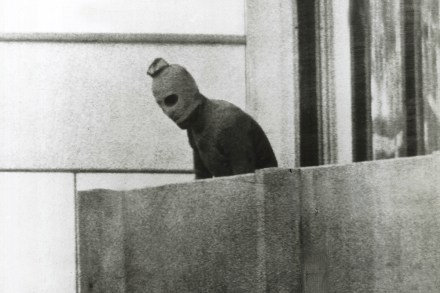
More than half a century ago Palestinian terrorists stormed the 1972 Munich Olympics, murdering two of the Israeli team and taking another nine hostage. The West German authorities, ill-equipped to deal with such incidents, agreed to fly the terrorists and their hostages to Egypt. Mossad, the Israeli intelligence service, offered to mount a rescue operation. The Germans launched their own, resulting in the deaths of a police officer, four of the seven terrorists and all the hostages.    One consequence was the Israeli government’s Operation Wrath of God, a programme to assassinate any leaders or planners associated with the massacre.

Assassinations have an awkward tendency to backfire

From our UK edition

Plutarch says that Julius Caesar dined with friends the day before he was assassinated. When conversation turned to considering the best way to die, Caesar looked up from the papers he was signing (being in company never stopped him working) and said, without hesitation: ‘Unexpectedly.’ Thanks partly to Shakespeare, Caesar’s has a claim to be one of the two or three best known historical assassinations. Another, plausibly argued here by Simon Ball as one of the most consequential, was that of Archduke Franz Ferdinand in Sarajevo on 28 June 1914, precipitating the first world war. Without it, the past century might have been unrecognisably different.

Everyone who was anyone in Russia was spied on – including Stalin

From our UK edition

Vasili Mitrokhin was a KGB colonel smuggled out of Russia by MI6 in the early 1990s with a treasure trove of notes from the KGB’s archive. The resulting 3,500 CI reports (CI meaning counter-intelligence – information about hostile spies) identified 1,000 KGB agents around the world and were shared with 36 countries. The CIA rated it ‘the biggest CI bonanza of the post-war period’, while the FBI described as ‘the most detailed and extensive pool of CI ever received’. The story behind it was as remarkable as the haul itself. Gordon Corera’s fluent narrative draws on many sources, including the magisterial two-volume Mitrokhin Archive compiled by the historian Christopher Andrew and Mitrokhin himself.

From the early 1930s we knew what Hitler’s intentions were – so why were we so ill-prepared?

From our UK edition

MI6’s historical archive suffered disastrous weeding on grounds of space from the 1920s onwards. One of many mysteries was the identity of a 1930s/40s agent referred to cryptically in surviving papers as ‘C’s German source’ (C being the chief of MI6). Now, as a result of indefatigable research, Tim Willasey-Wilsey has established who the man was who almost uniquely reported on the thinking of Hitler’s pre-war inner circle. In the course of this the author may also have resolved the origin of the notorious Zinoviev Letter, believed by many in the Labour party to have lost them the 1924 general election.   William Sylvester de Ropp, a baron usually known as Bill de Ropp, was a Lithuanian Balt, born in 1886.

Were the Arctic convoy sacrifices worth it?

From our UK edition

You need only mild interest in the second world war to be aware of the Arctic convoys of 1941-45, escorted by the Royal Navy through savage weather and unimaginable cold to deliver supplies to Russia. Their purpose was to keep Russia in the war; the conditions were such that storms could last nine days, blowing ships hundreds of miles apart and playing havoc with communications. That’s not to mention enemy action by submarine, air attack and large surface raiders such as the Tirpitz and Scharnhorst. Some 4.5 million tons of aid were delivered at the expense of 119 ships and 2,763 lives lost.  Was it worth it? Opinion at the time was divided.

The spy with the bullet-proof Rolls-Royce

From our UK edition

‘Biffy’ Dunderdale (1899-1991) was a legend in his own lifetime within MI6. Born in Odessa to an Austrian countess and a British trader representing Vickers, his cosmopolitan upbringing endowed him with English, Russian, German, Turkish, French and Polish. His real first name was Wilfred, Biffy being acquired through youthful handiness with his fists. Biffy played an important role in smuggling the Polish copy of the Enigma cipher machine to London Education and family connections made him intimate with prominent Levantine trading families such as the Whittalls, Keuns and La Fontaines. Members of each served with him in MI6 and two into modern times.

The assassination of Georgi Markov bore all the hallmarks of a Russian wet job

From our UK edition

In September 1978 Georgi Markov, a Bulgarian émigré writer, waited at a bus stop on Waterloo Bridge on his way to work at the BBC World Service. Feeling a sting in his right thigh, he looked round to see the man behind him picking up his apparently fallen umbrella. The man apologised in a foreign accent and hastily crossed the road where he hailed a taxi. Markov felt feverish that night, was admitted to hospital and within four days was dead. ‘The bastards poisoned me,’ he told doctors, as they struggled to identify what was wrong with him. ‘The bastards poisoned me,’ Markov told doctors, as they struggled to identify what was wrong with him What was wrong was ricin, a poison with no antidote.

If the Nazis had occupied Britain, how many of us would have collaborated?

From our UK edition

Those of us who have never endured occupation can find it difficult to judge the behaviour of some who have. The lines between survival, passive cooperation and active collaboration are not always clear. Following the second world war, the myths of resistance, especially in France, were deliberately inflated in order to hide the humiliation and deep wounds occasioned by collaboration, which was far more widespread. Understandably sometimes; you may take risks for yourself, but when it’s your family who may be butchered, decisions are harder. It’s not only the unoccupied who find judgments difficult. As Ian Buruma demonstrates in his informed and perceptive commentary, it can be equally difficult for those who were there.

Could you become a spy?

From our UK edition

Why spy? Why do people become spies, what are their motives, their justifications, and how do they perceive what they are doing? Could any of us do it? Are we all potential spies? Short answer: yes. Long answer: depends on circumstances. The Sunday Times ran a story about Abdi (a pseudonym), who was recruited in the wake of 9/11 by MI5 to spy on UK-based terrorists. He was subsequently sent by MI6 to penetrate training camps in Waziristan, despite both agencies allegedly being aware that he was mentally unstable. When he returned to the UK he killed his own child, claiming that this was a psychotic episode resulting from the stress of spying. The jury did not believe he was unable to control himself and convicted him of murder.

Behind the Five Eyes intelligence alliance

From our UK edition

In February 1941 four US officers were landed from a British warship at Sheerness, bundled into vehicles and driven to Bletchley Park, Buckinghamshire, a large redbrick house amid wartime huts. They were greeted at midnight by the head of Bletchley with sherry, whisky being in short supply. They carried with them a secret device called the Purple Machine, which deciphered previously impregnable Japanese communications. In return, they were given full details of Bletchley’s breaking of the German Enigma cipher. Yet it would be another ten months before the US entered the war.

People of little interest: MI5’s view of left-wing intellectuals

From our UK edition

If MI5 had a Cold War file on you – paper in those happy days – it didn’t mean they thought you were a spy. Nor even that you were especially interesting. Files were a means of storing and retrieving information. They could be general subject files or personal files (PFs) relating to individuals. Some PF holders were secretly investigated, but many were merely monitored – i.e. information about them was collated until it was clear there was no need for further investigation. Following their seizure of power in Russia in 1917, the avowed mission of the Soviet government was to foment worldwide revolution in order to impose communism. MI5 was tasked with investigating, monitoring and – within the law – preventing subversion.

The delicate business of monitoring the monarchy

From our UK edition

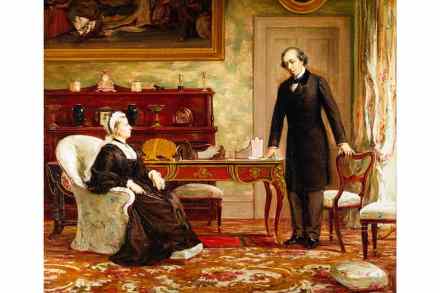
This very readable account of relations between the British intelligence services and the Crown does more than it says on the tin. Although subtitled ‘Spying and the Crown, from Victoria to Diana’, it quite properly begins with Queen Elizabeth I and the intelligence network masterminded by Francis Walsingham, whom MI6 regard as their historical progenitor. It also quite properly makes the point that ‘spies and royal statecraft were episodic and opportunistic partners’. Unlike other major powers, Britain had no permanent intelligence services until 1909. There weren’t even any permanent military intelligence organisations until the late 19th century.

Lambs to the slaughter: the fiasco of the Dieppe Raid, August 1942

From our UK edition

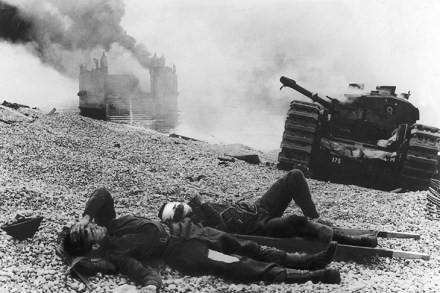
In carefree days which now seem so distant we used occasionally to take the Newhaven-Dieppe ferry. Docking after a long lunch, I would try to imagine the port during the infamous Dieppe Raid of August 1942. It is so clearly a natural defensive position that I could never work out how they expected to take it or, more importantly, why. This book sets out to answer both questions and, thanks to the release of previously classified wartime files, largely succeeds. It also throws new light on Ian Fleming, who was there. Dieppe in those days was intensively fortified by the Germans, flanked by heavy guns on the cliffs. Just about every inch of the docks was covered by concealed machine guns and cannon, including a captured French tank.

it’s easy to forget how many respectable people embraced eugenics

From our UK edition

Between 1923 and 1931 the publisher Routledge produced ‘Today and Tomorrow’, a series of 110 short books by intellectual luminaries of the time who were asked to imagine the future 50 to 100 years hence. The writers included Bertrand Russell, his wife Dora, J.B.S. Haldane, C.E.M. Joad, Sylvia Pankhurst, Robert Graves, Winifred Holtby, Basil Liddell Hart and Vera Brittain. The titles ranged between Science and the Future, An Anatomy of Clothes, The Conquest of Cancer, Women and Knowledge, The Future of War, The Future of the Jews, The Future of Humour, The World, the Flesh and the Devil, The Problem of Race and The Price of Justice. Those announced but never published included The Future of Sex by Rebecca West and The Future of Traffic in Women by H. Wilson Harris.

The Pearl Harbor fiasco need never have happened

From our UK edition

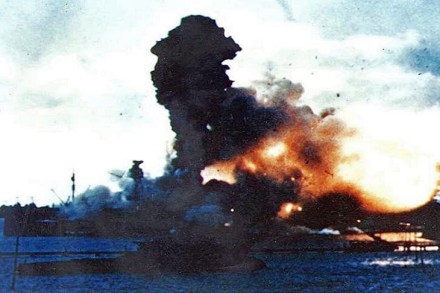
It is sometimes said that intelligence failures are often failures of assessment rather than collection. This is especially so when the intelligence is unwelcome or unfashionable. MI6’s first report of prewar Germany’s secret U-boat building programme was withdrawn from circulation at the request of the Foreign Office, reluctant to alarm Whitehall’s appeasers. Action Likely in Pacific exemplifies that tendency in spades.

Nordic noir

From our UK edition

Anyone mildly interested in the second world war probably knows two things about our wartime alliance with Norway, following its invasion by Germany. One is the great Christmas tree that appears in Trafalgar Square every year, a gift from the Norwegian government in recognition of that alliance. The other is the daring raid to sabotage the Norwegian heavy-water plant essential to the German attempt to build an atomic bomb, an operation subsequently filmed as The Heroes of Telemark. But few are likely to know that the idea of an annual tree gift probably originated with two Norwegians manning one of the many SIS coast-watching stations in occupied Norway from which German shipping was monitored. The men lived for months in a sheepfold, unable to wash or change their clothes.

Betrayal in Berlin – a small but important part of the Cold War story

From our UK edition

The Berlin Tunnel was an Anglo-American eavesdropping operation mounted against Russian-controlled East Berlin in 1955–56.  It was a technical and engineering triumph which yielded a vast hoard of intelligence and, crucially, guaranteed early warning of any surprise Russian attack (as was mooted by the Russian military). Yet it was betrayed to the Russians by the British spy George Blake before a single sod was dug. This well-researched and readable account tells both stories, showing how they fed into each other. High-grade information on Russian military capabilities and intentions were scarce.  One of few successful sources was an MI6 tunnel in Vienna, tapping into Russian underground communications cables.

Disputes over Putin

From our UK edition

These two refreshingly concise books address the same question from different angles: how should we deal with Russia? Mark Galeotti focuses on Vladimir Putin himself, his background, aims, tactics and strategy (if any).  Andrew Monaghan takes a wider approach, analysing Russia’s strengths and weaknesses, its self-image, its perceptions and misperceptions of us, ditto ours of it. Both argue that relations between Russia and the West suffer because we are sometimes prisoners of our own preconceptions. Monaghan describes what he calls the two-part security dilemma, a problem firstly of interpretation and secondly of response.

Could they have tried harder?

From our UK edition

Awareness of German opposition to Hitler is usually limited to Colonel Claus von Stauffenberg’s attempt to blow up the wretched man on 20 July 1944. Hitler was at a briefing in his Wolf’s Lair, a secret forested redoubt, when Stauffenberg entered the room with his briefcase bomb (containing British plastic explosive), placing it beneath the table where Hitler was due to sit. Stauffenberg withdrew, pleading an urgent call, but the unsuspecting subordinate who took his place moved the briefcase further under the table and away from Hitler. Standing and smoking by his car, Stauffenberg — a one-armed, eye-patched veteran of the North African and Russian campaigns — watched as the wooden briefing hut erupted with a flash and roar.