Margie Orford

A feminist finds fulfilment in derided ‘women’s work’

From our UK edition

Marina Benjamin writes with a frankness, depth and wisdom that recalls the self-exploratory but world-revealing essays of Michel de Montaigne. In A Little Give, she turns her exacting philosopher’s mind, and opens her capacious heart to, her own life. Her essays, Tardis-like in their complexity, depth and range, scrutinise what has made and unmade her feminism, and then enabled her to make anew the feminism that has given her life both its personal and political trajectory: While I’ve never stopped identifying as a feminist, I am less and less certain what it means to live as one. I don’t mean how to organise and mobilise collectively. I mean simply how to be.

The lost world of the Karoo

From our UK edition

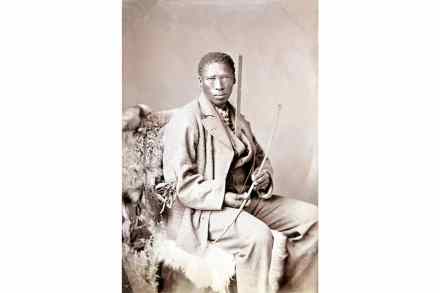
Julia Blackburn’s Dreaming the Karoo is the diary of a very bad year: from March 2020, when a research trip to South Africa was cut short by the sudden emergence of Covid, to March last year. Blackburn had gone to Cape Town, and then into the dry interior, the Karoo, to explore the lost world she had found in an obscure volume that she had once chanced upon in the London Library. Specimens of Bushman Folklore, by the linguists Wilhelm Bleek and Lucy Lloyd, published in 1911, contains the texts – life stories, origin myths, tales about animals, accounts of murders of women and children by the encroaching colonists – given by many of the /Xam, a Bushman group of hunter-gatherers. These informants were captives, hundreds of miles from their homes.

Ethel, Ella and all that jazz: the soundtrack of a Chicago childhood

From our UK edition

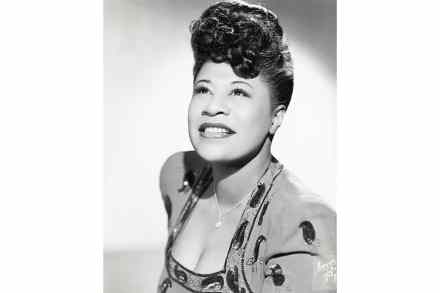
Margo Jefferson’s Constructing a Nervous System compresses memoir and cultural criticism into one slim, explosive volume, and in doing so the Pulitzer Prize-winning author makes both forms new. Hers is a wry, intimate portrayal of a passionate and intellectual woman coming to maturity: ‘Older women’s tales... are hard to pull off,’ she writes: ‘They risk being arch.’ But Jefferson is never arch. Her eye is too keen and her aim too true. She turns her clear gaze and razor-sharp intellect on America past and present, where freedoms are skewed and limited by race and gender.

Patterns in the grass: The Perfect Golden Circle, by Benjamin Myers, reviewed

From our UK edition

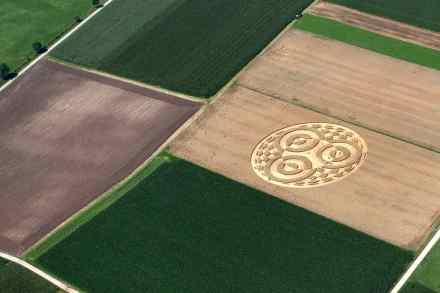
The Perfect Golden Circle is ostensibly about male friendship. Two men, flotsam of the 1980s – Calvert, a Falklands veteran, and Redbone, a failed punk musician – tramp across the English countryside in 1989 making crop circles. ‘Redburn sees life as a thrilling continuum, Calvert considers it a conundrum that can never be solved, only endured.’ How these outcasts met, or what drew them to each other apart from poor personal hygiene, is never made clear. Like two feral Hobbits, they rattle about the dystopian and degraded shires of an England in the death throes of the Thatcher era, making ever more elaborate crop circles. The reader is informed, not infrequently, that Calvert suffered trauma during the Falklands war.

King of a wild frontier

From our UK edition

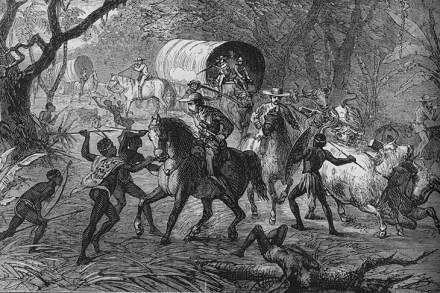
Red Dog is an ambitious hybrid of a book. It was published in South Africa to wide acclaim in 2014 and has been expertly translated by Michiel Heyns, who has retained the cadence and some of the vocabulary of the original Afrikaans — the mongrel tongue that evolved in the Dutch East India Company’s Cape colony. Willem Anker brings South Africa’s bloody birth to life through the story of Coenraad de Buys. The priapic founding father of a nation of bastards, he is a pillager and survivor, a rapist and husband, a colonist and outlaw, a rebel and hero. With his numerous wives and children, he is the gargantuan progenitor at the centre of this sprawling tale, pushing those with whom his life intersects — his intimates and his enemies — to the periphery.