Travis Elborough

Unhappy band of brothers: the Beach Boys’ story

From our UK edition

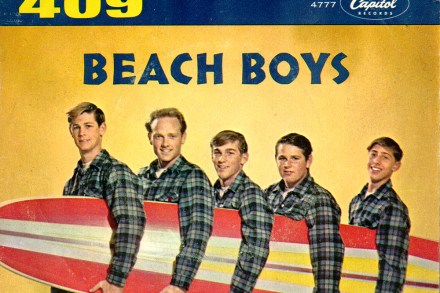
Film noir was the term coined by the French in the late 1940s to describe the genre of Hollywood crime movies which probed the darkness that lay in the shadows cast by all that bright Californian sunlight. The Beach Boys, who broke through in the early 1960s with a repertoire that hymned, in five-part harmonies, the Golden State’s promise of sun, sand and waves, bronzed bodies, beach-party ‘babes’, hot rods and open highways, were – and remain – the quintessential Californian band. But their story, an unhappy family saga featuring the three Wilson brothers (Brian, Carl and Dennis) and cousin Mike Love, is, like that of California’s itself, as dark as it is light. Their presiding musical genius, Brian, died in June.

Doctor, Doctor: the genesis of a national folk hero

From our UK edition

John Higgs begins his foray into the long-standing BBC television science fiction series Doctor Who with a personal anecdote about going to the pub with Tom Baker, the notoriously bibulous actor who played the part of the Doctor from 1975 to 1981 – still longer than anyone else. For me, as for Higgs, Baker was ‘my doctor’. He was the one I first watched as a child and who instantly comes to mind whenever I think about the character: sonic screwdriver, long stripy scarf, bags of jelly babies and tin dog companion. At the height of his Who fame, Baker turned, as Higgs doesn’t shirk from saying, into a ‘monster’, behaving appallingly on set and off. And, having become typecast by the role, he clearly struggled, mentally and professionally, in its aftermath.

The weirdness of the pre-Beatles pop world

From our UK edition

Quizzed about pop by the teen music magazine Smash Hits in 1987, the year of her third consecutive electoral victory, Margaret Thatcher singled out ‘Telstar’, a chart-topper from a quarter of a century earlier, for special praise. She pronounced it ‘a lovely song… I absolutely loved that. The Tornados, yes.’ As a whizzily futuristic sounding instrumental ode to a transatlantic communications satellite, and only the second British recording to top the American Billboard charts, its charm for Thatcher was perhaps as much political as musical. That it was the work of an independent producer might also have appealed to her love of freewheeling, self-reliant private enterprise.

Kate Bush – always quite hippy, dippy, ‘out there’

From our UK edition

In 2019, Kate Bush felt the need to issue a statement on her website clarifying that she was not a Tory supporter. Nearly three years earlier, in an interview with a Canadian magazine, the singer-songwriter had appeared to express her admiration for Theresa May, stating: ‘I actually really like her and think she’s wonderful... It’s the best thing that’s happened to us in a long time.’ This rare foray into British politics from a performer whose reticence about her private life has bordered on the Trappist went down about as well as David (‘Scotland Stay with Us’) Bowie’s contribution to the Scottish Independence Referendum debate. Taylor Swift may have Eras, but Kate Bush is more of an aeons artist, operating in glacial deep time But Twitter (as was) be damned.

At last, a private education that wasn’t unmitigated misery

From our UK edition

There has been a spate of books recently about private education, ranging from academic denouncements of their malign effects on society, such as Francis Green and David Kynaston’s Engines of Privilege, to Charles Spencer’s grim chronicle of neglect and abuse, A Very Private School. Though technically falling within this genre, 1967, the singer-songwriter Robyn Hitchcock’s diverting account of his formative spell at Winchester College, seems to hail from a rosier era. It is one where matron’s buttered crumpets rather than bullying were the chief topics of Billy Bunter-esque reminiscences that proclaimed schooldays the happiest of one’s life.

How Liverpool soon outgrew the Beatles

From our UK edition

‘If any journalist asks you about the Beatles because you’re from Liverpool, say you hate them and you don’t listen to that old crap.’ Such was the advice that the DJ Roger Eagle, promoter and founder of the legendary (and there really is no other word for it) Merseyside punk club Eric’s, dispensed to a young Ian Broudie in the late 1970s. Little could either have imagined that almost simultaneously John Lennon, over in New York in the Dakota Building, was busy demo-ing ‘Now and Then’. It was a song which would resurface as the final Beatles single and top the charts some 40-odd years later, aided by a form of AI technology that possibly only members of Dalek I, the Wirral’s wackier answer to Kraftwerk, could have dreamt of back then.

The folly of garden cities

From our UK edition

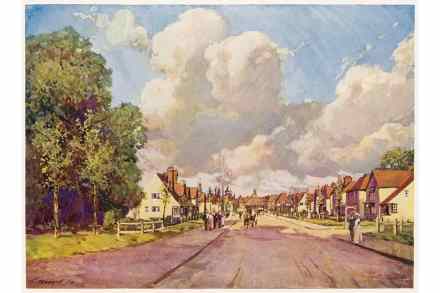
In his 1981 autobiography A Better Class of Person, the playwright John Osborne described an encounter he’d recently had with an actor who’d bought a house in Finlay Street, Fulham for £15,000. Osborne, having lived on the same street in the 1930s when properties there changed hands for £300, was astonished by the sum. Yet, as Simon Matthews notes in House in the Country, £15,000 was then only 3.5-3.75 times the average national earnings, while to buy a house on Finlay Street today you’d need £2,136,667 – which works out at 69 times the current average annual salary.

The story of Sealand – a most improbable sovereign state

From our UK edition

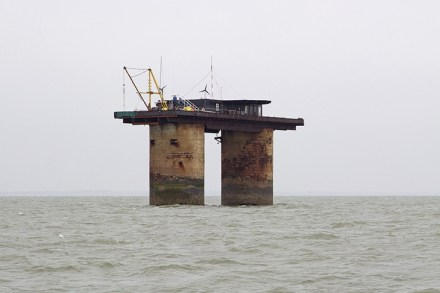
In 2012, the editors of Vice ran an article aimed at would-be contributors to their self-avowedly edgy magazine headed ‘Never Pitch Any of These Things to Us Again’. Among a list of no-nos that included burlesque dancing and art made of bodily fluids was the principality of Sealand. They wrote: OK, so an independent sovereign state floating just outside the UK sounds great, right? Except, well it’s not really, is it? I mean, it’s not an independent sovereign state like, say, France. It’s more like a big, floating turd of mental illness in the North Sea.

There be dragons

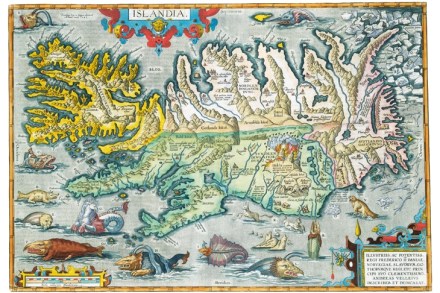
Reflecting on the genesis of Treasure Island, the adventure yarn that grew from a map of an exotic isle he had drawn to amuse a bored schoolboy on a rainy day, Robert Louis Stevenson observed: ‘I am told there are people who do not care for maps, and I find that hard to believe.’ It’s fair to say that Thomas Reinertsen Berg cares very deeply about them, and his book, sumptuously produced with lots of full-colour images, is a kind of potted treasury of cartographical history that gleams with pieces-of-eight-like snippets of information.

Pirates and puritans

From our UK edition

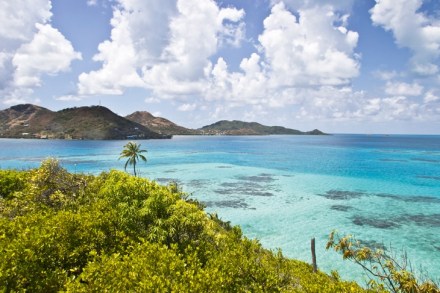
In The Growing Pains of Adrian Mole, Sue Townsend’s hapless teenage diarist, reeling from the news that Argentina has just occupied the Falkland Islands, fails to locate the archipelago on his world map. Eventually, his mother comes to the rescue and discovers it ‘hidden under a crumb of fruitcake’. If general awareness of the Falklands before 1982 was somewhat limited, as Townsend slyly implied, it pales into complete insignificance in comparison with the all-but-forgotten former British territory of Providence. This is a place I have to confess to never having heard of before picking up The Island that Disappeared. My ignorance is one thing and, according to Tom Feiling, common enough.