Graham Robb

Graham Robb: The Discovery of Britain

From our UK edition

40 min listen

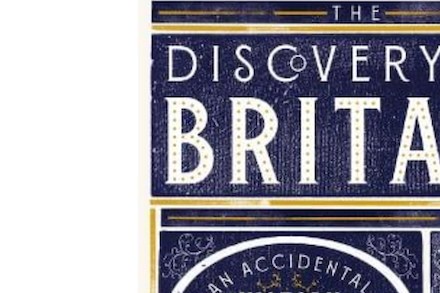
Sam Leith's guest this week is Graham Robb. In his new book The Discovery of Britain: An Accidental History, Graham takes us on a time-travelling bicycle tour of the island's history. They discuss how Graham weaves together personal memories with geography and history, his 'major cartographic scoop' which unlocks Iron Age Britain and contemporary debates about national identity. Graham also has a discovery of interest for those who hold out hope that King Arthur really existed. Produced by Patrick Gibbons and James Lewis.

There’s something about Marianne – but can French identity be defined?

From our UK edition

In October 2018, Andrew Hussey, the convivial and courageous observer and analyst of the political and social travails of modern France, was cycling back to his office after lunch through the rather staid and un-bohemian environs of the Boulevard Raspail on the Left Bank in Paris. To the ‘middle-aged man who already has a heart condition’, the scene into which he pedalled near the Montparnasse cemetery was terrifying, but to the veteran historian of the fractious Fifth Republic not particularly unusual. Parisians were sitting on café terraces and queuing for ice cream while just around the corner ‘a mini-civil war’ was taking place.

The English lieutenant’s Frenchwoman: the tragic story of Adèle Hugo

From our UK edition

In 1882, a sneaky reporter from the Figaro managed to track down Victor Hugo’s only surviving, long-forgotten child to an expensive mental asylum on the edge of Paris. He stalked her as she was being taken for a walk in the local park. She had the ‘profile of a duchess’, ‘staring black eyes’, a perilous hopping gait and odd compulsions. According to the reporter’s inside source, ‘Mme Pinson’ had spent a month removing all the rocks from the asylum’s long driveway and then replaced them one at a time. Thirty-three years later, she could still play the piano and claimed to be writing an opera titled Venus in Exile. She also enjoyed tearing up the pages of books and stuffing the confetti into her bag.

A tale of greed and catastrophe: An Honourable Exit, by Éric Vuillard, reviewed

From our UK edition

Experts in urban fauna have apparently discovered a ‘sacred triangle’ between the Parc Monceau and Neuilly in the west of Paris. A short distance from the wind-blasted northern arrondissements with their ‘robust but primitive population’, the leafy avenues and eco-landscaped gardens of private mansions on the edge of the Bois de Boulogne have created a special microclimate. Here, a protected human species has found its natural habitat and breeding ground. Avaricious, nepotistic and practically inexterminable, it has caused death and suffering on an unimaginable scale while amassing wealth which far exceeds its natural needs.

The pleasures – and perils – of getting on your bike

From our UK edition

Jody Rosen lives and cycles in Brooklyn, which makes him what the Mexican essayist Julio Torri calls ‘a suicide apprentice’. He has been ‘rear-ended’ and ‘doored’ several times. He quotes an unnamed cyclist who likens the click of a car door being opened to the sound of a gun being cocked. ‘Get a bicycle,’ said Mark Twain. `You will not regret it, if you live.’ This rangy, digressive book contains just about the right amount of bicycle history and mechanics for the unobsessed. Rosen is not a bicycle fetishist.

Journey to ‘the grimmest place in the world’

From our UK edition

Suffering from post-traumatic stress and the effects of government austerity measures, Paul Jones resigned as the head of an inner-city secondary school and, ‘an idiot without a job’, decided to cycle from Land’s End to John o’Groats in four stages spread over ten months. He had raced occasionally with professional cyclists but had never ridden more than 127 miles in a day. His aim was to ‘dissect a brain slice of the country’, to find some relief from the ‘formless terror’ of his mental landscape, and to subject himself to the torture of a long-haul literary endeavour. It took him three years to produce this companionable and energetic book about the obsessive and strangely affable breed of record-breaking End-to-Enders.

Our lady of hope

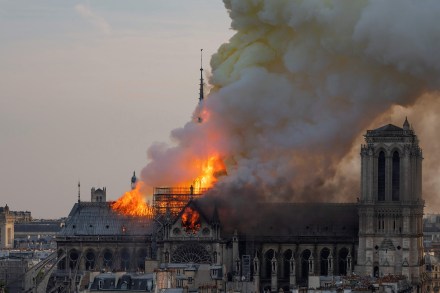
From the kitchen of her apartment on the Quai de la Tournelle in Paris, the journalist and broadcaster Agnès Poirier could see the bright yellow plumes of smoke rising into the sky. Notre-Dame de Paris was on fire, and suddenly, in that tourist-crowded, hyper-expensive ‘cradle of France’, nothing was certain — ‘democracy, peace and fraternity’ — anymore. The following morning, children living on or near the Île de la Cité took to school little plastic bags filled with blackened bits of roof picked up from balconies and pavements (as well as probably quite a lot of lead dust) which ‘dated back to the Crusades’.

notre-dame poirier

Has Notre-Dame ever been a symbol of unity for the French?

From our UK edition

From the kitchen of her apartment on the Quai de la Tournelle in Paris, the journalist and broadcaster Agnès Poirier could see the bright yellow plumes of smoke rising into the sky. Notre-Dame de Paris was on fire, and suddenly, in that tourist-crowded, hyper-expensive ‘cradle of France’, nothing was certain — ‘democracy, peace and fraternity’ — any more. The following morning, children living on or near the Île de la Cité took to school little plastic bags filled with blackened bits of roof picked up from balconies and pavements (as well as probably quite a lot of lead dust) which ‘dated back to the Crusades’.

Coming out of the class closet

From our UK edition

After an absence of 30 years, Didier Eribon, professor of sociology at the University of Amiens, returned to the seedy outskirts of Reims, where he had grown up in the 1950s and 1960s. His ‘stupid and violent’ father, a factory worker who drank, went fishing, shouted at the television and beat his wife, had finally died in a home for Alzheimer’s patients. Didier had never visited him (‘What would have been the point?’), nor did he attend the funeral. But he did go to interview his long-neglected mother. As he half-listened to her ‘endless stream’ of bitter reminiscence he ‘began a process of reconciliation with myself, with an entire part of myself that I had refused, rejected, denied’.

A heartwarming spectacle of desolation

From our UK edition

In 2008, the Scottish poet Kathleen Jamie characterised the typical exponent of modern nature writing as ‘the lone enraptured male’. This was a more solemn, grown-up Basil Fotherington-Thomas, the effete schoolboy of the Molesworth books who prances about in puerile pantheistic ecstasy, saying, ‘hullo clouds, hullo sky’. Ten years on, there is barely a British landscape that has not been visited by the species. He sits in a car until he reaches the chosen spot. Then, winding down the window, stunned by emptiness and silence, he savours the momentary disconnection from global networks. The void is soon filled with childhood memories, poems learnt at school and Wikipedia articles.

The martyrdom of Proust

From our UK edition

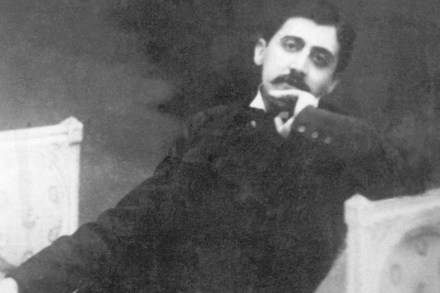
Why would a writer like Marcel Proust, who quivered and wheezed at the slightest sensation, decide to live surrounded by neighbours in one of the busiest parts of Paris? In 1906, at the age of 35, shortly after the death of his mother, he moved to a first-floor apartment at 102 Boulevard Haussmann. ‘I couldn’t bear to live in a place that maman never knew,’ he explained. For this ghostly comfort, he paid a heavy price. Petrol fumes and tree pollen — to which he was almost fatally allergic — drifted up from the boulevard.

Something in the water

From our UK edition

‘It was a shock, and an epiphany,’ says Fiona Sampson, to realise that many of her favourite places were built on and out of limestone: the cosy Cotswold village of Coleshill, the shambolic hamlet of Le Chambon in the Dordogne, the limestone Karst region of western Slovenia, and the honeycombed hills of Jerusalem and the Holy Land. ‘Surely, I thought, this has to be more than mere coincidence.’ From a strictly demographic point of view, it isn’t even much of a coincidence: about one quarter of the world’s population lives in limestone country or depends on it for its water. But the mind of a poet can feed on the slightest chance connection.

Spectator Books of the Year: An autobiography that makes the mundane seem outlandish

From our UK edition

My novel-reading year has been dominated by Barbara Pym, starting with Excellent Women (Virago, £8.99). Pym is usually likened to Jane Austen, but her hilarious situation comedies and recurring characters constantly reminded me of Balzac. Island Home: A Landscape Memoir (Picador, £12.99) is an all-too-brief autobiography by the novelist Tim Winton. He sees Europe with the eyes of an extra-terrestrial, finding nature ‘impossibly fertile’ and the Alps ‘claustrophobic’. As an unhappy schoolboy in Western Australia, he explored the violent, delicate landscapes which cars have erased, rendering ‘the outlandish mundane’. Winton’s dry, physical descriptions have the opposite effect.

Intoxicated with ink

From our UK edition

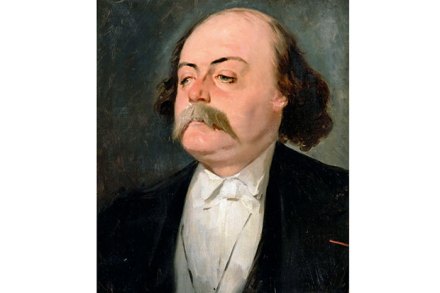
One of the charms and shortcomings of biography is that it makes perfectly normal situations sound extraordinary. According to Michel Winock, Gustave Flaubert (1821–80), the author of Madame Bovary and L’Éducation sentimentale, contracted ‘an early and profound aversion to mankind’. To Gustave the schoolboy, man was nothing but a coagulation of ‘mud and shit… equipped with instincts lower than those of the pig or the crab-louse’. This might have been the influence of his freethinking father, an eminent Rouen surgeon, but perhaps it was just the spirit of the age. The Napoleonic adventure was over; the sun of Romanticism had set.

Spectator books of the year: Graham Robb is gripped by an unforgettable story

From our UK edition

Robert Seethaler’s bestselling novel, Ein ganzes Leben, translated by Charlotte Collins as A Whole Life (Picador, £12.99) is the unaccountably gripping story of a half-crippled, simple-minded orphan in the Austrian Alps scraping a living from a stony field and slaving for a cable-car construction firm. It takes barely two hours to read it but would take a lifetime to forget. Some biographies are worth reading however slight one’s prior interest in the subject. I particularly enjoyed Robert Douglas-Fairhurst’s sensitive, canny and erudite biography of Charles Dodgson and Alice Liddell, The Story of Alice: Lewis Carroll and the Secret History of Wonderland (Harvill Secker, £25).

One événement after another

From our UK edition

The great conundrum of French history is the French Revolution, or rather, the sequence of revolutions, coups and insurrections during which the nation was repeatedly destroyed and recreated. How is it that a heap of cobblestones, furniture and overturned vehicles — handcarts in 1848, 2CVs in 1968 — erected at particular points on the Left Bank of Paris can bring down a régime whose domain extends from the North Sea to the Mediterranean? As Baudelaire observed when Napoleon’s nephew conducted a coup d’état in 1851 and installed himself as supreme leader, it seemed that ‘absolutely anybody, simply by seizing control of the telegraph and the national printing works, can govern a great nation’.

Is France now the sick man of Europe? It is if it’s taking Eric Zemmour seriously

From our UK edition

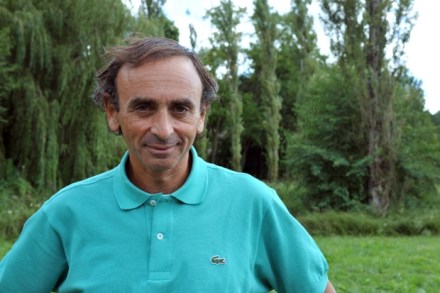
For the Figaro journalist and TV commentator Eric Zemmour, whose Le Suicide français has been topping the bestseller lists in France, France is ‘the sick man of Europe’. The land of liberty was once admired by the whole world. Then came May ’68, feminism, immigration, consumerism and homosexuality. On the surface, nothing has changed; espressos are still being plonked down on zinc counters, and ‘the legs of Parisian women still turn heads’. But ‘the soul has gone’. Gays and Muslims are taking over, and France is ‘dissolving in the icy waters of individualism and self-hatred’. The blurb calls Le Suicide français an ‘analyse’, but there is nothing analytical about it.