Culture

Culture

The good, the bad and the ugly in books, exhibitions, cinema, TV, dance, music, podcasts and theatre.

The forgotten heroines of the Middle Ages

More from Books

Isn’t it irritating when your ancestral manuscript collection gets in the way of your ping-pong tournament? That was Colonel Butler-Bowden’s predicament in the early 1930s. He was so peeved by the heap of rubbishy papers cluttering up his games cupboard that he declared his intention to burn the lot. Luckily, his ping-pong companion that day happened to be a curator at the V&A, so the colonel was dissuaded from book- burning and his manuscripts were shipped instead to the museum’s London archives. Among the collection was the unique edition of the Book of Margery Kempe, often described as the first autobiography in English, a sensational account of a woman’s mystical visions, travels and tribulations.

A call to farms: how a London barrister rediscovered her agricultural roots

More from Books

Farming threaded its way through the fields, mud, hedgerows and lifeblood of the people who made up Sarah Langford’s childhood. But her grandfather, ‘an oak of a man’ with his high-waisted trousers and ‘smelling of butter, honey and dust’, occupies no romantic sepia image in her memory. A tenant farmer, proud to have provided for the local Hampshire population during the second world war, he remains in the author’s mind a figure unfaded in achievement and identity. Having spent her early adult years as a successful London-based barrister, Langford and her husband were bringing up their two young sons with hard pavement beneath their feet until a sudden job loss and a wipe-out fire changed their lives.

What is the metaverse, actually?

Lead book review

There is a concept in tech and innovation – branded by an expensive consultancy company, naturally – known as the Gartner Hype Cycle. Any innovation, be it NFTs (a means of owning ‘unique’ digital art), blockchains (the technology powering crypto-currencies like bitcoin), self-driving cars or wearable tech, will go through distinct (buzzword-heavy) stages before it is adopted by the mainstream. First, it will head to a ‘peak of inflated expectations’, before entering the ‘trough of disillusionment’. As people then work out what the tech might actually deliver it climbs the ‘slope of enlightenment’ to the ‘plateau of productivity’.

All about my mother: Édouard Louis’s latest family saga

More from Books

Shunned by his father and his peers because of his homosexuality, Édouard Louis (born Eddy Bellegueule in 1992) left his village in rural Normandy and moved to Paris, becoming the first member of his family to attend university. By his mid-twenties he had published three well-received autobiographical novels: about working-class machismo (The End of Eddy), his experience of sexual assault (A History of Violence) and the condition of the French welfare state (Who Killed My Father). In his latest book he turns the spotlight on his mother, revisiting ‘the succession of accidents that made up her life’. Monique Bellegueule had ambitions to train as a chef, but was derailed by teenage pregnancies and terrible relationships.

Putin’s mistake was to discard the velvet glove

More from Books

To study international politics since the turn of the century has been, in large part, to study the changing nature of autocracy – and the West’s relationship to it. We kicked things off by trying to realise the Trotskyite dream of ushering in global democracy through the barrel of a gun. We wanted to bring an end to the world’s tyrants – or the ones of relevance to us at any rate. We got Iraq. But if we failed to end tyrants, we played our part in helping to mould them. As Sergei Guriev and Daniel Treisman observe in their intelligent, important book Spin Dictators, throughout this time something far more interesting and dangerous was happening.

The wonder of the wandering life

More from Books

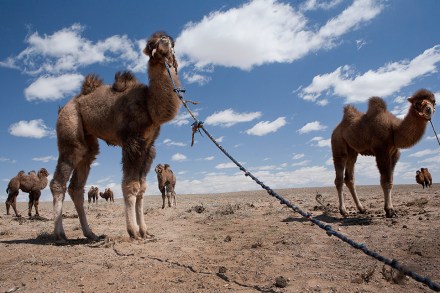
Anthony Sattin begins with a quotation from Bruce Chatwin, who famously tried all his life to produce a book about nomads but never quite succeeded (the nearest he got was Songlines). Hoping to persuade Tom Maschler at Cape of the virtues of the project, Chatwin described nomads as ‘a subject that appeals to irrational instincts’ – perhaps not the best way to sell something to publishers, who tend to pride themselves on their rational ones. But Chatwin’s thesis – that we were all originally nomads and need to recover some of that instinct – is now triumphantly brought to its conclusion in Sattin’s fascinating journey through 12,000 years, from the nomadic ways of prehistoric man to the Bedouin and Maasai of today.

Why should advocating sexual restraint be ridiculed?

More from Books

Louise Perry is on a mission: ‘It wasn’t enough just to point out the problems with our new sexual culture,’ she declares at the start of her punchy first book The Case Against the Sexual Revolution. So she offers advice as well to the young women she believes have been ‘utterly failed by liberal feminism’. That’s because contemporary sexual mores have exposed them to risks, the most serious of which are linked to some men’s propensity for violence. Women, Perry argues, have in recent decades been conditioned to repress their desire for attachment. They have learned instead to behave in ways more typical of men, with their greater (on average) appetite for casual sex or ‘sociosexuality’.

Hysterical outbursts: Bewitched, by Jill Dawson, reviewed

More from Books

‘Witch-hunt’ has become a handy metaphor for online persecutions, especially of women, though these days it is reputations that go up in flames rather than bodies. The mob mentality behind the phenomenon may not have changed as much as the medium or the mindset. In retelling a celebrated case from Elizabethan England, Jill Dawson enters thoroughly into her characters’ religious world view, while giving a meaningful glance at the issues of today. The fate of the Warboys witches – three members of one family – was recounted in prurient pamphlets of the time, but Dawson colours in the crude woodcut of history with passionate emotions and plausible motivations.

The great breakfast dilemma: should baked beans be part of a full English?

More from Books

A popular pastime in Britain is to post one’s breakfast on social media for strangers to pass judgment on bacon crispiness, egg doneness and whether baked beans are a vital component or just spoil the whole thing. Felicity Cloake is a writer after my own heart: she is not a fan of beans with her full English. ‘I object to the way they encroach on everything,’ she writes in Red Sauce Brown Sauce, and then quotes Alan Partridge on the importance of ‘distance between the eggs and the beans. I may want to mix them, but I want that to be my decision. Use a sausage as a breakwater.

‘Jerusalem’ is a rousing anthem – but who knows what the words mean?

Lead book review

The spontaneous mass adoption of deep feeling is always interesting. Jason Whittaker has a very good subject, in the journey of the cryptic lyric section of the preface to William Blake’s incomprehensible epic Milton, written and illustrated between 1804 and 1810, to its becoming the de facto national anthem of England. ‘And did those feet...’ only took on its familiar title ‘Jerusalem’ (which has nothing to do with Blake’s poem entitled ‘Jerusalem’) after it was set to music by Hubert Parry on 10 March 1916. The following day, Parry handed over his composition to his colleague Walford Davies, saying insouciantly: ‘Here’s a tune for you, old chap. Do what you like with it.

How inoculation against smallpox became all the rage in Russia

More from Books

The concept of vaccination evolved from 18th-century inoculation practices and many people contributed to the accretion of knowledge. This book focuses on two individuals: the Quaker doctor Thomas Dimsdale, who, from his small Hertfordshire surgery, pioneered a simple smallpox immunisation; and Catherine the Great, who summoned him all the way to St Petersburg to inoculate her and the teenage Grand Duke Paul. Despite success all round, though, it turns out that anti-vaxxers are nothing new. After revealing the destructive force of smallpox – in one period of the 18th century, 400,000 perished annually in Europe – Lucy Ward, a journalist and former lobby correspondent, recapitulates the history of inoculation against the disease.

We could all once tell bird’s-foot trefoil from rosebay willowherb

More from Books

‘There are a great many ways of holding on to our sanity amid the vices and follies of the world,’ wrote Ronald Blythe in 2008, ‘though none better than to walk knowledgeably among our native plants.’ To many today, when the age-old connection between people and their indigenous flora is in danger of being extinguished altogether, this pronouncement may seem eccentric; but is rightly endorsed by Leif Bersweden in Where the Wildflowers Grow, which vividly describes the botanical journey through Britain and Ireland he undertook last year. He was born in 1994 and, unusually for his generation, has been a keen amateur botanist since childhood.

Dangerous liaisons: Bad Eminence, by James Greer, reviewed

More from Books

Vanessa Salomon is an internationally successful translator. Clever, beautiful, privileged – ‘born in a trilingual household: French, English and money’ – she can indulge herself professionally with obscure, neglected books. About to embark on a forgotten nouveau roman by Alain Robbe-Grillet, she’s offered an irresistible assignment. A bestselling French novelist who is definitely not Michel Houellebecq wants to pay her an extravagant fee to translate his next book – before he’s written it. Vanessa accepts, and her life free-falls into a nightmare of dangerous, sadistic games, involving two possible Not-Houellebecqs, but which is the imposter? She herself is a very unreliable narrator.

Michael Beloff QC drops names – but they’re not the ones we’re curious about

More from Books

‘The law,’ according to W.S. Gilbert’s Lord Chancellor, ‘is the true embodiment of everything that’s excellent’ and, by common consent, Michael Beloff QC has been one of the prime exemplars of that excellence over the past 50 years. While he may not enjoy the profile of contemporaries such as Helena Kennedy, Michael Mansfield and Geoffrey Robertson, the Times, on his retirement, described him as ‘one of the great ornaments of the Bar’, and he himself notes that he has argued more than 475 reported cases (a lawyer’s way of assessing their significance). In a more dubious honour, he has appeared in two novels by his friend Jeffrey Archer.

At last, a book about James Joyce that makes you laugh

More from Books

I do not think I am alone in confessing that I had read critical works on James Joyce before I got around to reading him. As a schoolboy I drew up my own private curriculum, and one influential book was Malcolm Bradbury’s The Modern World, where I first encountered Joyce; and then moved on to Anthony Burgess’s Here Comes Everybody: An Introduction to James Joyce for the Ordinary Reader. Eventually I did read the actual work. All my teachers told me Ulysses was ‘mucky’. When they said that Finnegans Wake was even muckier, it slightly fritzed my brain when I finally got a copy.

Is Gone with the Wind to blame for Trumpism?

Lead book review

‘America is merely a story the nation tells itself,’ the historian and cultural critic Sarah Churchwell writes in The Wrath to Come. Of the many American stories, few are more disturbing than the complex one represented by the rioter Kevin Seefried inside the Capitol on 6 January 2020. He carried the Confederate battle flag to a place it had never before been: the hall outside the United States Senate chamber. There is a photograph of him standing between two portraits – one of Charles Sumner, an abolitionist beaten half to death on the Senate floor for his views; the other of Senator John Calhoun, one of the South’s most ardent enslavers and advocates of disunion.

The conspiracy against women’s football

More from Books

The moment before the fall of women’s football can be precisely dated. On Boxing Day 1920, Dick, Kerr Ladies FC beat St Helens 4-0 at Everton’s Goodison Park in front of 53,000 paying spectators, a sellout crowd. That was too much for the men at the Football Association. Hysterical at the sight of women running about as they liked and scared of competition from the female game, they banned it a year later. ‘The game of football is quite unsuitable for females,’ its ruling explained. From then on, the FA barred men’s clubs from letting women use their fields. Female players were condemned to jumpers for goalposts in parks. In the following years, many of the world’s other leading football associations followed the FA’s ban.

Ethel, Ella and all that jazz: the soundtrack of a Chicago childhood

More from Books

Margo Jefferson’s Constructing a Nervous System compresses memoir and cultural criticism into one slim, explosive volume, and in doing so the Pulitzer Prize-winning author makes both forms new. Hers is a wry, intimate portrayal of a passionate and intellectual woman coming to maturity: ‘Older women’s tales... are hard to pull off,’ she writes: ‘They risk being arch.’ But Jefferson is never arch. Her eye is too keen and her aim too true. She turns her clear gaze and razor-sharp intellect on America past and present, where freedoms are skewed and limited by race and gender.

Fish that swim backwards – and other natural wonders

Lead book review

In the Zhuangzi, a collection of tales attributed to the eponymous 4th-century BC Chinese philosopher, a frog that lives in a well boasts about its comfortable way of life to a visiting sea turtle. When the turtle describes its own existence in the vast expanse of the ocean, however, the frog has no idea what to make of it. The story is, of course, a humorous parable about typical human limitations and the possibility of stepping beyond them. But it could serve almost as well as an introduction to Ed Yong’s new book, which confirms in rich detail what Zhuangzi intuited: the nature and range of different forms of animal perception is astounding, and a greater appreciation of them has the potential to enrich human life.

People of little interest: MI5’s view of left-wing intellectuals

More from Books

If MI5 had a Cold War file on you – paper in those happy days – it didn’t mean they thought you were a spy. Nor even that you were especially interesting. Files were a means of storing and retrieving information. They could be general subject files or personal files (PFs) relating to individuals. Some PF holders were secretly investigated, but many were merely monitored – i.e. information about them was collated until it was clear there was no need for further investigation. Following their seizure of power in Russia in 1917, the avowed mission of the Soviet government was to foment worldwide revolution in order to impose communism. MI5 was tasked with investigating, monitoring and – within the law – preventing subversion.

An immorality tale: Lapvona, by Ottessa Moshfegh, reviewed

More from Books

Has there been a better novel this century than Ottessa Moshfegh’s My Year of Rest and Relaxation? There might not have been. The book was a hit when it came out in 2018 and had a second wind during the pandemic, when readers found themselves ‘resonating’ with its cabin-fever plot. Not that there was much plot: the novel follows a beautiful young woman marooned in her New York apartment, where she mainly watches TV and pops pills like they’re Pringles. There’s more plot in Moshfegh’s latest novel Lapvona. We’re not in contemporary America any more but in somewhere like medieval Europe, and the characters aren’t ‘prettier than Sharon Stone’ but proper old-school mingers, all tooth and gangle and belly.

The emperor as ruler of heaven and Earth

More from Books

Geography, climate, economics and nationalism are often seen as decisive forces in history. In this dynamic, original and convincing book Dominic Lieven considers emperors and their dynasties as motors of events. Defying constrictions of time and space, ranging from Sargon of Akkad, the ruler of what is now northern Iraq (r. 2334-2279 BC), to the Emperor Hirohito of Japan (r. 1926-89), he believes that ‘for millennia, hereditary sacred monarchy had been the most desirable and successful form of polity on Earth’. (Inhabitants of city states, from Athens to Venice, might not have agreed.) Emperors could create and extend states more easily than impersonal forces, as Lieven shows in chapters on many different empires, from China to Austria.

‘That little venal borough’: a poet’s jaundiced view of Aldeburgh

More from Books

‘To talk about Crabbe is to talk about England,’ E.M. Forster declared in a radio broadcast in May 1941, but few people today talk about this Suffolk-born poet or indeed read him. This makes Frances Gibb’s slender but thorough account of George Crabbe’s life and work all the more welcome. In his time he was considered a leading, though controversial, figure, who wrote with stark realism about the spiritually and morally impoverished lives of East Anglian villagers and townspeople, in particular the inhabitants of the ‘little venal borough’ of Aldeburgh, where he was born in 1754 and spent an unhappy youth.

We let Hong Kong down: Chris Patten on the end of colonial rule

More from Books

After 13 years in parliament, rising star Chris Patten had the bad luck to be one of the few Tory MPs to lose his seat in 1992. Had he been re-elected he would probably have become chancellor of the exchequer. Instead, he found himself in the wilderness. But not for long. Within months he had been appointed governor of Hong Kong, tasked with the tricky business of presiding over the transfer of the territory to communist China. It was a lucky break. Had he been chancellor, the odds are that his political career would have come to a sticky end the following September, when the pound fell out of the Exchange Rate Mechanism. Instead, it was Norman Lamont who drew the short straw. By the time Patten arrived in Hong Kong the clock was ticking.

Connecticut connections: A Little Hope, by Ethan Joella, reviewed

More from Books

A Little Hope, Ethan Joella’s debut novel, is about the lives of a dozen or so ordinary people who live in smalltown East Coast America. By helicopter over Connecticut ‘you wouldn’t notice Wharton right away’. Yet the problems its inhabitants face are universal. There is the seemingly American Dream family – Greg, Freddie, Addie the daughter and Wizard the dog. In line with the novel’s themes of ‘hurt’ and ‘hope’, Greg develops an aggressive blood cancer and is fighting for his life. Chemo and radiotherapy weaken him; ginger ale tastes like metallic fizz and the side-effects diminish his resolve. Freddie helps out as a seamstress at Crowley Cleaners, which Darcy Crowley established after her husband Van’s death.

Piloting a Boeing Dreamliner can be less than dreamy

More from Books

Mark Vanhoenacker dreams of my nightmares. Ever since he was a young boy, he fantasised about piloting airplanes. Ever since I was a young boy, well, let’s just say I’ve preferred to take the train. Of course I know that, statistically, flying is safe; but that knowledge doesn’t stop the unnerving sense that at some point the laws of physics will reimpose themselves and we’ll be punished for our former miracles. And let’s be honest, if God had wanted us to fly, would he really have invented airline food? Vanhoenacker has no such worries – which is handy, since he’s fulfilled his dream and now pilots Boeing 787 Dreamliners round the world (a life he detailed in his surprise 2015 bestseller Skyfaring).