Duncan Fallowell

‘I’m a hypocrite and a total fraud’ – the confessions of a French Surrealist poet

From our UK edition

Michel Leiris (1901-90) was one of those intellectual adventurers who are the astonishment of French literature in the 20th century. Their achilles’ heel is that most were communists, in a few cases Nazis; and nothing kills the life of the mind more thoroughly than preaching. Their saving grace is that many were eccentric characters, and their autobiographical work can often be their most luminous legacy. Among Leiris’s subjects are his dogs, his ideal hotel, his hatred of Wagner, his Anglophile snobbery and his tailor Because they were anti-form, the ideal prose vehicles became ‘aphorism’ or ‘fleuve’. The most brilliant of the French aphorists, Emile Cioran (though he was Romanian), exclaimed in an interview ‘Expression – that’s the cure!
Barbara Ker-Seymer – Bright Young Person in the shadows

From our UK edition

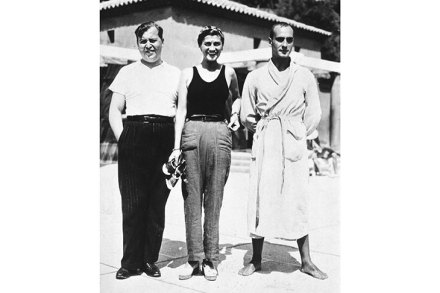
English Modernism was graced by five daring and gifted women who were in many respects well in advance of their native male counterparts: Virginia Woolf and Anna Kavan in prose, Edith Sitwell in poetry, Elisabeth Lutyens in music and Barbara Hepworth in sculpture. Barbara Ker-Seymer is not remotely in this class. She took some attractive photo-portraits before the war in her studio above Asprey’s and that was it. After leaving St Paul’s Girls’ School, Barbara was soon drinking, drugging and dancing round town Not that Barbara cared. Though trained at the Chelsea School of Art, she had a deprecating attitude to her activity which was characteristic of English amateurism and is absolutely maddening when it comes to the arts at a proper level.

Karl Lagerfeld – from fashion icon to invisible man

From our UK edition

Karl Lagerfeld was an icon when he died in 2019, but for most of his career he was unknown outside the fashion business. He was born in 1933, the year Hitler came to power, a distasteful coincidence, so Lagerfeld altered his birth to 1938. He was an only child, whose father did well by introducing condensed milk into Germany. His parents had been Nazi members, and Karl saw his future elsewhere. At 18 he left Hamburg for Paris. Short and chunky, he had simian good looks, with beetling brow and a smile that was wider than his eyes; and he didn’t want for admirers. In 1954 he won the young designers Woolmark Prize, but only in ‘the coat category’. The winner in the more prestigious ‘dress category’ was the several-years-younger Yves Saint Laurent – and that scorched Karl for life.

Russian escapism: Telluria, by Vladimir Sorokin, reviewed

From our UK edition

Vladimir Sorokin, old enough to have been banned in the Soviet Union, flourished in the post-Gorbachev spring, and he fled to Berlin several days before Russia attacked Ukraine. He writes phantasmagorias, as so many Russians do, because Russia is a nation that has never allowed its writers to examine society directly. Solzhenitsyn said: ‘Russian literature gives a poor notion of Russia, because after 1917 all truth was suppressed.’ But even in the so-called Golden Age, the Tsar’s censorship was brutal. Voinovich said: ‘Depicting reality as it is, it’s very alien to Russians.’ Gogol provided one way out – satire – but he escaped to Rome. Later writers escaped into the historic past, romantic passivity, surrealism.

Is Donald Trump postmodern?

From our UK edition

David Shields is an American author who has decided to collate many of the questions he’s been asked in interviews and reprint them – without any of his answers – under themes of Childhood, Art, Envy, Capitalism etc. The idea is that the questions put to him are just as revealing as his responses. This is a gimmick, but not merely that. To map how others interrogate us is an original idea. It follows that the best way of testing whether this works for the length of a book, even one as short as this, would be for the book to be reviewed by someone who had no prior knowledge of Shields. In this, I’m your man. My ignorance of him was immaculate – and I’ve kept it that way, for the duration.

Part Beat, part hippy, part punk: the gay life of John Giorno

From our UK edition

John Giorno, who died last year, was a natural acolyte: he needed a superior being to set him in motion. Part Beat, part hippy, part punk, he was a gay, sexually active poet who tells us that he loved to do it ‘endlessly’. He was therefore very popular among New York’s avant garde, many of whom were gay and passive: ‘I was young and beautiful and that got me what I wanted, and all I wanted was sex. I had all the money I needed; my parents gave me an allowance and paid my bills.’ Such boyish candour sets the tone of this memoir, which is a feast of exuberant emotion and indiscretion.

Why are musicologists so indifferent to their subjects’ love lives?

From our UK edition

People often say that the battle for male gay rights has been won, at least in the West, and that may be true. But the drag of the past is still great, and I can think of only two major works between classical and recent times that celebrate same-sex love openly: Shakespeare’s sonnets and Oscar Wilde’s The Picture of Dorian Gray. Light began to break through after the Great War, but largely for fellow insiders. Auden and Isherwood were timid in what they published in their prime. Proust did gay, but stuck to sordid. Only Gide spoke out positively in Corydon, but the journals are almost mute on his sex life. It took Genet, Burroughs and Warhol to place a bomb under the whole culture-wide taboo and proclaim the news: that males could be magically sexy to other males.

The wizard that was Warhol

From our UK edition

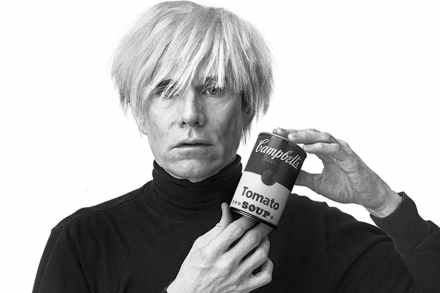
In 1983 I was sent to New York to interview Johnny Rotten and I took the opportunity to call on Andy Warhol. The Factory was in the phonebook; and the receptionist, Brigid Berlin, said that Andy was in Milan but would be back the following afternoon. ‘You better give him half an hour. Why don’t you come over at 2.30 p.m.?’ So I did. I’d never been part of that New York scene, but wanted to meet someone who had helped me develop my own freedoms almost 20 years earlier. According to Blake Gopnik’s book, I should have found a studio that was triple-locked, with an anxious artist hiding inside. But it wasn’t remotely like that.

Where’s Coco?

From our UK edition

Anne de Courcy, an escapee from tabloid journalism, has become a polished historian of British high society in the 20th century. Her book The Viceroy’s Daughters, an account of the three daughters of Lord Curzon, marked her transition from debutante-itis to something grittier. It was followed by a biography of Diana Mosley, published a few months after Mosley’s death. When I questioned Diana about it she told me that her previous biographer, Jan Dalley, had been frightened to ask anything too personal, but that De Courcy had been robust and unafraid to probe.

More scenes from my life with Francis Bacon

From our UK edition

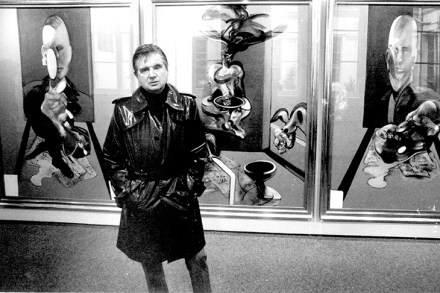
The case of Michael Peppiatt is a curious one. He first met Francis Bacon when he was an undergraduate at Trinity Hall, Cambridge, and visited Bacon for a student magazine. Something clicked and Bacon became his sugar daddy, immediately and for ever, though Peppiatt has said that no sex was involved. One can see what Peppiatt got out of Bacon: not cash per se, but many opportunities for money, an entrée to the great art world, a raison d’être for his pen, as well as free entertainment on a lavish scale. This he acknowledges gratefully. But what Bacon got out of Peppiatt is never quite clear. It certainly helped that Peppiatt was young, bright, and could match Bacon’s drinking. He must also have been attractive in an obliging, even submissive way.

Russian royalty

From our UK edition

It is not as surprising at it sounds that two of the greatest collectors of modern art should have been merchants from 19th-century Moscow. If Russia managed to contrive a semblance of western civilisation in St Petersburg, it was by virtue of being directly under the steely Tsarist eye. Moscow on the other hand, half lost in the shadows of barbarism, was more wacky and roguish. It liked to think it was home to the true Russian spirit, which artistically meant gaudy folk art, icons, sad music and weird architecture. However the tiny rich class were desperate for the oxygen of enlightened humanist society which they found, like their St Petersburg compatriots, in Paris (it must always be remembered that Diaghilev’s Ballets Russes could never perform in Russia).

Pondering the flowers

From our UK edition

This new book, from the NYRB’s publishing arm, is in a non-fiction genre I love: short entries dedicated to an integrating purpose; approaching a subject via concentrated, separated stabs rather than extended unfolding text. In philosophy this is called the aphoristic technique. In wider literature, it can range from the concise notebook to prose poetry. It is a genre whose masterpiece in English is Cyril Connolly’s The Unquiet Grave, but it is more often found in continental literature; and the French especially have made it their own, where its progenitor is usually said to be Baudelaire’s Le Spleen de Paris, described as prose poems and published in 1869 after the author’s death.

Free-wheeling flakiness

From our UK edition

Early on in his introduction of nearly 60 pages, Owen Hatherley writes: ‘I find the Britain promised by Brexiters quite terrifying — xenophobic, paranoid, enclosed, pitifully nostalgic, cruel. But in much of the country that landscape never went away.’ One’s heart sinks. This isn’t even polemical; it’s just silly. The introduction, subtitled ‘What is a European city?’, continues to push the line until something like a position is reached: Britain is awful, Europe is wonderful. I was reminded of certain of my French, Italian and German friends who are excited by the new horizons of living anywhere but in their own homelands, which they find every bit as stultifying as Hatherley does his.

Beyond Timbuktu

From our UK edition

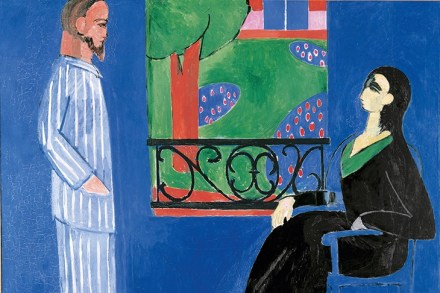
Every so often a monster comes along. Here’s one — but a monster of fact not fiction, over 700 pages recounting the French expedition from Dakar to Djibouti 1931–33. It doesn’t matter that this travel diary — part field study, part confessional, first published in 1934 — has arrived so late for an English readership. It comes with the additional resonance of a lost world. Michel Leiris was an exceptional man, a Parisian surrealist writer and protégé of Max Jacob. He was also close to Picasso, with whom he shared an interest in primitive art, shamanism and Mithraism; and he married a girl who was the illegitimate daughter of the wife of Daniel-Henry Kahnweiler, Picasso’s dealer.

The books the Nazis didn’t burn

From our UK edition

For one who has, since boyhood, regarded the secondhand bookshop as a paradise of total immersion, it is quite shocking to discover Albatross, an unknown imprint from the English literary past. Before Albatross there was Tauchnitz, the Leipzig firm which for 100 years cornered the market in English language books outside the territories of the British Empire and the USA. One often comes across Tauchnitz and I have two of its editions: a Thomas de Quincey, with a stamp from a circulating library in Lausanne; and a Ruskin, with one from a British club in Portugal. I only keep them as curiosities, because normally I avoid Tauchnitz editions: cheap boards with awful print on awful paper.

From Balzac to the Beatles

From our UK edition

All biography is both an act of homage and a labour of dissection, and all biographers are jealous of their subjects. Most keep it cool, but some like it hot and have created a distinct category in which jealousy becomes murder followed by necromancy: the one they hug is asphyxiated — but lo! — they breathe their own air back into it. Sartre’s book on Jean Genet is such a work, as are Brigid Brophy’s on Ronald Firbank and Roger Lewis’s on Anthony Burgess. Claude Arnaud’s on Jean Cocteau is yet another. Its approach is intensely romantic. Everyone is heaving in lurid colours.

Nazis and narcotics

From our UK edition

Norman Ohler is rather hard on the Nazis, for compared to what our little group got up to in the late 1960s and 1970s, they were shrinking violets in the drugs department. We smoked cannabis, ate opium and sometimes took strong LSD; lines of uncertain content went up nostrils; and we swallowed countless uppers (speed) and downers (tranquillisers, sleepers for looning on). Speed was amphetamine sulphate. Benzedrine, Dexedrine, Methedrine were the three original brands, in rising strength. Soon there were many other names, including slang: Desoxyn, Durophet, Durophet-M (speed with Mandrax), French Blues, Purple Hearts, Black Bombers. Many were prescribed by doctors who didn’t regard them as outrageously dangerous.

A masterpiece of mesmerising beauty

From our UK edition

In the beginning was Fellini’s La Dolce Vita, pleached and Proustian, released in February 1960. This was followed soon after, at Cannes in May 1960, by Antonioni’s L’Avventura, which invented slow cinema by taking a Hitchcock premise through a maze with no end. In June the following year, Last Year in Marienbad was released, in which Alain Resnais and Alain Robbe-Grillet entered the very cauldron where time and experience are formed out of stillness and silence. And Fellini’s 8½, appearing in February 1963, deployed all this and decided at the last (he had two endings) to return us to easy affability, albeit in a circus ring (the alternative, unused ending took his actors into death on an eerie Marienbad train).

Gay tittle-tattle

From our UK edition

The Comintern was the name given to the international communist network in the Soviet era, advancing the cause wherever it could. The ‘Homintern’, a wry play on that, was first coined at Oxford by Maurice Bowra and gladly passed on by Cyril Connolly, Auden and others, inferring an international homosexual network of mutual interest and support. Gregory Woods, in his very first sentence, defines it thus: ‘The Homintern is the international presence of lesbians and gay men in modern life.’ A few pages later he says: ‘There was no such thing as the “Homintern”.’ So which is it to be? And what does Woods mean by ‘modern life’?

The Mann who knew everyone

From our UK edition

Thomas Mann, despite strong homosexual emotions, had six children. The two eldest, Erika and Klaus, born in 1905 and 1906 respectively, were delinquent almost from the word go: shoplifting, prank phone calls, trickery on old ladies, special schools. They were also artistically precocious; the frantic pair took German Expressionist cabaret to Berlin, Paris, Amsterdam, London, New York and Moscow. By the time Klaus reached 21, he and his sister had frolicked right round the globe. Klaus never stopped travelling, and this biography is a feverish sequence of arrivals and departures. Erika was more the performer, Klaus more the writer. Both were openly gay. Klaus explored his homosexuality in his first book, published in 1925, and in many works thereafter.