Amelia Butler-Gallie

Carl Jung, the man behind the psychobabble

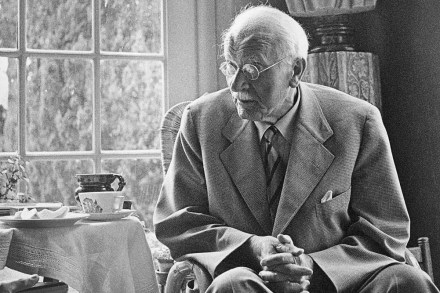
A surefire way to alienate people is to talk about the dream you had last night. In polite society, we’re generally told nobody cares about the goings-on of our subconscious and that it’s probably best to keep quiet. Nothing, then, quite prepares one for the oneiric delights to be found in Jung’s Life and Work, a new edition of the collected interviews between Professor Carl Gustav Jung, the renowned Swiss psychiatrist and founder of modern analytic psychology, and his former student, Aniela Jaffé. The tone is set in the very first interview, where Jung recalls a childhood dream involving a gigantic “erect phallus” reaching “almost to the ceiling” equipped with an all-seeing eye and seated on a plush golden throne.
carl jung

Thomas Pynchon’s Shadow Ticket is transcendent and exhausting

And just like that, after an excruciating 12-year hiatus, the literary world’s answer to Harry Houdini is back. Thomas Pynchon, that notorious recluse, has resurfaced with Shadow Ticket, a tricksy Prohibition-era detective caper that is by turns exhilarating, exasperating and inimitably Pynchonian. A new Pynchon novel is simultaneously a reviewer’s wet dream and feverish nightmare. There’s so much to unpack, you’re never going to do it full justice after a single reading. This is, after all, the writer famous for Byzantine, convoluted plots which zigzag their way across entire continents, ideologies and historical epochs, brimming with mysterious entities and delightfully nutty characters. Shadow Ticket is no different.

thomas pynchon shadow ticket

How F. Scott Fitzgerald anticipated our modern age

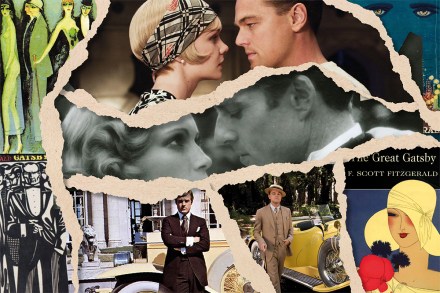
It has never been easier, or less rewarding, to be a Great Gatsby bore. As the book that is frequently, and speciously, cited as the Great American Novel — perhaps because, at around 180 pages, people have bothered to read it — turns 100 this month, it has become the byword for a certain kind of middlebrow literary appreciation. Even people who are barely aware of the novel know certain images and lines, such as the omnipresent lighthouse, “So we beat on, boats against the current, borne back ceaselessly into the past” and the whole Ralph Lauren-esque visual aesthetic that F. Scott Fitzgerald appeared to anticipate. The novel, published in April 1925, has achieved the impossible by breaking free of the page and reverberating across the world in a kind of endless meta-narrative.

Gatsby

Inside Thomas Pynchon’s most underrated novel

Atop the Almaden Tower in downtown San Jose — the world headquarters of Adobe Systems Inc. — sits a singular art installation. Four amber wheels rotate every few seconds in a seemingly innocuous and frankly nonsensical digital display. The installation, known as the “San Jose Semaphore,” is the brainchild of the data-driven media artist Ben Rubin and first appeared — or began transmitting — in August 2006 to the mass bamboozlement of passersby. What was going on, they cried? Was it that most millennial of things — a sign? For those less likely to be beguiled by some concealed piece of chicanery, the circles were little more than frivolous decoration, another example of Adobe splashing the cash on some geometric garnishing.

Pynchon

The Exchange will delight anyone seeking an impossible story made possible

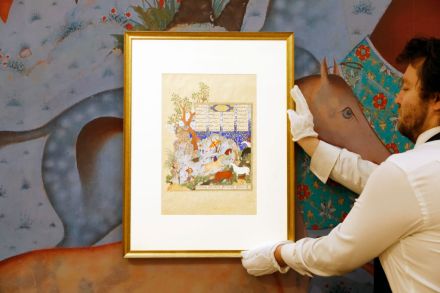
“I have been instructed to tell you that what you are proposing is entirely impossible. Nevertheless, in Iran, even the totally impossible becomes possible at times.” Such was the mysterious riddle that confronted the English art dealer Oliver Hoare as he sat across from an Iranian contact in Paris in 1992. He had just presented a madcap plan: to reunite the state of Iran with one of its most prized but long-lost manuscripts.   The Shahnameh of Shah Tahmasp is an illustrated epic poem comprising 50,000 rhyming couplets. Completed in the mid-sixteenth century, this “book of Kings” is one of the most exquisite examples of Islamic art and poetry ever to have been produced.

Twenty-five years of Fight Club and American Beauty

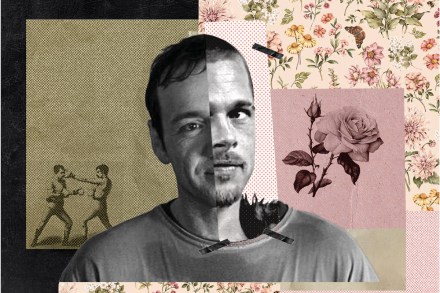
Sound the alarm: hypermasc beefcakes all over the world have an anniversary to celebrate! Beware women, children and the effete, this year marks the twenty-fifth birthday of both David Fincher’s notorious psychodrama Fight Club, adapted from the debut novel by Chuck Palahniuk, and Sam Mendes’s equally notorious American Beauty, which has gone from Oscar-winning acclaim to being a punchline on chat shows and animated comedies alike. If you haven’t seen Fight Club, shame on you. Go to Hulu and binge away. Revel in its anarchic ludicrousness and head-to-head carnage; inhale the feculent atmospheres of Lou’s Tavern and Tyler’s dilapidated mansion house, all tied together through Fincher’s iconic desaturated color palette. It is all too easy to taste the blood, sweat and tears.

Fight Club

The world needs more Lars von Triers

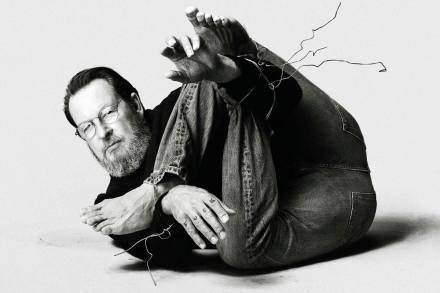
In 2009, cinema audiences were faced with a choice between two talking-fox pictures. The first, most obviously user-friendly option was Wes Anderson’s Roald Dahl adaptation Fantastic Mr. Fox, with the eponymous reynard voiced by none other than George Clooney. If your tastes verged on the darker and more perverse, the Danish director Lars von Trier had a treat in store for you with his controversy-laden psychodrama Antichrist. In one key moment, the male protagonist played by Willem Dafoe is approached by a mangy-looking fox — voiced, uncredited, by Dafoe himself — that declares, in maniacal bass tones, “Chaos reigns!” You wouldn’t get that with George Clooney.

von trier

The peculiar appeal of ‘sad-girl literature’

A stack of books balances on a fluffy white Michael Aram bedspread: Ottessa Moshfegh’s My Year of Rest and Relaxation, Lisa Taddeo’s Animal, Candice Carty-Williams’s Queenie and Lily King’s Writers & Lovers all touted as “sad-girl lit-fic book recs.” Lana Del Rey’s lugubrious melodies play on repeat; “I’m pretty when I cry” and “baby blues / baby blues,” in particular, are favored lyrics. This is a specific quarter of TikTok (or BookTok), the lachrymose world of “sad-girl lit.

sad-girl

Devil in the detail

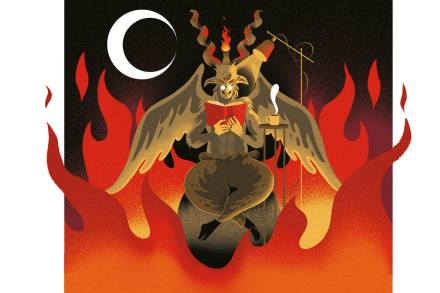
When I was offered the chance to review two new books about the Devil, I thought, “what fun!” I wouldn’t describe myself as a particularly diabolical person, but as someone whose deep love of Paradise Lost has made me, as good old William Blake didn’t quite put it, “of the devil’s party while very much knowing it,” I rubbed my hands together in glee at the prospect of getting down and dirty with Old Nick. Not, you understand, that my purely literary interest can begin to compare to the “Satanic Panic” outbreak that gripped the imaginations of middle America in the late 1980s and 1990s. “Satanic cults! Every hour, every day, their ranks are growing!

devil

Suburbia’s irredeemable reputation in the American canon

"My God, the suburbs!” John Cheever, the short-story writer who has rejoiced in the nickname “the American Chekhov,” had what can only be described as ambivalent feelings about the twentieth-century housing developments that grew up on the outskirts of major cities. He said of them that “they encircled the city’s boundaries like enemy territory and we thought of them as a loss of privacy, a cesspool of conformity, and a life of indescribable dreariness in some split-level village where the place name appeared in the New York Times only when some bored housewife blew off her head with a shotgun.” Cheever was not wholly consistent himself.

suburbia

Was the psychedelic art movement worth it?

If modern America were ever to have its own “the Great God Pan is Dead” moment, it would arrive in the form of Popeyes and KFC celebrating 4/20 as a marketing boon. After all, what better way is there to signal the end of counterculture than by chomping down on some discounted fried chicken? Devotees of the “4/20” marijuana festival, commemorated globally each year, have bemoaned a string of corporate sponsorship deals which are, they sniff, at odds with the event’s hallowed “hippie” origins. So when San Francisco decided earlier this year to cancel its annual 4/20 celebrations on Hippie Hill in Golden Gate Park, citing city-wide budget cuts and a lack of lucrative brand deals, the whole affair was a little on the nose. Come on, man!

psychedelic

Gabriel García Márquez’s posthumously published novel is unconvincing

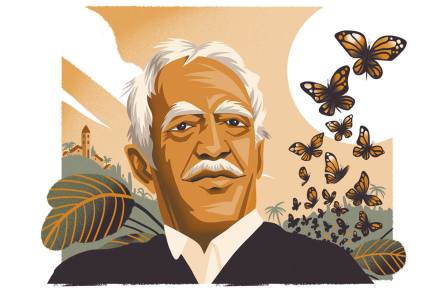
Love and loneliness. Loneliness and love. These two motifs, these two codependent deities, underpin all of grand maestro Gabriel García Márquez’s fiction — from his bewitching magnum opus One Hundred Years of Solitude to the tumultuous romance of Love in the Time of Cholera. His final sultry, sun-soaked and unexpected work, Until August, which he attempted to complete while struggling with dementia, is a continuation of these oeuvre-defining themes. It’s a damn shame it’s half-baked. The circumstances under which Until August came to be written might, themselves, one day make a rather droll short story, perhaps even a sparky novella.

Until August

Reconsidering Paul Thomas Anderson’s Inherent Vice

Much has been made in the Thomas Pynchon Reddit community — a crazed bunch — of the author’s rumored cameo appearance in Paul Thomas Anderson’s 2014 adaptation of his 2009 novel, Inherent Vice. Photos circulate in a frenzied online meta conspiracy: is he this old man? That guy in the hat? Famously reclusive, Pynchon has barely been photographed in real life. His only acting credit was when he voiced himself on The Simpsons, while his cartoon likeness appeared with a paper bag over its head. Pynchon revels in the oxymoron of the anonymous celebrity and his fans simply can’t get enough. He found the right director to bring his work to the screen.

Inherent Vice

The peculiar American attitude toward death

Dying sensibly has always eluded Americans — from Elvis to Houdini — and that’s before you even get to the funeral part. In fact, in America, something peculiar has occurred over the last century. Traditional obsequies have fallen out of favor as Americans increasingly opt for “anything but” the conventional when it comes to final resting places: that is, no more six feet under. According to the National Funeral Directors Association (NFDA), the majority of Americans now choose cremation, with the rate expected to surpass 80 percent by 2045. Ecofriendly departures — think hemp coffins or ashes strewn over a living coral reef — are also becoming more popular; 60 percent of respondents to one recent survey expressed an interest in “green funeral options.

death

Fleshing out family history: Ancestry, by Simon Mawer, reviewed

From our UK edition

DNA test kits may have been all the rage in recent years, but how much can they really tell us about our ancestors? Cold, hard data is, by definition, neither sentimental nor sympathetic. Or so says Simon Mawer, whose latest novel asks where, in our austere conception of the past as a graveyard of artefacts, bones, facts and figures, are the personalities of the dead? ‘Where is the flesh and blood?’ Mawer is well known for expertly pillaging the treasure chest of history to serve his fiction. His previous forays into the past, such as the second-world-war-era and Man Booker-shortlisted The Glass Room of 2009, struck an admirable balance between meticulous historical accuracy and deeply original imaginative character studies.

Homage to the greatest 18th-century poet you’ve never heard of

From our UK edition

If you were to glance only briefly at the title of the Irish poet Doireann Ní Ghríofa’s prose debut you might be forgiven for assuming that A Ghost in the Throat was a story about demonic possession — and you wouldn’t be entirely wrong. Demonic? No. Possession? Certainly. This spectral, arresting and at times disorientating autofiction is, most simply, the story of an author and her muse. But it isn’t just a story. Its fusion of historical biography, memoir and literary criticism makes it an intoxicating experiment in genre while also a heady and sensitive read. And that seems to be Ní Ghríofa’s modus operandi.