Andrew Lycett

The short, restless life of Robert Louis Stevenson

From our UK edition

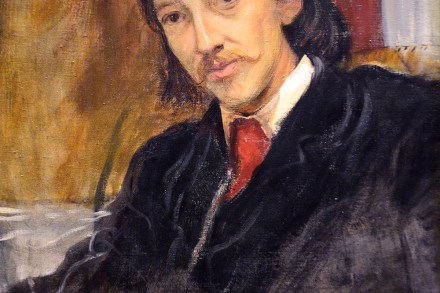
The discriminating Argentinian novelist Jorge Luis Borges once revealed his fondness for ‘hourglasses, maps, 18th-century typography, etymologies, the taste of coffee, and the prose of Stevenson’ – a list that was quirky and eclectic, adjectives that neatly encapsulate Robert Louis Stevenson himself. The story has often been told – but it’s a good one – of how the wiry, velvet-jacketed Stevenson emerged from Edinburgh’s haute bourgeoisie to become a hugely successful writer, before ending his shortish, sickly life on the Pacific island of Samoa in 1894, a revered expatriate married to a wilful American woman a decade his senior.

Survival of the cruellest in 16th-century Constantinople

From our UK edition

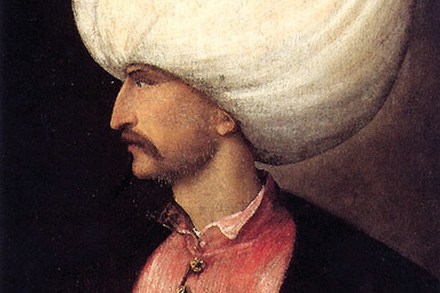
The 16th-century Ottoman ruler Sultan Suleyman liked to impose himself on foreign monarchs from the start, always beginning official letters with the uncompromising assertion: ‘I am the great lord and conqueror of the whole world.’ In this sparkling account of his middle years, the second in an ambitious three-volume biography, Christopher de Bellaigue never actually describes Suleyman as ‘the magnificent’, his most widely known epithet. But he certainly conjures up his awesome presence at home and abroad in animated prose saturated with vivid colour and detail. So, in 1538, we encounter the sultan in his mid-forties, a swan-necked figure in a white lozenge-shaped turban, riding to war in the Balkans.

Paul Wood, Ross Clark, Andrew Lycett, Laura Gascoigne and Henry Jeffreys

From our UK edition

33 min listen

On this week’s Spectator Out Loud: as Lebanon reels from the exploding pagers, Paul Wood wonders what’s next for Israel and Hezbollah (1:24); Ross Clark examines Ireland’s low-tax project, following the news that they’re set to receive €13 billion… that they didn’t want (8:40); Reviewing Ben Macintyre’s new book, Andrew Lycett looks at the 1980 Iranian London embassy siege (15:29); Laura Gascoigne argues that Vincent Van Gogh would approve of the new exhibition of his works at the National Gallery (22:35); and Henry Jeffreys provides his notes on corkscrews (28:01).  Produced and presented by Patrick Gibbons.

The SAS explode from the shadows in six days that shook Britain

From our UK edition

Ben Macintyre has a knack of distilling impeccably sourced information about clandestine operations into clear, exciting narrative prose. His latest book, about the April 1980 Iranian embassy siege in London, starts as it means to go on – with a snapshot of seven Range Rovers, two Ford Transit vans and two furniture lorries pulling out of Bradbury Lines, the then headquarters of the Special Air Service (SAS) in Hereford. Lying low inside were 45 soldiers and ‘enough weaponry to fight a medium-sized war’. Each man carried a submachine gun, mostly the ‘reliably lethal’ Heckler & Koch MP5, which fires 13 rounds a second, with four 30-round magazines of 9x19mm parabellum bullets.

Andrew Lycett: The Worlds of Sherlock Holmes

From our UK edition

38 min listen

My guest on this week's Book Club podcast is Arthur Conan Doyle's biographer (and historical consultant to the new BBC TV programme Killing Sherlock) Andrew Lycett. Introducing his new book The Worlds of Sherlock Holmes: The Inspiration Behind the World's Greatest Detective, Andrew tells me about the vexed relation between the great consulting detective and his creator, and the extraordinary afterlife of this apparently ephemeral creation.

Keeping a mistress was essential to John le Carré’s success

From our UK edition

Adam Sisman is sensitive to the charge that a book about an author’s unknown mistresses is simply an exercise in prurience. ‘I am not one of those who believes sex explains everything,’ he declares defensively. An affair with the wife of a close friend led to the ménage depicted in The Naive and Sentimental Lover But this admirably concise volume justifies its title. Sub-themes such as the practice and ethics of biography, and the emotional toll taken by spying, run through it. But its core relates how, when writing his 2015 life of David Cornwell (John le Carré’s real name.) Sisman was prevailed upon to delete details of his subject’s many extramarital affairs.

An exposé of drug smuggling and terrorism reads like a first-rate thriller

From our UK edition

The crucial moment in this vivid exposé of the murky world of transnational crime comes in 2015. Mustafa Badreddine, one of two Lebanese Shia cousins who for three decades had led the deadliest Iranian-linked terrorist network in the Middle East, was finally indicted by a UN special tribunal investigating the assassination of the Lebanese prime minister Rafic Hariri a decade earlier. After an extraordinary career of mayhem, Badreddine had spent the previous three years leading an elite Hezbollah militia shoring up President Bashar al-Assad’s regime. But the tide had turned, and in July 2015 Qasem Soleimani, the commander of the Iranian Quds force in Syria, secretly flew to Moscow to beg for Russian military support.

Poetry anthologies to treasure

From our UK edition

Francis Palgrave, the founder of the Public Record Office, didn’t like having his version of the past parcelled in neat gobbets. In his History of Normandy and England, he described anthologies as ‘sickly things’, adding that ‘cut flowers have no vitality’. His son, Francis Turner Palgrave, differed fundamentally, and, with Alfred Tennyson’s help, gathered what is still the greatest collection of English lyric poetry, The Golden Treasury, which sold 10,000 copies in six months after its publication by Macmillan in 1861 and, according to Clare Bucknell in this delightfully engaging survey of verse anthologies, had shifted 650,000 copies by 1939 and must surely now be hitting the million mark.

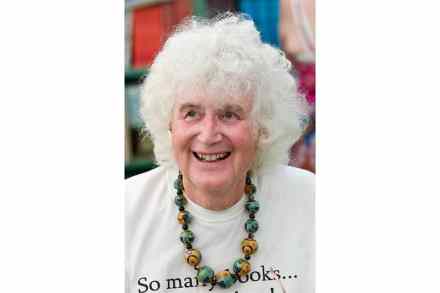
Jan Morris’s ‘national treasure’ status is misleading

From our UK edition

Almost two years after the death of Jan Morris, the jaunty travel writer and pioneer of modern gender transition, her first post-humous biography has arrived. (I follow Paul Clements in using the feminine pronoun throughout.) It is lively and well written, but it’s not the finished product. It lacks access to the private papers of its subject and her wife Elizabeth. That extra layer of insight into a fascinating but elusive personality must doubtless await the authorised life by Sara Wheeler. In the meantime, Clements deserves plaudits. He has worked his personal knowledge and existing sources well.

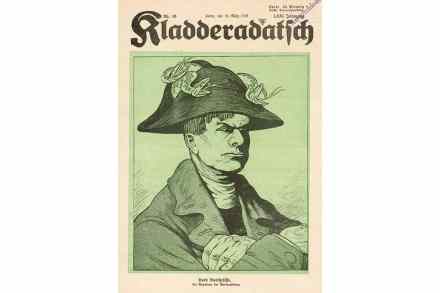
Lord Northcliffe’s war of words

From our UK edition

‘What a man,’ enthused Wilhelm II from exile in 1921. ‘If we had had Northcliffe we would have won the war.’ The Kaiser wasn’t describing a general or politician but a not- so-humble newspaperman, Lord Northcliffe, the pugnacious proprietor of the Times, Daily Mail and a host of other print publications, who had ended the Great War pumping news into Germany as the British government’s director of propaganda in enemy countries. Northcliffe brought to that post the drive he had shown building up his media empire over three decades.

The fuss over Mary Seacole’s statue has obscured the real person

From our UK edition

Who would have thought that a statue of a West Indian-born nurse in south London has a role in today’s culture wars? Unveiled in 2016, it stands three metres tall outside the great teaching hospital, St Thomas’, and depicts Mary Seacole, an extraordinary Creole woman who was loved and renowned for giving succour to British troops, first in her native Jamaica and then in Crimea during the bloody and prolonged war with Russia of 1853-6. It is controversial on two main counts. First, it stands on hallowed ground at the hospital where Florence Nightingale pioneered nursing as a profession after returning from Crimea.

Under deep suspicion in Beirut, Kim Philby still carried on regardless

From our UK edition

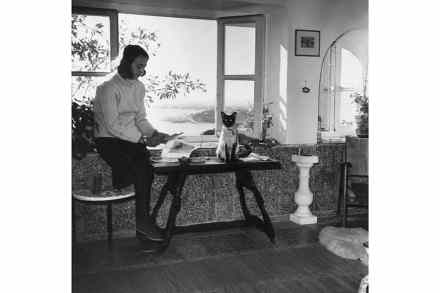
The story of the Cambridge spies has been served up so often that it has become stale — too detailed, too predictable, too firmly etched in Cold War monochrome. So it’s a good idea to seek another angle, through the warmer lens of a love affair involving its main protagonist Kim Philby and his wife Eleanor. It humanises the tale, particularly as it draws on a vivid and neglected personal source — The Spy I Loved— Eleanor’s own book centred on their romance in the Lebanese capital, Beirut. That was where Philby was despatched in 1956 to play out the penultimate act in a drama stretching back to the 1930s, when he and his fellow Cambridge students were recruited to spy for the Soviet Union.

The cosmopolitan spirit of the Middle East vanished with the Ottomans

From our UK edition

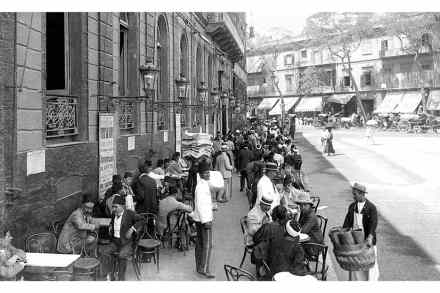
One of the most depressing vignettes in Michael Vatikiotis’s agreeably meandering account of his cosmopolitan family’s experiences in the Near East is when he, a former journalist with a sharp eye for detail, visits El Wedy, close to the Nile south of Cairo, where just over a century ago his great-uncle Samuele Sornaga built a hugely successful ceramics works employing 200 people. The factory no longer exists. It was nationalised, privatised, closed, and is now a vast construction site. After being harassed and prevented from taking photographs, Vatikiotis discovers it’s being developed as a resort — not for general tourists, mind, but for the army, whose presence looms menacingly everywhere.

Not so dryasdust: how 18th-century antiquarians proved the first ‘modern’ historians

From our UK edition

Antiquaries have had a bad press. If mentioned at all today, they are often derided as reclusive pedants poring over details of manuscripts and shards with little relevance to the wider world. As recently as 1990, the respected ancient historian Arnaldo Momigliano skewered their pretensions when he described them as ‘interested in historical facts without being interested in history’. Rosemary Hill, the biographer of Augustus Pugin, the architect of Gothic revivalism, which owed much to antiquarianism, has other ideas.

‘Britain’s Dreyfus Affair’: a very nasty village scandal

From our UK edition

It has been described as Britain’s Dreyfus Affair — the wrongful imprisonment in 1903 of a half-Indian solicitor George Edalji in the Midlands and the refusal of the authorities to pay him compensation, even though he was later pardoned. In a case tainted by racism, class prejudice and plain stupidity, Edalji was accused of mutilating horses, sheep and cattle, and then forging letters to implicate others, thus creating mayhem in the village of Great Wyrley where he lived, in a mining district in Staffordshire. His cause was taken up by a home-grown Zola in the form of Sir Arthur Conan Doyle who was happy to replicate the investigatory skills of his famous fictional detective, Sherlock Holmes.

War was never Sir Edward Grey’s métier

From our UK edition

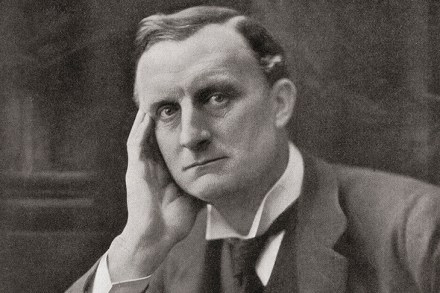
This meaty but easily digested biography pivots around the events either side of that fateful evening of 4 August 1914 when Britain’s ultimatum to Germany over Belgium ran out and Sir Edward Grey memorably remarked that the lamps were going out over Europe. As foreign secretary for almost a decade before that, Grey had deftly orchestrated a web of alliances designed to keep the peace in Europe, and Britain the dominant global power. But war and its attendant carnage unravelled his life’s work, leaving him a nervous wreck. He hung on in office until 1916 when the new prime minister David Lloyd George unceremoniously swept him out.

Death in the Cape – the lonely fate of Mary Kingsley

From our UK edition

What compelled three well-known British writers to leave their homes and travel 6,000 miles to participate in a nasty late-19th-century conflict in the far-off South African veldt? This question lies at the heart of Sarah Lefanu’s excellent analysis of how Rudyard Kipling, Arthur Conan Doyle and Mary Kingsley found themselves following the flag in Britain’s last great imperial war. Her book starts with concise biographical introductions to these protagonists, up to the start of what is still widely known as the Boer War in 1899. We get the familiar Kipling odyssey from Bombay, through fostering in the ‘House of Desolation’ in Southsea to journalism in Lahore. Marriage took him to Vermont, where he started a family and fine-tuned his thinking on Britain and empire.

A page-turning work of well-researched history: The Mountbattens reviewed

From our UK edition

He would want to be remembered as the debonair war hero who delivered Indian independence and became the royal family’s elder statesman. But something went wrong for Lord Louis Mountbatten. Andrew Roberts anticipated many modern historians when he called him ‘a mendacious, intellectually limited hustler’. Field Marshal Gerald Templer told him to his face he was so crooked that if he swallowed a nail, he’d shit a corkscrew. As reputations go, the turnaround has been extraordinary.

Amusing Queen Victoria

From our UK edition

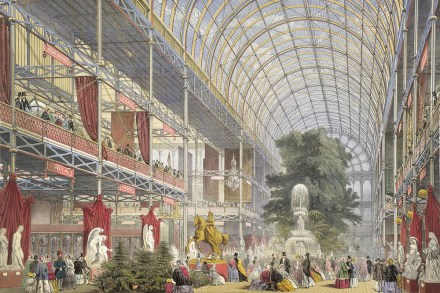
The American dwarf ‘General’ Tom Thumb is only mentioned once in Lee Jackson’s encyclopaedic survey of Victorian mass entertainment, and then as an example of an attraction at the rebuilt Crystal Palace in Sydenham in 1864. But he is the star of John Woolf’s breezy personality-driven history of the ‘freak’ show, an intriguing sub-set of that wider field of leisure activity. Tom is first introduced there 20 years earlier when, aged six and standing just 25 inches tall in red velvet coat and breeches, he performs before an enchanted young Queen Victoria in Buckingham Palace, together with his manager, P.T. Barnum.

Vive la libération!

We all have our favourite period of Parisian history, be it the Revolution, the Belle Époque or the swinging 1960s (the cool French version, with Jean-Paul Belmondo and Françoise Hardy). Agnès Poirier, the author of this kaleidoscopic cultural history, certainly has hers: the turbulent 1940s, which saw the French capital endure the hardships of Nazi occupation before throwing off this yoke and embracing freedom in every aspect — sexual, political and intellectual. Leading the way was that maligned couple, Jean-Paul Sartre, the philosopher, political activist and father of existentialism, and Simone de Beauvoir, the brilliant pioneer feminist, who was his life partner, if often errant lover.