Tom Williams

A study of isolation: The Late Americans, by Brandon Taylor, reviewed

From our UK edition

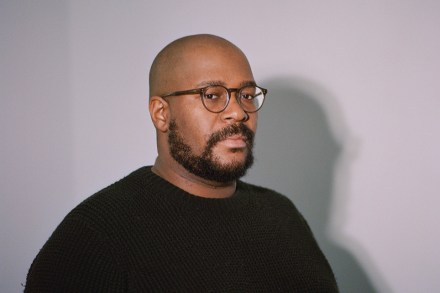
The Late Americans, Brandon Taylor’s second novel, follows the lives of a group of friends living in Iowa City over the span of a year. Early on, Seamus, a poet completing his master’s degree, imagines an ‘indifferent God... squinting at them as they went about their lives on the circuits like little automata in an exhibit called The Late Americans’, and this is a fine description of the novel. Each character is the focus of a chapter, and we watch as Seamus, Fyodor, Ivan, Timo, Noah, Bea, Fatima and Daw’s lives overlap, in bars, seminar rooms and dance studios, while they negotiate their place in a world determined by their race, class and wealth.
The lonely passions of Emily Hale and Mary Trevelyan

From our UK edition

This year marks the centenary of the publication of The Waste Land, the poem that made T.S. Eliot famous. His story is familiar and yet still surprising. What is well known: Ezra Pound whipped The Waste Land into shape, it was published in The Dial and then The Criterion, and it was quickly recognised as a poem of great importance. Eliot emerged as the poet of his age and his views on the ‘impersonality’ of poetry would dominate the next several decades of poetry and criticism. What is less well known is how Eliot’s work was shaped and influenced by a few key women. This dynamic is what Lyndall Gordon’s The Hyacinth Girl and Mary Trevelyan and Erica Wagner’s Mary & Mr Eliot set out to explore. Gordon has written about Eliot before.

The price of courage: On Java Road, by Lawrence Osborne, reviewed

From our UK edition

Lawrence Osborne’s novels are easy to admire. They tend to deal with characters trapped in morally questionable situations and their backdrops, from Macau to Greece, are often glamorous and exotic. Like any British novelist who deals with morality in foreign places, he gets compared with Graham Greene, but On Java Road, his sixth novel, owes much to Patricia Highsmith too. At its heart is a crime – the disappearance of a young woman in contemporary Hong Kong – but this, as much as anything, is a structural device on which to hang an examination of moral courage. What, Osborne asks, is required to protect democracy when doing so comes with great risk?

The year of living decisively: The Turning Point, by Robert Douglas-Fairhurst, reviewed

From our UK edition

We tend to think of turning points as single moments of change — Saul on the road to Damascus or Bob Dylan performing with an electric guitar. The change is identified as a discrete moment for which there is a distinct before and after. But this is not always the case and, as Robert Douglas-Fairhurst argues, a turning point can trace a wider arc and evolve over longer periods. These turning points are clear only in hindsight once the details have softened and the ripples outward have stilled. His latest book examines one such period in the career of Charles Dickens, surveying the artefacts of his life to track his development over the year 1851. This is not the first time Douglas-Fairhurst has applied his macro lens to Dickens.

Gay abandon: Filthy Animals, by Brandon Taylor, reviewed

From our UK edition

What does it mean to be a body in this world? It’s the question animating Brandon Taylor’s Filthy Animals. Our fleshy bodies and fragile minds complicate our experience of other people and isolate us from one another. As with Real Life, Taylor’s first novel, this short story collection displays his talent for rendering the precise inflection of a relationship while exploring the drama of the body. In ‘Potluck’, Lionel, a gay, black graduate student who has recently tried to commit suicide, meets Sophie and her partner Charles. Always ‘arriving at the moment just as it was ending and everyone was moving on’, Lionel connects with Charles and they sleep together.

Apostle of modernism: Clive Bell’s reputation repaired

From our UK edition

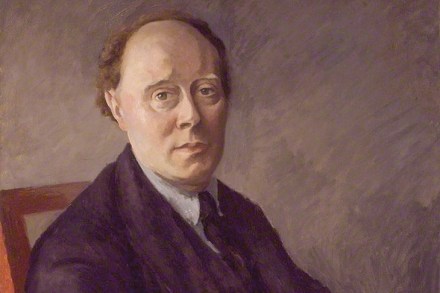
Clive Bell is the perennial supporting character in the biographies of the Bloomsbury group. The husband of Vanessa Bell, brother-in-law of Virginia Woolf and friend of Maynard Keynes and Lytton Strachey, he is often depicted as a witness to historical events rather than a participant in them, a sort of modernist Forrest Gump. At best he is a dilettante with good taste who didn’t quite belong with the intellectuals of Bloomsbury; at worst he is a womaniser with Nazi sympathies who took advantage of Virginia Woolf. In this useful book Mark Hussey lets him take centre stage and delivers a far more nuanced portrait. Bell liked to play up to his bad reputation — describing himself as ‘made for...

Wordsworth may have been partially eclipsed by his fellow Romantics, but his life was far from dull

From our UK edition

Between 1798 and 1807 William Wordsworth revolutionised English poetry, giving voice to the marginalised in poems such as ‘The Idiot Boy’ and anticipating modern psychology in his exploration of childhood. Today, his ability to articulate the connection between man and nature can still bring us up short, as in these lines from ‘Tintern Abbey’: ... And I have felt,A presence that disturbs me with the joy Of elevated thoughts; a sense sublimeOf something far more deeply interfused,Whose dwelling is the light of setting suns,And the round ocean and the living air,And the blue sky, and in the mind of man...

No longer the tough guy

From our UK edition

Only to Sleep is the third Philip Marlowe novel written by someone other than Raymond Chandler and while the authors of Perchance to Dream and The Black-Eyed Blonde both found freedom to play with Marlowe and explore his potential, it is Lawrence Osborne who has run the furthest with the source material. The novel opens in 1988, with Marlowe living in retirement in Baja, Mexico. He is 72, and enjoying a leisurely life in the sun, when he is asked to take on one last investigation into insurance fraud. A Reagan-era Marlowe unlocks an aspect that Chandler never considered.

Show business

From our UK edition

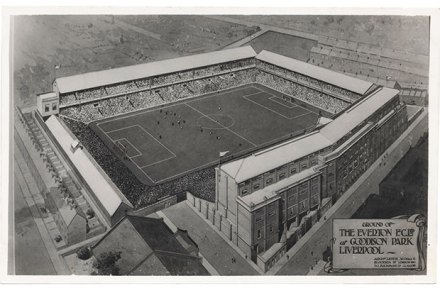
Sport has never held much appeal for me, so I rarely venture into stadiums. But I do appreciate their peculiar power: I was present at the 2012 Paralympics when George Osborne ill-advisedly turned up to award a medal while engaged in a campaign against disability benefits, and was roundly booed by the entire stadium. It was a transporting lesson in the joy of crowds and the proudest I have ever felt to be British. The stadium, ostensibly a facilitator of mass spectatorship, is actually a machine for producing such feelings. The Greeks were explicit about the ritualistic, community-forming function of their games, but it was the Romans who secularised the stadium and gave it its current form.