Andy Miller

The many shades of Pink Floyd

From our UK edition

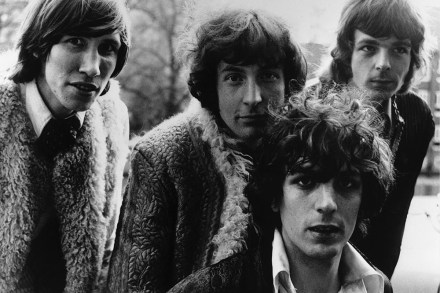
The English rock band Pink Floyd was founded 60 years ago in Cambridge. Reading two new books about them, it struck me how much time and place matter to their story. Now in their eighties, the surviving members remain a product of the milieu in which they were formed: middle class, semi-boho, comfortably numb. First they moved to London; then to the outer reaches of the cosmos. After that they circled the planet for decades, recollecting the emotions of their youth in both tranquillity and anger. You can take the multi-million-selling, emotionally repressed space cadets out of Cambridge… Broadly speaking, five different businesses have traded under the name Pink Floyd.

Across the universe – John and Paul are in each other’s songs forever

From our UK edition

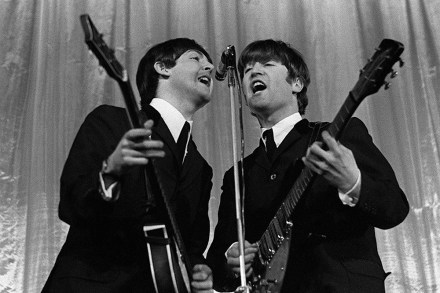
The world’s love affair with the Beatles began, arguably, with the release in October 1962 of the group’s first single ‘Love Me Do’, full-blown Beatlemania following hard on its Cuban heels. Will we still need them, will we still feed them, when they’re 64? The answer appears to be a resounding and remunerative yes. Beatlemania is for life, not just for Christmas. Beatles books increasingly obtain to the condition of poetry, in that more people want to write them than read them. Yet still they keep appearing in bookshops. And every time a new volume about the group is published – like all those of sound mind, I have loved their music, films and minutiae since childhood – I ask myself: what is different about this one? Will it be in the style or the substance?

The greatest British pop singer who never made a hit single

From our UK edition

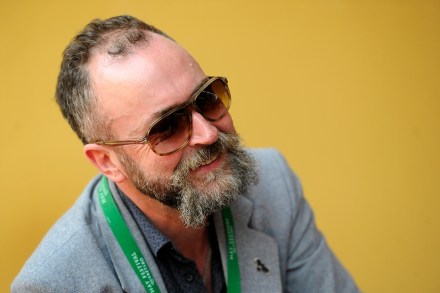
This is a magnificent book, regardless of whether the reader knows who it is about. I state this bluntly at the outset because I am keenly aware that many more people are ignorant of Lawrence’s career and achievements in the field of popular music than will be familiar with them; and that I will need to use up a significant number of words attempting to explain a figure who has repeatedly proven inexplicable to the public at large. So here goes... Has the indefatigably eccentric Lawrence led a charmed life or a cursed one? Lawrence Hayward may be the greatest British pop star never to have enjoyed a hit single.

The horror of finding oneself ‘young-old’

From our UK edition

It’s a familiar tale. Midway through life’s journey, Marcus Berkmann woke to find himself in a dark wood, where the right road was wholly lost and gone. Without a Virgil to guide him through the trials and torments of middle age, he composed a bestselling memoir based on his experiences, A Shed of One’s Own – not so much a divine comedy as a mildly amusing stocking-filler. In his latest book, Still a Bit of Snap in the Celery, he realises he has entered a new age category: the so-called ‘young-old’. It’s easy to picture the delight on the sleepy faces of many a grandparent this Christmas as they wake to discover young/old Father Marcus has visited again.

Why the Monkees were never considered ‘a real group’

From our UK edition

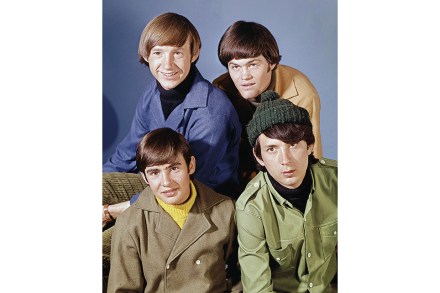
Among those of a certain age, no pop group of the 1960s provokes a debate quite like the Monkees – neither the Beatles, who now represent the establishment they once threatened to overturn; nor the Rolling Stones, whose shock value resides in a shameless career of cultural appropriation rather than the pursuit of sex, drugs and rock’n’roll; nor the Who, half of whose members died before they got old, but who kept touring regardless. These arguments about the Monkees can grow heated. The Rock and Roll Hall of Fame – the music industry-funded mausoleum located in Cleveland, Ohio – stubbornly refuses to recognise the contribution of ‘the Prefab Four’ on the spurious grounds that the hit-making combo was not ‘a real group’ but one put together for a television show.

A shaggy drug story: Industry of Magic & Light, by David Keenan, reviewed

From our UK edition

The Scottish writer David Keenan has published five novels in five years: This is Memorial Device (2017), For the Good Times (2019), Xstabeth (2020), last year’s magnum opus Monument Maker and now Industry of Magic & Light. At a comparatively modest 250 pages (Monument Maker weighed in at more than 800), it is practically a novella, or perhaps the sort of pamphlet one might once have picked up in a ‘head shop’ such as Compendium Books in Camden. The last book of Keenan’s I reviewed here I described as ‘either a cycle of novels or one vast fictional gallimaufry’ – to which I now approvingly add a third category. Industry of Magic & Light confirms the enterprise as a shaggy drug story: Then the main band came on.

What happens to rockers who don’t die young?

From our UK edition

What do the following individuals have in common: a political activist from Suffolk; a chartered psychologist from Oxfordshire, who enjoys playing golf at weekends; a funeral celebrant from Liverpool; the Birmingham-based chairperson of the Ladder Association Training Committee (‘When it’s right to use a ladder, use the ladder, and get trained to use it safely’); a pop star from LA? The answer is that all of them were pop stars, with the obvious exception of the pop star from LA who still is one. But even Robbie Williams used to be bigger.

David Keenan, literary disruptor in chief

From our UK edition

Near to the heart of this wild and labyrinthine novel — on page 516 of 808 — a character in a letter addressed to his future self within the reminiscence of a disfigured and imprisoned second world war sailor who will subsequently be transformed via sorcery, surgery and sex into a medium and prophet, eventually finding his way to Scotland where he will marry his own wife again, though possibly not in that order, states the following: My studies in magic and experimental psychology and of course alchemy suggested that the goal of magical practice, which had become the goal of art practice, was a reuniting of fractured selves across time… This feeling of union, of union with the past, the present and the future, in a place that was outside of time, well, it was palpab.

A true bohemian: the story of Nico’s rise and fall

From our UK edition

It is well established that artists are not always the nicest people. On the surface, the life of the model, actress and singer Christa Päffgen, aka Nico, would appear to bear this out. Being Nico didn’t mean being nice. The story of Nico’s rise and fall usually goes like this. She grew up in the rubble of post-war Berlin, emerging from adolescence as both stunningly beautiful and remorselessly ambitious. By the time she was 28 she had appeared on the cover of Vogue, starred in Fellini’s La Dolce Vita and sung with the Velvet Underground; she counted Alain Delon, Bob Dylan and Jim Morrison among her numerous conquests.

From cheap sex comedies to gritty brilliance: British culture comes of age

From our UK edition

As readers of a certain age will realise, Looking for a New England derives its title from ‘A New England’, a chart hit in early 1985 for the singer Kirsty MacColl. The song was written by Billy Bragg and opened side two of his first LP, 1983’s Life’s a Riot with Spy Vs Spy. Famously, Bragg pinched the opening couplet — ‘I was 21 years when I wrote this song, I’m 22 now but I won’t be for long’ — from Simon & Garfunkel’s ‘Leaves that are Green’ (1966), a winsome number that was itself a cover of Paul Simon’s acoustic original, which had first appeared on the folk singer’s rare 1965 solo album The Paul Simon Songbook.

From cheeky mop tops to long-haired holy men: The Beatles come of age in America

From our UK edition

In his latest book, the veteran pop commentator David Hepworth is concerned with satisfaction, its acquisition and maintenance. On record, satisfaction was something the Rolling Stones found notoriously hard to get — ‘an itch you could never quite scratch’. In reality, it was a commodity the groups spearheading the British invasion of the 1960s — the Stones, the Beatles, the Dave Clark Five and others — discovered to be plentiful in the USA. And as Hepworth notes, it was ‘Satisfaction’ itself, a huge hit in America, which delivered the very thing Mick Jagger bemoaned the lack of in the song.

If you spent a day at Action Park you took your life in your hands

From our UK edition

Before reading this book, the only thing I knew about Action Park was that it had lent its name to Shellac’s 1994 debut album At Action Park. Shellac, one of whose members is the notoriously contrarian music producer Steve Albini, play pummelling, hazardous, post-hardcore rock at ear-splitting volume and occasion much joy in anyone who chooses to attend one of their concerts, at which alcohol will be invariably consumed, pain endured and physical danger defied. After reading it, I was struck by how fitting the title was both to the music Shellac play and the circumstances under which they play it, never mind that the group claim it’s a coincidence and that the drummer came up with the name ‘because it sounded cool’.

Even in the Swinging Sixties, Ray Davies was feeling nostalgic

From our UK edition

At first glance, nostalgia does not seem like a subject much suited to exploration via the medium of the pop song; after all, this is the topic which inspired, at least in part, Ulysses and A la Recherche du Temps Perdu, two of the greatest and longest novels of the 20th century. What can one say in three minutes that hasn’t already been said in six volumes?On the one hand, we have such warnings from history as ‘Those Were the Days’ by Mary Hopkin or Terry Jacks’s implacably awful ‘Seasons in the Sun’, a rendition of Jacques Brel’s ‘Le Moribond’ which loses not just something but everything in translation.

Nick Lowe is that rare phenomenon — the veteran rock star who improves with age

From our UK edition

It is to Nick Lowe’s everlasting credit that in May 1977, a few months after David Bowie released the album Low, Lowe issued an EP entitled Bowi. Appearing on Stiff Records at the height of punk, the record contained ‘Marie Provost’ (sic), an account in two and a half minutes of the unhappy life and bizarre death of the silent movie star Marie Prevost: ‘She was a winner/ Who became the doggie’s dinner,’ chorused a heavenly choir of multi-tracked Lowes.

The riddle of Chapel Sands

From our UK edition

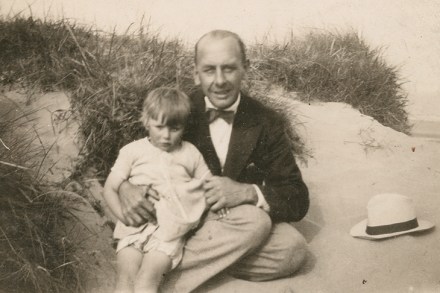
At first glance, Laura Cumming’s memoir On Chapel Sands begins with what appears to be a happy ending. On an autumn evening in 1929, a small child is snatched from a Lincolnshire beach. Her name is Betty Elston and she is three years old. The girl’s mother, Veda, is happy to let Betty play on Chapel Sands, not far from the family’s cottage, keeping an eye on her from a distance. Veda’s attention wanders; when she looks back the toddler has disappeared. Panic sets in and the police are called; Betty has been kidnapped. A few days later, however, the little girl is found safe and well in a neighbouring village, wearing a different set of clothes. She has not been harmed but she has no memory of where she has been or who took her off the sands.

… and The Comedy of Errors

From our UK edition

The phrase ‘Shakespeare comedy’ is an oxymoron with a long pedigree, one which perhaps stretches back to the late 16th century; and a running joke in Ben Elton’s Upstart Crow is that no one finds the comedies funny except their author, who thinks they’re hilarious. So it is a brave writer who, in a bid for laughs, bases a Shakespeare comedy on a Shakespeare comedy — in this case The Comedy of Errors. Fortunately, Marie Phillips has the wit, and sufficient wisdom, to pull it off. In Oh I Do Like to Be… Shakespeare is reborn in a grotty English seaside resort, not once but twice.

On the run from Corunna

From our UK edition

There is only one Andrew Miller. In the 20 years since his debut novel Ingenious Pain won both the James Tait Black Memorial Prize and the IMPAC Dublin Literary Award, he has written a series of books which have captured the imaginations of readers and critics alike. Oxygen (2001) was shortlisted for the Booker, while in 2011 Pure, the tale of a young engineer in pre-revolutionary Paris clearing the notoriously overstuffed Holy Innocents’ Cemetery, won the Costa Book of the Year award. Miller is read around the world; as a British author of (mostly) historical fiction that is both popular and literary, his peers are Hilary Mantel and, perhaps, Sarah Waters.

Clutching at straws

From our UK edition

For someone who is only 47 and has won a Pulitzer Prize, Andrew Sean Greer certainly knows how to get inside the head of someone who is 50 and hasn’t. Less is, among other things, a novel about the aches and pains of midlife, real and imagined; its hero, Arthur Less, turns 50 in the course of the book. By a happy coincidence — or one engineered by The Spectator’s literary editor — while reading Less I too marked my half-century. (Send no flowers.) Reader, I laughed and I cried; this is a hilarious, heart-warming and thoroughly midlife-enhancing book. Less is a failed novelist, or at least thinks of himself as one. When we first meet him, he is waiting to interview the famous science fiction author H.H.H.

The executor’s song

From our UK edition

In 1999, Patrick Hemingway published True at First Light, a new novel by his father Ernest. In his role as literary executor of the late writer’s estate, Patrick edited an unfinished manuscript of some 200,000 words down to a more marketable ‘fictional memoir’ of less than half that length. The book hit the bestseller lists but received largely negative reviews, most notably from Joan Didion in the New Yorker. ‘This was a man to whom words mattered,’ she wrote. ‘His wish to be survived by only the words he determined fit for publication would have seemed clear enough.’ To which the man charged with safeguarding Papa’s posthumous reputation responded, somewhat plaintively: I think it’s a very valid argument.

From Bradford to Belgravia

From our UK edition

In her debut novel, Adelle Stripe recounts the brief, defiant life of the playwright Andrea Dunbar. Dunbar was raised on the Buttershaw council estate in Bradford, one of eight siblings. Her first play, The Arbor, which premiered at the Royal Court in London when she was just 18, originated as a CSE English assignment. She was, according to one tabloid newspaper at the time, ‘a genius straight from the slums’. Rita, Sue and Bob Too (1982) was also a hit at the Royal Court and was subsequently filmed by the director Alan Clarke. Dunbar wrote one more play, Shirley, and died of a brain haemorrhage in 1990. She was 29.