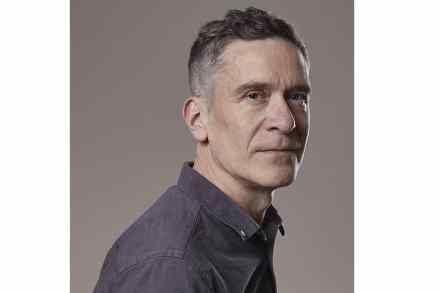
Keiron Pim

Keiron Pim, Miranda Morrison and Cosmo Landesman

From our UK edition

24 min listen

This week on Spectator Out Loud: Keiron Pim discusses what young Ukrainians can learn from the works of Joseph Roth (01:00), Miranda Morrison reflects on her decision to quit her job as a teacher (11:26), and Cosmo Landesman asks whether successful writers can be friends with less successful ones (19:39). Produced and presented by Oscar Edmondson.
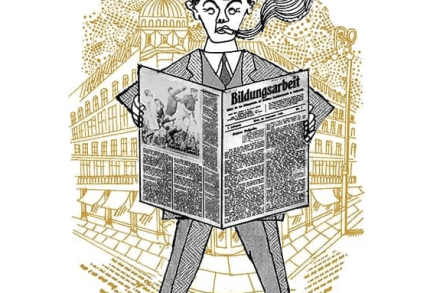
What young Ukrainians will learn from reading Joseph Roth

From our UK edition

As Russia’s assault on Ukraine continues, Volodymyr Zelensky’s ministry of education has just announced changes to the national curriculum that include removing almost all the Russian authors on the foreign literature syllabus. In last week’s Spectator, Svitlana Morenets revealed the new names: we see Robert Burns, whose inclusion may be a nod to Britain’s support during the conflict. Then there is Joseph Roth, a master of German prose, whose writing about interwar Europe speaks to Ukraine’s modern upheavals. Roth was born in 1894 in Brody, a town that now stands in western Ukraine but then lay in what was known as Galicia, the eastern Austro--Hungarian crownland.

Joy, fear and regret in contemporary Britain

From our UK edition

For two and a half years, as Britain adjusted from normality to the most disorienting collective trauma of our lifetimes, Will Ashon trawled the country for strangers’ stories. He wrote letters to random addresses, went hitchhiking, talked to the drivers and followed chance connections in pursuit of glimpses into other people’s lives. Once they had consented to speak, he asked some to tell him a secret and others to answer a question from a list. The resulting anonymous confessions, reminiscences, philosophical reflections and anecdotes were obtained via interviews, emails or voice recordings.

It’s not the dark hours the insomniac dreads but the clear light of day

From our UK edition

The insomniac may come to dread the night’s solitude, but the next day poses the greater challenge. That’s when you are obliged to walk among the rested population and pass for one of them, when in truth most interactions are conducted in a state of self-doubting confusion; when harnessing one’s thoughts is like grabbing at shadows; the right words, if found, won’t cohere into fluent sentences; and dark intrusions from the subconscious flicker up and distract from whichever simple task you’re attempting to complete. The novelist Samantha Harvey’s first memoir examines a year spent in this condition.

Satire and self-deprecation

From our UK edition

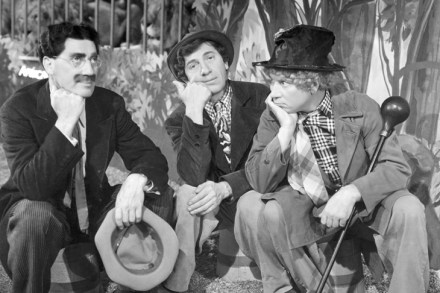
If you’re Jewish, or Jew-ish, or merely subscribe to the view that Jews should be trusted to recognise anti-Semitism rather than be accused of making false allegations to further their own malign agenda, the chances are you could do with a laugh right now. The resurgent far right’s threat feels frightening but expected, whether from torch-waving American mobs or European ethno-nationalists directing the restive masses’ anger towards the traditional target, presently embodied by George Soros.

In a dark forest

From our UK edition

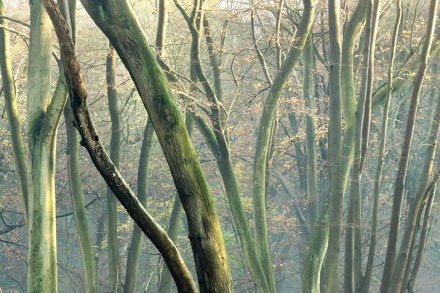
In his mid-forties Will Ashon realised he was adrift and confused, confronted by the situation Dante described in the Divine Comedy: ‘In the middle of our life’s path/ I found myself in a dark forest.’ Ashon’s dark forest was metaphorical to begin with — conscious of ageing, dis-satisfied with his career in the music industry, wondering where to turn — but it became literal as he sought answers by exploring Epping Forest, the vast ‘shadow of London’ near his home in Walthamstow.

For king and countryside

From our UK edition

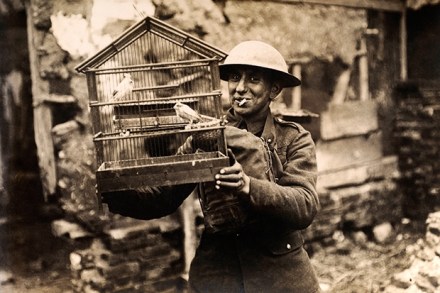
In July 1915 the poet Edward Thomas enlisted as a soldier with the Artists’ Rifles, even though, at the age of 37, he had no obligation to do so. When his friend Eleanor Farjeon asked why, he scooped up a handful of earth and replied: ‘Literally, for this.’ John Lewis-Stempel’s new book is persuasive that Thomas and his contemporaries’ love of the natural world informed both their motivation to fight and their conduct during the first world war. Theirs was the prelapsarian Britain of Thomas’s poem ‘Adlestrop’, which records a brief, unscheduled halt aboard a steam train on a hot June afternoon in 1914: peaceful, inviolate, chiming with birdsong, loved and understood by a generation of young men who knew willowherb from meadowsweet.