Thomas W. Hodgkinson

Thomas W. Hodgkinson is the author of How to be Cool.

Expect toddlers and parlour games at today’s dinner parties

From our UK edition

When I was in my twenties and giving dinner parties every week, I came up with a couple of money-saving devices. First, no snacks. This also ensures that, by the time dinner is served, your guests are so hungry they’ll mistake almost anything for a masterclass. Second, invite people on a Monday evening, so they won’t stay too late. As my millionaire cousin likes to say: ka-ching! I mention all this because one reason people don’t give more dinner parties is that they think they’re too expensive. Another is that they’re afraid of being judged. I remember being taken aback when a guest of mine said she would never dare to give a dinner party.

The adventures of an improbable rock journalist

From our UK edition

The filmmaker Cameron Crowe had the coolest childhood. Growing up in California, he started writing for Rolling Stone magazine at the age of 15. His big break came in 1973, when he had the chance to interview the Allman Brothers Band, then one of America’s biggest rock groups, for a cover piece.  For days he tagged along with the rockers on tour, winning their trust with his passion for music and open, honest, moon-shaped face, while phoning his mother every evening to assure her that he wasn’t taking drugs. Finally he earned an interview with the troubled Greg Allman himself, who, shirtless on a bed, spoke about the loss of his big brother Duane in a motorcycle accident and strummed some songs on his guitar. The article seemed in the can, but then disaster struck.

The Russian spies hiding in plain sight

From our UK edition

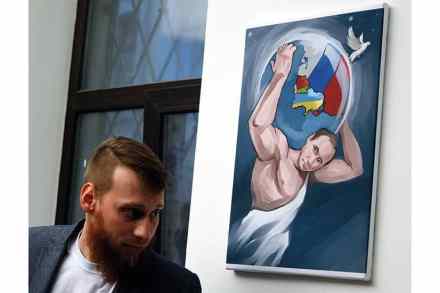
In June 2022, Vladimir Putin tipped up at a party at the headquarters of Russia’s foreign intelligence service, the SVR. This was to mark, of all things, the centenary of the country’s programme of deep-cover spies, who live for years abroad under elaborate false identities while passing secrets back to their masters at home. The weirdness of that espionage hoopla, just four months after the invasion of Ukraine, leaves one wondering what other bizarre birthday events Putin might have in his diary. The 85th anniversary of the assassination of Leon Trotsky, perhaps? Ah, you can imagine the banter. The cracker hats. The roll-out noisemakers.

What Kierkegaard tells us about Bridget Jones

From our UK edition

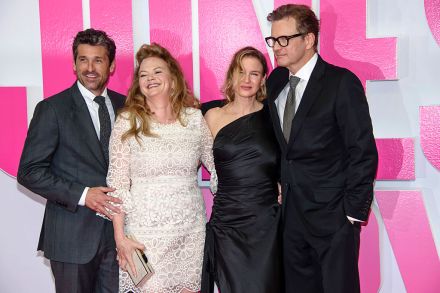
The scene is a well-appointed drawing room in Copenhagen in September 1840. A fresh-faced girl in her late teens is playing the piano in an attempt to soothe the troubled spirit of her boyfriend, a slender, bouffant-haired philosopher in his late 20s by the name of Søren Kierkegaard. Suddenly, he grabs the score from her and claps its pages shut before exclaiming, ‘Oh! What do I care for music? It’s you I want!’ Upon which, he proposes marriage, and soon after, the young Regine Olsen accepts. Immediately, Kierkegaard has second thoughts. Being an existentialist, he doesn’t deal in casual doubts. His are devastating. When Regine bumps into him in the street a few days later, he is so physically altered that she doesn’t recognise him. He agonises in his diary.

The greatest rockstar you’ve never heard of

From our UK edition

A man takes the stage at the Clapham Grand. His large, histrionic eyes are ringed with kohl. His slim limbs are decked in spandex, open to a furry navel. He throws back his flaxen hair and punches the air. ‘Thunder!’ he yells to the opening salvo of the AC/DC tub-thumper ‘Thunderstruck’. His name is Mac Savage and I used to know him at school.  The set that follows is a greatest hits of the 1980s and 1990s, from Bono to Britney. And there are revelations. Did you ever notice, for instance, how tender the lyrics are to Tina Turner’s ‘The Best’? Or how terrible they are to ‘The Final Countdown’?  And Mac Savage and Rockstar Weekend? They’re the Proms.

The power of talking as thinking

From our UK edition

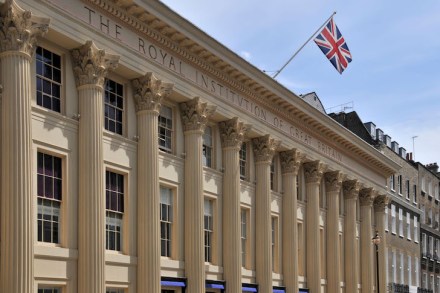
The world’s greatest scientific building recently celebrated its 225th birthday. In 1799, a group of natural philosophers (the word 'scientist' hadn’t been invented) founded the Royal Institution (RI) in Mayfair. The fact that the RI went on to achieve a greater rockfall of discoveries, including nine elements and the principles of electromagnetism, than has been witnessed anywhere else is extraordinary – all the more so when one considers that the organisation wasn’t originally created to do research. It was created to talk about it.  The relationship between the laboratory in the basement and the lecture theatre on the ground floor proved two-way. The discoveries its scientists made downstairs added lustre to their talks upstairs.

How did this London townhouse become the world’s greatest research centre?

From our UK edition

If you were asked to name the world’s greatest research centre in terms of discoveries per square yard, the answer wouldn’t be an Oxford or Cambridge lab. Nor would it be anywhere in America. Or China, for that matter. The correct answer would be a handsome Georgian townhouse in the heart of London.  For it was at the Royal Institution (Ri), in the 19th century, that Sir Humphry Davy identified nine new elements in the periodic table. And it was there that Michael Faraday teased out the relationship between electricity and magnetism, which enabled the creation of our modern electrified world.

Why do so many writers become dictators?

From our UK edition

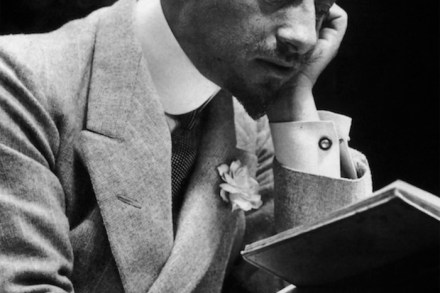
The list of writer-politicians goes back as far as Julius Caesar, who wrote a robust account of his campaigns. More recently, Boris Johnson has published fiction, as has former culture secretary Nadine Dorries, although neither to much acclaim. Inevitably, the names on this list tend to be either minor politicians or minor writers. Often both.  In fact, if you’re in search of a major literary figure, who also made a significant contribution to the politics of their country, and even rose to be a ruler in their own right, there’s only one answer. That is the Italian author, soldier, womaniser, coke-addict and career egomaniac, Gabriele d’Annunzio, who briefly became dictator of his own tinpot state on the Adriatic coast.

The royal lust of Hampton Court

The Dowager Countess of Deloraine, who was governess to the children of George II at Hampton Court and other royal homes, was a notorious bore — so much so that her “every word” made one “sick,” according to the courtier Lord Hervey. When she naively asked him why everyone was avoiding her, he replied with exquisite irony that “envy kept the women at a distance, despair the men.

Hampton

The genius of John Betjeman’s Metro-Land

From our UK edition

‘Over the points by electrical traction, out of the chimney pots into the openness, till we come to the suburb that’s thought to be commonplace, home of the gnome and the average citizen.’ Fifty years ago, the BBC documentary Metro-Land aired for the first time. These free-flowing dactyls, which mimic the motion of a train, were delivered over the footage by the newly appointed poet laureate, John Betjeman, as he rode the Metropolitan line out into the middle-class Arcadia of Middlesex. They don’t write voiceovers like that anymore.  The entire movement of poetry in the 20th century was towards finding beauty in unexpected places Hailed as a masterwork right off the buffers, Metro-Land was a hymn not only to Betjeman’s suburbia but also to the Tube that took him there.

Inside the weird world of real tennis

From our UK edition

When John Lumley was a baby, his mother placed him in his carrycot at one end of the tennis court in the leafy village of Holyport in Berkshire, and drove balls at him. I should clarify that John was perfectly safe. The tennis in question was real tennis: the old-fashioned version of the game, which is played indoors, with a window at one end fitted with string netting.  Nevertheless it’s easy to picture the infant John, secure behind that safety net, being jolted awake as ball after ball thudded into it, and waving his arms wildly in the way that babies do, before lapsing back into unconsciousness. Few sportsmen can ever have been so intimately introduced, at such a tender age, to the sport that would define their lives.  Lumley is a retriever.

Hampton Court: an architectural symbol of royal lust

From our UK edition

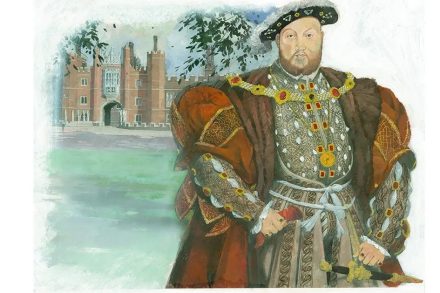
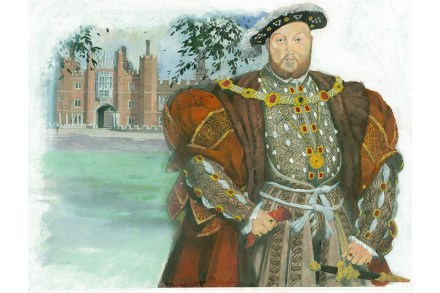
The Dowager Countess of Deloraine, who was governess to the children of George II at Hampton Court and other royal homes, was a notorious bore – so much so that her ‘every word’ made one ‘sick’, according to the courtier Lord Hervey. When she naively asked him why everyone was avoiding her, he replied with exquisite irony that ‘envy kept the women at a distance, despair the men’. This kind of witty, skittish anecdote is scattered throughout Gareth Russell’s scintillating hybrid of a book, which is partly a biography of a place and partly something stranger: an episodic history of England from Tudor times to the present, illustrated by lightning flashes of gossip and politics, set against the handsome backdrop of Hampton Court.

Searching for the best of all possible worlds – in London

From our UK edition

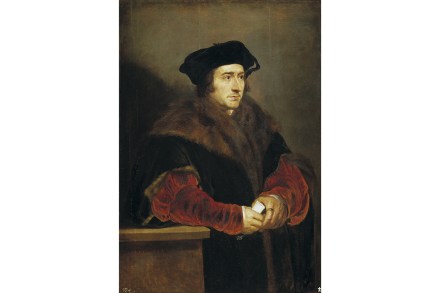
Utopia can never exist, literally, since the word, which Sir Thomas More coined in his 1516 book of that name, comes from the Greek for ‘not’ and ‘place’. For the avoidance of doubt, More doubled down on the wordplay, naming the governor of his fictional island Ademos, meaning ‘no people’, and the river that runs through it Anyder, meaning ‘no water’. Interrupting your steak to recite from Leviticus isn’t everyone’s idea of fun Yet there’s more to it than this, because it turns out that one man’s idea of an ideal society is often very different from another’s. More’s vision was proto-communist. Houses in his Utopia are allocated by lot, and re-allocated every ten years.

Can the ancient Greeks really offer us ‘life lessons’ today?

From our UK edition

Adam Nicolson’s seductive new book –a voyage around early Greek thought – opens with a lovely passage. Moored with his wife off the island of Samos, Nicolson rises at first light, with ‘only the cats awake’, to find that other boats have come in during the night and laid their anchor lines over his. Our action-man author dives in and swims down ‘the 12 feet or so to the sandy sea floor, hand over hand and link by link down the chain, looking for the tangle that needed to be undone’. It’s a metaphor for the task he sets himself in How To Be, which aims to separate out the strands of thought that originated in Greece between 650 and 450 BC.

It’s thrilling to learn that the rebellious Urien actually existed

From our UK edition

Once, when we shared the same history teacher in our teens, my older brother Dominic handed in an essay about the Dark Ages that deliberately parodied a sub-Tolkien mysticism of tone. ‘Little is known,’ his opening sentence ran, ‘about those shadowy twilit years twixt 400 and 600 AD.’ Our teacher was particularly enraged by the word ‘twixt’. In Dom’s defence, he was just reacting to a challenge that still confronts medievalists today. When there’s barely any evidence, what is there to say? The response of this intriguing book by Thomas Williams is to lean into the problem.

The Greek myths are always with us

From our UK edition

Once upon a time there was a collection of stories that everybody loved. They involved brave heroes such as Perseus and Theseus defeating fearful monsters like Medusa and the Minotaur. Sometimes they used ingenious gadgets to achieve their goals, a bit like James Bond with his exploding pen. Sometimes they were helped by women who took a fancy to them. Some, like Icarus, failed. Others succeeded but still came to a sticky end – like Oedipus, who solved the riddle of the Sphinx but also killed his dad and married his mum. The point is that these stories were so old they came from a time before writing. There was no set text, so they could be adopted and adapted and take many forms.

Film’s most unforgettable scene

From our UK edition

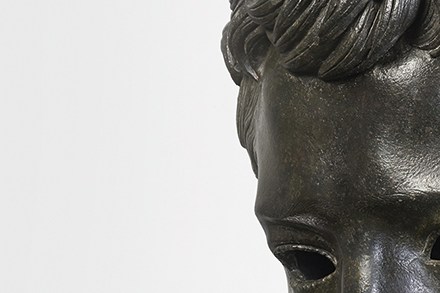
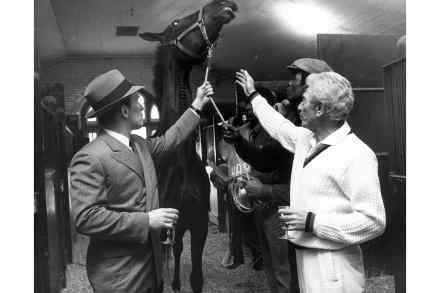
The actor never knew they would use a real horse’s head. This was May 1971 and John Marley was preparing to perform in the most infamous scene in The Godfather, playing the corrupt movie producer who wakes up to find a horse’s head in his bed. Reportedly, Marley assumed this would just be a plastic prop. But the director, Francis Ford Coppola, had other ideas. In a note to himself, Coppola observed: ‘If the audience does not jump out of their seats on this one, you have failed.’ So he quietly sent an assistant to a dog-food factory to pick up a genuine head, newly hewn from the shoulders of a racehorse. She brought the stinking object back in a freezer box and it was slipped into the bed with Marley for maximum authenticity.

Has nostalgia become the Greeks’ national disease?

From our UK edition

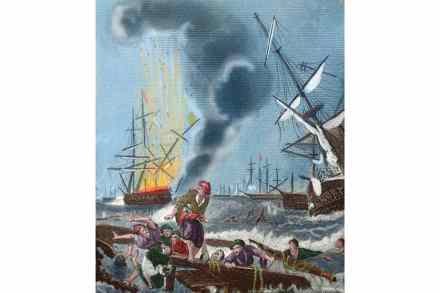
Imagine a new take on the Greek myth of Pygmalion. A love-shy artist makes a woman out of marble who is so beautiful that he falls for her and prays that she will come to life. For a moment he thinks his wish will be granted, but it is only his imagination. Now, in his sadness, he feels as if he himself is turning to stone. This, in a sense, has been the story of the Greek nation since, two centuries ago, a gang of brigands and diplomats took up arms to breathe life into the Parthenon marbles and revive the glory that was Greece. Thus began the phenomenally bloody Greek War of Independence, which brought an end to the centuries-long Ottoman occupation. Yet even at the start, the dream was as chaotic as its realisation.

Nature is healing

Ignoring the padlocked gate, my six-year-old son Nicholas and I climbed through a break in the metal fence and pushed into the mesh of undergrowth. This was the site of Ducker, the open-air swimming pool that once belonged to Harrow School in London. Here the young Winston Churchill romped (naked, since trunks were for prefects), as, in his own day, did my dad. When I arrived at Harrow in the 1980s, the pool — far bigger than Tooting Bec Lido, which is now the UK’s largest — had just been abandoned. It was covered with graffiti, the haunt of skateboarders. Returning in 2021, I looked for changes wrought by three decades of neglect. Google Maps showed a J-shaped artificial lake, 98ft by 492ft.

nature

Paradise regained: how the world’s wastelands are regenerating

From our UK edition

Ignoring the padlocked gate, my six-year-old son Nicholas and I climbed through a break in the metal fence and pushed into the mesh of undergrowth. This was the site of Ducker, the open-air swimming pool that once belonged to Harrow School. Here the young Winston Churchill romped (naked, since trunks were for prefects), as, in his day, did my dad. When I arrived at Harrow in the 1980s, the pool — far bigger than Tooting Bec Lido, which is now the UK’s largest — had just been abandoned. It was covered with graffiti, the haunt of skateboarders. Returning in 2021, I looked for changes wrought by three decades of neglect. Google Maps showed a J-shaped artificial lake, 30m by 150m.