Scott Bradfield

The scandal of California’s stolen water

From our UK edition

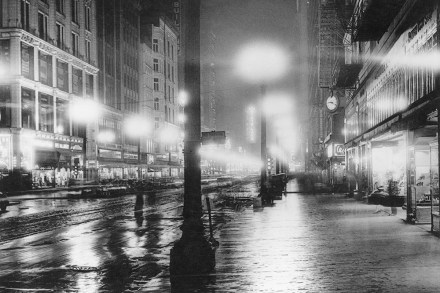
As the poem goes: Water, water, everywhere, Nor any drop to drink  – which might well describe how residents of the Owens Valley felt after Los Angeles stole their lake. Immortalised in Robert Towne’s screenplay for Chinatown, this early 20th-century water diversion via the 233-mile Los Angeles Aqueduct quickly led to an endless property boom for the Southland, and a near-biblical ecological disaster for Inyo County, California. Towne later described the main perpetrators of this crime as ‘an old boys Wasp network’ that included the LA Times publishers, Harrison Gray Otis and Harry Chandler, and the self-taught civil engineer William Mulholland.

Funny, absorbing and as noir as noir can be: Thomas Pynchon rides again

From our UK edition

Thomas Pynchon is so well known for being out of the public eye that he often seems to be hiding in plain sight, much like Edgar Allan Poe’s ‘purloined letter’. He is famous for avoiding the camera and the few extant photos of him – especially one from his high school yearbook – are paraded at every mention of his name or one of his books, usually accompanied by a rude remark about his ‘rabbity front teeth’. Many of his efforts to escape the limelight, such as sending the rumpled ‘Professor’ Irwin Corey to accept on his behalf the 1974 National Book Award for Gravity’s Rainbow gained him more renown than if he had just shown up and shuffled off with the damn thing himself.

The subversive message of Paradise Lost

From our UK edition

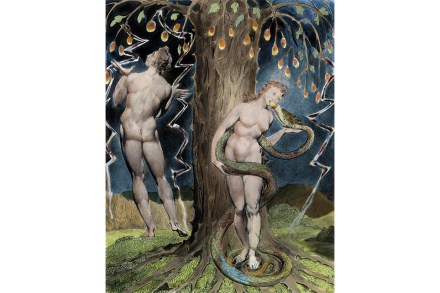
For those of us who have long loved (or hated) Paradise Lost, this is one of those rare and refreshing books that invites us to compare our feelings with other committed readers over the centuries. The poemmay well be the only major work in the western canon that nobody can avoid for long – even if it comes down to making a decision not to read it at all, or just to give up trying. Orlando Reade argues that it may also be the most ‘revolutionary’ text commonly available in modern classrooms – written by a man who, in his time, took extreme positions on everything from divorce (he was all for it) and whether kings have a divine right to keep their heads (they don’t). John Milton read widely and lived during the most conflict-driven period of British history.

No writer was better suited to chronicle the Depression than John Steinbeck

From our UK edition

John Steinbeck didn’t believe in God — but he didn’t believe much in humanity either. When push came to shove, he saw people as cruel, selfish, dishonest, slovenly and, at their very best, outmatched by environmental forces. Like his friend, the biologist Ed Rickett, Steinbeck considered human beings to be no better and no worse than any community of organisms: they might aspire to do great things, but they always ultimately failed. In The Grapes of Wrath, the hard-working Joad family travel west, seeking a good life, and get taken apart by poor wages, malignant farm cooperatives and company stores. In Cannery Row, Mack and his boys want to repay their friend Doc for all his generosity, and end up burning down his lab after a drunken party.

The fresh hell of Dorothy Parker’s Hollywood

From our UK edition

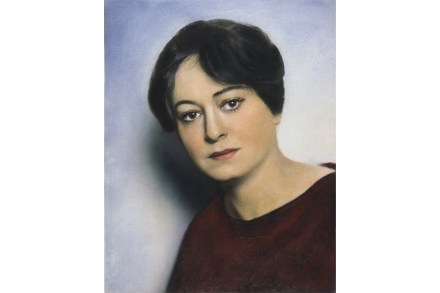
Hollywood didn’t kill Dorothy Parker, but booze probably did. In fact, if Hollywood hadn’t paid her so well to spend so much time at home, she couldn’t have afforded the booze – as well as maintain a lifelong ability to insult almost everyone she loved while still earning their (sometimes reluctant) affection.

Nothing was off-limits for ‘the usual gang of idiots’ at Mad

From our UK edition

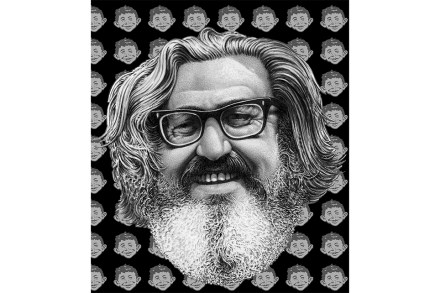
As many of us who grew up in America in the 1960s and 1970s learned, Mad magazine didn’t, as our parents warned us, warp our brains – because our brains were pretty warped to begin with. It was a time when what passed for culture was almost entirely scripted by Madison Avenue, promising that overpriced concoctions of sugar water and aspirin would eliminate all pain, social awkwardness and anxiety, or transport us to happy, sex-crazed beach parties with packs of photogenic young people.

A marriage of radical minds: the creative partnership of Fanny and Robert Louis Stevenson

From our UK edition

It is hard to imagine any Victorian man living a fuller life in a flimsier body than Robert Louis Stevenson – and he certainly wouldn’t have managed it without the support of his partner and wife of several decades, Fanny Van de Grift. Born in Edinburgh on 13 November 1850, Louis suffered from countless childhood illnesses that limited his activity to reading books, writing stories and staging ‘pasteboard theatre’ productions with his nanny, or else travelling to health spas in Marseille, Genoa and Naples. He strongly resisted his father’s efforts to enlist him in his own career as a lighthouse designer, and at Edinburgh University the only thing he excelled at was truancy.

Reading pulp fiction taught me how to write, said S.J. Perelman

From our UK edition

This volume of short essays – originally written for the New Yorker in the 1940s and 1950s but never before assembled – provides ample evidence that the great S.J. Perelman could misspend his youth with the best of them. It’s also the closest thing to an autobiography he ever completed: a series of comic reflections on the awful, absorbing books and movies which entertained him when he should have been attending his classes at Brown University (from which he eventually dropped out), or keeping a steady job.

The lonely passions of Carson McCullers

From our UK edition

It may be true that The Heart is a Lonely Hunter (1940) – but in the case of Carson McCullers it could also be an indefatigable and exhausting one. Born Lula Carson Smith into a struggling middle-class family in Columbus, Georgia in 1917, she grew up hungering for great passions – and, like Hunter’s teenage protagonist Mick (her characters often carry gender-neutral names), she fell in love with classical piano at a young age. (Then Carson – not Mick – fell in love with her female piano teacher.) She married young a 20-year-old ex-serviceman named Reeves McCullers who, by all reports, was far more beautiful than her.

In search of utopia: Chevengur, by Andrey Platonov, reviewed

From our UK edition

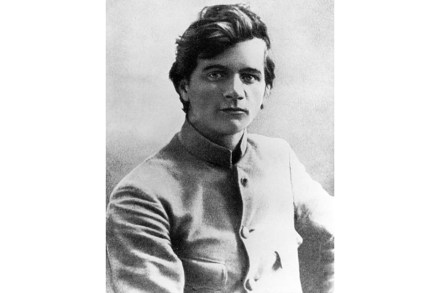
It has been a long journey into the light for the greatest Russian modernist most people have probably never heard of: Andrey Platonov. Born in 1899 in Voronezh, he started professional life as a mechanic and land-reclamation engineer, making him one of those rare writers with an affinity for both people and machines. In the mid-1920s, he was branded an ‘anarchic’ spirit by Maxim Gorky, who nevertheless admired his work. His great early novels were openly critical of the Soviet policy of ‘total collectivisation’ – which, in Platonov’s nightmare scenarios, tends to collectivise people to death.

The extraordinary – and haunting – life of Lafcadio Hearn

From our UK edition

It’s a convoluted title for a book, but then Lafcadio Hearn – a widely travelled author and journalist who earned his greatest fame as an interpreter of Japanese horror stories – led a convoluted life. Born in 1850 from a difficult marriage between an Irish officer-surgeon and a wildly unpredictable noble-blooded Greek woman (his middle name, Lafcadio, was adopted from Lefkada, the name of the island where he was born), he was quickly abandoned by both. His mother ended her life in an asylum; his father remarried and died young of malaria. Hearn went on to be yet again abandoned by the great-aunt who raised him, and spurned by the impatient Catholic priests to whom he was entrusted for an education.

The tragically short life of Bruno Schulz – and his complicated legacy

From our UK edition

This is the second excellent book by Benjamin Balint to consider the cross-cultural perils of being a great writer after you’re dead. His first, Kafka’s Last Trial: The Case of a Literary Legacy, described legal battles over the residence of Kafka’s literary estate. This new one shifts the focus to a very different (and equally unusual) writer, Bruno Schulz, whose work has long been caught up in posthumous conflicts about who it most belongs to – that motley assembly of us selfish readers who actually read him, or those various governments competing to claim him as part of their national heritage.

Tales of old Hollywood are always entertaining – even when they’re apocryphal

From our UK edition

Despite being known as a visually driven town, Hollywood has a rich oral history. This may be due to the fact that it is (like most literary communities) a small, gossipy village in which everybody knows everybody else and what everybody is saying about them. It also testifies to the fact that while Hollywood’s ‘players’ may often produce stupid films, they aren’t actually stupid themselves. Most of the time they know exactly what they’re doing – which is what makes them so perplexing. According to this hefty book, which assembles more than half a century’s worth of interviews conducted by the American Film Institute, Hollywood’s early days weren’t as glamorous as the later ones, but they certainly seemed a lot more fun.

Harpo Marx – genius, idiot savant or lovable overgrown child?

From our UK edition

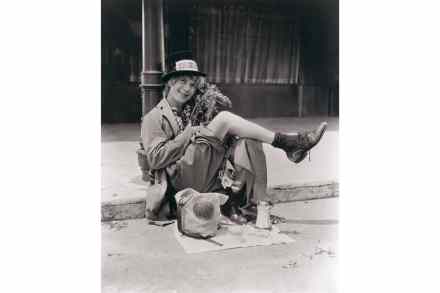
It’s hard (if not impossible) to imagine a world worth living in that doesn’t include the Marx Brothers; and equally impossible to imagine the Marx Brothers without their forever silent, animal-loving, hilariously unpredictable Harpo, he of the moppet wig, trampish overcoat packed with stolen silverware and blow torches, and recurringly grotesque facial expressions. For while the greatest comic performers of the silent film era (such as Chaplin and Keaton) couldn’t speak to the camera, Harpo was the only comic of the talkie era who simply wouldn’t, as if human conversation were somehow beneath him.

Is Mark Twain’s old age best forgotten?

From our UK edition

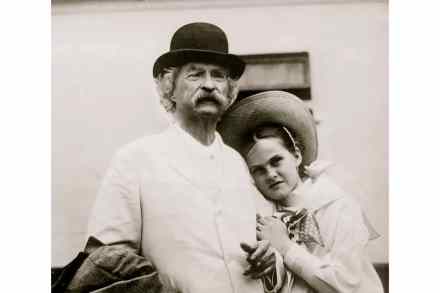
Mark Twain conquered almost every challenge that came his way except old age. Living well into his seventies, he was a printer, an investigative journalist, a riverboat captain, a government functionary, a bestselling novelist, an imperialism-defying political essayist, a successful playwright and a devoted father and husband. He travelled the world giving lectures that made him many fortunes, which he often used to replenish the fortunes he lost from his madder and most poorly managed investment schemes, such as the Paige Compositor, a self-justifying printing press which worked briefly for a few days in 1894 and then, just as mysteriously, stopped.

Life’s dark side: the catastrophic world of Stephen Crane

From our UK edition

Long before Ernest Hemingway wasted his late career playing the he-man on battlefields and in fishing boats, or Norman Mailer wasted an entire career playing Hemingway, Stephen Crane was the most world-striding combative male intelligence in literature. And while he created the template for every ‘manly’ novelist who came after, from Jack London to Robert Ruark, he never sought attention as a man but only as a writer; and he certainly never issued many advertisements for himself. Instead, he almost surreptitiously explored the world’s most violent places with inexhaustible intrepidity.

Bugsy Siegel — the gangster straight out of a Hollywood movie

From our UK edition

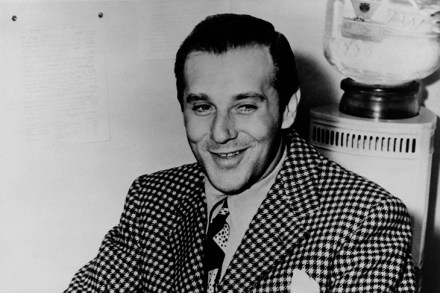
Benjamin ‘Bugsy’ Siegel was about as meta-gangsterish as a real life gangster could get. Born in the slums of Manhattan’s Lower East Side in 1906, he was still a teenager when he teamed up with Meyer Lansky to become a successful bootlegger and mob enforcer. But when Mayor La Guardia came along in the early 1930s to clean up New York’s underworld, Siegel moved to California, and began dressing the way film adaptations of gangsters were supposed to. He befriended actors who played characters like him, and even filmed a couple of test scenes of himself playing a gangster who was based on a gangster like him. (The studios feared him too much to hire him. After all, who was going to shout ‘Cut!’ at Bugsy Siegel?

Murder most casual: why Patricia Highsmith’s thrillers are so chilling

From our UK edition

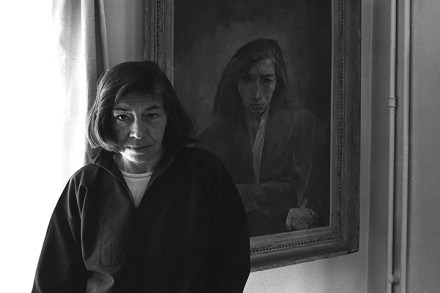
Patricia Highsmith’s life was filled with more eccentric, disturbing brilliance than most readers can normally handle; and so the chief attraction of this third biography in 18 years (released to commemorate her 100th birthday) may be its brevity. From the time Highsmith was born (after a failed abortion attempt by her parents), her story starts off dark and then gets much, much darker. Raised in Fort Worth, Texas by the granddaughter of former slave owners, she survived the Spanish influenza to become a smart, hard-drinking student at Barnard, where she exploited, at every opportunity, her affections for pretty, well-bred girls.