Matthew Janney

The diary of a tortured man: Deceit, by Yuri Felsen, reviewed

From our UK edition

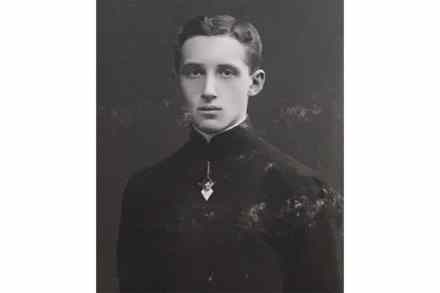
Yuri Felsen, born in St Petersburg, was an exile in Riga, Berlin and Paris and died at Auschwitz in 1943. Had his archive not been destroyed, we might find him on the same shelf as Vladimir Nabokov, Vladislav Khodasevich and Ivan Bunin – the glittering Russian literati of 1930s Paris – and Georgy Adamovich, who said that Felsen’s prose ‘left behind a light for which there is no name’. With this new translation of the 1930 novel Deceit, that light has been brought back from dim obscurity. In this first of three novels Felsen published, we follow the unnamed narrator’s tortured obsession with the ‘unequivocally irresistible’ Lyolya Heard, who drifts in and out of his life in Paris, leaving him in an intoxicating loop of ecstasy and despair.
An innocent abroad: a Dutch tour operator in 1980s Russia

From our UK edition

‘One morning in late October 1988,’ begins The Long Song of Tchaikovsky Street, ‘this dapper-looking guy from Leiden asked me if I might be able to deliver 7,000-odd Bibles to the Soviet Union.’ It’s the kind of line you might hear in a bar when you accidentally catch the eye of the resident storyteller — a tale so implausible it could just be true. Where on the scale between fact and fiction Pieter Waterdrinker’s memoir lies is impossible to tell, and beside the point: his engrossing 400-page account of post-Soviet disorder grips you and doesn’t let go.

‘Mother Volga’ has always been Russia’s lifeblood

From our UK edition

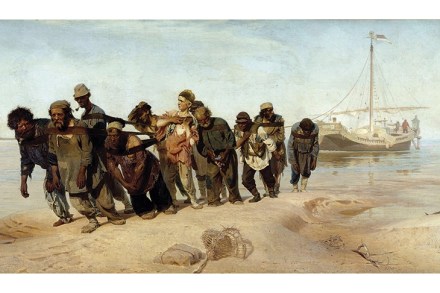
‘Without this river the Russians could not live,’ remarked Robert Bremner in his work, Excursions in the Interior of Russia. The year is 1840. The river in question, the Volga, the 2,000 mile-long meandering waterway stretching from the forests of north-west Russia to the steppes by the Caspian. At the time of Bremner’s survey, half of the Russian empire’s fish was caught in the single stretch of river by Astrakhan, the Volga’s final pit stop before flowing out to sea. Since the earliest days of medieval Rus through to the Soviet and post-Soviet eras, the Volga has not simply fed the mouths of its population but has been crucial to Russia’s commercial, cultural and imperial development.

‘I was frightened every single day’: the perils of guarding Stalin

From our UK edition

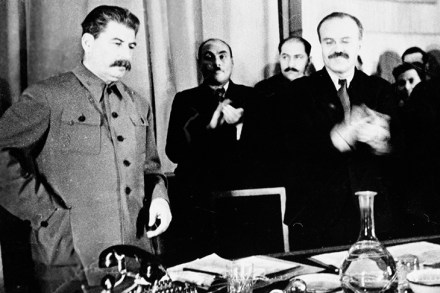
In Russian, the proverb ‘Ignorance is bliss’ translates as ‘The less you know, the better you sleep’. For those who experienced the worst of the Soviet Union’s terrors, this is not just a throwaway adage but a strategy for self-preservation. As Alex Halberstadt’s father — the son of one of Stalin’s former bodyguards — attests: ‘There is no more to be gained from sifting through the past than through cigarette ashes.’ Halberstadt, a Soviet-born American writer, doesn’t agree. Aged nine, soon after leaving Moscow with his family and defecting to the West, he began having a recurring nightmare in which he was chased by a ferocious bulldog, a dream that lingered into adulthood.