Sam Leith

Sam Leith

Sam Leith is literary editor of The Spectator.

The utter absurdity of the Sally Rooney affair

Last week I got an email from a colleague I respect on another magazine, prefaced with the assertion that it concerned ‘a matter we feel will be of importance to you as an artist, writer or journalist’ and inviting me to subscribe my name to an open letter in support of the Irish novelist Sally Rooney. The issue in question, in case there are any readers of this who missed the news story, is that Rooney's publisher Faber has announced that with the full support of their author they are withdrawing all Rooney's novels from publication in the UK.  Governments shouldn't, if they can possibly avoid it, put themselves into the position of being arbiters of hermeneutics. The absurdities proliferate fractally That's a big deal. Sally Rooney sells a lot of books.
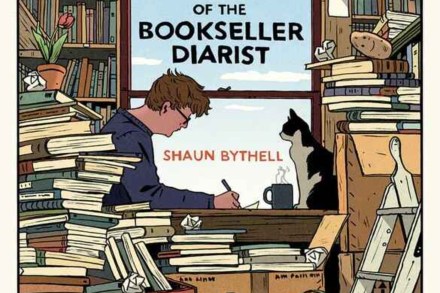
Shaun Bythell: Return of the Bookseller Diarist

From our UK edition

31 min listen

For this week’s Book Club, Sam Leith, the Spectator’s literary editor, is joined by Shaun Bythell, proprietor of The Book Shop in Wigtown, Scotland, and author of The Diary of a Bookseller series, to discuss the fourth instalment, The Return of the Bookseller’s Diary. They discuss the strange characters who wander into second-hand bookshops, the customers who haggle over £2 books, and how Bythell’s shop helped turn Wigtown into Scotland’s unlikely book town. They also explore the changing world of bookselling, from the rise of online marketplaces to the 18th-century bookseller James Lackington, whose ‘buy cheap, sell cheap’ philosophy has more than a little in common with Amazon.

Shaun Bythell: Return of the Bookseller Diarist

Why aren’t all executions public?

There is a boring, snooty, self-righteous school of thought that the judicial killing of a human being is a grave and dignified sacrament of the state. It says that where the law provides for the government to take a life, that is about as serious a decision as, in peacetime, it gets. This school of thought has it that the preceding judicial process must be exhaustive; that the condemned, no matter how repulsive their crimes, should be treated with respect by virtue of their status as human beings; that the whole punitive apparatus must see the process through with the sort of impersonal solemnity appropriate to its momentous arrogation of the right to take a life. Black caps, drawn curtains, ceremonious and exact procedures, shuffling clergymen…all that stuffy malarkey.

Marvel’s Wolverine just doesn’t work

From our UK edition

Grade: B If you’re the sort of person for whom ‘SNIKT’ – the sound-effect that, by ancient tradition, accompanies the unsheathing of Wolverine’s adamantium claws – is music to the ears, you may have been looking forward to Marvel’s Wolverine. You may, even, have perked up as you saw a poster for it sail by on the side of a bus.  Alas, I’m here to report that it is, if not exactly a dog, not quite a wolverine either. Industry rumour has it that the developers originally hoped to produce an open-world game along the lines of the successful franchises for Spider-Man and Batman. They were thwarted when they realised that the character doesn’t really lend himself to that.

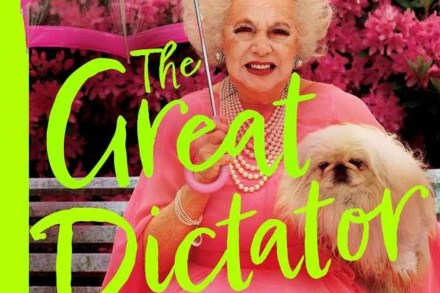
Matthew Sweet: The Great Dictator

Matthew Sweet: The Great Dictator

From our UK edition

44 min listen

In this week’s Book Club podcast, Sam Leith is joined by author Matthew Sweet to discuss his new biography, The Great Dictator, about the bestselling novelist Barbara Cartland. They explore the extraordinary life behind Barbara Cartland’s instantly recognisable image – from her beginnings in the aftermath of the First World War to her career as one of the bestselling authors of all time. They discuss why Cartland was so often dismissed as a joke by literary critics, and how her novels offered generations of women stories of romance, aspiration and consolation. They delve into the political side of her life, including her opposition to appeasement, her campaigning on behalf of Romani travellers and her close relationship with her brother, MP Ronald Cartland.

There’s nothing more absurd than the anti-Ulez bomber

From our UK edition

Remember when everyone was constantly banging on about “online radicalisation”? In those days, it usually meant confused and resentful young Muslim boys who fell prey to “preachers of hate” on YouTube and would, if not referred sharpish to Prevent, start thinking it was a good idea to blow the hated kufir up while he went about his morning commute. Occasionally, it would refer to confused and resentful young men of all stripes who’d fall prey to the more radical sort of manosphere influencer and start fantasising about spree-killing as an alternative to getting a girlfriend. Rees set off an actual bomb, at considerable risk to life...

Steven Pinker: When Everyone Knows That Everyone Knows…

From our UK edition

37 min listen

In this week’s Book Club podcast, Sam Leith is joined by psychologist and linguist Steven Pinker to discuss his new book, When Everyone Knows That Everyone Knows… Pinker explores the powerful idea of ‘common knowledge’ - not simply what we know, but what we know that other people know, and what we know they know we know. From the story of the Emperor’s New Clothes to revolutions, financial markets and international relations, he argues that our ability to coordinate with one another depends on making certain things publicly understood.

Steven Pinker: When Everyone Knows That Everyone Knows...

The real reason kids are giving up reading

Another day, another dispiriting survey about the crisis in childhood reading. Parents who earn more than £100,000 a year are the least likely of all social groups surveyed to read aloud every night to their children. So much for the sharp-elbowed middle classes. Even when we factor in the possibility that the cash-rich and time-poor are outsourcing bedtime stories to nanny, it’s a less than encouraging finding. It tells us something about the dwindling importance of reading to the most successful among us.

John Sellars: Stoicism Is Not What You Think

From our UK edition

28 min listen

In this week’s Book Club podcast, Sam Leith is joined by philosopher John Sellars to discuss his new book, Stoicism Is Not What You Think. Sellars explores the ancient philosophy of Stoicism and challenges some of its most common misconceptions – from the idea that Stoics repress their emotions to the belief that they are cold, indifferent and detached from the world. From its origins in ancient Athens to its modern revival online, Sellars explains what the Stoics actually believed and counter Stoicism’s reputation beyond its ‘stiff upper lip’ image. Sam and John also discuss Marcus Aurelius, the role of women in the history of Stoicism, and the growing body of psychological research asking whether putting Stoic ideas into practice can actually improve our lives.

John Sellars: Stoicism Is Not What You Think

The King and Charles Spencer are both victims

From our UK edition

Is it possible to avoid taking sides in the latest skirmish of the forever wars about the late Diana, Princess of Wales? I'd like to hope it is, though I appreciate it might be seen as a bit counter-journalistic to do so. Suppose the King is a flawed man, but not a monster? Suppose Earl Spencer is also a flawed man, but not a monster? Suppose the King is a flawed man, but not a monster? Suppose Earl Spencer is also a flawed man, but not a monster? And suppose what we are seeing is two hurt and damaged people revisiting a vicious row between them for the delectation of a public with no interest in the matter but prurience?

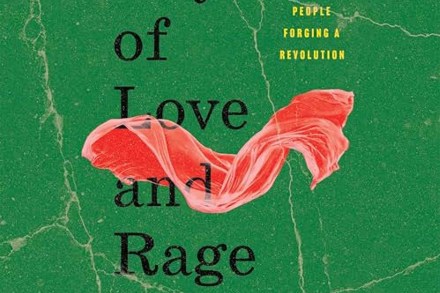
Anand Gopal: Days of Love and Rage

From our UK edition

In this week's Book Club podcast, Sam Leith is joined by The New Yorker writer Anand Gopal, whose new book, long-listed for the Baillie Gifford Prize, is Days of Love and Rage: A Story of Revolution. What does freedom mean once the dictator has gone? Anand explains why he spent eight years reporting on Manbij, a city of 150,000 that pushed out the Assad regime and set about building a democracy from scratch – and how the argument over what came next split the revolution in two. They discuss the bubblegum seller who became a protest leader, the police chief who quietly stopped shooting at the crowds, how six outsiders talked their way into control of the city, and why the manuscript was handed in three days before Assad fell.

Anand Gopal: Days of Love and Rage

The real reason AI is so frightening

In Joseph Heller's Catch-22, the anxious Colonel Cathcart is in the habit of compiling little lists of recent events. He draws these lists up under two headings: "Black Eyes" and "Feathers In My Cap." Into the former, he puts everything that seems to damage his chances of preferment – bombing his own runway again, and so forth – and in the latter, everything that will redound to his credit. I like to imagine Sam Altman, the boss of OpenAI, and his fellow AI overlords doing something similar. In the "Black Eyes" column, we might find near the top of the list the original sin of generative AI.

The Book Club: Hannah Richell

From our UK edition

33 min listen

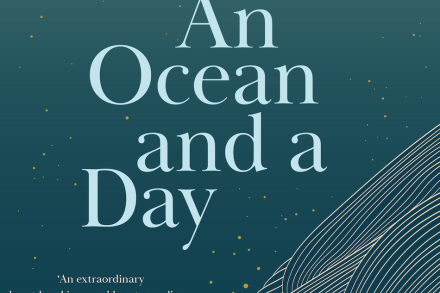
In this week’s Book Club podcast, Sam Leith is joined by bestselling novelist Hannah Richell to discuss her new memoir, An Ocean and a Day. When Hannah’s husband died in a surfing accident, her life in Australia was shattered. Suddenly, she was a single mother to two young children, navigating a grief she could never have imagined. Her memoir traces that journey from the moment of the accident, but, more uniquely, looks beyond those first years of loss – to what grief looks like with the benefit of time, distance and reflection. Sam and Hannah discuss the shame and embarrassment that can accompany grief, the physical effects of loss, how her experience has shaped her fiction, and what makes memoirs so powerful - to both writer and reader.

The biggest of all the delusions about Reform

From our UK edition

If public life contains a very high-profile, very vulnerable fantasist with an inexhaustible appetite for money and publicity, what is the duty of care that we all owe them? It’s a question that seems to arise repeatedly in the so-called post-truth era. Of course, anybody’s lies and delusions are, to a substantial extent, their own responsibility. But these situations always exist in a context.

James Marriott: The Dawn of a Post-Literate Society

From our UK edition

40 min listen

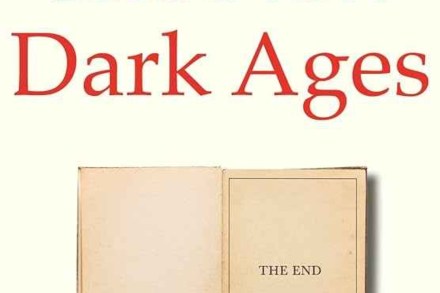
In this week’s Book Club podcast, Sam Leith is joined by The Times columnist James Marriott, whose new book is The New Dark Ages: The End of Reading and the Dawn of a Post-literate Society. Are we witnessing the end of the reading age? James explains why literacy has shaped not just our culture but the way we think – and why its decline could have profound consequences for politics, democracy and public life. They discuss how television, TikTok and short-form video have transformed our attention spans, whether AI will further erode the status of writing, and why the readers of the future may become a new cognitive elite.

James Marriott: The Dawn of a Post-Literate Society

I’m not convinced keeping PC Harper’s killers in jail is justified

From our UK edition

Just in time to meet his self-imposed deadline of early September, the Prime Minister has found a way of preventing two cop-killers from returning to the streets. The method of keeping the killers of PC Andrew Harper, convicted of manslaughter in the 2019 killing, behind bars is to block all those convicted of any form of manslaughter – along with grooming, death by dangerous driving and causing or allowing the death of a child – from eligibility for the early release scheme. I don’t think it lessens or trivialises the moral enormity of PC Harper’s death to feel uneasy about this This seems to me to be a telling decision, and not necessarily in the way the PM will hope.

Does it matter that Jason Arday’s memoir is made up?

Bloomsbury’s former editor-in-chief Alexandra Pringle popped up on the Today programme this week to argue that Jason Arday’s publisher could not have been expected to fact-check his book Great and Unfortunate Things. The argument she made raised a lot of eyebrows and has precipitated a lot of self-righteous ridicule online.

An agreeable new 2D fighter

Grade: B The final boss of Marvel Tokon: Fighting Souls, who’s called the Champion (they could have tried harder), is up front about his philosophy. ‘Actions are worth more than any word,’ he says. ‘And the greatest action is... to fight!’ Well, that’s Proust told, the big biscuit-dunking jessie. Here’s a very competently made, agreeably hectic new entry in the lineage of that most apparently basic of computer games, the 2D fighter. Ever since the heady days of Yie Ar Kung-Fu, gamers have known there’s fun to be had in having a couple of cartoon characters square off and slap each other upside the face.

Simon Sebag Montefiore: The Cauldron

Simon Sebag Montefiore: The Cauldron

From our UK edition

My guest on this week’s Book Club podcast is Simon Sebag Montefiore, the author of a number of fantastic books, including The Cauldron, which released this week. Simon and I talk about the making of the modern middle east, and how we forget some of the most fundamental groups who shaped this part of the world into the region that we know of today.

The truth about Andy Burnham’s tea-drinking habit

From our UK edition

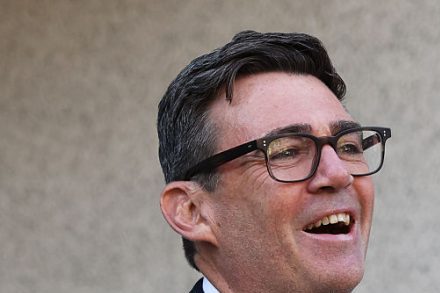
The Times, the newspaper of record, has been invited to witness proceedings in No. 10 North – which is Andy Burnham’s Mancunian analogue, I suppose, of Donald Trump’s 'Winter White House'. They witnessed, as you’d expect, some blethering on about planning permission and mayoral powers, a joke by Angela Rayner and a humorous cardboard cut-out of Larry the cat. And at the centre of it all: the man of the hour: Sitting in his trendy new office in Manchester, open-collared shirt, cup of tea on a table in front – milk in first – Burnham is keen to talk about this new policy that he hopes will help him deliver the biggest council house building programme since the war.  Three words. 'Milk in first.' This is, isn’t it, an odd thing to notice.