Mika Ross-Southall

Desperate for love: Very Cold People, by Sarah Manguso, reviewed

From our UK edition

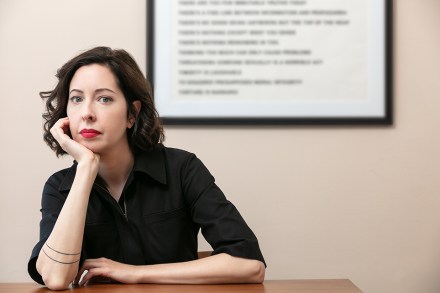
‘My parents were liars,’ the narrator Ruthie says at the beginning of Sarah Manguso’s unsettling debut novel. Looking back on her abusive childhood in a New England town near Boston in the 1980s, she recounts how her father wore a fake Rolex that didn’t work, and her narcissistic mother was obsessed with social climbing, pinning the wedding announcements of local Mayflower descendants on the fridge as if she knew them. Ruthie observes everything in high definition, from her parents’ neglect (‘I have no memories of being held’) to their naked bodies flopping on top of each other while they all share the same bed. In a disturbing scene, her mother, who seems to have been traumatised by her own upbringing, asks her elementary school daughter to spell the f-word.
Adrift in Berlin: Sojourn, by Amit Chaudhuri, reviewed

From our UK edition

Feelings of dislocation are at the heart of Amit Chaudhuri’s award-winning novels. Friend of My Youth (2017) followed a writer’s unsettling trip back to his childhood home in Bombay. Before that, Odysseus Abroad (2014) charted the day of a lonely English literature student from India as he meandered around London. Now, in Sojourn – Chaudhuri’s eighth novel – we meet a nameless first-person narrator adrift in Berlin. It is the early 2000s, and the 43-year-old, Indian protagonist has just arrived as a visiting professor at a university for four months. He doesn’t know anyone, and navigating the streets is confusing.

Beware the woke misogynist

From our UK edition

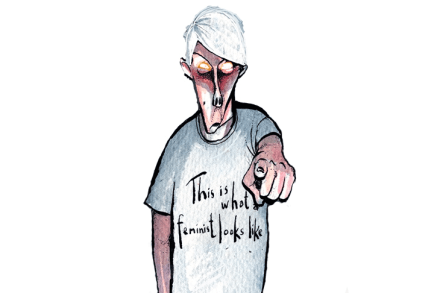
The #MeToo movement isn’t all it seems. More than three years after countless sexual abuse allegations shook the world, the relationship between men and women has mutated into something ‘subtle and insidious’, writes Sam Mills. Her new book — an intriguing blend of feminist theory, memoir, psychological sleuthing and self-help — investigates the rise of what she calls ‘chauvo-feminists’: men who champion women’s rights in public to appear woke while in private their ‘shadowy doppelgänger’ is misogynistic. ‘If sexual harassment is not just about desire but about power,’ Mills says, then ‘the means will no longer be a hand on a knee as a way of implying threat’.

A short history of the kimono

From our UK edition

'Fashions have changed', said the Japanese writer Ihara Saikaku in 1688. 'Certain shrewd Kyoto people have started to lavish every manner of magnificence on men’s and women’s clothes. By then, everyone in Japan was wearing a kimono. But it was the new, eye-catching, sumptuous ones wrapped around a flourishing breed of fashionistas that Saikaku was talking about. How to show off your wealth and status in Edo-era Japan? Wear the latest kimono. This was the starting point for the V&A’s exhibition Kimono: Kyoto to Catwalk, which opened, then hurriedly closed just days before the lockdown. Those of us lucky enough to catch it can tell you it would’ve been the museum’s summer blockbuster.

An unsentimental Hungarian education: Abigail, by Magda Szabó, reviewed

From our UK edition

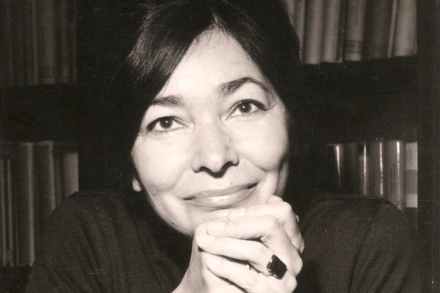
Although widely read in her native Hungary, Magda Szabó, who died in 2007, did not gain international acclaim until the mid-1990s with the translations of her novels The Door and Katalin Street. Abigail, which was originally published in 1970 and is her best-known book, now appears in English for the first time in a superb translation by Len Rix. Set over six months, from September 1943 to March 1944 when Germany occupies Hungary, Abigail follows the 14-year-old Gina Vitay, who is ‘plucked away as if by a bird’ from her privileged life in Budapest and sent to a remote fortress-like Protestant boarding school for girls by her father, a general in the Hungarian army.

Field trip with father

From our UK edition

Sarah Moss’s concise, claustrophobic sixth novel concerns the perils of family life. The narrator Silvie is a frustrated 17-year-old on holiday in the Northumbrian countryside with her father Bill, a bus driver with an insatiable interest in prehistoric Britain, and her mother Alison, who works as a cashier in a supermarket. They have joined an ‘experiential archeology’ field trip — ‘to have a flavour of Iron Age life’ — run by Professor Slade for a group of his university students. But Silvie dislikes the scratchy tunic that she’s forced to wear and the small wooden hut she must sleep in because her father insists on authenticity.

Consumed by guilt

From our UK edition

At the beginning of After the Party, Phyllis Forrester tells us she was in prison. While inside, her hair turned yellowy-white, ‘like the mane of an old wooden rocking-horse’, not out of shock, she reassures us, but because ‘one couldn’t get one’s hair dyed’. She thinks she deserved to be there: ‘What I did was terrible. Terrible. The shame of it will never leave me until my dying day.’ For a long time in Cressida Connolly’s chilling new novel, though, it’s not clear what she has done. The year is 1979, and middle-class Phyllis, who is bitter and alone (her family don’t talk to her any more), recounts her story to a voiceless interviewer in mannered, first-person chapters that interject throughout.

A spy in la-la land

From our UK edition

In 1940, the British Security Coordination sent an agent with an assistant to a Hollywood film studio to help promote the British war effort in America. This is the inspiration behind Louise Levene’s enjoyable new novel Happy Little Bluebirds. Here, though, the assistant — Evelyn Murdoch, who was working at the Postal Censorship department in Woking — discovers that she was drafted in by mistake: HQ didn’t read her file properly and assumed she was a man (‘Red faces all round,’ a British Intelligence worker tells Evelyn when she arrives in the United States), which is one of the only moments in the narrative that feels stretched. The agent who Evelyn is meant to assist has gone to Bermuda for an unspecified length of time.