Christopher Bray

The movie brats who changed popular cinema

From our UK edition

For some people it’s Star Wars; for others it’s Jaws or Close Encounters of the Third Kind. For me not a year goes by without watching Chinatown and the first two parts of The Godfather. This urge to repeatedly live through familiar narratives surely starts with bedtime stories; and though it diminishes in early adulthood as we push ourselves out into the world, the habit returns before long. So, although The Last Kings of Hollywood, Paul Fischer’s partial history of American movie-making focusing on Francis Ford Coppola, Steven Spielberg and George Lucas, tells a familiar story, it will be read by the same people who have already worked their way through the holy scriptures on the period.
Revelling in illusion: the French sociologist-cum-philosopher who hit peak absurdity back in 1991

From our UK edition

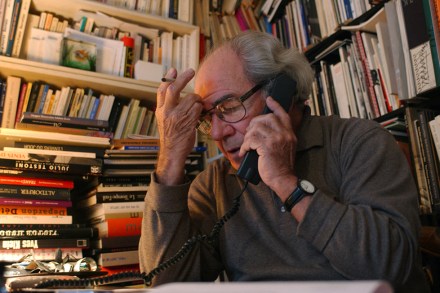
‘What is he talking about?’ Marine Baudrillard would sigh whenever she read her husband’s work. Anyone who has studied for an arts or a social-science degree over the past few decades will know what irked her. A sociologist-cum-philosopher’s prose is to thought what mud is to a windscreen. ‘There is no more hope for meaning,’ Jean Baudrillard wrote with unconscious exactitude in Simulacra and Simulation. ‘This is a good thing: meaning is mortal. Appearances, though, are immortal, invulnerable to nihilism. This is where seduction begins.’ In their admirably brief critical biography, Emmanuelle Fantin and Brian Nicol praise Baudrillard’s writing for its ‘enigmatic verve’. One might as well commend Bruckner’s 8th for its enervating brevity.

Masculinity in crisis – portrayed by Michael Douglas

From our UK edition

There isn’t another actor alive whom I’d rather watch than Michael Douglas. Just as Pauline Kael once said that the thought of Cary Grant makes us smile, so the thought of Michael Douglas makes me grin, smirk, nod, wink, cackle, cheer – and walk a little taller, too. Even his anti-heroes are heroic in their truth to self. From the sly, ophidian sneer of his washed-up money man in A Perfect Murder to the salty, satanic leer of his trigger-happy cop in Basic Instinct, Douglas has embraced self-destruction, stared down absurdity and made plain what Nietzsche meant when he said that man is either a ‘laughing stock or a painful embarrassment’. But no matter how much Douglas means to me, he means a whole lot more to Jessa Crispin.

Instantly captivating: the mysterious harmonies of Erik Satie

From our UK edition

The first time I heard a piece of music by Erik Satie it was on the B-side of a Gary Numan single. Played on a synth that sounds like a theremin sucking on a dummy, ‘Gymnopédie #1’ is so saccharine sweet it actually makes the music seem sorry for itself. And yet. It got me hooked on Satie’s catchy yet sombre ironies. Par for the course, says Ian Penman in this dazzling study. People who know nothing about music beyond the top tens of their teens can be so ‘instantly beguiled, captivated and transported’ by Satie that his ‘pop single length’ works are ‘now part of some collective audio memory’. Those who know nothing much about music can be instantly beguiled, captivated and transported by Satie For all that, there is no mention of Numan here.

Three great minds explore the enigmas of the universe

From our UK edition

It sounds like a Tom Stoppard play. A big-shot philosopher meets a big-shot boffin by way of a big-shot writer to descant on the biggest of big-shot debates – what The Rigor of Angels’s subtitle calls ‘the Ultimate Nature of Reality’.True, William Egginton can’t match Stoppard for punchy one-liners, nor for puns and pratfalls and persiflage. But while his book is as demanding a read as anything published this year, it still leaves you smiling. Over and over again the author reminds you of the shimmering weirdness beneath the experiential surface of what we are pleased to call the real world. There is no shortage of books that pit one thinker against another to tell the history of an argument.

Bogart and Bacall’s first film together might as well have been called Carry On Flirting

From our UK edition

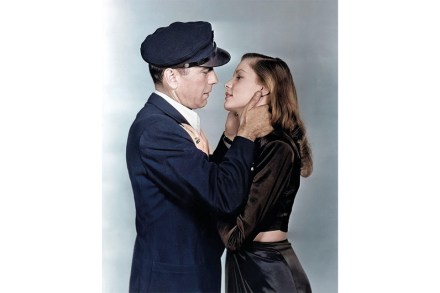
You must remember this... Harry Morgan is leaning on the bar wondering how the femme fatale and her wounded freedom fighter husband are doing. Then Slim walks in, wearing two wisps of black satin linked by a hoop around her navel. Harry tells her it’s time he checked on his patient. ‘Give her my love,’ says Slim. ‘I’d give her my own,’ says Harry, ‘if she were wearing that.’ And in real life, as the tabloids would say, he did. We are talking of To Have and Have Not (1944), in which Harry is Humphrey Bogart and Slim is Lauren Bacall. The director, Howard Hawks, said the movie was just an excuse to do some scenes.

Abba’s genius was never to write a happy love song

From our UK edition

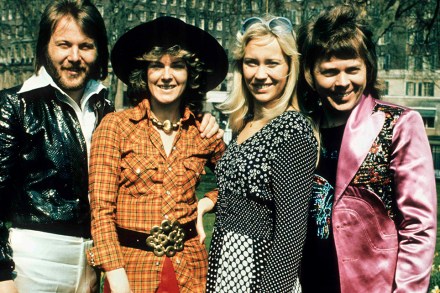
Memories. Good days. Bad days. In 1992, U2 mounted their Zoo TV tour. U2 being U2, the gigs were over-earnest affairs, their showbiz razzmatazz never emulsifying with their agitprop posturing. But disbelief was colloidally suspended the night the show hit Stockholm – and U2 were joined on stage by Benny Andersson and Björn Ulväeus for a cover of ‘Dancing Queen’. In truth, that evening’s take on one of Abba’s meisterwerke was a lumpen affair. Bono had to drop his voice an octave for what ought to be the song’s soaring refrain.

How The Sopranos changed TV for ever

From our UK edition

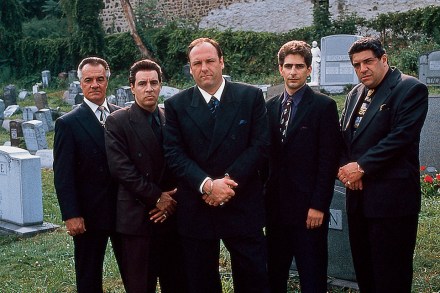
‘Too many characters, too many plot lines, characters who weren’t very good at their jobs, and their personal lives were a mess.’ Thus the memo to the creatives behind Hill Street Blues. ‘It was like a blueprint for what made every show successful since The Sopranos,’ Kevin Spacey giggles to Peter Biskind. ‘If the NBC executives had had their way, the road from then to now would never have been paved.’ As the quondamlead of one of that road’s biggest stones, House of Cards, Spacey can perhaps be excused his post hoc moment. Still, his big point stands. There was TV before The Sopranos and TV after The Sopranos, and they are not the same.

The socialist thinker who imagined ‘transforming her body and soul into potatoes’ to feed the poor

From our UK edition

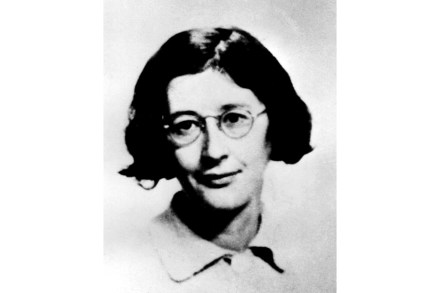
May you live in interesting times. The jury is still out on whether that sentiment is a blessing or a curse. There can be no doubt, though, that the heroines of Wolfram Eilenberger’s new book lived in interesting times and then some. Ayn Rand fled the Russian Revolution; Hannah Arendt fled the Nazis; Simone Weil took part in the French general strike of 1933 and fought for the Republicans in the Spanish Civil War; Simone de Beauvoir went to bed with Jean-Paul Sartre. Eilenberger calls his foursome The Visionaries. It’s an odd title, but then so was the one he gave his previous book, The Time of the Magicians. There is no more magic in the philosophy of Ernst Cassirer and Ludwig Wittgenstein than there is anything visionary about the thinking of these women.

There’s nothing ‘magical’ about a great theatrical performance

From our UK edition

‘Make him read the lines the way they’re written!’ Raymond Massey snarled at Elia Kazan during the East of Eden shoot. Classically trained, Massey was infuriated at the way the movie’s star, the Method instinctive James Dean, never played a scene the same way twice. Kazan, who had refereed similar rows between Jessica Tandy and Marlon Brando on the Broadway production of A Streetcar Named Desire, did what good directors do with warring actors: play them off against each other the better to boost both performances. Nobody who has watched the picture, especially those scenes in which Massey flinches at Dean’s latest flight of fancy, could doubt the artfulness of Kazan’s technique.

As normal as blueberry pie: Oscar Hammerstein II, through his letters

From our UK edition

Tolstoy or Dostoevsky? Picasso or Matisse? Lennon or McCartney? Impossible to call? No such quandary with Rodgers and Hart and Rodgers and Hammerstein. There are those that laugh at the city smarts of the words Larry Hart wrote with Richard Rodgers. And there are those that weep at Oscar Hammerstein’s home-on-the-range cornpone lyrics. But there is nobody that loves them both. Over to the pros then: while the likes of Frank Sinatra, Sarah Vaughan, Ella Fitzgerald and Tony Bennett have all given us their takes on Rodgers and Hart, nobody but Bryn Terfel has seen fit to make a Rodgers and Hammerstein CD. Not that Hammerstein would have worried.

The amazing grace of Bruce Lee’s fight scenes

From our UK edition

Early on in Enter the Dragon our hero, the acrobatic Kung Fu fighter Bruce Lee, tells a young pupil to kick him. Needless to say, the kid’s kick comes a cropper. ‘What was that?’, Lee sneers, clipping the lad’s ear. ‘An exhibition? We need emotional content, not anger.’ Even at 12, when I first read about this scene (in the poster magazine Kung Fu Monthly, whose first 26 issues are handsomely reproduced in Volume I of Carl Fox’s Archive Series), I thought it sounded like a load of chop suey hooey. An exhibition is precisely what I’d have wanted, if by some miracle I could have wise-guyed my way into seeing Lee’s X-rated picture. Anyway, if anger isn’t an emotion, what is it?

Beautiful enigma: Garbo’s mystery lives on

From our UK edition

‘We didn’t need dialogue’, glares Gloria Swanson’s crazed silent picture star midway through Billy Wilder’s Sunset Boulevard. ‘We had faces!’ She had a point. Even those of us who believe the movies weren’t really the movies until they had snappy dialogue (and no dialogue ever snapped the way Wilder’s did) have to concede that Swanson had a face that could stop a train. Still, she was an also-ran compared with Greta Garbo, who had a face that could start a religion. As her first champion, the Swedish filmmaker Mauritz Stiller, once said that Garbo’s mush would ‘make the gods happy’. Her embonpoint was rather less empyreal.

Restless visionary: Man Ray was always ahead of his time

From our UK edition

In the summer of 1940, after almost 20 years in Paris, Man Ray fled the Nazis for the country of his birth. Disliking New York, where he’d spent his youth, he made for the West Coast. He hoped to get as far as Tahiti or Hawaii. But his trip came to an end when, braced by the space, lifted by the lack of skyscrapers (‘made me feel taller’) and swept off his feet by a dancing girl (the latest in a long line of hoofers for whom he’d have the hots), he settled in Los Angeles. Though he would live there for more than decade, he never really liked the place. Nonetheless, he was far more productive in America than in Europe.

‘I wonder about his humanity’: Malcolm McDowell on Stanley Kubrick

From our UK edition

Twenty-five years after making Spartacus, a parable of Roman decadence and rebellious slaves shot in California, Stanley Kubrick made Full Metal Jacket, a ’Nam flick shot in Beckton. Ever the perfectionist, Kubrick had imported palm trees from Africa, the better that the local gas works resemble downtown Hué. Alas, he wasn’t happy. Something about the clouds over east London wasn’t right, and as for the sunsets… Meanwhile, the crew and cast and hordes of extras thumb-twiddled in the silence Kubrick demanded. Then an extra kicked up: ‘Get him off the crane.’ An assistant was despatched to find the guilty party. ‘You’re working with Stanley Kubrick,’ he lectured the rhubarbers. ‘No talking.

Houdini looks bound to captivate us forever

From our UK edition

Give thanks to the person who invented Venetian blinds, they say, or it would be curtains for us all. Curtains is mostly what people got at a Houdini show. He’d come on stage, be locked up or sealed in or tied down, and then the curtains would descend. They could stay drawn for an hour or more. Ostensibly this was to ensure that nobody saw him effect his escape, but in reality it was to heighten the drama. Houdini was usually free within a couple of minutes, but he knew audiences didn’t want things to be too simple for him. As he put it: The easiest way to attract a crowd is to let it be known that at a given time and a given place someone is going to attempt something that in the event of failure will mean sudden death.

David Bowie: the boy who never gave up

From our UK edition

A few years ago Will Brooker spent 12 months pretending to be David Bowie. For several weeks he dressed up as Ziggy Stardust (gold bindi, maroon mullet, jumpsuit run up from old curtains), then as Aladdin Sane (blue and red lightning slash daubed across face), then as the Thin White Duke (black waistcoat, black eyeliner, slicked-back hair). And so on, right through every satin-and-tat get-up of Bowie’s long career. What larks! And yet. I don’t know whether Brooker had his mother in a whirl, but he certainly had some of us wondering what was going on in the groves of academe. Did I mention that these wardrobe antics were part of a research project? That Brooker is professor of film and cultural studies at Kingston University?

A sublime lyricist, but no letter writer: Cole Porter’s correspondence is sadly wit-free

From our UK edition

‘In olden days, a glimpse of stocking/ Was looked on as something shocking’, carolled the company of Cole Porter’s 1934 Broadway smash musical Anything Goes. Eighty-five years on, in this age of Love Island and Naked Attraction, what wouldn’t you give for a retooled version? Not that the song is wholly out of date. When the show opened at the Palace Theatre in London the following year, the lyric to ‘Anything Goes’ was nationalised. Out went Porter’s lines about Rockefeller and Max Gordon and in came two couplets on current parliamentary antics: ‘When in the House our Legislators/ Are calling each other “Traitors”/ And “So and So’s”/ Anything goes’. Hmmm.

Hollywood’s invisible man

From our UK edition

What do the following filmmakers have in common: Victor Fleming, John Ford, Henry Hathaway, Howard Hawks, Alfred Hitchcock, Ernst Lubitsch, Lewis Milestone, Otto Preminger, Josef von Sternberg, George Stevens, Charles Vidor, King Vidor, Orson Welles and William Wyler? I know, it’s a toughie — and it isn’t much less tough if you consult IMDb. But the answer is that all of them made pictures from scripts that had been worked on by the same man. His name was Ben Hecht and, even today, 125 years after his birth, he’s regarded as the greatest screenwriter the movies ever had.

Getting it in the neck

From our UK edition

‘What!’, railed Voltaire in his Dictionnaire Philosophique of 1764. ‘Is it in our 18th century that vampires still exist?’ Hadn’t his Enlightenment rationalism seen off such sub-religious voodoo? Well no, mon frère, it hadn’t. In fact, here we are, a quarter of a millennium on, and those vampires are still with us. Films, rock concerts, novels, TV shows, they’re full of fangs and dripping with blood. We’re suckers for those suckers — so much so that even academia is getting in on the act. As Nick Groom, an English professor at Exeter university says in his densely researched new book: ‘Vampires are good to think with.’ Well, there’s certainly a lot to be said about them. Symbols don’t come more labile.