Jon Day

Jon Day teaches English at King's College London and is the author of Homing: On Pigeons, Dwellings and Why We Return

A meditation on reality: Transcription, by Ben Lerner, reviewed

From our UK edition

Near the beginning of Ben Lerner’s new novel the unnamed narrator recalls visiting an exhibition of botanical models made by the father-and-son glass artists Leopold and Rudolf Blashka in Dresden in the 19th century. Like Zeuxis’s grapes, so lifelike that birds would come and peck at them, the models, ‘impossibly delicate things’, challenge the narrator’s sense of the real: I kept seeing the flowers as organic one instant and as artificial the next, a kind of duck/rabbit effect, not between things the object might represent but between nature and culture, the given and the constructed. Transcription, like Lerner’s previous three novels, is an autofiction about the tension between the given and the constructed. It is arranged in three acts.
In defence of rats

From our UK edition

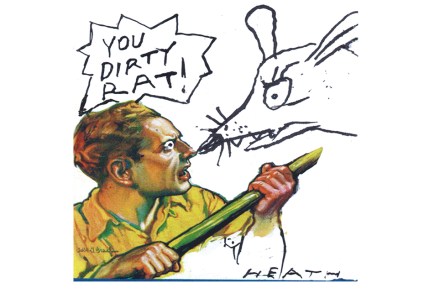
I n the ranks of unloved animals, rats are  surely king – so reviled that other pest species are often referred to as variations of the rat archetype: pigeons are ‘rats with wings’, grey squirrels are ‘tree rats’. There was also a recent flurry of stories about Britain facing an ‘invasion’ of ‘300 million monstrous super-rats capable of gnawing on steel and chewing through concrete’. Yet how reliable were these stories? The 300 million figure is from Steven Belmain, a Greenwich University professor, who was simply giving his estimate of the rat population. (Probably an underestimate, he says, but there has never been a proper survey.) Nor is there any evidence that our rats are changing in size or nature.

Fleeing paradise: eden, by Jim Crace, reviewed

From our UK edition

Since announcing his retirement in 2013, Jim Crace has had more comebacks than Kanye West, something for which we should all be thankful. Craceland is a compelling place to visit, full of hazy yet broadly recognisable locations (Tudoresque England in the IMPAC award winning Harvest; a vaguely Mediterranean town in Melody) and spanning indeterminate times (the post-apocalyptic future in The Pesthouse; the end of the Stone Age in The Gift of Stones). The specific non-specificity of his fiction reflects Crace’s view of himself as more of a storyteller than a novelist, and his sense of history as a largely unwritten – and therefore often forgotten – phenomenon. In this, eden is typical Cracian fare.

The controversial side of carp fishing

From our UK edition

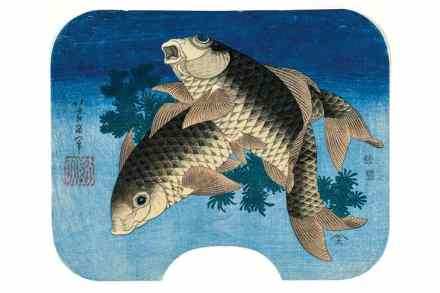
All anglers are obsessive, but carp fishers are the most single-minded of all. They think nothing of spending weeks on the banks of a muddy lake or gravel pit, lines and breath baited, waiting for a bite. Ask an aficionado what motivates him and he’ll speak — with an intensity that sounds a lot like love — about the carp’s unrivalled cunning and fighting ability: its coquettish, crafty takes and its long, blistering runs. Most of all he will talk in awe about the sheer, meaty heft of these fish, of their unparalleled weight and girth. Carp fishing is a particularly British obsession, which is surprising, as the species is a relative newcomer to our waters.

Isabel Oakeshott, Melanie McDonagh and Jon Day

From our UK edition

15 min listen

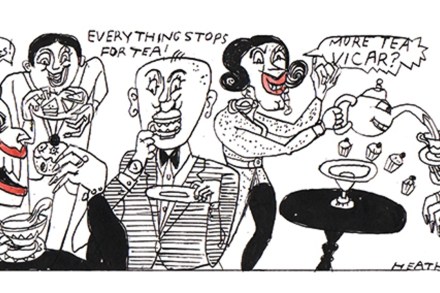
On this week's episode: Journalist Isabel Oakeshott on how she let the Matt Hancock scandal slip through her fingers a week before it turned up in The Sun (00:59). We’ll also be joined by Melanie McDonagh who's written about how high tea has gone from an affordable British staple to and oversized and overpriced, still delicious monstrosity (06:17). And finally Jon Day takes us into the wonderful world of competitive pigeon racing (11:18).

The mysterious world of pigeon racing

From our UK edition

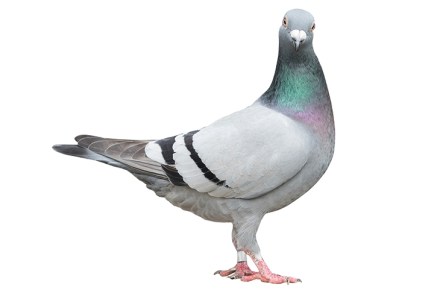
Pigeon racing isn’t much of a spectator sport. Race birds are driven to the ‘liberation point’, where they’re released to fly back to their homes. Only the liberation and the return are witnessed — what happens in between is a mystery. This is partly what makes pigeon racing so fascinating. It’s also what can make it so stressful. A week ago, between 5,000 and 10,000 pigeons went missing during a race from Peterborough. Usually fanciers aren’t too worried if a few birds don’t make it straight home from a race; they’ll rest up and return a few days later, no worse for wear. But this time the losses were exceptionally large.

Man about the house: Kitchenly 434, by Alan Warner, reviewed

From our UK edition

I have enjoyed many of Alan Warner’s previous novels, so it gives me no pleasure to report that his new book is so monumentally tedious that when two accountants turn up halfway through you think: great! Things might finally be getting interesting. Kitchenly 434, set in Thatcherite Britain, is narrated by Crofton Clark, an aging hippy who lives at Kitchenly Mill Race, a Tudorbethan pile belonging to the mainly absentee rock star Marko Morell. Crofton loves both Marko and the house with an obsessiveness signalled by his frequent mentions of the fact. ‘I’m your, eh, caretaker,’ he reminds the owner. ‘I’m the retainer. I’m a faithful retainer of this house that I love.

A chronicle of modern times

From our UK edition

Jonathan Coe writes compelling, humane and funny novels, but you sometimes suspect he wants to write more audacious ones. He has a long-standing interest in formally experimental writers — Flann O’Brien and B. S. Johnson are heroes — but it’s an interest that has never really become full-blown influence.

Back to basics | 30 March 2017

From our UK edition

Tim Parks is a writer of some very fine books indeed, which makes it even more of a shame that his most recent novel is flat, grim and (like its narrator) interesting only to itself. His main theme is adultery, a subject he explored in his wonderful novel Europa (1997), in the short story collection Talking About It (2005), and in the thoughtful essays of Adultery and Other Diversions (1998). But in recent years he has become the laureate of a certain kind of seedy, middle-aged infidelity, and In Extremis is single-minded to the point of obsession: anorak and dirty mac in one. The problem might be that he is simply too productive. In Extremis is a loose sequel to Thomas And Mary (2016) a novel that explored the breakup of a marriage from a range of narrative perspectives.

Life in the chain gang

From our UK edition

In 2004, French police officers searching the home of the professional cyclist David Millar found some syringes and empty phials hidden in a hollowed-out book. Millar confessed that he had been using the substance EPO to boost his red-blood-cell count. He was banned from the sport for two years, and returned to cycling a reformed man, becoming a prominent and vocal critic of doping in the professional peloton. The rise and fall and rise of David Millar’s cycling career formed the dramatic backdrop to his first memoir, Riding Through the Dark (2011). His second book, The Racer, is a more elegiac affair. It follows Millar through the twilight of his career, recording his frustration as he loses his position as the elder statesman of British cycling.