Artemis Cooper

Riddled with contradictions: the enigma of Jan Morris

From our UK edition

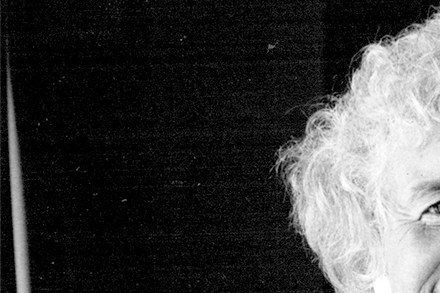
Jan Morris was driven by almost super-human levels of energy and ambition, producing more than 40 books as well as news and travel articles, introductions, interviews, reviews and essays, travelling incessantly and taking on every job that was offered. That’s as far as I can go without a pronoun, because of course Morris’s life is divided into two parts. For the first half he was James, for the second she was Jan. James Morris was born in 1926, aware from early on that she was female, trapped in a male body. The transition to Jan, made in the early 1970s, remains at the heart of our fascination with Morris.
The great French painter who had no time for France

From our UK edition

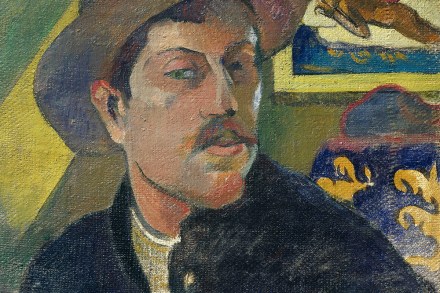
In 1855, Paul Gauguin’s widowed mother Aline returned to her husband’s family in Orleans after seven years in Peru. She brought back her daughter Marie, eight-year-old son Paul and her collection of pre-Columbian artefacts. They had no commercial value but those strange objects, sprouting the heads of birds and animals, had a power that the westernised world had lost touch with. They sank deep into the imagination of her wild, headstrong boy, who often described himself as ‘a savage from Peru’. After the sensory overload of South America, France and school were grey, cold and miserable. With education over, Gauguin insisted on going to sea and served in the navy in the Franco-Prussian war.

Between the Iron Lady and the Wedding Cake: conflict in Belle Époque Paris

From our UK edition

Between 1789 and 1871 Paris went through five kings, two Bonapartist empires, two republics, several revolutions and a Commune. Each had been an attempt to accommodate or neutralise one of two visions of France. The oldest was traditional and conventional; it mourned the ancien régime, and preferred the safety of autocracy over the chaos of democracy and God over science. The younger was progressive and eager for change, building on the ideas of the Enlightenment and the revolutionary ideals of 1789. We are taken through slums, cafés, law courts, theatres, brothels, strikes and demonstrations For Mike Rapport, ‘the friction between change and tradition is perhaps the defining characteristic of the modern condition’.

How Alice Prin conquered bohemian Paris

From our UK edition

This book is about two people who reinvented themselves in 1920s Paris. Mark Braude focuses on Kiki de Montparnasse and Man Ray, the decade of their creative collaboration and the cafés and nightclubs of Montparnasse, immersing the reader in a world where everyone was pushing their creativity in unimaginable directions. Emmanuel Radnitzky, the Jewish tailor’s son from Brooklyn who turned himself into Man Ray, the painter and photographer, saw himself as the equal of Picasso, Duchamp, Picabia, Léger and the other artists who were being talked and written about with such excitement. Yet people found him more interesting as an innovative photographer than a painter, and while photography was definitely an art, it was not Art.

Go east – the people get nicer, even if their dogs get nastier

From our UK edition

When Nick Hunt first read Patrick Leigh Fermor’s account of his youthful trudge across Europe in A Time of Gifts and Between the Woods and the Water, he knew ‘with absolute certainty’ that one day he would make that journey himself. When I embarked on Patrick Leigh Fermor’s biography, I made an equally firm resolve that I wouldn’t walk a step of it. Paddy’s books had left me with a vision of a timeless Europe suspended somewhere between memory and imagination, and I didn’t want that vision distorted by layers of personal impressions. But to Hunt the books posed a question. Eighty years on, was there anything left of the ‘gifts’ Paddy had enjoyed in prewar Europe?