Culture

Culture

The good, the bad and the ugly in books, exhibitions, cinema, TV, dance, music, podcasts and theatre.

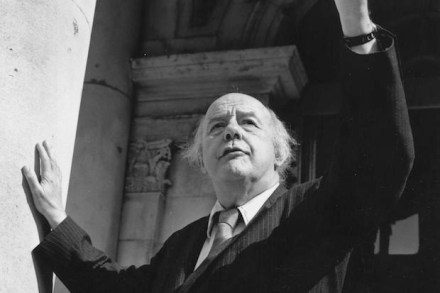
Peter Levi – poet, priest and life-enhancer

More from Books

Hilaire Belloc was once being discussed on some television programme. One of the panellists was Peter Levi. The other critics expressed their doubts about the old boy. Levi leaned forward in his chair to say, with passionate intensity, ‘But Belloc is worth discussing… because he was… very nearly a poet.’ At the time, I thought

This thriller is as good as anything by Hilary Mantel

More from Books

A few years ago, after a lifetime of wearing white shirts through which the straps of my white bra were plainly visible, I discovered a remarkable fact: if you wear a pink or even a crimson bra underneath a pale shirt, it doesn’t show. For several weeks I passed on this gem of truth to

Britain must do more for the new wave of asylum seekers

Over the summer I read Vilhelm Moberg’s The Emigrants, a documentary novel about the Swedes who emigrated to America in the 18th century. It powerfully describes what drove illiterate peasants to take such an extraordinary gamble on a country about which they knew almost nothing. The story, of course, could have been written about migrants

A Hello! magazine history of Venice

More from Books

When Napoleon Bonaparte captured Venice in 1797, he extinguished what had been the most successful regime in the history of the western world. The Venetian Republic had lasted over 1,000 years — longer than ancient Rome — without a revolution, a coup d’état or a successful foreign invasion.  Yet after 1797 it was never to

Thomas Cromwell: more Tony Soprano than Richard Dawkins

More from Books

The travel writer Colin Thubron once told me that to understand a country and its people he first asks, ‘What do they believe?’ This is also a good place to begin when writing about the past, not least when your subject is Thomas Cromwell, a key figure in the English Reformation.  But Tracy Borman’s Cromwell

Is America headed for tyranny? It is when the other side’s in charge…

More from Books

For the last 50 years Americans have been decrying the increase of presidential power whenever the party they oppose is in office.  Republicans hated to see Kennedy and Clinton throwing their weight around, while Democrats deplored the ‘imperial presidency’ of Nixon and Reagan. F.H. Buckley, a Canadian law professor now working in Virginia, explains why

Stalin’s Spanish bezzie

More from Books

During the Spanish civil war the single greatest atrocity perpetrated by the Republicans was known as ‘Paracuellos’. This was the village where an estimated 2,500 prisoners loyal to Franco were executed by leftish militiamen between November and December 1936. Even though the facts of this massacre are now widely known, one question still remains: who

The biography that makes Philip Larkin human again

Lead book review

How does Philip Larkin’s gloom retain such power to disturb? His bleakest verses have the quality of direct address, as if a poetical Eeyore were protesting directly into our ear. ‘Aubade’, his haunting night-time meditation on the terrors of death and dying, focuses on ‘the sure extinction that we travel to/ And shall be lost

Owen Jones: ‘Our generation’s Orwell’?

Calling in a favour from a comrade to help flog your new book is hardly a new trick, but Mr S wonders if Owen Jones really thought this one through: Thankfully, Russell ‘the revolution is coming’ Brand is not known for his outrageous hyperbole.

The Village: Sunday-night TV at its most unsubtle and addictive

Proof that television has changed a bit since 1972 came with an archive clip shown on BBC4 on Sunday. ‘My first guest:’ Michael Parkinson announced matter-of-factly on his Saturday-night chat show, ‘W. H. Auden.’ Auden then made his way gingerly down the stairs, lit a fag and began by discussing the failure of the poetry

Robin Williams in London

In 2001 I wrote a book called The Comedy Store (still available in some good bookshops – and quite a lot of bad ones) about the London comedy club that kick-started modern British comedy. The book was a bit of a mixed bag, but the best bits were where I shut up and let these

Siberia beyond the Gulag Archipelago

More from Books

Larger than Europe and the United States combined, Siberia is an enormous swathe of Russia, spanning seven time zones and occuping 77 per cent of the country’s land mass. Ryszard Kapuscinski describes the gulags which were placed there as being amongst the greatest nightmares of the 20th century — and that image of suffering has

Chris Barber should let someone meaner tell his story

More from Books

Chris Barber, still going strong with his big band, was born in 1930. He heard jazz as a schoolboy on the radio programme Music While You Work and tried to find out more about this wonderful music. He soon discovered that, in his words, ‘black music was the real thing, although some white people managed

The lost Victorian who sculpted Churchill

More from Books

Ivor Roberts-Jones was in many ways the right artist at the wrong time. Had the sculptor been born a few decades earlier and worked in the Victorian age, when statues of the builders and defenders of empire were erected proudly and prolifically across the land, he’d surely have received no end of garlands. As it

Soldier, poet, lover, spy: just the man to translate Proust

Lead book review

Charles Kenneth Scott Moncrieff’s Englishing of Proust — widely and immediately agreed to be one of the greatest literary translations of all time — very nearly didn’t happen. Scott Moncrieff only suggested the project to his publisher after they rejected a collection of satirical squibs in verse (sample: ‘Sir Philip Sassoon is the Member for

Soviet greyness, literary mediocrity and hot dates

More from Books

Right at the outset of this autobiographical novel — in fact it reads more like a memoir — Ismail Kadare sets up his stall as a lover of women. His lust even permeates his similes: ‘… that particular path, like some women who, though not beautiful, possess a hidden charm…’ and that’s only the walk

The Jane Austen of Brazil

More from Books

When the American poet Elizabeth Bishop arrived in Brazil in 1951, she expected to spend two weeks there and ended up staying 15 years, a time of emotional turbulence and creative productivity. Bishop wrote poetry and prose and translated Latin American writers, including Octavio Paz, but this project, suggested by friends as a way to