Tom Tugendhat

Tom Tugendhat is the Conservative MP for Tonbridge and Malling and a former officer in the territorial army.

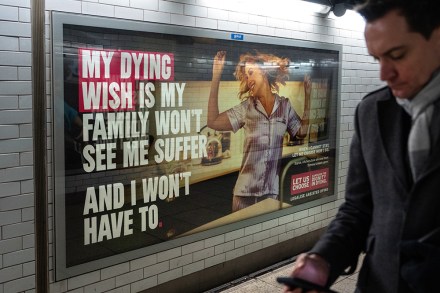
Don’t be fooled by the euphemisms around assisted dying

From our UK edition

It’s funny the ways we lie to ourselves. The little lies. The white ones. We say we’re exhausted when we mean we’re unfit. That we’re joyful when we’re drunk. That we want to be alone when in fact we’ve simply been left out. Parliament is the same. We invent ways of saying things to mask the reality of the debate. But when we’re choosing how our citizens live and die, shouldn’t we be honest with ourselves at least? Shouldn’t we try to be as clear as possible? Euphemisms in the assisted dying debate cloak it in language of compassion and discretion, but behind the veil there are some ugly truths.

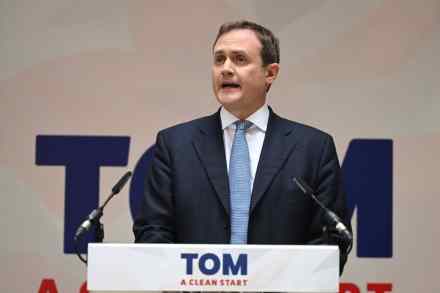
We need a clean start

From our UK edition

Families in the United Kingdom face a moment of crisis. It is becoming harder for people to simply get by. For so many of them, there is more month than there is pay. We face danger abroad, division in our politics, an economy saddled with debt and a creeping sense of despair about our collective future. This is a defining moment for us. It is a defining moment for our country. It is a defining moment for our party, and it is going to test the values for which we stand. I am going to talk about economic policy today: but for me - for conservatives - leading on the economy is not only a question of policy. It is a question of values - it is a question of mission - a question of our task and purpose.

How I’d deliver a clean start for the UK

From our UK edition

Good morning and welcome.  Families in the United Kingdom face a moment of crisis. It is becoming harder for people to simply get by. For so many of them, there is more month than there is pay. We face danger abroad, division in our politics, an economy saddled with debt, and a creeping sense of despair about our collective future. This is a defining moment for us. It is a defining moment for our country. It is a defining moment for our party, and it is going to test the values for which we stand. I am going to talk about economic policy today: but for me — for Conservatives — leading on the economy is not only a question of policy. It is a question of values — it is a question of mission — a question of our task and purpose.

Afghanistan: The error of withdrawal

From our UK edition

Like many veterans, this last week has been one that has seen me struggle through anger, grief and rage. The feeling of abandonment, not just of a country but of the sacrifice that my friends made. I’ve been to funerals from Poole to Dunblane; I’ve watched good men go into the earth, taking with them a part of me and a part of us all. And this week has torn open those wounds, left them raw, left us all hurting. I know it’s not just soldiers. I know aid workers and diplomats who feel the same way. I know journalists who’ve been the witnesses to our country in its heroic effort to save people from the most horrific fates. This isn’t just about us. The mission in Afghanistan wasn’t a British mission, it was a Nato mission.

Britain was wrong to back the U.N’s anti-Israel resolution

From our UK edition

Like all the best mistakes, it was done for the right reasons. Knowing that for once the US wouldn’t veto, the UN Security Council passed a resolution condemning settlement building in the occupied Palestinian Territories. The UK was no doubt keen to be with the consensus but we were wrong to back the Resolution. This time was different. Not because Israel has changed, nor the expansion of the settlements is exacerbating the efforts towards a settlement, but because the world has changed and so have we. The Arab Spring showed that the Israel-Palestinian conflict doesn’t matter. This may sound harsh for a country generating more news than any people can reasonably be expected to cope with but the medieval mapmakers were wrong. The Holy Land isn’t the centre of the world.

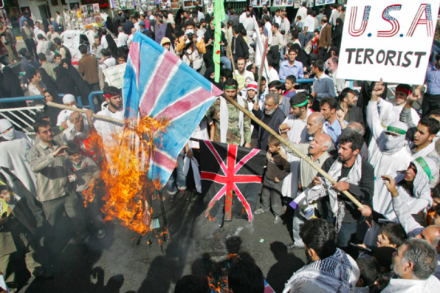
Iran has been at war with Britain for some time – it’s time that we took notice

From our UK edition

When British troops were on patrol in Iraq and Afghanistan, we faced many enemies, from jihadis to press-ganged civilians. But he most terrifying ones lay buried. Bullets usually miss. Improvised explosive devices – IEDs — don’t. They are frighteningly simple. Old munitions wired together or plastic bottles packed with fertiliser and ball-bearings could destroy a vehicle and kill its passengers. During the four years I served in Afghanistan, I saw IEDs evolve: first came remote triggers, then pressure plates and then low-metal-content devices. Curiously, IEDs evolved in a similar way in Iraq. This should be no surprise, since the groups trying to kill British troops shared one common resource: Iranian support. For years, Tehran has armed insurgents.

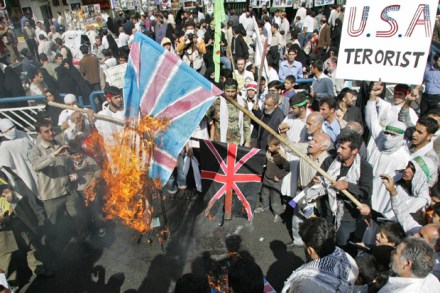
Iran’s hidden war with the West – and what we can do to fight back

From our UK edition

When British troops were on patrol in Iraq and Afghanistan, we faced many enemies, from jihadis to press-ganged civilians. But for me, the most terrifying ones lay buried. Bullets usually miss. Improvised explosive devices – IEDs — don’t. They are frighteningly simple. Old munitions wired together or plastic bottles packed with fertiliser and ball-bearings could destroy a vehicle and kill its passengers. During my four years in Afghanistan I saw IEDs evolve: first came remote triggers, then pressure plates and then low-metal-content devices. Curiously, IEDs evolved in a similar way in Iraq. This should be no surprise, since the groups trying to kill British troops shared one common resource: Iranian support. For years, Tehran has armed insurgents.

What has Hezbollah’s Secretary General been reading this summer?

From our UK edition

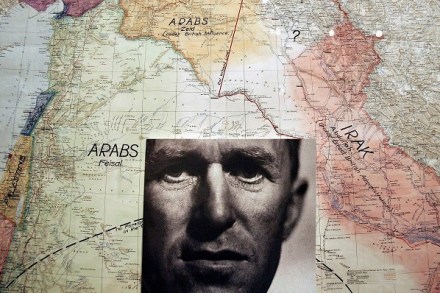
In Britain we seem to be obsessed by what our politicians are reading this summer. It tells us, so we think, about the way they’re thinking or perhaps just what they want us to think they’re thinking. Why don’t we study what other political leaders are interested in? Lebanon’s Daily Star offered us a revealing vision of one regional actor, Hezbollah’s Secretary General Sayyed Hassan Nasrallah. Sitting with Lebanon’s veteran Druze leader, Walid Jumblatt, in late July, Nasrallah has a copy of James Barr’s A Line in the Sand in front of him. The book, one of the best researched and most readable studies of the making of the modern near east (read The Spectator’s review here), offers a tantalising glimpse of what might have been.

Nato has a choice: stop ISIS or witness another genocide

From our UK edition

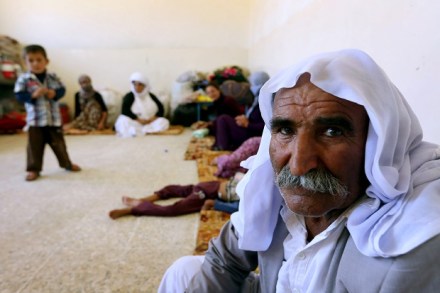
What we are witnessing in Northern Iraq today is the unwinding of lives. Where once they were blurred, intertwined and interdependent, now they are monochrome, distinct, raw. The process is bloody and cruel. The Yazidi community, which has worshipped in the area since before Jonah warned the king of Nineveh to repent, is being deliberately murdered. This isn’t the first time we have watched genocide happen. In Rwanda one group committed the worst massacres since the Holocaust while we stood by. For many reasonable military reasons it was thought too difficult to act: the distance, the internal isolation, the confusion.

America won’t be Europe’s policeman any more – but that’s good for Britain

From our UK edition

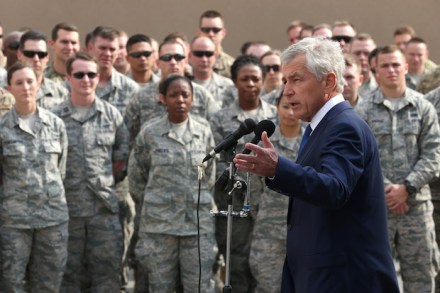
The US Army's cuts are good for Britain. They will force our European allies to think about their own defence and re-evaluate their policies. This will highlight the benefits of NATO’s guarantees and put the focus in the EU on what matters. For over twenty years European members of NATO have had a free ride. They've enjoyed the protection of a shield on land and a fleet at sea wherever needed, and have prospered as a result. Insurance without premiums has been one hell of a gift. It has also led to what Sir Humphrey would call 'courageous' assumptions. Just think what hasn't happened. The Baltic States haven't been invaded, Poland hasn't been cowed like Ukraine or Belarus, Japan hasn't feared China, oil hasn't hit $300 a barrel and piracy has had little impact on world trade.