Will Nicoll

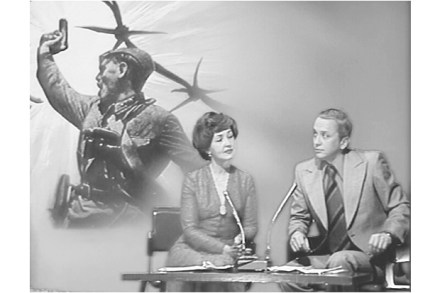
The great Soviet gameshow

From our UK edition

In the opening chapter of her history of Soviet Central Television, Christine E. Evans observes two Russian televisual displays of 2014. February saw the opening ceremony of the Sochi Winter Olympics — which sought to depict a millennium of national history using glitter and gameshow grandiosity. April brought the stern, but no less theatrical, Direct Line with Vladimir Putin — an annual phone-in — during which the president celebrated Crimea’s annexation with an orgy of televisual patriotism. Although more glitzy than their Soviet-era equivalents, both can be seen as displays of continuity in Russian broadcasting, rather than incidences of invention.
The bane of Albania

From our UK edition

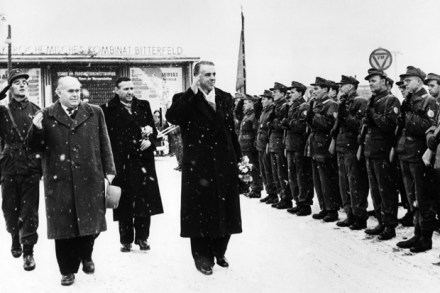
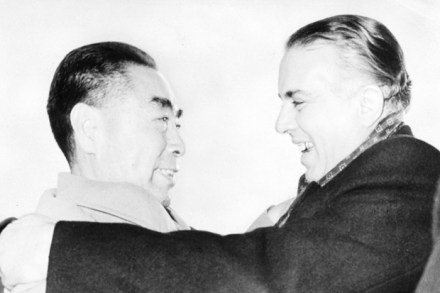
In his final public appearance, the Albanian dictator Enver Hoxha addressed a Tirana crowd to commemorate the capital’s liberation from German invaders on the 28 November 1944. The Hoxha who had entered the city as a communist partisan was now a weak old man. He was often confined to a wheelchair, had to be hoisted on to his podium using a custom-built lift and was only prevented from falling by camouflaged safety rails. The dictator was deeply vulnerable but still formidably powerful.

Reds against Whites

From our UK edition

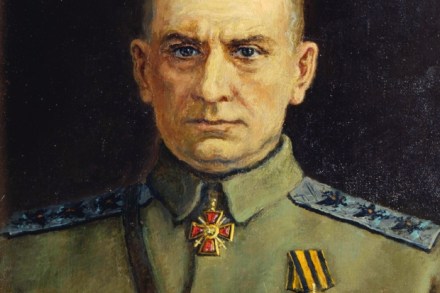
On the 24–25 October 1917 (according to the Julian Calendar, or 7–8 November according to the Gregorian) the political disputes which had shaken the Russian empire reached a peak. The provisional government, or All-Russian Soviet of Workers’ and Soldiers’ Deputies (which had been formed in the wake of the February revolution and abdication of Tsar Nicholas II) was stormed by the Bolsheviks. These men and women — whom Churchill later described as ‘swarms of typhus-bearing vermin, vampires, troops of ferocious baboons’ — quickly consolidated power in Petrograd, now St Petersburg.

A nation in trauma

From our UK edition

Albania is a small country of 2.7 million people, wedged within the Balkan peninsula. Separated from both Greece and Italy by mere kilometres of seascape and shoreline, it borders the European Union, and, with official candidate status as a member country, strongly hopes for closer ties. As Fred C. Abrahams describes it, the country’s transition from cultish Stalinist dictatorship to functioning democracy in only three decades should be a source of debate, intrigue and pride. The principal protagonists in the ‘drama’ of transition are ‘a paranoid dictator, an ambitious doctor, a scheming economist and an urban artist’.

British colonialism is once again under attack in Aatish Taseer’s sprawling Indian epic

From our UK edition

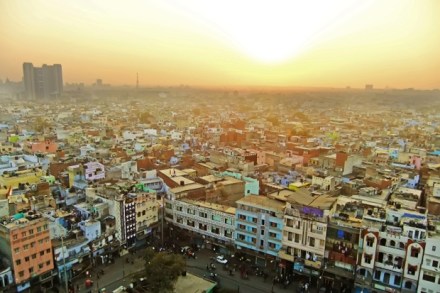
Early in the second section of Aatish Taseer’s The Way Things Were we are presented with a striking description of Delhi. The city’s bright bazaars and bald communal gardens, among them ‘the occasional tomb of a forgotten medieval official’, are ‘stitched together with the radial sprawl of Lutyens’s city’. Taseer acknowledges the landscape’s beauty, but buried in his description, with its reference to the British architect who designed much of Delhi during the empire, is the painful and stifling legacy of history. For Taseer, it is an atmosphere that infects Delhi — simultaneously a ‘submerged necropolis’ and a city where ‘the dense cold air, sulphurous and full of particles, closes over old wounds’.

Siberia beyond the Gulag Archipelago

From our UK edition

Larger than Europe and the United States combined, Siberia is an enormous swathe of Russia, spanning seven time zones and occuping 77 per cent of the country’s land mass. Ryszard Kapuscinski describes the gulags which were placed there as being amongst the greatest nightmares of the 20th century — and that image of suffering has tarnished the region irrevocably. In her masterful study of Siberia’s people, Janet M. Hartley, professor of international history at the London School of Economics and Political Science, argues that this has not only been a place of torture and starvation. While it has certainly endured miserable times, and is likely to suffer many more, it should be considered a frontier land, comparable in some ways to America.

Valium’s 50th birthday: little to celebrate

From our UK edition

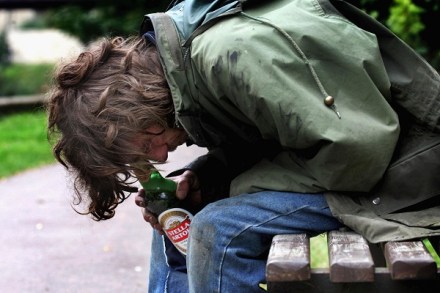
A recent report published by the charity MIND – which paints a troubling, and important portrait of Britons driven to alcohol, cigarettes and prescription medication to differing extents by the stress of working-life – makes it a prescient moment to cast the mind back to a series of very strange goings-on. The time was the late 1950s, the place a hospital canteen in the North of England. Perhaps pickings in that week’s British Medical Journal had been lean – or patients that day exasperating – because the topic of conversation was a newspaper article about a Swiss circus-master who had found a drug to calm his tigers.

Shiva Naipaul Memorial Prize: What’s waiting at Elm Tree Loan

From our UK edition

The following essay was shortlisted for the Shiva Naipaul Memorial Prize. It’s a cold, sunny morning when I take the bus to Elm Tree Loan. It’s a trip that I’ve avoided and I feel sick and dizzy. Tourists gather on St Andrew’s Square, beneath the granite plinth. They admire the bright shop windows and the old doorman, with his top hat and gold-trimmed tailcoat. Two girls pose for photographs with him and giggle, then bow theatrically when he waves them through the shining glass doors. From the bus-stop, I watch the shoppers disperse across the drab city gardens. Bandaged in autumn colours and clutching paper bags, they look like parchment confetti, strewn on the auburn grass beneath the sun.