Marcus Berkmann

Marcus Berkmann’s Berkmann’s Pop Miscellany is out in June.

A feast for quiz-lovers: Christmas gift books

From our UK edition

The Christmas gift book market is a fascinating thing. Things come into fashion, other things drop out, although the desire to amuse and/or make the mind boggle is pretty much constant. This year’s book that performs both tasks admirably is The History of Art in One Sentence (Bloomsbury, £14.99) by Verity Babbs, which I am assured is her real name. She is an art historian and a comedian, an unusual combination in academe and a very effective one here. Her task is to guide us through 50 art movements from the past 500 years, one sentence at a time. Each short chapter asks ten judicious questions about the movement, then profiles three significant artists and three significant artworks. And it’s all done with a delicious light humour that makes the whole book sing.

Gift books for Christmas — reviewed by Marcus Berkmann

From our UK edition

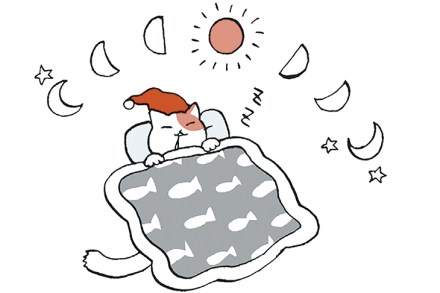
We have a fine crop of Christmas gift books this year, so good that some of them actually qualify as real books. This is a rare and beautiful thing. What Cats Want (Bloomsbury, £12.99) is by Dr Yuki Hattori, billed here as ‘Japan’s leading cat doctor’, as though anyone is going to argue with that. It’s simply a guide to understanding your cat — clear, concise, very pleasingly designed and with some lovely, quintessentially Japanese illustrations, mainly of cats.

Nostalgia for snooker’s glory days

From our UK edition

Forty or so years ago, when I was at university, my friends Richard, Terence, Harry and I would often go to the Oxford Union to play snooker. There were two immaculate snooker tables in a large room at the top of the building and almost no one ever went there except for us. Unfortunately, our enthusiasm was not matched by concomitant talent. On one occasion it took us 34 minutes to pot a single ball. At a certain point in that endless non-break, Terence had an easy pot to a distant hole. Saying ‘I was going to pot the ball, but instead I’m going to do this’, he hit the ball with such misapplied force that it leapt in the air, off the table altogether and very nearly out of the door. Our frames would take hours.

The titans who shaped Test cricket

From our UK edition

Cricket histories are a dangerous genre both for writers and readers. They can be incredibly boring, the dullest of all probably being John Major’s weighty tome, which said everything you knew it would say as drearily as you feared. So Tim Wigmore, a young shaver who writes on cricket for the Daily Telegraph, has entered hazardous territory. Speaking as a proud cricket badger, who even has a book by Merv Hughes on his shelf (Dear Merv, 2001), I will admit that I have read rather too many cricket histories, and I swore that it would be a cold day in hell (or possibly at the county ground in Derby) before I would willingly start another. But Wigmore has written a splendid, comprehensive book full of good stories and droll asides.

A shortage of Nigels and other calamities: humorous stocking-fillers

From our UK edition

This is the part of the run-up to Christmas I always look forward to most – the ‘silly’ books, loo books, even non-books produced by serious publishers who may resent the huge piles of money they make every year while delicate, thoughtful literary novels remain unbought and unread. As it happens, I have just finished a wholly unsatisfactory book of short stories – no names, no packdrill – so a few weeks of loo books have proved surprisingly refreshing, like a palate cleanser after a hideously over-thought restaurant meal. They are all recommended for grumpy old relatives, or even yourself. Ysenda Maxtone Graham’s Scream (Abacus, £14.99) comes in the familiar category of ‘Rants About Life’, and is full of gobbets of unadorned rage about features of modern living.

Wonderwall is the worst song ever written

From our UK edition

It could be said that the last thing we need now is an Oasis reunion. I read somewhere that there are 56 conflicts in the world at the moment, and that doesn’t count what would surely happen if you put the Gallagher brothers in the same room. Siblings have a poor history in rock ’n’ roll – one immediately thinks of John and Tom Fogerty of Creedence Clearwater Revival, who didn’t talk for the last 20 years of Tom’s life, or Ray and Dave Davies of the Kinks. In 1971, Ray and Dave were dining in Manhattan. Dave tried to steal one of Ray’s French fries. Ray stabbed his brother in the chest with a fork. At Dave’s 50th birthday, Ray stamped on his cake.

Will there ever be another cricket captain like Richie Benaud?

From our UK edition

Some books have good titles. Many books, sadly, have terrible titles. But a few rare books have the perfect title – the one that tells you briefly what the book is about, and also whether you want to own it. Richie Benaud’s Blue Suede Shoes is one such. If that title grabs you, you should go out and buy it now, because the book is brilliant. If it doesn’t, you have probably stopped reading this review already and turned over to Melissa Kite. Either you love Blofeld’s ‘My Dear Old Thing’ eccentricities or you want him slowly roasted over an open fire Harry Ricketts is a poet and critic who was born in London but has lived in New Zealand since 1981.

A choice of this year’s gift books

From our UK edition

Obviously, the best and funniest gift book out this Christmas is my own Still a Bit of Snap in the Celery (Abacus, £16.99), about the horrors and delights of being 60, but I am far too humble and modest to mention it, so I won’t. Very nearly as good is Bob Cryer’s Barry Cryer: Same Time Tomorrow? (Bloomsbury, £20), a timely biography of his father, the legendary comedian and comic writer who died at a great age last year. I knew Barry a little –I used to go up to Hatch End, where he lived, with my friend Mark Mason and meet him in his local pub – and I can confirm he was every bit as kind, generous and, above all, funny as everyone says he was. Here was a man who could only remember falling out with one fellow comic, Jimmy Tarbuck, and even Tarby he eventually made up with.

The Queen Mother’s tipsy bons mots and other stocking fillers

From our UK edition

The standard complaint of anyone doing a Christmas gift books guide is that the books aren’t up to much. I myself may have moaned to this effect in the past. But either they are getting better or my critical faculties are beginning to fail. I think it’s the former, but if I’m wrong don’t be surprised if I’m sucking on milky rusks by this time next year. My daft picture book of the season – a vital category – is Ryan Herman’s Remarkable Football Grounds (Pavilion, £25), which is exactly what it seems to be: a collection of colour photographs of some of the most spectacular football grounds in the world. There are all the usual suspects, such as Anfield and Old Trafford, and others that resemble a crocodile, an armadillo or a chocolate box.

Elephants walk on tiptoes — but can they dance? This year’s stocking-fillers explore such puzzles

From our UK edition

It’s almost a shock to admit it, but this year’s gift books aren’t bad at all. It’s even possible that, should you be given one of these for Christmas by the aunt who hates you or the brother who merely despises you, you might actually enjoy it — more than the acrylic scarf or the comedy socks that I always get from my least favourite relatives, anyway. What with one thing and another, there are roughly four million new books by comedians, all written during lockdown when there was nothing else to do. The best I read was Bob Mortimer’s sweet, elegiac memoir And Away...

A load of oddballs: the eccentricities of past cricketing heroes

From our UK edition

For reasons I can’t seem to remember, I have read an awful lot of cricketing histories. The dullest, by a distance, was Sir John Major’s plodding effort, a labour of love to write, I’m sure, but a real labour to read. One of the most astute was Sir Derek Birley’s magisterial A Social History of English Cricket. It apparently helps to be a knight of the realm if you wish to get your cricketing history into hard covers. Richard H. Thomas isn’t there yet — he’s an associate professor of journalism at Swansea university — but his book is so absorbing and entertaining I would be surprised if the offer of at least a CBE wasn’t already in the post. For Thomas has done something unusual but actually very simple and effective.

Has the vaccine cured my long Covid?

From our UK edition

Everyone has their own Covid-19 story, and here’s mine. I caught it in Marks & Spencer in late March last year, when 200 clearly deranged panic-buyers set about stripping the store of its every last ready meal. Web designers grasping the last known packet of Our Best Ever Prawn Cocktail, estate agents fighting over the gooseberry and elderflower yoghurts: it felt like the end of times, and was actually one of the scariest experiences I have ever had. My friend Russell got it at around the same point at his daughter’s PTA meeting. He spent five weeks in hospital. Another parent died. There were four of us in this small flat. We knew if one of us got it, we all would. It was my daughter Martha, aged 20, who first started showing symptoms.

Is it too late to save cricket?

From our UK edition

The news that cricket is returning to Channel 4 for the forthcoming series between India and England has been greeted with relief by cricket fans and absolute mystification by everyone else. In 2005, after the greatest Ashes series any of us will ever see, the England and Wales Cricket Board (ECB) signed a long-term deal with Sky Sports, which made the ECB a fortune and blew a huge hole in cricket’s potential television audience. To this day I have cricket-mad friends who refuse to sign up to Sky Sports, either because it is owned by Rupert Murdoch or because it’s so bloody expensive, or possibly both.

The magnificence of the Covid ‘business lunch’ loophole

From our UK edition

A friend of mine went for a walk in the Cotswolds last weekend with his wife. At around four o’clock, tired but happy, they fetched up at a country pub. ‘You’ll have to eat a substantial meal,’ said the landlady, crossly. ‘But it’s four o’clock,’ said my friend. ‘We’re not hungry.’ The landlady tutted and showed him a long and expensive menu. My friend and his wife turned around and walked out of the pub. This, I think we can safely say, represents one end of the Tier 2 pub spectrum. At the other is a pub I know which used to be up the road from the local police station. This pub had, and continues to have, a famously good relationship with the rozzers: late-night lock-ins have long been a speciality.

Why are so many people still going to the pub?

From our UK edition

Pubs are fascinating at the moment. On the day that the Prime Minister advised us not to attend them, I turned up at one in leafy Highgate, London N6 to find it much fuller than you might expect. I’m not sure that’s entirely a bad thing. People are still getting out, having a jolly time — but carefully. At the Woodman earlier this week, while I sat alone with my book and a drink, everyone was very politely giving each other a metre of space because that’s now the done thing. One couple, in the early stages of courtship, were wondering how close they could get to each other. She was keen. He was less so. I’d dump him, if I were her. In France, Spain and Italy all bars and restaurants have been closed and everyone has been ordered to stay at home.

The unwritten rules of sending Christmas cards

From our UK edition

No one sends Christmas cards any more. Except that I do, and you might, and a few other people do too. But overall, cards have become so expensive, time-consuming and, let’s admit it, unfashionable that many people have abandoned them with some relief. Some of them rather piously tell us the money thus saved is now going to charity. Others, even more piously, say they are no longer sending cards because of the waste of planetary resources, and they now prefer more ecologically sustainable methods of celebrating Christmas. These are often the people who then fly to New York to go Christmas shopping. I love cards. I like buying them, I like writing them, and most of all, I like receiving them.

Children’s questions about death are consistently good fun

From our UK edition

What strikes me most about the Christmas gift-book industry — for industry it surely is, as I can confirm, having toiled on that production line myself — is the incurable optimism of everyone concerned. After all, most of these books are terrible. Some are merely appalling. But the simple act of writing and publishing them is to hope beyond hope that this will be the year for you, the year that your not-very-good book will become a bestseller and buy you everything you want and need, and that no one will notice its manifest flaws until it’s far too late. Or maybe not; because every year a few decent titles do somehow manage to peek through the clouds. These are the ones that genuinely deserve to be bought, read and loved.

The lessons I learned at my Oxford gaudy

From our UK edition

I went to a gaudy last weekend. Several British universities now host these splendid events; mine was at Worcester College, Oxford, from where I graduated in 1981 with a double third in mathematics. A gaudy is essentially a reunion weekend with knobs on. At Worcester they are blessedly free, which is great for paups like me who can enjoy the exceptionally good food and, particularly, wine with a huge stupid smile. (The only cost was £42 for a guest room for a night, and my God do you need that.) Gaudies typically occur for each year’s intake only every seven years, and when you get the invitation you need to respond by return, because if you don’t you won’t get in.

The elegance and humour of Neville Cardus

From our UK edition

As a fully paid-up, old-school cricket tragic, I astound myself that I have read almost no Neville Cardus. How can that be? He was, in his lifetime, the doyen of cricket writers, mainly because he effectively invented the form. Before he started writing for the Manchester Guardian in 1919, cricket journalists reported the score and little else. And what little else, you could probably have done without. As Duncan Hamilton says in his biography: Before Cardus, there were cricket writers who still called the ball ‘the crimson rambler’, referred to the wicketkeeper as ‘the custodian of the gauntlets’ and saw the ball speed ‘across the greensward’, as though the vocabulary of Merrie Olde England had never gone away. Cardus swept all that aside.

Cricket’s guilty men: my list of who deserves to be sacked for the Ashes debacle

From our UK edition

I suppose the question is who we sack first. For like many, if not most England fans, I am at a stage beyond rage, beyond reasonable doubt, beyond all good sense. I want blood. As a friend of mine who supports Everton posted on Facebook this morning, ‘Name two seven-letter sports teams beginning with E who will always let you down.’ The candidates for the chop are as follows: 1. Jason Roy as opening batsman. Dear god, I could do better. My old friend Simon, who used to open for the team I play for, could do better. He played 252 games for us and averages just over seven. He has just one shot, a smear down to third man. That’s one shot more than Jason Roy, unless you count the firm-footed edge to the wicketkeeper. 2. Trevor Baylis as coach.