Culture

Culture

The good, the bad and the ugly in books, exhibitions, cinema, TV, dance, music, podcasts and theatre.

Why the most important years in history were from 1347 to 1352

More from Books

A group of retired Somerset farmers were sitting about in the early 1960s, so Ian Mortimer’s story goes, debating which farming invention had most changed their lives. Was it the tractor? Fertilisers? Pesticides? Silos? No, they agreed, it was the Wellington boot. Mortimer tells this old story to illustrate that ‘it is not always the most dramatic changes that make a difference to our lives’. And for all the wars, plagues, renaissances and revolutions documented in this lively survey of 1,000 years of western history, they are outweighed by quieter forms of change: the rise of peace in the 11th century, for instance, or that of record-keeping in the 13th. Later, there are all the ‘-isations’ — urban, industrial, liberal, global.

Cronenberg attempts a teleportation from cinema to fiction. Cover your eyes…

More from Books

Following his beginnings as a science-fiction horror director, David Cronenberg has spent the past decades transforming himself into one of cinema’s most literary filmmakers. He has adapted for the screen — often brilliantly — novels by J.G. Ballard, William Burroughs and Don DeLillo. In each, he has paraded his obsession with lurid mutations in human form wrought by technology, disease and the imagination. In Crash (1996), he had bodies melding with machinery. In Naked Lunch (1991), he had bodies melding with insects — plus insects melding with typewriters.

Was John Cleese ever funny?

More from Books

Like many of my generation I was enchanted by the surrealistic irreverence of Monty Python’s Flying Circus, until I overheard other boys — it was never girls — excitedly murdering the Parrot Sketch: ‘Ah yes, the Norwegian Blue — lovely plumage…’ This was not out of a snobbish disdain for popularity; I still loved the Beatles, after all. What made me wince was that the boys in question obviously lacked any sense of humour, and had adopted the show as a kind of prosthesis — which would explain its huge success in Germany.

Things to do: read this book

More from Books

It would be perverse not to succumb to the temptation to write this review as a list. So, the first item is how very handsome an object this book is: sturdy and smooth and substantial and full of white space and full-page illustrations (my favourite is Nick Cave’s homemade dictionary, which has two full pages). How much less satisfactory it will be in its e-form. This is somewhat ironic, as it had its genesis as a website, being a companion to the equally splendidly produced Letters of Note, such a hit last Christmas. Item two is that it is just as engrossing as that former volume. Indeed, judging from the number of shared contributors — F. Scott Fitzgerald, Leonardo da Vinci, Einstein, Vonnegut — it is less a companion, more an offspring of the first.

A Jamaican civil war, with cameos from Bob Marley

More from Books

There are many more than seven killings in this ironically titled novel — in fact very long — that starts off set in the Kingston, Jamaica, of the 1970s, amid an efflorescence of political violence. The two major parties, the right-wing Jamaica Labour Party and the left-wing People’s National Party, were pouring guns into West Kingston’s slums to create loyal voting ‘garrisons’, controlled by neighbourhood dons — because ‘who-ever win Kingston win Jamaica and whoever win West Kingston win Kingston’, as one of Marlon James’s characters explains. The CIA was siding with the JLP, or, as another character puts it, ‘squatting on the city, its lumpy ass leaving the sweat print of the Cold War’.

The Tudor sleuth who’s cracked the secret of suspense

More from Books

Some reviewers are slick and quick. Rapid readers, they remember everything, take no notes, quote at will. I’m the plodding sort, making more notes than I can ever use and underlining so many quotes that, if I put them all in, it would constitute a republication of the book. But I’ve not done this with Lamentation, the sixth novel in C.J. Sansom’s Tudor crime series featuring his credible and likeable hero, the lawyer Matthew Shardlake. I intended to proceed as normal, but so engrossing is the tale that I didn’t pause long enough to take a note. Even when judged by the high standards of the earlier Shardlake novels, this one stands out — not least because it successfully maintains suspense for over 600 pages, which is going it a bit.

Terror plots, threats to liberties, banks in crisis: welcome to Britain during the Napoleonic Wars

Lead book review

In our own troubled times it is useful and comforting to recollect that ’twas ever thus.  Violent threats against prominent politicians? Jenny Uglow reminds us that in 1802 Colonel Edward Despard, a British officer turned radical agitator, was the last person in England to be sentenced to be hanged, drawn and quartered, for a plot to kill King George III and the cabinet; while in 1812, the wildly unpopular hardline Tory Spencer Perceval became the only prime minister (so far) to be assassinated, the victim of John Bellingham, a deranged bankrupt. Threats to civil liberties?

Care for the dying needs more imagination – and less hospitalisation

More from Books

‘To die of age is a rare, singular and extra-ordinary death’, wrote Montaigne, ‘and so much less natural than others: it is the last and extremest form of dying.’ Not any more. Thanks to the marvels of modern medicine, we are limping and stumbling and mumbling and forgetting our way into the grave at greater ages than ever before. Since such longevity is still new, we’re not really prepared for it: we are dying beyond our means, outliving our usefulness, our pensions and even our individual body parts. Outliving, too, the patience of our families. In affluent countries like ours, the spectre of the care home holds more menace than death itself. Atul Gawande is a surgeon, as well as a professor at Harvard Medical School.

Dylan Thomas: speeches for Hitler, balderdash for Walton and the true meaning of Under Milk Wood

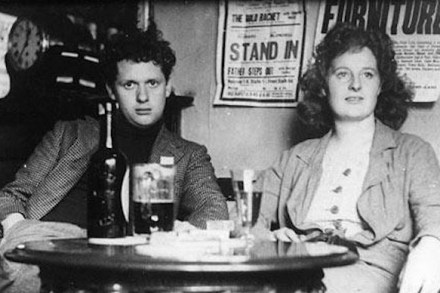
My father came across Dylan Thomas in a Swansea pub in 1947. ‘Chap over there,’ said one of the regulars ‘is a poet.’ ‘What’s his name?’ asked my father. ‘No idea.’ That Thomas’s celebrity was rather patchy, even in his hometown just a few years before his death, illustrates how much his fame owes to the fans and memorialisers who have stoked the legend ever since. His centenary falls on 27th October. He was morose, shy, florid-faced and hyper-sensitive. He described himself as having ‘the countenance of an excommunicated cherub'. His first poems, published in the 1930s, were greeted with cautious interest. Edith Sitwell championed him. So did Cyril Connolly. Sceptics found his imagery inscrutable or meaningless.

The history of the home – with the spittoons put back in

More from Books

In 1978, a family of Russian ‘Old Believers’ living in a supposedly uninhabited part of the Siberian taiga were discovered by a team of geologists. They had fled Stalinist persecution, and for half a century had lived in isolation in a ‘low, soot-blackened log kennel’ with a floor made of potato peelings and crushed nutshells, one tiny window, a fire, a single rushlight, and one item of furniture — an axe-hewn table. Five adults lived without sanitation in a space seven steps long and five steps wide. The geologists were horrified.

The man who was mistaken for a deer

More from Books

‘And anything by Michael Connelly’ were the final words of advice from one of my best friends in discussing books to read one summer. I’ve been hooked ever since by a master of narrative tension, complex but believable plotting and three-dimensional characters. Luckily Connelly is a prolific author of detective and investigative fiction with a number of protagonists who sometimes appear in each other’s books. His latest novel maintains the same high standard and relentless forward impetus that keeps one turning the pages. Hieronymous ‘Harry’ Bosch, a Vietnam veteran, has had a distinguished but somewhat bumpy career as a detective and is now deployed in the Open-Unsolved unit of the Los Angeles Police Department looking at old, cold murder cases.

Jeff Koons’s latest achievement: a new standard in prolix, complacent, solipsistic, muddled drivel

More from Books

Jeff Koons is, by measures understood in Wall Street, the most successful living artist. But he’s a slick brand manager rather than a tormented creative soul. The Koons brand includes a stainless steel bust of Louis XIV, a red aluminium lobster and balloon dogs, plus countless knock-offs of novelty-store dross. It is tempting to think Koons a vulgarian and condemn his art as crapola, but to do so would be lazy. There’s no point in criticising him for his cynical exploitation of the credulous art market, since that is exactly his intention. Futile to damn him as vacuous; he’d be flattered. All artistic achievement can be assessed in terms of skill, talent and genius. Koons has very little technical skill: his work is made by production-line assistants.

Lolita’s secret revenge mission, and other daft theories of literary spite

More from Books

Richard Bradford has written more than 20 books of literary criticism and biography. This latest one is a compendium of writers’ feuds and resentments. Reading Literary Rivals is a curious experience; from the quotations and bare facts you can just about make out a version of reality, but it’s fighting so hard against the author’s interpretations that it’s sometimes obscured altogether. It feels as if Bradford has done his research with a baleful monocle pressed to his eye, giving a ghastly pallor to everything he reads. When Dickens read Thackeray’s review of his work, he wrote to thank him, but when Professor Bradford read the same review, he saw nothing but mockery and malice. Nabokov and his friend Edmund Wilson disagreed about communism.

Spectator competition: tips of the slung — or poems as the Revd W.A. Spooner might have written them (plus: an author’s acknowledgments page with a twist)

The diminutive, myopic Revd W.A. Spooner was the inspiration behind the recent call for Spooneristic poems. The long-time warden of New College, Oxford bequeathed us such comic gems as ‘The Lord is a shoving leopard’ and ‘kinkering kongs their titles take’. Not everyone was laughing, though. ‘Am I the only one who finds this exercise extraordinarily difficult?’ wailed Brian Murdoch. He’s got a point. Judging the entries was a brain-addling process, so goodness knows what torture it must have been to write them. Still, it was a large and lively entry. The winners are rewarded with a well deserved £25 each. Sylvia Fairley snaffles £30.

Ezra Pound – the fascist years

More from Books

‘There are the Alps. What is there to say about them?/ They don’t make sense. Fatal glaciers, crags cranks climb, /Jumbled boulder and weed’, was Basil Bunting’s 1949 opinion of Pound’s Cantos; but as the sometime friend of Pound continued: ‘There they are, you will have to go a long way round / If you want to avoid them.’ This judgment has proved wise. Here we are in 2014, not avoiding one of the most contentious figures in 20th-century literature: poet, midwife of Eliot’s The Waste Land, economist, translator, committed Fascist, anti-Semite, avid supporter of James Joyce and Mussolini, later alleged traitor to the United States of America and — meaning he never had to stand trial for treason — patient of St Elizabeth’s psychiatric hospital, Washington DC.

When Irish nationalism meant sexual adventure

More from Books

One of the easiest mistakes to make about history is to assume that the past is like the recent past, only more so. It’s a natural human tendency to project the outcome of events backwards, ignoring the fact that the arc of history really doesn’t work like that. In the case of Ireland that tendency to see the past in terms of outcomes is particularly misleading. The state that came about less than a century ago as a result of the Easter Rising, the war of independence and partition was socially conservative and strongly Catholic. Roy Foster’s achievement is to show that this need not have been so. This book — the title is from W.B.

Why prefabs really were fab

More from Books

Sir Winston Churchill did not invent the prefab, but on 26 March 1944 he made an important broadcast promising to manufacture half a million of them to ease the new housing emergency caused by enemy bombs and the continued growth of inner-city slums. He went on to claim that these easy-to-assemble, factory-made bungalows would be ‘far superior to the ordinary cottage’. Readers of this richly illustrated, hard-hitting little book will find that Churchill was right. The new prefab — an early prototype immediately went on show at the Tate Gallery, of all places — did not meet the approval of George Bernard Shaw, who called it ‘Heartbreak House’ and that ‘Damn Tin Can’ — but seems to have been hugely enjoyed by most of those lucky enough to live in one.

Detective drama Dostoevsky-style

More from Books

In the world of Gaito Gazdanov, a Russian émigré soldier turned taxi driver who began writing fiction in the 1920s, doublings abound, though their meanings are rarely resolved. As with his great contemporary Nabokov, this hall-of-mirrors effect provides a pleasant means of exploring the fragmentary and illusory self. But it is Dostoevsky, and his novel The Double, that really loom larger here than Nabokov. Gazdanov shares Dostoevsky’s penetrating psychological insight, and is drawn to characters in the midst of a breakdown. While Gazdanov seems in thrall to these vastly different novelists, he has his own utterly distinctive voice.

The Etonian peer who became an assistant to a Mexican commie

More from Books

The lefty hereditary peer has few equals as a figure of fun, in life or literature. The late Tony Benn comes inevitably to mind here, as does the Earl of Warminster — ‘Erry’ — in Anthony Powell’s A Dance to the Music of Time. As his name would suggest, Francis John Clarence Westenra Plantagenet ‘Jack’ Hastings, the 16th Earl of Huntingdon, emerged into the world bedecked with promisingly absurd trappings. And for a time it looked as if his life would follow a predictably conventional path. But then everything changed. After some routine torturing by his nanny — she branded him with an iron — he went to Eton.

The bonkers (and not-so-bonkers) theories of what the pre-historic people of Cornwall believed

More from Books

Philip Marsden’s book is about place. He makes a distinction between place and space. In his mind ‘place’ is something resonant, evoking a connection with the land and its meaning. Marsden is obsessed with pre-history and the beliefs and practices of the earliest inhabitants of Cornwall. He cites with approval someone’s judgment that written history is a palimpsest and he is demonstrably eager to see what was written over. Although his area of special interest is Cornwall, he describes expeditions to other European countries in search of a kind of kinship of belief and practice among them.

Tolstoy’s favourite novel is a guide to being idle

More from Books

Oblomov, first published in 1859, is the charming tale of a lazy but lovable aristocrat in 19th-century Russia. The novel’s eponymous hero cannot see the point of doing anything at all, and spends his time lying in bed or wandering around his St Petersburg flat in his beloved oriental dressing gown, bickering about the dusting with his manservant. The newspaper on the desk is a year old; flies buzz from the inkwell. Oblomov broods; he worries; he thinks. The book’s author, Ivan Goncharov, is perhaps little-known now, but in its time Oblomov was hugely popular in Russia. Tolstoy, that venerable, saintly moralist, was deeply in love with it, writing: ‘Oblomov is a truly great work, the likes of which one has not seen for a long, long time.

Is it boring being the god of the sea?

More from Books

Writing to a god seems a presumptuous thing. Who are we, feeble mortal creatures whose lives pass in the blink of an eye, to address the great immortal deities? The Dutch writer Cees Nooteboom, now entering his ninth decade and never knowingly lacking in chutzpah, is not one to be deterred by such considerations. Nooteboom is an immensely civilised and civilising writer, rich in curiosity and armed with a dazzling literary style. Those who already know his writing will not be surprised to discover that on the page, if not in the briny, he is more than a match for the trident-bearing earth-shaker, god of the sea.

How a clumsy drummer started the 1848 revolutions

More from Books

There are hundreds of resounding ideas and shrewd precepts in Adam Zamoyski’s temperate yet splendidly provocative Phantom Terror. This is the history of European ultra-reactionary repression and police espionage in the half-century after the overthrow of the French monarchy in 1789-93. The instability of popular opinion, the destructiveness of angry, ignorant populism and the wretchedness of timid, suppliant leadership are laid bare by him. Yet his deadliest strictures are against the rigid, fear-driven, authoritarian reaction of the propertied classes, which he demonstrates was lethally counter-productive as well as often absurd.

From working-class heroes to Disney World mascots: the sad fate of the Chilean miners

More from Books

On 5 August 2010, 33 men entered the remote San José mine in Chile’s Atacama desert to begin their 12-hour shift. They came out again 69 days later, to be greeted by the country’s president in front of a worldwide TV audience of around 1.2 billion. A group of workers who, in many cases, had never left the local area in their lives were now global heroes. At the time, it was embarrassingly easy to see their rescue as simply the sort of good news that makes us all aware of our shared humanity. Héctor Tobar’s book, though, is a sharp reminder that the truth was a lot more complicated — and sombre — than that. As their shift started, many of the men were already worried by the rumbling sounds coming from the mine, but were ordered to carry on anyway. Then, at around 2 p.m.

My mad gay grandfather and me

Lead book review

Family history is all the rage at the moment — finding out about one’s ancestors, digging back into one’s roots. Sofka Zinovieff has written the strange, and strangely moving, tale of her family’s unorthodox relationships. By turns comical, tragicomical and melodramatic, her book often reads much like fiction, and she recounts it like a novel. The principal characters are: Gerald Berners, born in 1883; his lover, nicknamed the ‘Mad Boy’, Robert Heber-Percy, born in 1911; the author’s grandmother, Jennifer Fry, born in 1916; and the author herself, born in 1961. Zinovieff expertly interweaves their unlikely history from late Victorian England until the present day, leaving the reader on the last page with ‘a view up to the intriguing gateway of Faringdon House’.

Why you should never meet your heroes

As we become steadily accustomed to life in the Age of Celebrity, it’s become a truth that, as Mark Mason put it in the Speccie last month, ‘meeting your heroes is almost always a bad idea’. Reading the letters page in the London Review of Books, it seems that this advice extends to visiting any place associated with your heroes. Last summer Max Long, an undergraduate at Magdalen College, Oxford, arrived at Patrick Leigh Fermor’s old house at Kardamyli in Greece, hoping to pay homage to one of his heroes.

Why are sports biographies treated differently to other works?

Agatha Christie’s The Mousetrap has been running in London theatres for 62 years straight - a period that spans more than 25,000 performances. As is traditional in the genre, it ends with the suspects gathered together for a shocking denouement, during which the detective unmasks the murderer, to general horror. Despite the number of times this has happened, the identity of the killer is apparently 'the best-kept secret in show business'; at no point has any reviewer felt the need to reveal that the butler did it. On the other hand, the publication last week of two autobiographies - one by Kevin Pietersen and one by Roy Keane - were treated quite differently.