Cressida Connolly

Cressida Connolly is the author of Bad Relations.

Jesus’s female disciples remain women of mystery

From our UK edition

Is there a patron saint of conjecture? Perhaps it is a name known only to Bible scholars, who have rich cause to guard it jealously. Even if such a saint is invoked by the academy alone, the petitioning must be pretty constant. Lucky, then, that this account of the early female followers of Jesus is jointly authored, for it takes more than one person to dream up the vocabulary required for 200 pages of guesswork. As Joan Taylor and Helen Bond admit in their introduction: ‘Sometimes there’s not much to go on and we’ll need to use our imaginations.
Ann Patchett’s The Dutch House is even better on second reading

From our UK edition

Having a saint in the family is dreadful, They’re often absent, either literally or emotionally, and because they’re always thinking of higher things they can’t be expected to do prosaic stuff like take the rubbish out or pay the gas bill. They tend not to enjoy jokes, much less teasing. Worse still, they’re convinced they’re right about everything. Street angel, house devil, as the old saying has it. Do-gooders crop up here and there in fiction, from Dickens’s bustling, bossy Mrs Jellyby in Bleak House through to the long- suffering Lady Marchmain in Brideshead Revisited to Ian Bedloe, the miserably stubborn hero of Anne Tyler’s brilliant Saint Maybe.

The upsides of dementia

From our UK edition

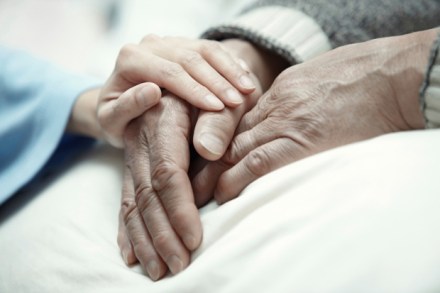
My 91-year-old father-in-law has always had a terror of hospitals. This dates from his time as a Royal Marine when, just after the second world war, he was infected with polio by a contaminated needle. The first he knew of it was when a visiting dignitary came on board ship and he was unable to lift his arm in salute. Ever since, he made it very clear that he doesn’t want to go to a hospital under any circumstances, ever. But last week he was admitted to A&E with a high temperature and I didn’t fret for one moment that he’d be alarmed. Why? He’s got late-stage dementia. He’s forgotten that he was ever frightened of needles or men in white coats. In fact, he rather enjoys the kind attention of the nurses.

Something sensational to read in the train

From our UK edition

Any memoir is a form of double-entry book-keeping, in which what has been lost is reckoned against what has been gained. It’s always easier to fill in the ‘lost’ column, since boasting is discouraged; sadness gets more attention, too, as it’s generally supposed to be more interesting than contentment. Sophie Ratcliffe includes an actual list of her losses in this wonderful and highly individual book. The items include an Australian opal her uncle gave her, a purse snatched from her at St Petersburg railway station, her father, and the exact memory of a lover’s face. ‘Not that your face was much to write home about,’ she adds. ‘Not that I could write home about it in any case.

Outpourings of love and loss

From our UK edition

The deserved success of Shaun Usher’s marvellous anthology Letters of Note has inspired several imitators, and Caroline Atkins’s sparkling collection makes an ideal companion volume. Here are missives both literary and otherwise, all of them destined never to be read by their intended recipients. Some are grave, some are tender; some are funny, several are vengeful or self-justifying. It’s a great idea for a book. A letter which goes missing is of course a standard tragedy-inducing device in fiction.  Romeo could have lived had he received Juliet’s letter; but perhaps the most heartbreaking of all is poor Tess Durbeyfield’s to Angel Clare. Never was a flap of carpet responsible for so much misery.

Ill-met by gaslight

From our UK edition

What is it about Victorian murders that so grips us? The enduring fascination of Jack the Ripper caught the imagination of the American thriller writer Patricia Cornwell to such an extent that she allegedly spent more than $6 million of her own money examining the case and producing two books on the subject. (She thinks the killer was the artist Walter Sickert.) Meanwhile, Bruce Robinson, the writer and director of Withnail and I, devoted 15 years to Ripper studies: the result, They All Love Jack, is a gloriously labyrinthine, closely argued whopper of a book, rich with conspiracy theories about freemasons and the police. (He proposes another culprit, the songwriter Michael Maybrick.

Comfort the suffering

From our UK edition

If a single book could help you to be kinder and more compassionate, could expand and deepen your understanding of other people (and possibly yourself) and make you less afraid of dying in the process, you would surely be eager to acquire it at once. Well look no further, for Grief Works is that book. The King Lears among us — whose every third thought is the grave — will need no persuading that a collection of essays about surviving bereavement is an enthralling read. For those of a more timid or sunny disposition, ask yourself this: when someone you love dies, how will you manage? The odds of avoiding grief are not in anyone’s favour. In Britain half a million people die each year and it’s estimated that each death affects at least five people.

Spectator Books of the Year: How Ali Smith’s Autumn captures the best in human nature

From our UK edition

Easily the most original novel of the year was Charlotte Hobson’s The Vanishing Futurist (Faber, £16.99). It tells the story of an English governess who finds herself caught up in the Russian Revolution; but instead of retreating to the safety of Cornwall, she stays on in order to join a sort of prototype commune run by the charismatic Futurist Nikita Slavkin. Entirely sui generis, it also boasts the year’s best cover design. This is the book I’ll be giving people for Christmas. World events were gloomy when Ann Patchett’s Commonwealth (Bloomsbury, £18.99) and Ali Smith’s Autumn (Hamish Hamilton, £16.99) appeared. Each of these books describes the best in human nature: our capacity for love and loyalty and kindness; our love of storytelling.

Between pony club and the altar

From our UK edition

If you were to take a large dragnet and scoop up all the shoppers in the haberdashery department of Peter Jones in Sloane Square, your catch would be a group of women of the kind given voice in this marvellous little book. Readers old enough to remember Joyce Grenfell will know the type. Ysenda Maxtone Graham characterises them as people who sleep with the window open in all weather; who know how to cast on and off in knitting; are thrilled by the arrival of a parcel, even if it’s just some Hoover bags bought on Amazon. They haven’t done up their kitchens since the early 1970s and they always feel homesick on Sunday evenings, even though they’re at home.

The mother of all crimes

From our UK edition

During the heatwave in the summer of 1895, the Gentlemen v. Players match at Lords Cricket Ground on 8 July attracted more than 12,000 spectators. Among the crowd that sunny day were two little boys from the East End of London, brothers Robert and Nattie Coombes, aged 13 and 12. That morning they had got themselves up and prepared their own breakfast. Their mother was in the house, but she wasn’t able to see to her boys, because during the night Robert had killed her. He had stabbed her with a knife bought expressly for this purpose and then, just to be sure she’d perished, put a pillow over her face. In the days that followed, Robert and Nattie had a fine old time. They went again to watch the cricket, where they saw W.G. Grace score his seventh century of the season.

Time out of mind

From our UK edition

There can hardly be two novelists less alike than Sebastian Faulks and Will Self, in style and in content. Faulks writes in the grand tradition of realist fiction: a list of his themes might include the brutality and waste of war, France and, of course, romantic love. Self, meanwhile, has created dystopias in which to satirise different aspects of humanity, while conjuring with all manner of stylistic invention. The one area of shared interest has been the history of psychiatry. Here, with Faulks’s new book, their preoccupations further converge. A student of literature on the lookout for a dissertation topic could do a lot worse than The Psychotic Century: 20th Century Ideas of Mental Illness and the Traumatic Effects of War in mid-period Faulks and Self.

Dick Whittington for the 21st century

From our UK edition

Novels of such scope and invention are all too rare; unusual, too, are those of real heart, whose characters you grow to love and truly care for. The Year of the Runaways has it all. The action spans continents, taking in a vast sweep of politics, religion and immigration; it also examines with tenderness and delicacy the ties that bind us, whether to family, friends or fellow travellers. Judges of forthcoming literary prizes need look no further. Rose Tremain’s The Road Home described the experience of an Eastern European immigrant arriving to look for work in England. The book (which is among Tremain’s finest) was a powerful corrective to the notion that such migrants have an easy time of things.

A noble undertaking

From our UK edition

I adore undertakers. Unlike dentists or buses or boyfriends, they’re always there when you need them: even if you call in the middle of the night you will be answered by a human, not an answer-phone message. Funeral directors (as they prefer to be called) are surely the only businesses in Britain never to greet a customer with the words: ‘Sorry love, we’re just closing.’ They are unfailingly courteous and full of good sense. They listen reverently while you recite your woes; like a therapist, but without the side effect of making you hate your family. In an age when even consultant surgeons dress in trainers, there is a pleasing dignity in the formality of their dress.

Throw away the Valium and start bragging instead

From our UK edition

This is not a book to be read in solitude. Not for the obvious reason that it’s frightening, but because every few lines some fascinating or unexpected fact forces you to exclaim: ‘Blimey! Listen to this ...’ The three authors are American psychology professors. As young academics they were much influenced by the work of the anthropologist Ernest Becker, whose final book, The Denial of Death, won the 1974 Pulitzer Prize. This work struck them as a most important and potentially fruitful area for further investigation. Over the past 30 years, between them, they seem to have invented a new area of research with the unpromising name of Terror Management Studies. This makes it sound as if they could win a lucrative contract as ideas men for IS or Boko Haram.

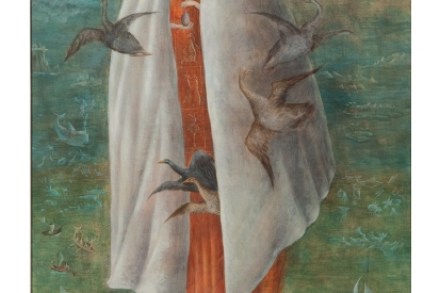
A mad menage — and menagerie – in Mexico: the life of Leonora Carrington in fictional form

From our UK edition

Leonora Carrington is one of those jack-in-the-boxes who languish forgotten in the cultural toy cupboard and then pop up every few years to a small flurry of excitement. Born in 1917, the child of a rich Lancastrian industrialist, she ran away to Paris to paint and there became the lover of Max Ernst. She lived at the heart of the Surrealist group, fleeing war-torn Europe with a gaggle of artists to sail to New York, where she kept company with Peggy Guggenheim, Dalí, André Breton, Marcel Duchamp et al. Raven-haired and chain-smoking, she spent time in a Spanish lunatic asylum, married a Mexican, painted and wrote. There were lovers, a second husband — this one a Hungarian photographer — children and a menagerie of animals.

Rugger, Robin Hood and Rupert of the Rhine: enthusiasms of the young Antonia Fraser

From our UK edition

Despite it being a well known fact that Antonia Fraser had earthly parents, I had always imagined that she had somehow skipped infancy and emerged instead from a celestial cloud, surrounded by hordes of trumpet-wielding cherubim, a fully-formed Venus in pink and gold and white. Turreted castles, a constant shower of sovereigns, a title, a jewelry box whose contents might have made Liz Taylor wince: this was the milieu suggested by her tremendous beauty and mysterious half-smile. My History, a captivating memoir of her childhood and early youth, proves otherwise. In fact Antonia’s father, Frank Pakenham, was a second son who married the very clever daughter of a Harley Street doctor.

The problem when novelists write short stories

From our UK edition

Rose Tremain walks on water. Her historical novels are absolutely marvellous, brilliantly plotted, witty and wise, with some of the best characters you’ll find anywhere. Indeed one of their number has a good claim to being the natural heir to Falstaff, his bawdy antics giving way to a more melancholy conclusion: he is to be found in both Restoration and the eponymous Merivel. Tremain’s contemporary fiction is similarly strong. With tremendous insight and sympathy, The Road Home describes the life of an Eastern European as he tries to make a new life in England. The novel is a powerful corrective to the notion that economic migrants have an easy time of things. If Nigel Farage et al haven’t read this book, it’s about time they did.

Care for the dying needs more imagination – and less hospitalisation

From our UK edition

‘To die of age is a rare, singular and extra-ordinary death’, wrote Montaigne, ‘and so much less natural than others: it is the last and extremest form of dying.’ Not any more. Thanks to the marvels of modern medicine, we are limping and stumbling and mumbling and forgetting our way into the grave at greater ages than ever before. Since such longevity is still new, we’re not really prepared for it: we are dying beyond our means, outliving our usefulness, our pensions and even our individual body parts. Outliving, too, the patience of our families. In affluent countries like ours, the spectre of the care home holds more menace than death itself. Atul Gawande is a surgeon, as well as a professor at Harvard Medical School.

If you don’t think this novel is practically perfect, I’ll send you a replacement

From our UK edition

If there were a harvest festival to honour the bounty of the autumnal book crop, the choir would be in especially good voice this year. There is much cause for rejoicing, with work from Martin Amis, Hilary Mantel, Will Self, Margaret Atwood, David Mitchell, Ali Smith, Sarah Waters. Oddly enough in these secular days, a bookish vicar could glean a sermon from any one of three new novels — by Ian McEwan, Michel Faber and Marilynne Robinson — in each of which the Bible is central. Faber’s book is said to be a science-fiction caper in which the holy book is exported to another planet, where alien inhabitants give it an enthusaistic reception. McEwan’s is a rationalist refutation of literalist Bible reading.

Improbable, unconvincing and lazy – Ian McEwan’s latest is unforgivable

From our UK edition

The Children Act could hardly be more attuned to the temper of the times, appearing just as our newspapers are full of a story about parents absconding to Spain with their critically ill child. The incident makes us wonder who should have ultimate responsibility for a sick minor: his parents, his doctors, the law? Ian McEwan’s short novel examines these very questions and, like the family currently in the headlines, his patient is a Jehovah’s Witness. Here the boy is suffering from leukemia and requires immediate treatment, but his religion forbids the transfusion of blood. The book’s heroine, Fiona Maye, is a judge whose task it is to determine what is in the boy’s best interests.