David Blackburn

The quest for the perfect malt

From our UK edition

It was poker night. Five yuppies crammed round a table in a room at the back of a south London semi. Tumblers and water were on the table. Conventions had developed. The host cooked the food (or so he said) and the four guests each brought a bottle of whisky. The guests rotated between four ‘stations’. One had to supply a standard blended scotch. Another had to provide a whisky from outside the United Kingdom. Another had to find an affordable malt (no more than £40). The last had to produce an ‘interesting’ malt. Ordinarily, this would be from a boutique producer; but if the nominee had had a good quarterly review then a special bottle would be brought. The blend was opened first and drunk last.

Nation-builders on a sticky wicket: the farce and heroism of Pakistani cricket

From our UK edition

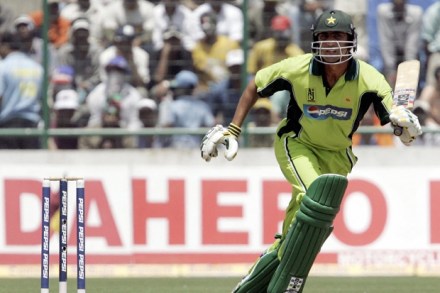
There is farce in Peter Oborne’s history of cricket in Pakistan. An impossible umpire is abducted by drunken English tourists and imprisoned in their hotel. Political uncertainty leads to the selection of rival captains and players for the same match against New Zealand. An ageing Pakistan cricketer is ruled out of a one-day international after eating a surfeit of spinach. There is tragedy, too. England toured Pakistan in 1968–69, during the strife which ultimately led to the bloody separation of West and East Pakistan (modern day Bangladesh). The players landed in Karachi, in West Pakistan, which was under a curfew. The tension was such that they were billeted in a hotel near the airport, should they need to escape.

Boris Johnson’s European crusade to save the Tory party

From our UK edition

The Sunday Telegraph has news that Boris Johnson will give a speech next week in which he will throw his weight behind a report, published by Volterra, calling for Britain to renegotiate its membership of the EU. The Telegraph reports: ‘The capital’s gross domestic product (GDP), currently £350 bn — or just over a fifth of the UK economy — would grow to £640 bn by 2034 if Britain stayed in a reformed EU and adopted policies encouraging more trade with the world’s fastest-growing markets, the report will say.  But if the UK left the EU, while pursuing its own trade-friendly policies regardless, the London economy would still grow to £615 bn over the next 20 years.

Mutually assured benefits: Francis Maude’s public sector revolution

From our UK edition

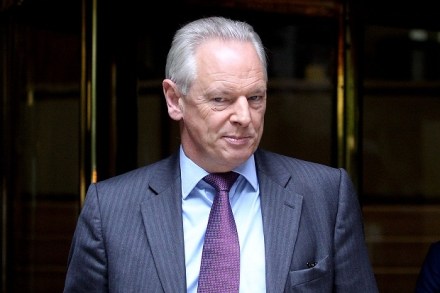
A revolution is underway in Bromley. The average time that it takes for a leg ulcer to be treated and healed has been cut from 21 weeks to 5 weeks. The partnership that has achieved this dramatic improvement is one of 100 new public sector mutuals employing 35,000 people across England. These are employee-controlled businesses that have been spun out of the public sector, and which now account for £1.5bn worth of public services. Francis Maude, the Cabinet Office minister, is possessed by ‘missionary fervour’ for mutuals.  He told Coffee House that they ‘improve morale and boost productivity.’ Productivity is among Maude’s foremost concerns.

The Tories must commit to more defence spending in the next parliament

From our UK edition

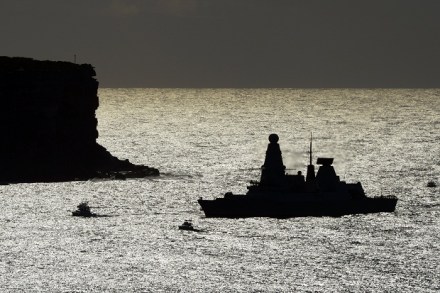
Nato is 65 years old this year; but there’s little cause for celebration. The Defence Select Committee’s latest report suggests that the populations of western Europe and North America are lukewarm about Nato’s collective defence guarantee – the principle that an attack on one Nato member is an attack on all. Paragraph 70 quotes research conducted in the aftermath of Vladimir Putin’s invasion of Georgia in 2008; it found that less than 50 per cent of the populations of major Nato powers would support the defence of the Baltic States if they were attacked.

Is NATO a busted flush?

From our UK edition

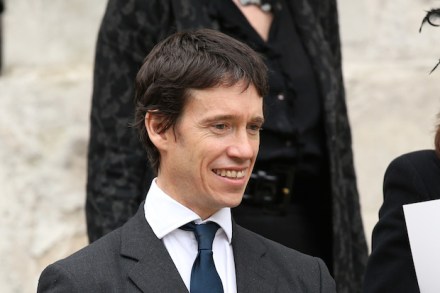
Rory Stewart is no soft-touch. When he was elected chairman of the Defence Select Committee, it was thought that he would hold the government and NATO’s feet to the fire. And so it has come to pass. The committee has published an alarming report on NATO’s unpreparedness to meet a threat from Russia. It says, in terms, that the risk of Russia attacking a NATO member, either conventionally or asymmetrically, is ‘small’ but ‘significant’. NATO has inadequate rapid reaction forces, cyber defence and strategic plans to counter this risk. The report also makes a telling political point: the public might no longer support NATO’s defining principle that an attack on one member is an attack on all.

An amateur’s guide to the glories of Gleneagles

From our UK edition

Pity the folk at Gleneagles. They have the misfortune to host the Ryder Cup this year. Nothing, surely, can surpass the drama of the previous contest between the United States and Europe, held at Medinah Country Club near Chicago in 2012. The Yanks dominated for two days before Ian Poulter, an Englishman who plays golf with an intensity that borders on divine possession, marched on to the 18th green late on the second evening. He had the bit between his teeth, having made four straight birdies to keep himself in his game. All square; the US 10–5 up in the match overall. With darkness gathering and the boozy American support raining scorn on him, Poulter sunk a tricky 12-foot putt for birdie to win. He roared in defiance — eyes wide, knees bent and fists pumping.

David Cameron hints at tax cuts for Middle England

From our UK edition

The Telegraph’s Christopher Hope tweets the news that David Cameron is open to raising the threshold for the 40p rate: NEWS! PM: "I would love to raise the 40p tax threshold, I understand the problem, but would have to look at the books before doing it" — Christopher Hope (@christopherhope) July 30, 2014   The Telegraph has been pushing for this change for some time. Cameron has, in political terms, flashed a bit of thigh at Middle England. One of the strange features of this parliament is how little credit the government gets for keeping taxes low. This sense was reinforced recently by one of Lord Ashcroft’s polls, which found that voters thought that they would pay less tax under Labour. This is errant nonsense, as this morning’s revelations suggest.

Labour wants you to pay more tax. But what about its tax bill?

From our UK edition

Westminster has got in a tizz overnight because Andy Burnham has been taped saying that he still favours a 'death tax' of 10-15%, on top of 40% inheritance tax, to pay for social care. Burnham concocted a similar plan before the last election, only for Gordon Brown (even dear old Gordon Brown recognised a loser) drop it. Guido has a recording of Burnham’s comments, which were made at the Fabian Society’s Summer Conference in June. Burnham was musing aimlessly, rather than articulating party policy. But, that said, one might easily draw the conclusion from this and other musings, such as Harriet Harman’s views on sports betting and football, that Labour has a rapacious attitude to your money. In view of the above one would expect Labour to be paying lots of tax.

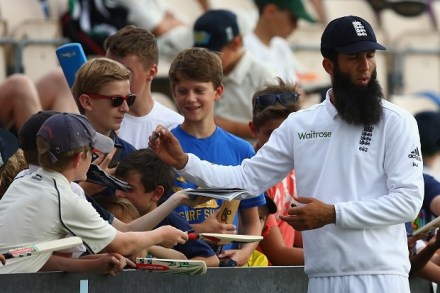
Moeen Ali reminds us that sometimes sport is the only place for politics

From our UK edition

Moeen Ali, the England cricketer, faces a possible reprimand after the International Cricket Council (ICC), the game’s governing body, censured him for wearing two wristbands, one saying ‘Save Gaza’, the other ‘Free Palestine’. International cricketers are, you see, prohibited from making political statements on the field. The English Cricket Board, which is not above making political statements (as its various boycotts of Robert Mugabe’s Zimbabwe suggest), dissents from the ICC’s view, and says that Moeen’s stance is ‘humanitarian not political’. What, then, of ‘Save Gaza’ and ‘Free Palestine’? There is politics here. And, yes, it is partial.

David Cameron aims at Ukip and attacks Labour with immigration clamp-down

From our UK edition

The government has unveiled a set of measures to curb immigration. David Cameron has written an article in the Telegraph about what the government has already achieved and what it plans to do now. He has three themes. 1). To tackle illegal immigration. Cameron says that the government has shut more than 750 of ‘bogus’ colleges. He wants to go further: colleges will lose their licenses if 10 per cent of their pupils are refused visas. Cameron also repeats some of the provisions of the Immigration Act 2014. From November, for example, a system will be imposed to ensure that landlords have to account for the immigration status of their tenants.

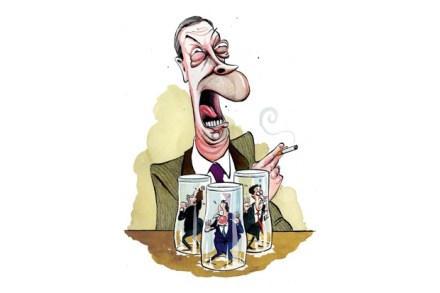
Labour confirms Tory strategy: Vote Nigel, Get Ed

From our UK edition

Talk to most Tory strategists about Ukip and Ed Miliband and they say something along the lines of ‘Vote Farage, get Miliband’. They hope that this will deter people from voting Ukip or win back those Ukip supporters who are not irreconcilable to the Tories. The Telegraph has news that Labour’s private polling confirms the Tory view: Ed Miliband will win Downing Street if Ukip polls 9 per cent of voters, which it is more than capable of doing on current projections. The Tories, I suspect, will be fairly pleased that Labour has published this information. It reinforces what we’ve known all along: an unpopular left-wing party will win power if the right remains divided.

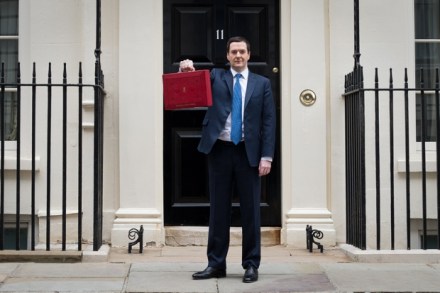
George Osborne’s taxing dilemma

From our UK edition

Some of what David Smith, author of the essential Economic Outlook column in the Sunday Times, says today will be salve to George Osborne: ‘…the government intended to spend £722bn in the 2013-14 fiscal year. In fact, it spent £714bn. Spending has been lower each year than set out in 2010. Current spending was originally intended to be £679bn in 2013-14. In fact, it was £668bn. Unusually for any government, spending has come in comfortably within budget. There has been no slippage.’ Other parts will not: ‘Where there has been slippage is in tax receipts, which have been weaker than expected.

Ukip MPs would have to trim and compromise like everyone else, wouldn’t they?

From our UK edition

Ukip are holding an action day in Thurrock today. Their tails are up at the moment because a recent poll of marginal seats by Lord Ashcroft put them in first in Thurrock on 36%. The party also leads in Thanet South, according to this round of polling. Ukip very kindly offered me the chance to interview its candidate in Thurrock, Tim Aker MEP (pictured above). I declined due to diary commitments; but I did submit some written questions which I thought might prove relevant if Aker was indeed elected to parliament. I haven’t heard anything back from Ukip, so I reproduce them here for readers of Coffee House to consider: 1).

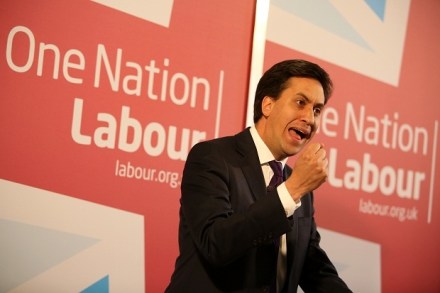
Ed Miliband stakes all on his ‘big choice’

From our UK edition

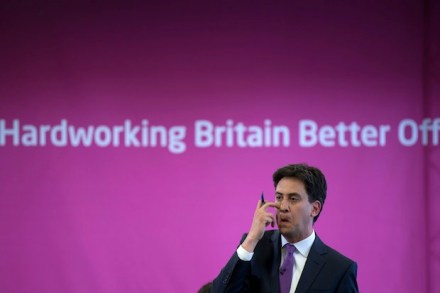
Labour will launch its summer campaign later today. The centre-piece is Ed Miliband’s speech. He will present a ‘big choice’ to the British public, arguing that they cannot afford 5 more years of Conservative rule. Miliband’s argument is simple: the economy is broken, only we can fix it; the NHS is threatened, only we can save it; the Tories represent the few, only we care for the many. You will have heard these mantras many times before; but, this time, the presentation is different. The speech bears the mark of David Axelrod, who is busy ‘reframing’ Ed Miliband as an honest yeoman of the shires rather than a metropolitan oddball. Rafael Behr of the Guardian has an extensive account of this ‘reframing’ effort.

No EU agreement on ‘Tier 3’ sanctions against Russia

From our UK edition

Sir Malcolm Rifkind was right: there was no agreement in Europe on serious against Russia. The FT’s Peter Spiegel tweets the news that many have been expecting: The #EU ambassadors meeting finally breaks. No decision on "phase three" sanctions, but meeting again tomorrow. And maybe Mon. And Tues. — Peter Spiegel (@SpiegelPeter) July 24, 2014   The EU's account of the meeting refers, comically, to an 'exchange of views' on the 'preparatory work' on tier three sanctions. There was some agreement on the extended list of 'Putin cronies'. Zero Hedge has a summary of the discussion, drawn from a variety of sources.

Labour’s sports betting levy will hit poor punters

From our UK edition

Harriet Harman has set the hare running this morning by proposing a levy on sports betting. The shadow sports minister Clive Efford said: ‘We believe it is right that businesses that make money from sport should contribute to sport. We are consulting on whether we should introduce a levy on betting, including online betting, to fund gambling awareness and support for problem gambling but also to improve community sports facilities and clubs.’ Harman and Efford have also singled out the Premier League. They propose that its voluntary levy on broadcast deals (worth £5.5bn) be turned into a ‘proper tax’, which would raise £275m for grassroots football. The improvement of grass roots sport is a noble ambition, and one supported by the gambling industry.

What are the chances of Europe agreeing substantial sanctions against Russia tomorrow?

From our UK edition

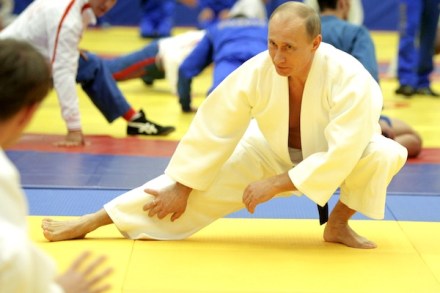
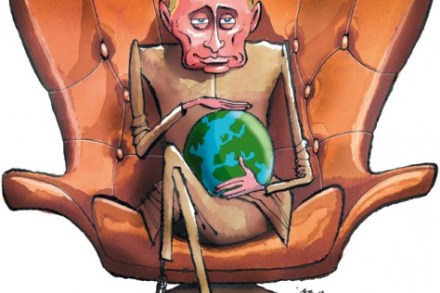
‘Somewhere between zero and minus five.’ That is the verdict of former Foreign Secretary and current Chairman of the Intelligence and Security Committee, Sir Malcolm Rifkind, to the question in the headline. The general consensus is that the European Union will not – indeed, cannot – agree substantial sanctions against Russia. European countries are, variously, too dependent on Russian trade and resources, or too weak in themselves, to punish Putin. The disagreements at yesterday’s summit were plain to see. Europe, the narrative goes, can only agree on more provisions against ‘cronies’ who use international markets to conduct their nefarious business and then spend their spoils in the great playgrounds of the West (see Taki for details).

Boris Johnson won’t play tennis with Putin’s cronies

From our UK edition

'I think you have to do stuff that actually hits Putin and his government where it hurts. I know about this tennis match – they volunteered me to play tennis with some geezer. It is very important full checks are carried out to make sure this is not someone who is an intimate or a crony.

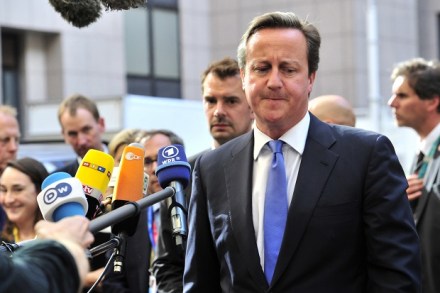
Europe split over sanctions against Putin’s Russia

From our UK edition

The European Council has spoken! We must all come back on Thursday after it has considered its approach to fresh sanctions against Russia. The communiqué from today’s meeting of the Council is full of fine ambition: albeit ambition that was agreed on 18 July. We are promised an extended list of: ‘…entities and persons, including from the Russian Federation…who actively provide material and financial support to or are benefiting from the Russian decision makers from the annexation of Crimea or the destabilisation of Eastern Ukraine, and to adopt additional measures to restrict trade with and investment in Crimea and Sebastopol, at the latest by the end of July.