A.N. Wilson

A.N. Wilson is an author and former literary editor of The Spectator.

The crimes of Cecil Rhodes were every bit as sinister as those of the Nazis

From our UK edition

This is a brave and learned book. I would recommend it to anyone interested in the history of Africa; who has taken sides in the recent quarrel about ‘Rhodes Must Fall’, in Oxford or other parts of the world; or who wants to entrench themselves in contrary positions in our apparent ‘culture wars’. It is the biography of a vicar’s son, born in Bishop’s Stortford, Hertfordshire in 1853, who went as a teenager to Africa to join his elder brother who’d bought a plot of land in Natal. One day, walking past a stream by the side of a field, he noticed some pebbles gleaming especially brightly. They were diamonds. By the time Cecil Rhodes enrolled as an undergraduate at Oriel College, Oxford, aged 20, he had an annual income of £23,000 – the equivalent of about £1.
Is the end of Christendom nigh? with A.N. Wilson

From our UK edition

25 min listen

Thousands of Brits will be attending Christmas and carol services throughout December. Yet festive attendance masks the reality that church congregations just aren’t holding up. The most optimistic of estimates suggest that regular church attendance has almost halved in the UK since 2009. This is just one of the factors that has led the historian and writer A.N. Wilson, in the Christmas edition of The Spectator this week, to declare that the end of Christendom is nigh. On this episode of Holy Smoke, A.N. Wilson joins Damian Thompson to discuss his thesis. Like Platonism, is Christianity doomed to become extinct in practice? When was the last time England was truly, and fervently, religious?

Poet, novelist and arms-dealer

From our UK edition

When H.H. Asquith, as prime minister, visited Elswick, Newcastle upon Tyne, during the first world war, he found a vast noisy factory churning out the most sophisticated means of destroying human life. The firm, Armstrong Whitworth, would, during that war, supply Britain with 12 armoured ships, 11 cruisers, 11 submarines, eight sloops, two floating power stations, 4,000 naval guns, 9,000 military guns, 14.5 million shells, 21 million shell cases, 100 tanks, three airships, over 1,000 aircraft, together with bombs, grenades and armour plate. Asquith was accompanied by his daughter Violet, who sat beside the chairman of the company at dinner, a gigantic figure who her father described as having a ‘rather melancholy face and voice and the general air of a transplanted hidalgo’.

The end of Christendom is nigh

From our UK edition

If you are of a traditional turn of mind, you might well go to church this Christmas, sing the carols you knew in childhood and feel a bit of a Dickensian glow. If you are already Christian, the experience will confirm your sense that what is commemorated is the most stupendous thing in human history – the arrival of Jesus Christ, whether or not you believe the stories as told in the readings. Statistically, however, it is highly unlikely that you will be going back to church for months – probably not until next year. If you did venture into your local church on a normal Sunday, you would find a tiny band of old people like me who go regularly and who are wondering, all the time, how much longer it can all continue.

The English were never an overtly religious lot

From our UK edition

Generalisations about national characteristics are open to question. Nevertheless, the overwhelming impression one gets from reading the major works of English literature, or from studying the famous English men and women of politics, the military or the academic world, is that the English have not been an especially religious lot. Or, if you think that a strange judgment of a nation that produced the finest Gothic cathedrals in Europe and the hymns of Charles Wesley, then you could rephrase it and say that they have not generally worn their religious feelings on their sleeve. Jane Austen’s hilarious novels do not quite prepare us for her letters in which she confesses her sympathy for evangelicalism.

The greatness of C.S. Lewis

From our UK edition

He died on the very day that President Kennedy was assassinated, Friday 22 November 1963, so it is not surprising that the event was overshadowed at the time. With the passage of 60 years, C.S. Lewis’s reputation is undiminished and the sheer range of his achievements as a writer and teacher appears ever more prodigious. For many, he is most beloved as the creator of the seven Narnia books: for others as the author of the science-fiction Space trilogy, which is not only a page-turner but horrifyingly and accurately prophetic. For still others – and for a long time this would have included myself – the great work is his scholarly but always readable contribution to literary studies.

Dickens’s London is more elusive than the artful dodger himself

From our UK edition

Is Dickens’s London a place, or a state of mind, or a bit of both? I used to ask myself the question all the time when I was literary editor of this periodical and our office in Doughty Street was a few doors down from the Dickens Museum, at no. 48, the house where he lived in the early days of his fame and where his beloved sister-in-law Mary Hogarth died. The deputy lit ed, Clare Asquith, and I used to walk in those days before computers to the press, which was in Saffron Hill, Clerkenwell, the scene of Fagin’s lair. We’d pass Bleeding Heart Yard, where so much of Little Dorrit takes place. Many of the streets near our office – Brownlow Street, for example – took their names from characters in Dickens’s novels. But which came first: Dickens or the place names?

The mad, bad and dangerous theories of Thomas Henry Huxley

From our UK edition

Racism lies at the heart of the Victorian rewrite of the creation myth. What happened in prehistory, according to Thomas Henry Huxley, Darwin’s representative on Earth, was that while Homo sapiens emerged from its primitive state among the other apes and lemurs, some – Europeans – developed at a faster rate. Humankind had evolved from a ‘hairy, tailed quadruped’, which was itself ‘probably derived from an ancient marsupial animal’ (Darwin). But once the human species emerged, ‘men differ more widely from one another than they do from the apes’.

Queen Elizabeth II: 1926-2022

From our UK edition

33 min listen

On this week’s podcast: We reflect on the life and the reign of Queen Elizabeth II. For The Spectator, A.N. Wilson writes that Queen Elizabeth was a constant in a country that has changed so much, and he is joined on the Edition podcast by Graham Viney author of Last Hurrah: The 1947 Tour of Southern Africa and the End of Empire (00:59). Also this week:  Michael Hall takes us inside the Royal Collection and discusses the Queen’s relationship with art. He is joined by Susan Ryder, who was commissioned to paint her portrait in 1997 (13:28). And finally: Scott Methven recalls his time as piper to the sovereign with Anne Denholm, a former personal harpist to the now King Charles III (22:58). Hosted by Lara Prendergast and William Moore.

The Queen’s strength was that she did not change

From our UK edition

Her task – did she ever quite realise it? – was to preside over a country in decline; and not merely to preside over it, but to be the nation’s anaesthetic, creating the illusion that the nightmare was not happening. When she was born, at 17 Bruton Street, by Caesarean section, on 21 April 1926, Britain commanded the mightiest, richest empire in the history of the world. By the time she died, Britain had ceased even to be what Gore Vidal once called it, an American aircraft-carrier. It was simply a muddle of a place, which had lost most of its manufacturing industrial wealth, all its political influence in the world, and any sense of national identity.

Arnold Bennett’s success made him loathed by other writers

From our UK edition

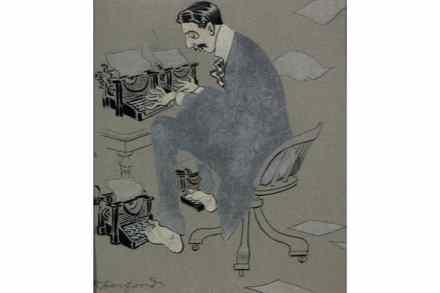
Virginia Woolf admitted to her journal: ‘I haven’t that reality gift.’ Her contemporary Arnold Bennett had it in spades. He was a great novelist, as anyone who has read Riceyman’s Steps or the Clayhanger trilogy would attest. Being also the contemporary of Henry James, Joseph Conrad and D.H. Lawrence – you might say this was one of the reasons his reputation became obscured since those glory days of English fiction – he had fierce competition. Woolf’s snobbishness about him (see her lecture on ‘Mr Bennett and Mrs Brown’) did not help matters. It was easy to be snobbish about Bennett, ‘The Man from the North’, to use the title of his first novel.

Paradise and paradox: an inner pilgrimage into John Milton

From our UK edition

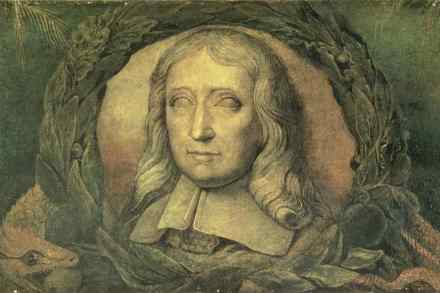
When E. Nesbit published Wet Magic in 1913 (a charming novel in which the children encounter a mermaid), she took it for granted that her young readers would immediately pick up the references to ‘Sabrina Fair’ from Milton’s Comus. Phrases from Milton were part of the language — ‘Tomorrow to fresh woods’; ‘Better to reign in hell than serve in heaven’. Milton was central to the shared experience of life itself for those who spoke English. Throughout the 18th and 19th centuries Milton was inside every literate anglophone head. If Harold Bloom is to be believed, which I think he is in this respect, the English romantic movement grew out of young poets reacting to, against and with Milton.

Did Britain commit a war crime in Dresden? A conversation

From our UK edition

  In February 1945, the Allies, led by Sir Arthur Harris and Bomber Command, destroyed the historic city of Dresden, killing 25,000, most of them civilians. For the 75th anniversary, Sinclair McKay, author of a recent book on the bombing raid, and A.N. Wilson discuss whether it should be regarded as a ‘war crime’.   SINCLAIR MCKAY It was an atrocity. But I hesitate about war crime because war crime is a legal term and not a moral one. It is a legally defined concept.   A.N. WILSON Certainly at one stage of 20th-century history it was a crime to deliberately kill non-combatants and civilians who weren’t in the line of fire for warfare.   MCKAY Indeed, but there are then a number of follow-on questions that come with the label war crime.

A.N. Wilson: The V&A’s Tristram Hunt is a modern Prince Albert

From our UK edition

We don’t have Thanksgiving in Britain, but this does not stop us giving thanks and Christmas is a good time to do it. Last year, when I made a visit of farewell to the great medievalist Jeremy Catto, who was dying, his American partner of 57 years, John Wolfe, said that they always kept Thanksgiving. I asked Jeremy what he gave thanks for. ‘I give thanks that the Pilgrim Fathers left,’ was his characteristic reply. We fell to deploring the growth of modern puritanism in all its nauseating forms. Thanksgiving should glow in every English heart for the fact that Queen Victoria married Prince Albert and brought to this country that wide-ranging, humane European of genius, who could have excelled as an engineer, a politician, a soldier, a musician.

The first Puritans weren’t so much killjoys as ardent believers in honest living

From our UK edition

‘Puritan’ is a term of abuse, and we tend to use it to refer to such figures as the nightmarishly moralistic, sour-faced women who force Hester Prynne to be emblazoned with the Scarlet Letter in Nathaniel Hawthorne’s novel. But David D. Hall, doyen of 17th-century puritanism, goes deeper than this. His history is not so much one of ranters as of honest men and women trying to get right the most fundamental things of all: the human relationship with God, and hence the right way to be living and the right sort of society to be ordering. It is these basic questions, as he shows over and over again, which determined the pattern of the Puritans’ behaviour in the early stages of the Reformation, in Scotland and in England.

Conning the dons

From our UK edition

In 2010, Adam Sisman published a masterly biography of Hugh Trevor-Roper, who was not merely one of the best historians of his generation but also a former intelligence officer, fascinated by tricks, lies and fraud. He himself wrote a mischievous series of anonymous articles for The Spectator, purporting to emanate from the 17th-century pen of ‘Mercurius Oxoniensis’,which gave a hilarious picture of his contemporary dons at Oxford and their crazy ways. One of his funniest books was an exposé of the sinologist Sir Edmund Backhouse, a benefactor of the Bodleian Library, whom Trevor-Roper proved to have been a forger and liar on a heroic scale.

Uncle Tom Wedgwood and all

From our UK edition

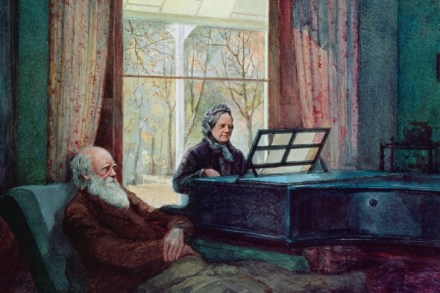
Readers of Geoff Dyer’s Out of Sheer Rage will remember that its author set out to write a life of D.H. Lawrence and somehow it never got written. In the course of the story, however, we travel to many of the scenes where Lawrence lived and wrote, and a hilarious  journey it is. Emma Darwin, namesake and descendant of Charles Darwin’s wife, alludes to Dyer’s book at the end of this charming ramble round her family. It begins with a conversation with her agent. Inevitably, the agent wants her to play safe and to write a straight biographical account of the marriage of the famous Victorian biologist. This author, the present-day Emma Darwin, is resistant to the idea, and believes that there is room for a fictional account.

Rich man, poor man, friar, saint

From our UK edition

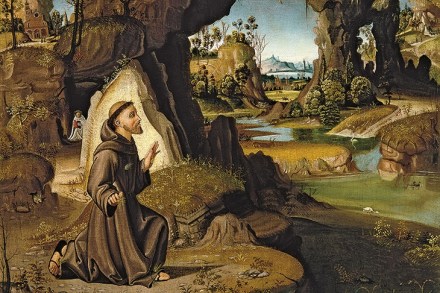
This passionate series of engagements with the life of St Francis will stay in my mind for a very long time — I hope forever. Ann Wroe describes it as ‘A Life in Songs’, and it does, indeed, rehearse the familiar story of the rich young merchant’s son dispossessing himself, and giving his life to Christ so wholeheartedly that not only he, but the world, was transfigured. We revisit the kissing of the leper, the preaching to the birds, the founding of the order, the call of St Clare, the mission to the Middle East to bring peace to the Crusades, the gift of the stigmata. All these familiar events are rendered in a series of verses, sometimes metrical and rhyming, sometimes free. The sequence of the sermon to the birds is especially successful: They did not stir.

Prejudice and Popery

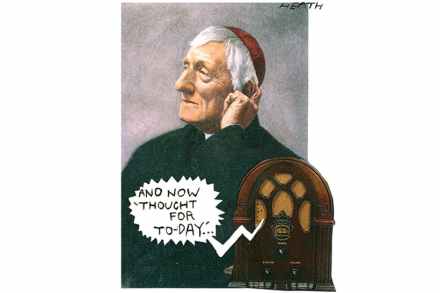
Once won, rights and freedoms are taken for granted. We all find it difficult to imagine life before the Married Women’s Property Act, when everything belonging to a wife — goods, chattels, children — automatically became the sole property of her husband. Those born since the 1960s can’t really envisage what it was like for practising homosexuals in those days. By a similar token, the mind can scarcely take in the fact that in Penal times, Catholics could not buy or sell land; or that it was an imprisonable offence for Catholics to run a school. It was a legal offence to dress as a monk or a nun out of doors.

Enoch Powell’s problem was vanity – not racism

From our UK edition

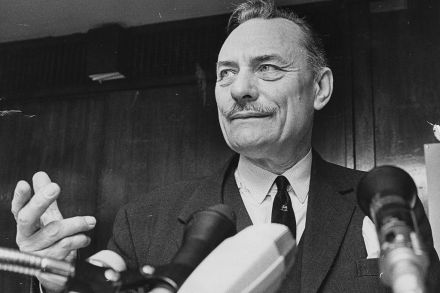
The anniversary of the ‘Rivers of Blood’ speech by Enoch Powell reminded me of my stint as literary editor of this mag. If you are responsible for finding book reviews each week, you come to cherish the regulars, such as Enoch, who are prepared to review anything. His besetting sin was not racism so much as vanity. He always wanted to cut a dash by saying things, however foolish, which drew attention. Hence his famous, almost invariably ridiculous, opinions — that Our Lord was not crucified, that Shakespeare did not write the plays etc. In delivering the R of B speech he got what he most wanted: attention.