Roy Kerridge

Ian Paisley’s private kingdom

From our UK edition

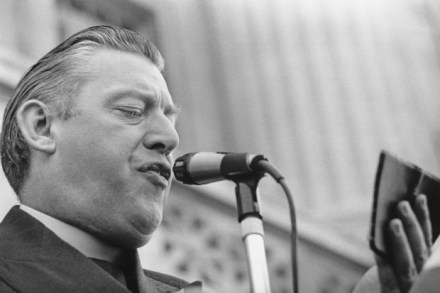
This is an extract from the The Spectator, 13 August 1982: One summer's evening, I went for a stroll by the shores of Lough Erne, just outside the city of Enniskillen, Northern Ireland. Swifts and swallows patrolled separate strands of midge-covered waters as if divided into Catholics and Protestants. Gleaming in the twilight, the Gospel Tent stood in a field beside a full car park. A small poster on a telegraph pole proclaimed a ‘Fundamentalist Convention. Preacher: Dr Ian Paisley’. The event was scarcely publicised, and few people in Enniskillen knew that Paisley was on their doorstep.
Chris Barber should let someone meaner tell his story

From our UK edition

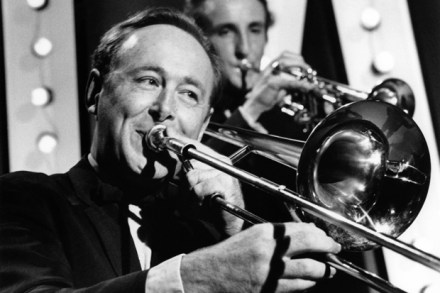
Chris Barber, still going strong with his big band, was born in 1930. He heard jazz as a schoolboy on the radio programme Music While You Work and tried to find out more about this wonderful music. He soon discovered that, in his words, ‘black music was the real thing, although some white people managed it pretty well’. By the time I became a secondary schoolboy in the 1950s, Chris Barber’s band was the sensation of the age. Chris played the trombone, sometimes switching to harmonica on blues numbers. He and his glamorous Northern Irish wife, Ottilie Patterson, seemed a golden couple. Ottilie had a superb voice for the blues, ancient or modern. She sounded like a classic blues singer of the 1920s, presenting a style that had died out in North America.

Taking the life out of the Lane

From our UK edition

On Brick Lane by Rachel Lichtenstein Brick Lane, a long and ancient street in London’s East End, casts a spell of fascination on all who go there. To walk down Brick Lane is to take a voyage through the past, where Huguenot weavers of the 18th century meet fellow ghosts of Jewish anarchists, and their history is everywhere you look. My own family history touches lightly on the Lane, for my grandfather owned a workshop there in the 1920s, and my stepfather discovered an anarchist printing press hidden in a ruined house there in the 1950s. Whitechapel Library, next door to the Art Gallery, is not strictly speaking in the Lane, but Rachel Lichtenstein includes it in this book of tape-recorded interviews. It is, or rather was, just round the corner to the Whitechapel end.

Me and my white mates

From our UK edition

Michael Collins, he tells us, was brought up in a terraced street south of the River Thames in Southwark, a district I don’t know very well. I have been there a few times, usually visiting west African friends and acquaintances, a fact that might strike Michael Collins as ironic. For if you look closely at his book’s title, you will not see ‘A biography of the working class’ but ‘A biography of the white working class’. Infirm of purpose, Collins wavers between a history of the entire working class, an autobiography, a history of Southwark, and a biography of his grandmother, spiced up with quotes from other authors. This confused book seems to have been inspired by a Julie Burchill article in the Guardian of 5 May 2001.