David Gilmour

A Hello! magazine history of Venice

From our UK edition

When Napoleon Bonaparte captured Venice in 1797, he extinguished what had been the most successful regime in the history of the western world. The Venetian Republic had lasted over 1,000 years — longer than ancient Rome — without a revolution, a coup d’état or a successful foreign invasion.  Yet after 1797 it was never to be independent again: it was given to Austria, taken back by France, allotted once more to Austria and finally, in 1866, handed over to the young Kingdom of Italy.
The Italians who won the war – against us

From our UK edition

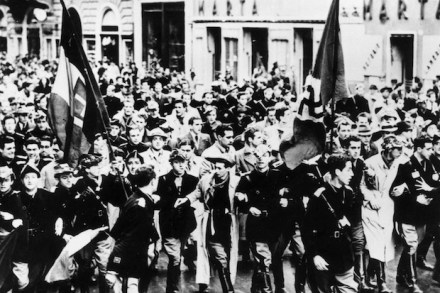
Italy entered the second world war in circumstances very similar to those in which it signed up for the first. Its leaders waited for nine months after the outbreak until they thought they had identified the winner and extracted promises of territorial rewards. In 1915 they guessed rightly and attacked Austria, their formal ally for the past 33 years, and they seemed to have chosen correctly again in June 1940, when France was already beaten and the British had evacuated Dunkirk. Italy’s new enemies were even older allies than Austria. Without the military aid of the French and the diplomatic support of Britain, Italy would never have become unified between 1859 and 1870.

Fun and games — except with mother

From our UK edition

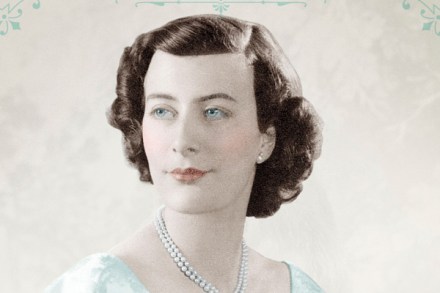
The Duke of Edinburgh, a New Zealand typist claimed in 1954, was ‘the best investment that the royal family has made in all its history’. But would she have thought so had she seen him a few days earlier at a ‘crazy’ party where, according to his first cousin Pamela Hicks, he ‘excelled himself, managing to use three cracker blowers at once — one in his mouth and one up each nostril, the shiny rolls unravelling simultaneously’? Anecdotes like that are, I imagine, the chief reason why people buy books like this. Lady Pamela tells them well, especially those about her ancestors. The best-crafted character in the tale is her grandmother, Princess Victoria of Hesse, who was capable of carrying on three conversations in three languages at the same time.

Giving Italy the boot

From our UK edition

If a pollster were to ask us which country we thought had produced Europe’s greatest artists, which had built its most beautiful cities and which had provided the world with it finest singers and composers, most of us would put Italy in first or second place.  And if we were asked which country had developed the best cuisine, which one contained the loveliest man-made landscapes and which had produced the most stylish designs in clothes and motor cars and many other things, we would also rate Italy highly, perhaps in the first four or five, certainly near the top of the premier league.

Humanity on the scrapheap

From our UK edition

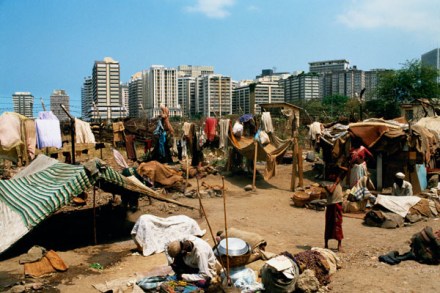
One night a few years ago in Washington DC, Katherine Boo tripped over an ‘unabridged dictionary’, broke three ribs, punctured a lung and, as she lay on the floor unable to reach a telephone, ‘arrived at a certain clarity’ about her future. With most people — certainly those like Boo with a history of wretched health — the clarity would have taken the form of some assuasive advice: ‘Take it easy,’ ‘Don’t push yourself,’ ‘Find something less difficult to write about.’ For Boo, a Pulitzer Prize-winner who has written mainly about poverty in the US, clarity suggested the opposite.

‘Viva la muerte!’

From our UK edition

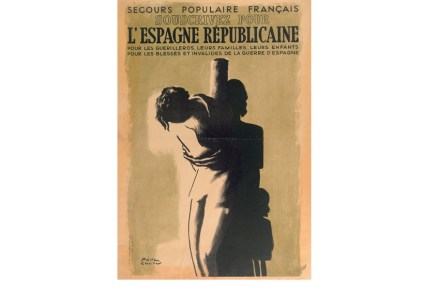
The Spanish Holocaust is a book that will give readers nightmares: it gave me two in a single night. Even people who think they have read enough about the Spanish Civil War to feel inured to its horrors will still be appalled by the intensity of the cruelty and repression here revealed. ‘Of the folly and wickedness of the military rising’, wrote Gerald Brenan in The Spanish Labyrinth, ‘there can today be no two opinions.’ Nor today, more than 60 years after he wrote those words, can there be two opinions about the sadistic and merciless repression planned and perpetrated by General Franco and his conspirators.  Reading Paul Preston’s narrative is like watching a Spanish Schindler’s List without a Spanish Schindler.

A cult of virility and violence

From our UK edition

Mussolini’s brutal sex-addiction makes for dispiriting reading, but provides material for a fine psychological study, says David Gilmour Bunga bunga may be a recent fashion, but adultery for Italian prime ministers has a long history. The first of such statesmen, Count Cavour, had affairs with married women because he was too nervous of being cuckolded to risk having a wife of his own.  One of his successors, Francesco Crispi, suffered such amatory turbulence that the police were often called to break up screeching rows between his wives and his mistresses; in old age he was accused by the press of trigamy because he had fathered children by two women in consecutive years while being married to a third.

Enterprising Scots

From our UK edition

If you wish to see how Scotland changed in the century after the Act of Union (1707), you might visit and compare the two houses in Edinburgh that belong to the National Trust for Scotland. Gladstone’s Land, built for a wealthy merchant in the 17th century, is a six-storey tenement in the old town, a place rich with period ambience but narrow, confined and in its heyday unhygienic. It could hardly contrast more vividly with The Georgian House in the new town’s Charlotte Square, which has space and elegance and the architecture of Robert Adam.

All these Indias

From our UK edition

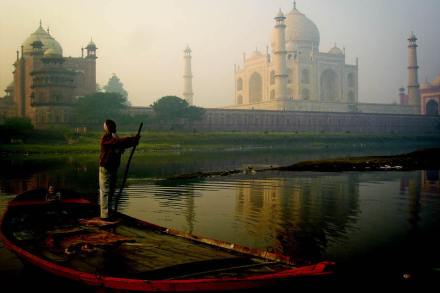
Some years ago I went to a dinner party in Lucknow, capital of India’s Uttar Pradesh, where the hosts and their guests were Hindus who as children had fled Lahore in 1947 at the time of Partition. A week later I was in Lahore, capital of Pakistan’s Punjab, and found myself in a house where the other diners were Muslim refugees who at a similar age had come from Lucknow. Midway through the second meal, I suddenly realised how similar the two groups of middle-class professional people were. Lawyers, teachers, booksellers and architects, they shared the same tastes and the same worries, their chief anxiety being that their belligerent governments had both recently acquired nuclear weapons.

The lion or the donkey?

From our UK edition

Giuseppe Garibaldi must be among the most commemorated secular figures in history. Italian towns invariably have a square or a street named after him, and many contain statues, stations and other sites as well. In Genoa Garibaldi is represented not only by a vast equestrian bronze in front of the Opera but also, in diverse and equally inappropriate ways, by a Via Garibaldi (a street of Renaissance palaces), a Piazza Garibaldi (a tiny space with a shop selling motorbikes), a Vico Garibaldi (a dingy cul-de-sac) and the Galleria Garibaldi (not an art gallery in this instance but a tunnel for motorcars — useful in a city which tried to solve its traffic problems by erecting a motorway on stilts that separates the old town from the port).

Beauty and bigotry

From our UK edition

When I was a child in the 1950s, I had a delightful book called The Golden Geography which tried to encapsulate every aspect of the globe — its landscape, its climate, its people and their occupations — in a small sketch with a brief caption. From a section called ‘This is Asia’, I learned that Arabs drank water from goatskins, that Indians usually lived ‘out-of-doors’ (a nice way of putting it) and that the Japanese had weird houses with sliding paper doors. Such apparently timeless images were imprinted on my mind and, without much scope for revising them, remained there a long time.

The resurgence of the puritan element

From our UK edition

The words ‘fanatic’ and ‘Arabia’ are placed together so often that they almost seem designed for each other. A Syrian friend once asked Charles Doughty, the Victorian explorer, how he could abandon the orchards of Damascus, ‘full of the sweet spring as the garden of God’, and ‘take such journeys into the fanatic Arabia?’ Doughty did not really know the answer. He had passed ‘one good day in Arabia’, he recalled, but ‘all the rest were evil because of the people’s fanaticism’. In the late 1870s Doughty travelled to Nejd, the desert birthplace of the Wahhabi sect, an intolerant, puritanical and — to its adherents — very pure form of Islam.

A small, bespectacled hero

From our UK edition

United Italy was reluctant to honour authentic heroes of its national struggle. Apart from Garibaldi, its squares and street-names — as well as its bronze statues and marble plaques — commemorate incompetent generals, duplicitous statesmen, serial conspirators, an oafish monarch (Victor Emmanuel) and a number of crazy young patriots who dashed off to Calabria (or wherever), shouted ‘Viva Italia!’ at a bemused populace, and were quickly shot. One neglected figure was Daniele Manin, the protagonist of Jonathan Keates’s skilful and absorbing account of the Venetian Revolution of 1848-9. Manin did not fit the mould of the Risorgimento romantic.

Prickles and thorns

From our UK edition

One of the oddest forms of contemporary masochism is our passion for surveys that reveal how ignorant and stupid we have become. Scarcely a week goes by without the publication of some poll telling us how many schoolchildren believe that Churchill was victorious at Waterloo or that Hornblower commanded at Trafalgar. The teaching of traditional history has all but disappeared, surviving in just the one area where it should have been abolished: the perpetuation of nationalist myths. In his wise and stimulating new book, Allan Massie recounts the recent story of a Fife councillor who was banned from his local pub for abusing some English visitors on the grounds that the English had defeated the Scots at the battle of Culloden.