William Cook

Two forgotten men brought down the Berlin Wall

From our UK edition

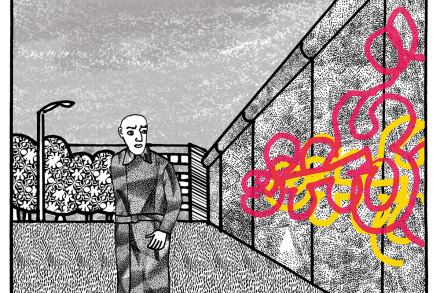
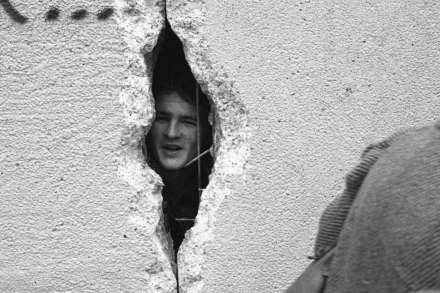
Here in Berlin, 35 years ago today, at a dull press conference in a dreary conference room a short walk from my hotel, an East German politician made a rookie error which brought about the fall of the Berlin Wall. Half a lifetime later, it’s easy to forget that this seismic shift was the result of a bizarre accident – the unlikely collision of two snap decisions by two men whose names are now almost forgotten.

What Robert Jenrick can learn from Oktoberfest

From our UK edition

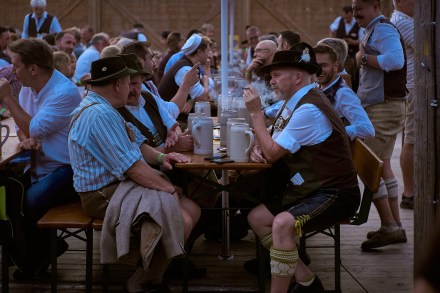
Sitting in a gigantic marquee on the green edge of Munich, surrounded by thousands of boozy Germans singing along to a Bavarian oompah band, I wonder how I got talked into coming to another Oktoberfest. Last time I came, ten years ago, I hated it and swore I’d never come again, but this time feels different. Maybe it’s the beer talking, but this year the atmosphere seems less manic, more relaxed. There are lots of couples, old and young, and hardly any stag parties. Amid the endless rows of trestle tables I see numerous families in traditional Bavarian dress (the women so alluring in their dirndls, the men faintly ridiculous in their lederhosen), tucking into huge hearty platters of carnivorous Bavarian grub.

Matt Ridley, William Cook, Owen Matthews and Agnes Poirier

From our UK edition

28 min listen

On this week’s Spectator Out Loud: Matt Ridley argues that whoever you vote for, the blob wins (1:02); William Cook reads his Euros notebook from Germany (12:35); Owen Matthews reports on President Zelensky’s peace summit (16:21); and, reviewing Michael Peel’s new book ‘What everyone knows about Britain’, Agnes Poirier ponders if only Britain knew how it was viewed abroad (22:28).  Presented by Patrick Gibbons.

England’s hooligan days are over

From our UK edition

In downtown Düsseldorf, a district known as ‘the longest bar in the world’, hordes of happy England fans belted out ‘God Save the King’. The Three Lions beat Serbia in nearby Gelsenkirchen and supporters were still celebrating in the days after. Last time Germany hosted the Uefa European Football Championship (aka the Euros) in 1988, hundreds of England fans rioted in Düsseldorf, but I’ve seen no sign of trouble. The English are outnumbered by French and Austrians. Everyone is getting on well. Times have changed. German bartenders used to be wary of England fans. Now, thankful for their first big windfall since Covid, they welcome them. There was admittedly a little controversy over the weekend, whipped up by social media.

The real story of Bauhaus and the Nazis

From our UK edition

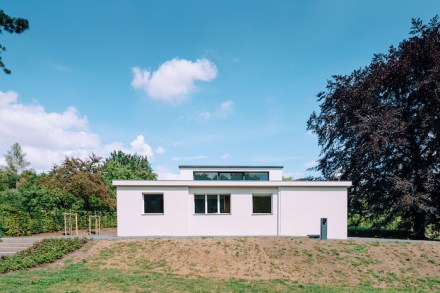
Here in Weimar, the cultural and spiritual capital of the Bundesrepublik, a brave group of curators and academics are challenging one of Germany’s most sacred taboos. A trio of exhibitions in this historic city, the birthplace of Deutschland’s first fleeting democracy, are exposing the hitherto unexplored connections between the Bauhaus and the Third Reich. For bien pensant Germans, it’s hard to picture anything quite so provocative (there’s no real British equivalent but, for the sake of argument, imagine how left-leaning Brits might regard a show which established a direct link between the British Union of Fascists and the foundation of the NHS).

Survival plan: is Rishi ready for the rebels?

From our UK edition

34 min listen

This week: Survival plan: is Rishi ready for the rebels? Ever since his election, Rishi Sunak has been preparing for this weekend – where the most likely scenario is that dire local election results are slow-released, leaving him at a moment of maximum vulnerability. He has his defences ready against his regicidal party, says Katy Balls: the Rwanda plan, a welfare reform agenda and a 4p NI cut (with hints of 2p more to come). And while the rebels have a (published) agenda they do not – yet – have a candidate. Katy joins the podcast alongside Stephen Bush, associate editor of the Financial Times. (02:12) Next: Lara and Gus take us through some of their favourite pieces from the magazine, including Damian Thompson's Life column, and Joel Golby’s notes on ⅓ pints.

Meet Hillingdon Man, Britain’s unhappiest chap

From our UK edition

It’s official. I live in the unhappiest place in Britain. Who says so? My neighbours here in Hillingdon, that’s who. They’ve been polled by the property company Rightmove, along with citizens the length and breadth of the country, and Richmond came top(seems money can buy you happiness, after all) while my own London borough, Hillingdon, a few miles away, came rock bottom. For me, this was a complete surprise. In 2011, my wife and I moved to Hillingdon, from insufferably trendy Chiswick to profoundly unfashionable Ruislip, and we’ve never been happier. We raised our two children here, and even though they’re now both away at university they return home whenever they can. What’s so good about living here?

Euro 2024: a guide to Germany’s cities

From our UK edition

Here’s a question for Spectator football fans: what’s the most memorable match you’ve ever seen? I don’t mean on television. I mean in an actual stadium, the way football should be seen. For me it was in 1996, seeing England play Germany at Wembley, in the semi-finals of the Euros. England were the better team over 90 minutes, and also during extra time, but with the game tied at 1-1 it came down to penalties. The first five players on both sides all scored. Then Andreas Köpke saved from Gareth Southgate (I wonder what became of him?) and Andreas Möller stepped up and scored the winner. England were out. A few days later the Germans returned to Wembley where they beat the Czechs in the final, and English hearts were broken – yet again.

The elite coach taking school football to a new level

From our UK edition

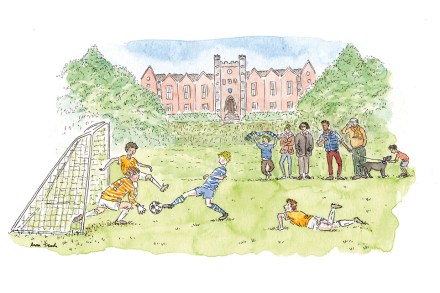
On a wet and windy afternoon at Repton School, technical director of football Luke Webb is putting his first team through their paces. At first glance this training session looks much the same as any other, but I soon start to spot some subtle yet significant differences in his approach. Webb keeps his distance, there’s no shouting from the touchline, yet all his players seem to know exactly what to do. They start off with close passing drills, then move into small-sided games, and finish with an exercise designed to hone the low driven cross – a delivery all defenders dread. Webb teaches players to play with freedom, to be less risk-averse Afterwards, there’s no big team talk. Instead, as the boys pack up the balls and cones, he chats to them one-on-one, quietly.

The Nazi next door: inside my grandmother’s house

From our UK edition

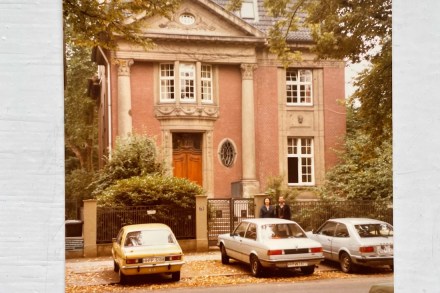
Each time I return to Hamburg (about once a year, on average) I pay a sentimental visit to my grandmother’s magnificent old house, where she spent her cosseted, idyllic youth, during the Weimar Republic and the Third Reich. It’s a robust Teutonic villa, a bombastic relic of the Gründerzeit – that flamboyant building boom which followed Bismarck’s triumphant unification of Germany. It’s on one of Hamburg’s smarter streets, a leafy avenue called Heimhuderstrasse – but it’s not the ornate architecture that draws me there, or even the snob value of the neighbourhood. What brings me back year after year are the stories that cling to this house like ivy – stories from the life my German grandmother lived before I knew her, before and during the second world war.

Nuremberg is the best and worst of Germany

From our UK edition

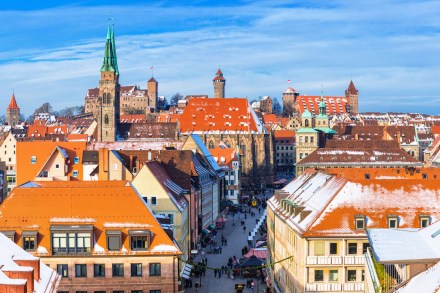
On a snowy night in Nuremberg, a city that encapsulates the best and worst of Germany, a huge crowd has gathered in the ancient Marktplatz for the opening of the Christkindlesmarkt, Bavaria’s biggest Christmas market. Cradling mugs of steaming Glühwein, stamping our feet to keep out the cold, we’re all waiting for the Christkind (Christ Child) to appear on the balcony of the Frauenkirche (Church of Our Lady), an event that marks the start of Nuremberg’s Advent season. Five hundred years ago, Nuremberg was one of the biggest cities in Central Europe Turns out we have Martin Luther to thank for this quaint Teutonic custom.

The growing appeal of dreary Düsseldorf

From our UK edition

In the cavernous basement of Bilker Bunker, a second world war air raid shelter in downtown Düsseldorf, the staff of groovy events guide the Dorf are toasting the magazine’s tenth birthday. During the war, Germans sheltered here from the RAF. Today, their descendants come here to party. With an art gallery up above and DJs down below, this labyrinthine concrete relic is a symbol of Düsseldorf’s transformation – from industrial powerhouse of the Third Reich to Germany’s hippest city. Düsseldorf has always been a wealthy city, the buckle of the German rustbelt The Dorf is the size of a slim paperback. It fits neatly into your coat pocket. It started out online but its success soon spawned a print edition: art, music, fashion and loads of entertainment listings.

Leuven: Belgium’s most underrated city

From our UK edition

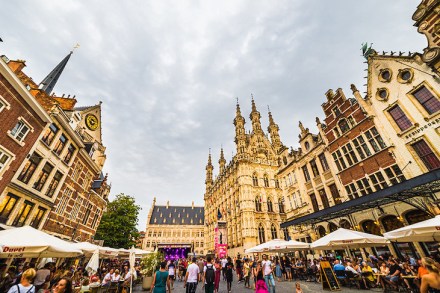
From the vertiginous belltower of Leuven’s university library, you get a great view across the mottled rooftops of Belgium’s most underrated city. Leuven isn’t swarming with sightseers, like Bruges. It isn’t choked with commuter traffic, like Brussels. It’s lively and compact, ideal for a weekend away – so why have most British travellers never even heard of it? Search me. I’ve just spent three days here and I had a great time. I can’t wait to go again. One of the best things about Leuven is, it’s so easy to get here: two hours via Eurostar from London St Pancras to Brussels, and then a local train to Leuven from the same station. Trains leave every ten minutes at peak times and take around half an hour.

You can’t cancel Picasso

From our UK edition

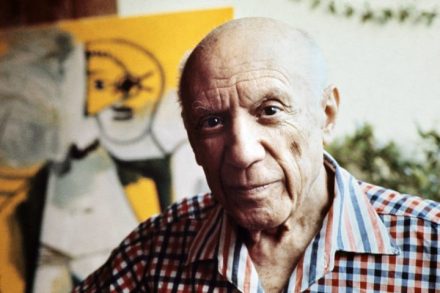
In the sunlit courtyard of the Picasso Museum in Málaga, Bernard Ruiz-Picasso is telling me about his grandfather, the greatest artist of the 20th Century. ‘He’s very inspiring – a powerful artist and thinker,’ says Bernard. ‘He was super-cool, and also super tough.’ Not so long ago, such an uncontentious compliment would have seemed entirely unremarkable. Yet in today’s censorious climate, few things are so clear-cut. For a century, Picasso has been lauded – the finest draughtsman since Michelangelo – but now he’s a figure of fierce controversy. Fifty years since his death, could we be about to witness the cancellation of the man who personified modern art?

Walking the Suffolk Coast Path

From our UK edition

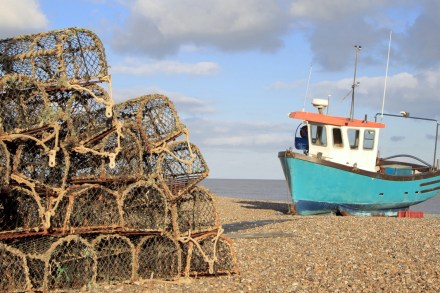
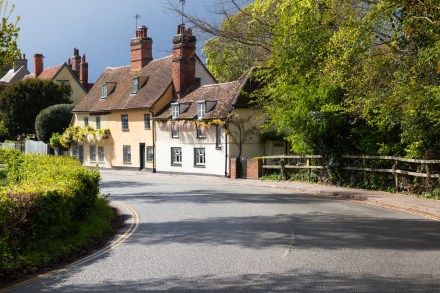
When was the last time you woke up bright and early on a weekday morning, with no need for an alarm call, rested and impatient for the day ahead? My last time was a week ago, when I awoke in the Pier Hotel in Harwich, eager to walk the first bit of my latest hike, along the Suffolk Coast Path. The Saxons sailed up this river to conquer East Anglia after the fall of the Roman Empire The Suffolk Coast Path runs for 55 miles, from Felixstowe to Lowestoft. Almost the entire route passes through an Area of Outstanding Natural Beauty. No ugly modern eyesores. Hurrah!

Walking the Essex Way is a wonderful adventure

From our UK edition

I’m hiking along a footpath through glorious English countryside, across lush green meadows framed by ancient woodland. I’ve hardly seen a soul today, just a few solitary dogwalkers. I’ve been walking all day and my legs are aching, but I can’t recall the last time I felt so contented, so alive. Welcome to the Essex Way, an epic walking trail that runs right across this rugged county, from Epping, on the edge of London, to Harwich, on the North Sea. I first walked the Essex Way, 81 miles from end to end, a few years ago. Like a lot of weekend hikers, I’d done a fair bit of walking in National Parks like the Lake District and the Peak District. What makes the Essex Way so different is that it runs through landscape which most folk dismiss as bland commuter belt.

How the British intelligentsia fell out of love with Germany

From our UK edition

An economic slowdown, the far right on the rise, even apocalyptic hailstorms – what on earth is happening in Germany? Is Europe’s industrial powerhouse on the slide? Well, yes and no. Germany is in recession, and Germany’santi-immigration party, Alternative für Deutschland (AfD), is growing stronger, but the bad news coming out of Germany indicates a more lasting sea change: liberal Britain has finally fallen out of love with the Bundesrepublik. It’s not just British Teutonophiles who are troubled by the rise of AfD. This week Germany’s domestic spy chief, Thomas Haldenwang, warned about growing right-wing extremism within the party and German President Frank-Walter Steinmeier has echoed these concerns. ‘Ban the enemies of the constitution!

How to make the most of Basel’s spectacular artistic delights

From our UK edition

Standing on the quayside beside the River Rhine, gazing at the happy teenagers swimming in the dark water down below, I wonder where the last forty years have gone. Forty years ago, I was one of those teenage swimmers, swept along by the fierce current through the centre of this ancient city. Now, half a lifetime later, I’m one of the watchers on the shore. No matter. Switzerland’s most stylish city is always full of interest, whether you’re a participant or a spectator, and this week it plays host to the most prestigious art fair in the world. On the face of it, Art Basel sounds like just another boring trade fair – posh art dealers selling pretentious artworks to filthy rich collectors – but there’s more to it than that.

How Salzburg made Mozart

From our UK edition

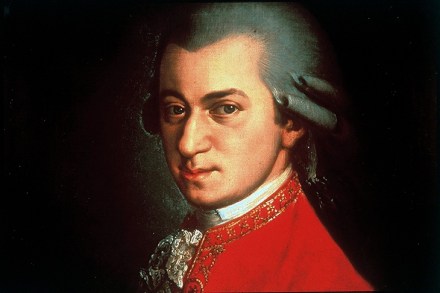
Arriving in Salzburg, ahead of this week’s Whitsun music festival, the first thing that greets you is a rather grumpy statue of the greatest composer who ever lived. Johann Chrysostom Wolfgang Amadeus Mozart was born in this implausibly pretty Alpine city, and each time I return here the boyish creator of the world’s most beautiful music seems more ubiquitous than ever. Wandering the narrow alleyways of Salzburg’s medieval Altstadt, its cobblestones worn smooth by centuries of tourist traffic, Mozart’s pale and pensive face stares back at you from the window of every souvenir shop, emblazoned on every conceivable knick-knack, from fridge magnets to action figures (my personal favourite is the Playmobil Mozart, which comes complete with violin, frock coat and powdered wig).

The rise and fall of bohemia

From our UK edition

In the Kunsthalle Praha, a smart new gallery in Prague, a Scottish professor from UCLA called Russell Ferguson is trying to explain to me the meaning of bohemia. Like a lot of fashionable buzzwords, it’s surprisingly difficult to pin down. Is a bohemian an artistic rebel? Or merely a pretentious layabout? Ferguson is an expert on the subject, and even he can’t quite sum it up. However, unlike most academics (and most journalists, for that matter) Professor Ferguson isn’t content to just sit around and chat. As well as writing a book about bohemia, he’s mounted an exhibition about bohemians here at the Kunsthalle – and after he’s shown me round, I have a far better sense of what bohemianism is all about.