Peter J. Conradi

Another enemy within: Thatcher (and Wilson) vs the BBC

From our UK edition

In a ‘Dear Bill’ letter in Private Eye, an imaginary Denis Thatcher wrote off the BBC as a nest of ‘pinkoes and traitors’. That drollery points to the corporation’s paradoxical place in British life: an essential part of the establishment (‘Auntie’) yet sometimes its most daring critic, willing to put impartiality above patriotism. Jean Seaton makes one wonder at this impressive balancing act in a book that continues Asa Briggs’s magisterial history of the BBC up to 1987. After the war many from newly liberated Europe thanked the BBC Overseas Service for keeping hope alive during the Occupation; this was reprised after the Berlin wall fell.


The biography that makes Philip Larkin human again

From our UK edition

How does Philip Larkin’s gloom retain such power to disturb? His bleakest verses have the quality of direct address, as if a poetical Eeyore were protesting directly into our ear. ‘Aubade’, his haunting night-time meditation on the terrors of death and dying, focuses on ‘the sure extinction that we travel to/ And shall be lost in always’ and offers no consolation. His ‘Next Please’ makes grim fun out of our habit of hope, pictured as a ship we expect to greet us with its full cargo of rewards. But of course ‘Only one ship is seeking us, a black-/Sailed unfamiliar….’ He saw religious faith as a form of self-deception. Moreover, his ‘The Old Fools’ mercilessly depicts senility.

Blonde, beautiful — and desperate to survive in Nazi France

From our UK edition

Around 200 Englishwomen lived through the German Occupation of Paris. Nicholas Shakespeare’s aunt Priscilla was one. Men in the street stopped to gaze at this blonde with the careless allure and raw beauty of Grace Kelly. Some fell instantly in love. Her second mother-in-law thought her face showed truth and sincerity, and the reader shares this impression of integrity under duress. She was a reckless driver, yet was also shy, gentle and biddable. She had a beguiling habit of stroking your arm to show affection. She was not vain. Born in 1916, hers was a rackety childhood. Her self-engrossed parents, imprisoned within a failed marriage, then in new partnerships, rejected her.

Meeting the Enemy, by Richard Van Emden; 1914, by Allan Mallinson – review

From our UK edition

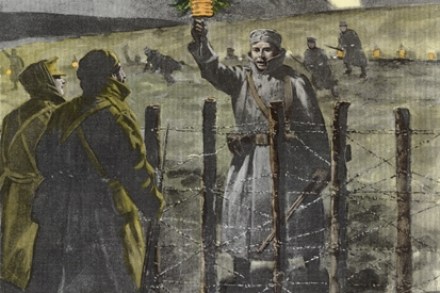
The Great War was an obscene and futile conflict laying waste a generation and toppling emperors. Yet here are two books that situate the horrors of trench warfare within a much larger perspective. One argues that the war had a forgotten ‘human face’. The other that it might all have had a very different outcome. Henry James described  the 1914 plunge of civilisation into blood and darkness as ‘too tragic for any words’ — and about tragedy there is always some air of inevitability, of sailing Titanic-like towards a foredoomed catastrophe. This air of unstoppable fatality has solidified over the intervening century.

Migration Hotspots, by Tim Harris – review

From our UK edition

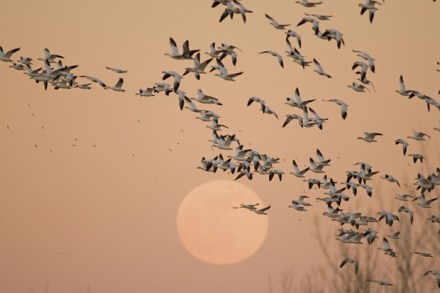
Consider for a moment the plight of the willow warbler. Russian birds of this species fly between eastern Siberia and southern Africa and back every year of their short lives, a distance of nearly 7,500 miles in each direction. Each weighs roughly as little as two teaspoons-full of sugar. But at least these tiny birds can refuel on their journey. Southern bar-tailed godwits are unluckier. These fly the 7,000 or so miles between New Zealand and Alaska over the immense Pacific Ocean — hence non-stop — twice each year. Moreover, Arctic terns migrate from the Antarctic to the Arctic and back again: a fledgling of this species, born on the Farne islands off the Northumberland coast, was recorded only three months later near Melbourne, Australia.

‘Imagined Greetings: Poetic Engagements with R.S. Thomas’, by David Lloyd – review

From our UK edition

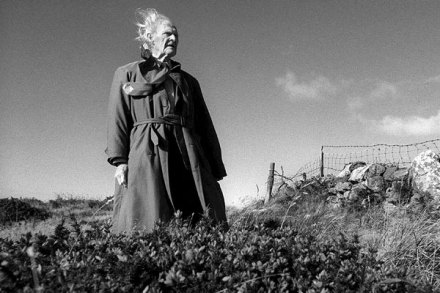
There is a much reproduced image of the great Welsh poet R.S. Thomas towards the end of his life. A gaunt and angular figure leans defiantly out over the half-gate of his cottage on the Llyn peninsula, wild of hair, curmudgeonly and altogether unwelcoming. The photograph, taken after Thomas’s retirement as vicar of the fishing village of Aberdaron and relocation to nearby Rhiw, reveals a man at war with the world — and with himself too. Tourists passing through the Welsh-speaking region who asked him for directions encountered the baffling response: ‘No English’. He would return indoors to relish the joke with his monoglot English wife Elsi. She shared his hatred of the machine age.