Alastair Smart

Albers the austere

From our UK edition

The German-born artist, Josef Albers, was a contrary so-and-so. Late in life, he was asked why — in the early 1960s — he had suddenly increased the size of works in his long-standing abstract series, ‘Homage to the Square’, from 16x16 inches to 48x48. Was it a response to the vastness of his adopted homeland, the United States? A reaction to the huge canvases used by the abstract expressionist painters in New York? ‘No, no,’ Albers replied. ‘It was just when we got a station wagon.’ In Charles Darwent’s new biography, Albers (1888–1976) comes across as a man as frill-free as the art for which he’s famous.

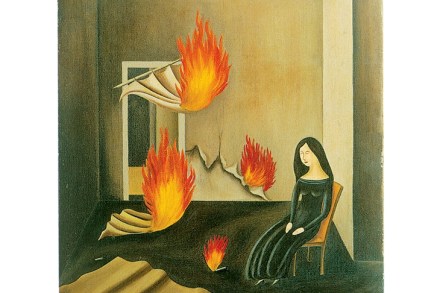
How ever did they find time to paint?

Those with long enough memories may remember Desmond Morris as the presenter of the hit ITV children’s programme of Zoo Time in the late 1950s and early 1960s. Or perhaps as the author of the 1968 bestseller The Naked Ape, in which he argued that, beneath our sophisticated veneer, humans are nothing more than primates. Now aged 90, he has written an uproariously funny book on the ostensibly unlikely subject of the Surrealists. I say ‘ostensibly’ because, before becoming a successful zoologist, Morris was actually a painter and even had a joint exhibition in London with Joan Miró. In The Lives of the Surrealists he takes on the role of a latter-day Vasari, penning mini-biographies of 32 artists who were associated with Surrealism.

Paintbrushes at the ready

From our UK edition

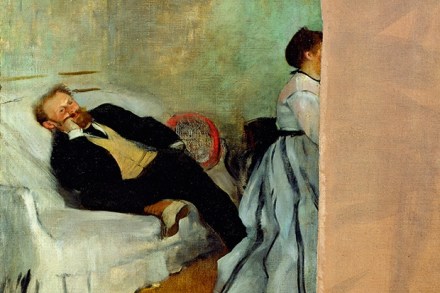
When the old curmudgeon Edgar Degas died in 1917, a stunning trove of works by Edouard Manet — eight paintings, 14 drawings and 60 prints — was discovered in his studio. There, too, was a portrait of Manet and his wife Suzanne, painted by Degas 50 years earlier. But its right-hand third was missing — which included half of Suzanne’s body and all of the piano she was playing. For some reason, Manet had put a knife through the canvas and sent Degas packing with what remained. The duo’s relationship is one of four ‘friendly rivalries’ considered by the Boston Globe art critic, Sebastian Smee, in his new book (Matisse vs Picasso, Pollock vs de Kooning and Bacon vs Freud being the others).

Preaching in pictures

From our UK edition

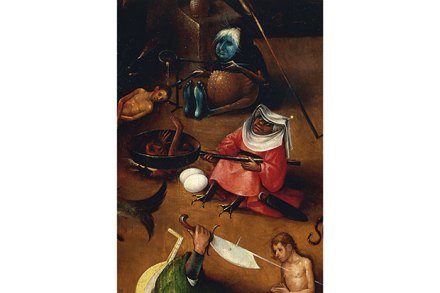
To call Nils Büttner a killjoy is perhaps a little unfair, but not very. The professor at Stuttgart’s State Academy of Art and Design has written a revisionist biography of Hieronymus Bosch: one which tells us that the Early Netherlandish painter wasn’t, as many over the centuries have suggested, the devil incarnate or Satan’s crazed representative on earth. Instead, his graphically disturbing visions of hell — infernal soups populated by hybrid monsters — were actually the product of a devoutly Catholic, medieval mind.

Life’s rich collage

From our UK edition

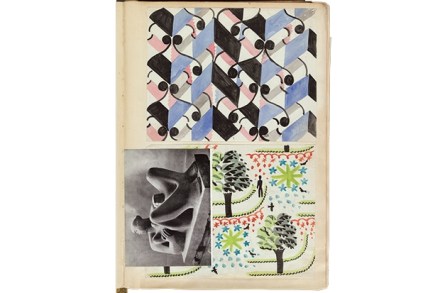
Such is the veneration in this country for the St Ives school of painters, it’s easy to forget that other art colonies existed, let alone thrived, in the mid-20th century: that in Great Bardfield, Essex, perhaps chief among them. The village near Saffron Walden was home to the likes of John Aldridge, Kenneth Rowntree, Michael Rothenstein, Eric Ravilious and Edward Bawden (1903–89). Maybe it’s going a bit far to say there has been a resurgence of interest in this loosely affiliated group of figurative artists.

Trivial pursuits

From our UK edition

Well, he’s back. Though you’d be forgiven for thinking he’d never been away. Fresh from delivering the Reith lectures, exhibitions nationwide, various television shows for Channel 4, countless broadsheet interviews, building his ‘dream house’ in Essex and much else besides, Grayson Perry is back. His latest offering is a book of sketches, selected from across his career. He began drawing as a boy in notebooks his grandmother gave him, filling them with images of racing cars and comic-book characters. It was at art school in Portsmouth in the early 1980s, however, that Perry began sketching in earnest, a practice he kept up when he subsequently moved to London, a lack of money for studio space meaning it was his only artistic outlet.

If you hate art-world show-offs, Grayson Perry, what’s with the frocks?

From our UK edition

At the time it was all too easy to get sucked in by the hype. In 2013, Grayson Perry was the first visual artist ever to give the Reith Lectures and — unlike so many of his dry, earnest predecessors — here was a speaker ready to fulfil all three Reithian aims: to inform, educate and entertain. (‘I still find commercial art galleries intimidating,’ he observed in the first lecture. ‘From the frighteningly chic gallery girls on the front desk to the reverential hush around arcane lumps of stuff inside.’) Here also was a transvestite potter from Essex being welcomed to the heart of the British cultural establishment, a one-time outsider who’d made his name with pots depicting fetishism and bondage.

The lost Victorian who sculpted Churchill

From our UK edition

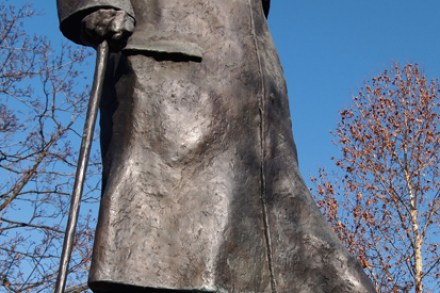
Ivor Roberts-Jones was in many ways the right artist at the wrong time. Had the sculptor been born a few decades earlier and worked in the Victorian age, when statues of the builders and defenders of empire were erected proudly and prolifically across the land, he’d surely have received no end of garlands. As it is, Roberts-Jones (1913–96) found himself constantly battling against artistic fashions and today is barely even talked about. Born in the Welsh border town of Oswestry, he moved to London to study at the Royal Academy Schools and Goldsmiths College (the latter’s fame as a breeding ground for conceptual excess still a long way into the future).