D.J. Taylor

D.J. Taylor is a critic, novelist and biographer of William Thackeray and George Orwell.

Rebarbative relatives abound: The Palm House, by Gwendoline Riley, reviewed

From our UK edition

Like its predecessor My Phantoms (2021), Gwendoline Riley’s new novel is stuffed to the gills with the sort of people she has come to specialise in – who, once assembled, supply a kind of casebook of rebarbativeness. To begin with there are the terrible men: – the thespian, Lawrence, for example, who says things like ‘cheery-bye’ and whose decrepit bathroom has ‘a Miss Havisham aspect’; or Chris, the lairy Irish stand-up, by whom, as a besotted teenager, the heroine Laura Miller is cheerlessly seduced.

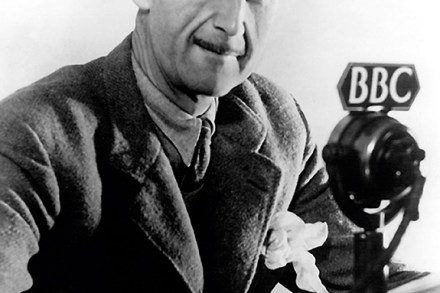
Life lessons from George Orwell

It was the British political journalist Jason Cowley, writing in London’s Sunday Times a month or two back, who posed a query calculated to strike terror into the heart of any self-respecting Orwell-fancier. Were we, Cowley wondered, with the air of one who tosses a Sèvres vase into the air to watch it descend into heap of fragments, approaching peak Orwell? Was the man in whose voluminous output so much of modern political and sociocultural malaise has been refracted losing his sheen? Some Orwellians – myself included – on hearing this would probably respond with a rather handy Latin phrase: si monumentem requiris, circumspice, which loosely translates as, “If you want evidence, buster, then take a look around.

Margaret Atwood’s autobiography reveals a steely self-possession

The problem with the contemporary literary life, most of its observers usually agree, is that nobody at large in it does anything much except write. A century ago, your specimen male novelist could be found fighting in wars or traveling to places from which the reportage he brought back had genuine novelty. These days, alas, our man just sits at a desk and every so often looks out of the window at the teeming world beyond. The trajectory of the 21st-century novelist is as familiar – and as unavoidable – as a portrait of Taylor Swift. You grow up, you show an aptitude for literature, you start writing books and, unless something very unusual happens, you go on writing them.

Margaret Atwood

The myth of the outsider

From our UK edition

The job of radio critic for the Tablet offers several perquisites. One of them is access to the BBC previews website, and it was by this means, quite some time before its recent broadcast, that I was able to listen to Adrian Chiles’s Radio 4 documentary Finding Elgar. As a veteran of countless BBC radio documentaries and mindful of their sensitivity to the cultural issues of the day, I knew exactly what I would find, and there it was. Elgar, Chiles insisted, was an ‘outsider’ – lower middle class, a Catholic to boot, and marginalised and patronised by ‘the establishment’ until such time as his musical genius began to declare itself.

One of the boys: From Scenes Like These, by Gordon M. Williams, reviewed

From our UK edition

Although Gordon M. Williams died as recently as 2017, his heyday was the Wilson/Heath era of the late 1960s and 1970s. During that time he managed to appear on the inaugural Booker shortlist, dash off a ten-day potboiler, The Siege of Trenchard’s Farm, that would be filmed by Sam Peckinpah, and continue to file a series of ghost-written newspaper columns for the England football captain Bobby Moore. As these accomplishments might suggest, Williams was the kind of writer whom the modern publishing world no longer seems to rate. Essentially, he was a literary jack-of-all-trades, alternating straightforward hackwork with more elevated material as the mood took him, and eventually abandoning fiction for a desultory career as a screenwriter.

Comfort reading for the interwar years

From our UK edition

A prospective reader who chanced upon Recommended! without its subtitle might be forgiven for thinking that the six grim-looking portraits on the cover depict the Watch Committee of an exceptionally puritanical interwar-era seaside town. This would be a misjudgment, as, rather than being charged with censoring films or evicting courting couples from cinema back rows, Nicola Wilson’s galère – Hugh Walpole, Clemence Dane, George Gordon, Edmund Blunden, Sylvia Lynd and J.B. Priestley – turn out to have made up the selection panel of the early 1930s Book Society. The subtitle is, of course, a wild exaggeration. Even at its high-water mark, the Society’s membership was in the low five figures.

Why are publishers such bad judges when it comes to their own memoirs?

From our UK edition

‘The publisher who writes is like a cow in a milk bar,’ Arthur Koestler once declared. For some reason this put-down has never stopped publishers from fathering their memoirs, and the book trade titan’s life and times used to be as much a staple of the library shelf as slim volumes of nature poetry. As in other branches of life-writing, the procedural approach tends to vary. There are practical primers – Stanley Unwin’s The Truth about Publishing, say, from the year of the general strike, or Anthony Blond’s The Publishing Game (1971); there are delightful vagaries in the style pioneered by Grant Richards’s Author Hunting (1934); and there is the emollient, if not absolutely vainglorious, reminiscence, most recently on display in Tom Maschler’s Publisher (2005).

The passage of Ragtime

Back in the winter of 1980, a young Martin Amis found himself on the London set of Miloš Forman’s movie Ragtime. The plan was to inspect what Norman Mailer, whom Amis was profiling for the Observer newspaper, was doing with the part of Stanford White, the real-life architect murdered by the deranged husband of New York chorus girl Evelyn Nesbit. Impressed by the lavish million-dollar backdrop, Amis looked on as the nattily dressed and neatly bewigged author of The Executioner’s Song, accompanied by his sixth wife, Norris, made his way into a reconstruction of Madison Square Garden.

Ragtime

A biography of Lorne Michaels that strays into hagiography

The gilt fell off Saturday Night Live’s reputational gingerbread almost from the moment of its inception. Long before the arrival of Bob Woodward’s Wired: The Short Life and Fast Times of John Belushi (1984) — its antihero dead at the age of thirty-three — whatever luster the show had possessed had been well-nigh obliterated by a tide of scuttlebutt. The girls were (apparently) all bulimics and anorexics. The guys were coke fiends and egomaniacs. Misogyny (exemplified by Belushi’s dislike of sketches written by women) and back-stabbing were endemic; drug dealers sat in on the writing sessions.

Lorne

The exquisite vanity of the male sports writer

From our UK edition

A good place to catch the highbrow sports journalist in action is the ‘Pseuds Corner’ column of PrivateEye, where he (and it’s always a ‘he’) regularly appears. Here you will discover that to contemplate Manchester City’s mid-season loss of form is ‘like sitting in Rome in 410 and watching the Visigoths pour over the horizon’, warm to the spectacle of Liverpool’s Virgil van Dijk ‘striding about the place like the 17th Earl of Egham with a quiver of pheasants over one shoulder’, or learn that the mothers of the former Everton manager Sean Dyche and the French national coach Didier Deschamps both worked in the textile industry, which may explain their sons’ ‘common emphasis on durability and craft over flamboyance and novelty’.

One hundred years of Theodore Dreiser’s An American Tragedy

The high-water mark of the American naturalist novel lasted for about forty years — the period bookended by Frank Norris’s 1899 McTeague and John Steinbeck’s 1939 The Grapes of Wrath, taking in along the way such highlights of the form as Upton Sinclair’s 1906 The Jungle, Sinclair Lewis’s 1920 Main Street and James T. Farrell’s Studs Lonigan trilogy of 1932-35. But these are all subsidiary crags on the path to Mount Olympus, for the novel that towers above them all and draws each of them — to mix the metaphor a little — into its remorseless slipstream is Theodore Dreiser’s 1925 An American Tragedy.

Dreiser

What will become of George Orwell’s archives?

From our UK edition

The news that a vast cache of material by and concerning George Orwell is about to be cast to the four winds in the wake of a corporate sell-off has stirred predictable fury among Orwell buffs. As in all the best literary rows, the contending roles seemed to be clearly defined from the outset. There were the heroes (Orwell and his many acolytes); there was a principal villain – the publisher Hachette, which had decided to unload its archive, only to find that no single bidder could meet the asking price; there was the agent of their devilry (more about him in a moment); and even some subsidiary baddies, in the shape of a clutch of rare book dealers who are now hard at work flogging off the individual lots.

Examining children’s literature and its enduring worth

My first reaction, on tipping this vast compendium — soaring toward 600 pages — out of its padded bag onto the kitchen table, was straightforward envy at the thought of anyone being paid what, you infer, was quite a reasonable sum of money to spend several years on the intoxicating trail of the children’s book. My second was intense curiosity over the procedural approach employed, which is to say that there are a variety of well-worn pathways into the heart of the genre; it would be fascinating to see which ones Leith, the literary editor of The Spectator in the UK, had chosen to follow. The first path, exemplified by Francis Spufford’s 2002 The Child that Books Built, involves writing a memoir that broadens out into a consideration of the form as a whole.

Leith

The wild times on the late, great John Belushi’s most famous film

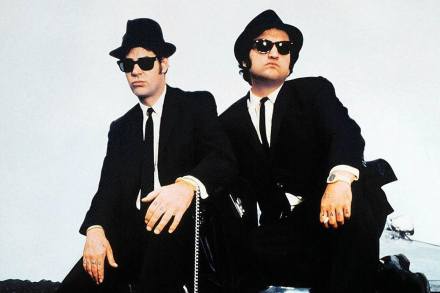
A good place to start with The Blues Brothers, Daniel de Visé’s engaging account of the John Belushi-Dan Aykroyd comedy classic, is in the spring preceding the movie’s summer 1980 release. By this stage, the production was mired in controversy and a martyr to industry scuttlebutt. Press reports put the expenditure at anywhere between $35 million and $40 million (in fact it sailed home at a mere $27.5 million) — and this at a time when over-subsidized box office calamities such as Steven Spielberg’s 1941 and Michael Cimino’s Heaven’s Gate had prompted many a lament about Hollywood hubris. The rough cut came in at a mammoth three hours, at a time when two were reckoned excessive.

Belushi

Reluctant servant of the Raj: Burma Sahib, by Paul Theroux, reviewed

From our UK edition

Eric Blair, to give George Orwell his baptismal name, arrived in Burma (present-day Myanmar) as a 19-year-old trainee police officer at the end of 1922 and left it in mid-1927 just before his 24th birthday. Not much of his time there had a direct impact on his work beyond a solitary novel, Burmese Days (1934), two luminous essays, ‘A Hanging’ (1931) and ‘Shooting an Elephant’ (1936), a poem or two and a scattering of autobiographical fragments, most of which turn up in the second half of The Road to Wigan Pier (1937). None of his letters home survives and only a handful of reminiscences by people who knew him as a servant of the Raj.

In praise of George Gissing, the born exile

George Gissing died just over 120 years ago, marooned in the French Atlantic resort of Saint-Jean-Pied-de-Port and in circumstances that might have been plundered wholesale from one of his notoriously ground-down novels. H.G. Wells, present at the scene, was so affected by his friend’s deathbed ravings that he transferred them word for word into the mouth of Uncle Ponderevo as he lies dying in Tono-Bungay (1909). There are Orwellian shadings: like Gissing, Orwell died at forty-six of lung disease, and was profoundly influenced by his Victorian forebear. It was Anthony Powell who remarked of Orwell’s third novel, Keep the Aspidistra Flying (1936) that “the Gissing had to stop.

gissing

Adam Sisman’s new John le Carré biography entertains and disappoints

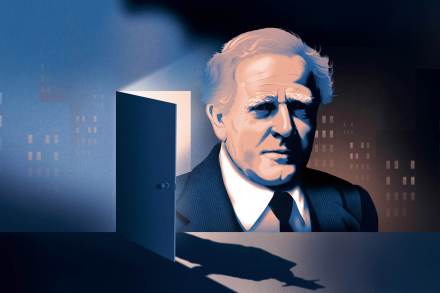
The fellow biographer for whom I always felt the most sympathy was James Atlas. Mr. Atlas, who has left an extensive account of his tribulations in The Shadow in the Garden: A Biographer’s Tale (2017), made the fatal mistake of writing a life of Saul Bellow while its subject was still alive. Bellow, you may not be surprised to learn, revealed himself to be a devious, shifty and manipulating old cuss. He interfered, blew hot and cold, disparaged his encomiast’s prose style, intelligence and research techniques and finally remarked, “I like you Atlas, but cut the crap.

le carré

Taking a trip to Russoville

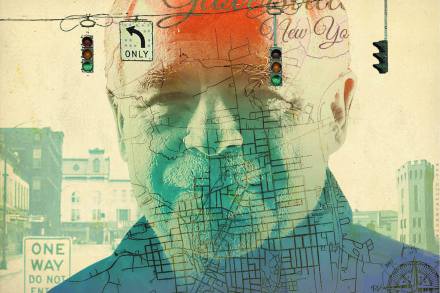
In Elsewhere, a coruscating memoir published in 2012, Richard Russo described his formative years as “an American childhood, as lived in the late Fifties, by a lower-middle class that barely seems to exist any more.” The setting for this slice of lost Eisenhower-era Americana was Gloversville in upstate New York, an East Coast leather town where the money had long since moved out and taken the locale’s animating spirit with it, to the point where the eighteen-year-old high-school graduate reckoned that “you could have strafed Main Street with an automatic weapon without endangering a soul.” The “Main Street” reference carries its own freight of associative cargo.

russo

How America influenced George Orwell

Some of the most tantalizing pieces of George Orwell’s journalism are the reviews written on the hoof, filed against deadlines, sent straight to the typewriter while World War Two raged above his head. One of them is a round-up of four reprinted dystopian novels supplied to the weekly magazine Time and Tide in July 1940, shortly after the fall of France. (Today, it’s rarely reissued and barely available outside the stout bindings of volume XII of Orwell: The Complete Works.) The four books are Jack London’s The Iron Heel (1908), H.G. Wells’s When the Sleeper Wakes (1910), Aldous Huxley’s Brave New World (1932) and Ernest Bramah’s The Secret of the League (1907).

orwell

The bookish life of John Carey

One of the most revealing moments in Sunday Best — a collection of book reviews dating back to the late 1980s — comes when John Carey, invited to appraise some items about Robert Graves, remembers hobnobbing with the author of I, Claudius half a century ago in Oxford’s High Street. Instantly, two of Carey’s signature marks — his love of literature and his eye for personality — come crashing together. Graves, then in his late seventies, tall, craggy and mage-like, is still a “commanding sight.” The drawback is his conversation: from the great poet’s lips, “in disconcertingly loud, upper-class tones, issued a bizarre stream of superstition and bogus history.

carey