J P O'Malley

Jonathan Powell interview: middle-man to the terrorists says ‘secret talks are necessary’

From our UK edition

Jonathan Powell is a British diplomat who served as Tony Blair's chief of staff from 1997 to 2007. During this period, he was also Britain's chief negotiator for Northern Ireland. These days, Powell runs a charity called Inter Mediate, which works as a go-between among terrorist organizations and governments around the globe. David Cameron appointed him last May as the UK's special envoy to Libya. His book 'Talking to Terrorists' was published this month, a review of which can be found in the October 4 edition of The Spectator. In it, Powell argues the British government has failed to learn lessons from the history of diplomacy with guerrilla groups.

Stalin’s Spanish bezzie

From our UK edition

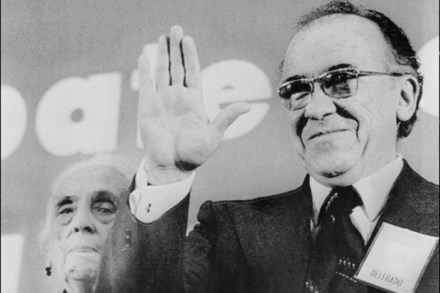
During the Spanish civil war the single greatest atrocity perpetrated by the Republicans was known as ‘Paracuellos’. This was the village where an estimated 2,500 prisoners loyal to Franco were executed by leftish militiamen between November and December 1936. Even though the facts of this massacre are now widely known, one question still remains: who ordered the killings? In his latest book The Last Stalinist,Paul Preston claims that it was Santiago Carrillo who played a crucial role in signing the death warrants. (Carrillo, who died in 2012, always denied any involvement in the incident). It is worth mentioning this mass murder because history tends to catch up with power-hungry leaders devoid of moral integrity. With Carrillo, however, this hasn’t been the case.

Alastair Campbell interview: Northern Ireland, David Kelly, Margaret Thatcher and Leveson

From our UK edition

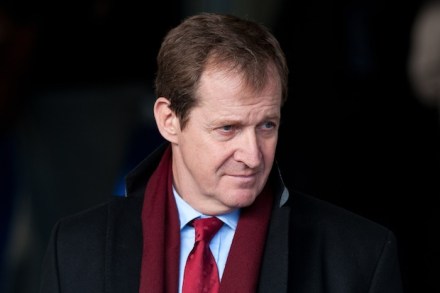
Alistair Campbell began his career as a journalist. He started working for The Daily Mirror in 1982 and then moved onto Today, a former British leftwing tabloid. In 1994 Tony Blair asked him to become his press secretary, and Campbell worked on Labour’s media campaign, where he helped them achieve a landslide victory in 1997. That same year he became both the Prime Minister’s Chief Press Secretary and Official Spokesman. In Labour’s second term he took on the role of Director of Communications for the party. Campbell has just published The Irish Diaries (1994-2003). The book describes the various ups and downs of the Northern Ireland peace process over a period of nine years.

Interview with a poet: Richard Murphy, an old Spectator hand

From our UK edition

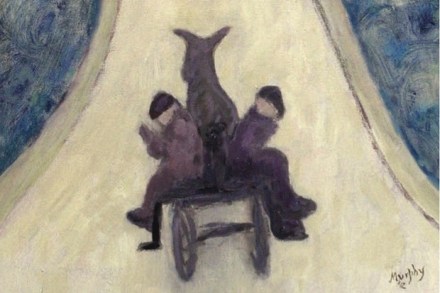
Richard Murphy was born in County Mayo in Ireland in 1927. He spent part of his childhood in Ceylon (now Sri Lanka) where his father was the last British mayor of Colombo. From the age of eight he attended boarding schools in Ireland and England, eventually winning a scholarship to Oxford. In 1959 Murphy moved to Inishbofin, an island off the coast of Connemara in County Galway. He settled there for twenty years, writing poems inspired by tragic tales from the local fishing community. These include ‘The Cleggan Disaster’, ‘The Last Galway Hooker’, ‘Pat Cloherty’s Version of The Maisie’ and ‘Sailing to an Island’. The latter describes a dangerous boating trip Murphy took with his brother. Murphy has always been an outsider.

Amartya Sen interview: India must fulfil Tagore’s vision, not Gandhi’s

From our UK edition

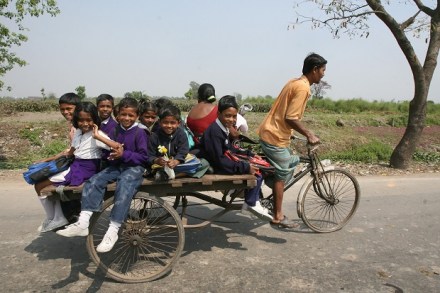
Amartya Sen is Thomas W. Lamont University Professor and Professor of Economics and Philosophy at Harvard University. Sen’s previous books include: Development as Freedom; Rationality and Freedom; The Argumentative Indian; Identity and Violence, and The Idea of Justice. In 1998 Sen won the Nobel Prize in Economics. Much of the work done by the Indian economist has focused on poverty, specifically looking at developing new methods to predict and fight famines. His research also discusses ways to measure poverty, so that more effective social programs can be designed to prevent it. Sen has recently co-written a book with fellow economist, Jean Drèze, called An Uncertain Glory: India and its Contradictions.

Winston Churchill was a very human leader, says Churchill and Empire author Lawrence James

From our UK edition

More books have been written about Winston Churchill than perhaps any other figure in British history. Do we really need another volume added to the existing library? In Churchill and Empire, the historian Lawrence James makes a strong case for justifying another book for Churchillian bibliophiles. The narrative begins by looking back at Churchill’s career as a young army officer in the late nineteenth century, where he served in conflicts in India, South Africa and Sudan. It ends with Churchill’s slightly deluded view of Britain’s place in global politics as the Second World War is ending: when the British Empire is disintegrating and America is the most dominant superpower on the planet.

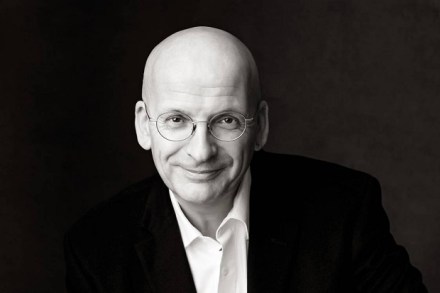
Roddy Doyle: I’m a middle class person commenting on working class life

From our UK edition

Roddy Doyle was born in Dublin in 1958. He first came to prominence with his debut novel The Commitments, which he self-published in Ireland in 1987. The book was then published in the UK in 1988 by William Heinemann. The two books which followed, The Snapper (1990) and The Van (1991), completed his Barrytown Trilogy. All three books were subsequently made into extremely successful films. In 1993 Doyle won the Booker Prize for his novel Paddy Clarke Ha Ha Ha. The book was praised for Doyle’s ability to write convincingly in the idiom of his main protagonist, Paddy Clarke: a ten-year-old boy residing in Dublin in the 1960s. Doyle’s popularity has continued to soar.

Korea – the 60 year war

From our UK edition

In the early morning hours of June 25, 1950 the opening shots of the Korean War were fired. At the time, few could have predicted how seminal this event would be in shaping world history. While the Korean War itself was only fought over a period of three years, no peace agreement was ever reached. In her new book ‘Brothers At War’, Sheila Miyoshi Jager provides a compelling historical analysis of a conflict that set the agenda for much of the Cold War.  Sheila Miyoshi Jager is Luce Associate Professor and Director of East Asian Studies at Oberlin College, Ohio. She has written extensively on modern and contemporary Korean politics and history. Would you describe the various phases of the Korean War?

George Packer interview: The American Dream is dangerous because people yearn for it to be true

From our UK edition

George Packer is a staff writer at The New Yorker and the author of The Assassins Gate: America in Iraq, a book that received several prizes. Packer’s other non-fiction books include, The Village of Waiting and Blood of the Liberals, the latter winning the 2001 Robert F. Kennedy Book Award. He is also the author of two novels, The Half Man and Central Square.  Packer’s latest book, The Unwinding: An Inner History of the New America, is a work of non-fiction that attempts to document the massive political and economic changes that have taken place in the last three decades in the United States.

Professor Steve Jones: Why I think religion is a bad thing

From our UK edition

Steve Jones is Emeritus Professor of Genetics at University College London. Some of his previous books include: The Language of Genes, Y: The Descent of Men, The Single Helix, and Darwin’s Island. Jones’ latest book is called The Serpent’s Promise: the Bible Retold by Science. The title suggests that Jones uses the Bible as a starting point to explain the world of science. In the preface, he says that the book is an attempt ‘to stand back and take a fresh look at the sacred writings in a volume that tries to interpret some of [the Bible’s] themes in today’s language.’ Really, this is a clever marketing ploy: the theme of religion and science is a hook to make this book shift more units.

Jesse Norman interview: Edmund Burke, our chief of men

From our UK edition

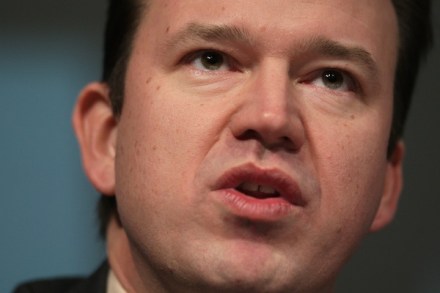
When he arrived in London, Burke had a very brief career in law. He soon dedicated his time to critical thinking, writing and politics. Burke published a number of ground breaking books, including: A Philosophical Enquiry into the Origin of Our Ideas of the Sublime and Beautiful, and Reflections on the Revolution in France. In his new book, Edmund Burke, Jesse Norman dissects Burke’s outstanding intellect, and his career. He then asks how these ideas might be applied to modern politics. Jesse Norman is Conservative MP for Hereford and South Herefordshire. In 2012 he was named as the Spectator’s Parliamentarian of the Year. He is a member of the Treasury Select Committee and is a senior fellow at the think tank, Policy Exchange.

Michael Sandel interview: the marketization of everything is undermining democracy

From our UK edition

Michael Sandel is a political philosopher and a professor at Harvard University. He is best known for his  ‘Justice’ course, which he has taught for over two decades. Sandel first came to prominence in 1982 with his book Liberalism and the Limits of Justice. The book offers a critique of liberalism, arguing that individuals’ needs are rooted with a sense of community and obligation to others, rather than the self. Last year, Sandel published What Money Can’t Buy: The Moral Limits of Markets. When one initially begins to read this book, it seems as if Sandel is simply stating the obvious. He asks questions that many of us think about on a day to day basis, but perhaps are afraid to ask, such as: do we want a society where everything is up for sale?

Interview: Jared Cohen and The New Digital Age

From our UK edition

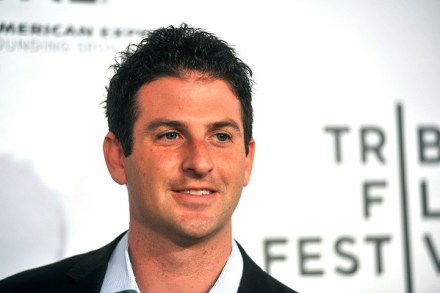
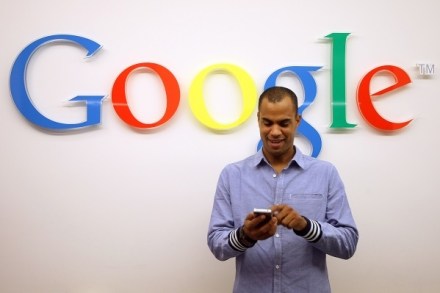
Jared Cohen is Director of Google Ideas, a think tank set up by Google dedicated to understanding global challenges by applying technological solutions. Cohen is also an Adjunct Senior Fellow at the Council on Foreign Relations. He previously served as a member of the U.S. State Department’s Policy Planning Staff, working as a close advisor with two former Secretaries of States, Condoleezza Rice and Hillary Clinton, focusing on the Middle East, South Asia and counter terrorism. Cohen has co-written, together with Eric Schmidt, Google’s Executive Chairman, The New Digital Age; a book that examines a number of different challenges that will arise as cyberspace drastically changes in the coming decade. The book asks two central questions.

Interview: David Graeber, leading figure of Occupy

From our UK edition

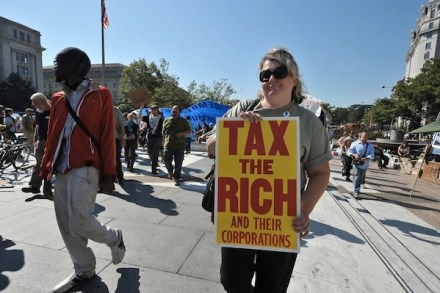
The anarchist movement in the United States has had the support of leading libertarian intellectuals, such as Noam Chomsky; but it has lacked a figure who could transform its guiding principles into something resembling a political movement. In the autumn of 2011, David Graeber seemed to be the man who could drag anarchism into mainstream politics. Graeber, along with other leading figures in the Occupy movement, coined the term ‘we are the 99 percent’. The catchphrase caught on, and within weeks — with the assistance of social media — Occupy transformed a small group of idealists with little support into a radical network occupying 800 cities around the world.

Interview with a writer: Kevin Maher

From our UK edition

Kevin Maher’s debut novel The Fields is set in the suburban streets of south Dublin in 1984. The story is narrated by Jim Finnegan: an innocent 13-year-old boy who lives in a carefree world that consists of hanging out in the local park and going on nightly bike rides with his geeky friend Gary. But shortly after his fourteenth birthday, Jim’s life drastically changes when he falls in love with a beautiful 18-year-old woman, Saidhbh Donoghue. After a brief honeymoon period their relationship turns sour when the young couple are forced to take a boat to Britain to arrange for Saidhbh to have an abortion.

Interview with a writer: John Banville

From our UK edition

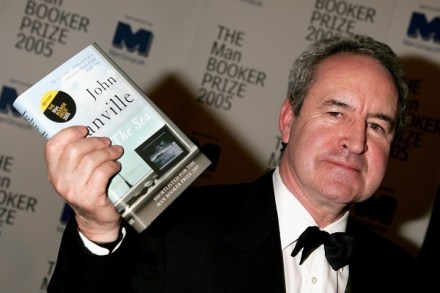
The salubrious surroundings of the Waldorf Hotel seem like a very apt setting to interview a master of style and sophistication. When I arrive in the lobby, John Banville is nowhere to be seen. Peeping into the bar, I notice a grey haired man with a moustache, wearing a tuxedo, softly playing a grand piano. Taking a seat, this strikes me as the kind of place that Alex Cleave would enjoy a drink. Alex is a semi-retired actor, and the central protagonist and narrator of Ancient Light; a novel that recalls a passionate love affair that took place over fifty years ago. The object of Alex’s desire was Mrs Gray, his best friend's mother, who was 35, when he was a naïve 15-year-old boy.

Interview with a writer: Jaron Lanier

From our UK edition

In his new book, Who Owns The Future?, computer scientist, Jaron Lanier, argues that as technology has become more advanced, so too has our dependency on information tools. Lanier believes that if we continue on our present path, where we think of computers as passive tools, instead of machines that real people create, our myopia will result in less understanding of both computers and human beings, which could cause the demise of democracy, mass unemployment, the erosion of the middle class, and social chaos. Lanier encourages human beings to take back control of their own economic destiny by creating a society that values the work of all industries, and not just those with the fastest networks.

Interview with a writer: Jared Diamond

From our UK edition

In his latest book The World Until Yesterday, Jared Diamond analyses the behavioral differences between human beings in tribal stateless-societies and those living in bureaucratic nation states. Diamond says that if states only came into existence 5,400 years ago, and agriculture in the last 11,000, human beings have been wandering nomads for most of history. Therefore, if modern nations are relatively new concepts, we have much to learn from traditional cultures. Drawing on his experience of 50 years of field research in New Guinea, Diamond attempts to prove his thesis with a mixture of personal anecdotes and academic research.

Interview with a writer: John Gray

From our UK edition

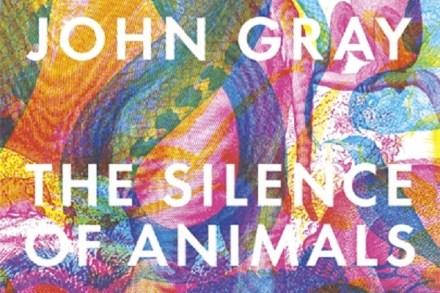
In his new book The Silence of Animals, the philosopher John Gray explores why human beings continue to use myth to give purpose to their lives. Drawing from the material of writers such as J.G. Ballard, Joseph Conrad, Ford Madox Ford, John Ashbery, Wallace Stevens and others, Gray looks at how we can reinvent meaning in our lives through a variety of myths and different moments in history. Gray refutes that humanity is marching forward to progress, where utopian ideals of civilisation and enlightenment are the end goals. He sees human beings as incapable of moving beyond their primordial, animalistic, selfish instincts, particularly when factors beyond their control make them more fearful.

Interview with a writer: Professor Neil Shubin

From our UK edition

Following in the footsteps of the great tradition of paleontologists like Stephen Jay Gould, and evolutionary biologists such as Ernst Mayr, Neil Shubin, professor in the Department of Organismal Biology and Anatomy at the University of Chicago, has spent a considerable part of his career discovering fossils around various parts of the world. These have changed the way we think about many of the key transitions in evolution. He famously discovered tiktaalik roseae, a 375 million years old fossil fish, in Canada in 2004. This discovery provided valuable data in helping us understand how fish evolved into land animals.