Culture

Culture

The good, the bad and the ugly in books, exhibitions, cinema, TV, dance, music, podcasts and theatre.

First-rate firsts

More from Books

It has become something of a truism among writers’ groups and in articles offering advice on how best to secure the services of an agent or publisher that the opening of a novel is everything — the ne plus ultra of the writer’s armoury. If one can knock the reader’s socks off with the first few lines one is almost there. So I’ve decided to conduct an experiment. Before reading any of these four first novels to the end, I shall compare and mark their opening couple of pages. First in line (and chosen entirely at random) is Michela Wrong’s Borderlines. Miss Wrong (you’ll find no silly jokes from me here) has been writing non-fiction books about Africa for years. This is her first try at a novel.

The day of reckoning is nigh

More from Books

I think this should begin with a truth-in-journalism disclosure: I know R.W. Johnson well enough to call him Bill. Since this opens me to charges of bias, let me start by acknowledging that Professor Johnson (a former leader of the ‘Magdalen Mafia’ at Oxford and author of a witty book on the subject) is unpopular in certain circles down here in South Africa. In spite of his record — 12 books, platforms at several esteemed British publications and an engaging prose style — Johnson has been shunned by local book fairs and banished from our op-ed pages.

It happened one summer | 27 August 2015

More from Books

Five songs, only three of which were amplified. Thirty-five minutes, including interruptions. That’s how long Bob Dylan played for at Newport Folk Festival on Sunday 25 July 1965. Even on its own merits, it was a messy, halting set with an inadequate sound system. ‘Why did that matter?’ Elijah Wald rightly asks. ‘Why does what one musician played on one evening continue to resonate half a century later?’ Cameras documented only the stage, and memories are unreliable, so nobody can say how many in the 17,000-strong crowd booed Dylan’s noisy rock’n’roll rebirth, but one eyewitness’s claim that it ‘electrified one half of his audience and electrocuted the other’ is broadly true.

Life with old father William

More from Books

This intensely written memoir by Adam Mars-Jones about his Welsh father, Sir William, opens with the death of Sheila, Adam’s mother, of lung cancer in 1998: ‘She died with self-effacing briskness in little more than a month.’ Adam too is self-effacing, moving in while his mother was dying, then staying on as his father’s main carer. The second of three brothers, he explains away this generous act: ‘As an under-employed freelance, I had time to spare.’ ‘Dad’, diagnosed informally as ‘demented’, was by then a retired High Court judge granted a low rent for a large flat in Gray’s Inn. Adam lived in the flat’s converted attic. Adam is thorough and, it appears, fair.

Gothic mysteries

More from Books

This is a muddle of novel (originally published last year by Tartarus Press in a limited edition), though there are plenty of indications that the author will go on to do great things. I doubt if he had quite decided what he was writing — a Stephen King horror story, a book about the loss of intense Catholic faith, a serious novel about families, a Gothic mystery.… It has elements of all these, but has not settled down to be any. It is written as though at a distance from the characters, by someone observing them, perhaps ironically, perhaps fondly, never closely. Only the narrator, and his younger brother, Andrew — called Hanny — have inner lives, and their relationship is movingly described.

A rollicking satire on the way we live now

More from Books

Jonathan Franzen’s latest novel, Purity, comes with great expectations. Its author’s awareness of this fact is signalled by a series of lampoons of writers expected to produce ‘big books’, writers named Jonathan and an assortment of other self-referential gags, but also the fact that its eponymous heroine, Purity Tyler, is nicknamed Pip. This Pip’s expectations are played off against those of Franzen’s readers: she won’t get what she expects, of course, any more than Dickens’s original Pip did. But to a great extent, our expectations will be met: this is a ‘big book’, a rollicking, sharply observed contemporary satire of family life and cultural politics.

Red for danger

More from Books

‘Gentlemen prefer blondes,’ Anita Loos pronounced, ‘but gentlemen marry brunettes.’ Quite what they do with redheads she never revealed (and I’ve often wondered), but with Red: A Natural History of the Redhead, Jacky Colliss Harvey sets out to discover everything — what it takes to make a redhead, where in the world they come from and why they exist at all; whether redheads are actually different or just treated differently; how they got their reputation, what that reputation might be and whether they deserve it. The history begins some 40,000 years ago, we are told, when the gene for red hair was carried from ‘the grasslands of Central Asia’ to Europe.

Spirits of the Blitz

More from Books

If the early Martin Amis is instantly recognisable by way of its idiosyncratic slang (‘rug-rethink’, ‘going tonto’ etc) then the later Pat Barker can be similarly identified by its finely wrought accounts of physical trauma. ‘Afterwards, it was the horses she remembered,’ runs a specimen sentence from the new novel, ‘galloping towards them out of the orange-streaked darkness, their manes and tails on fire.’ Noonday’s Blitz-era setting — the horses are in flight from a bombed-out brewery — gives Barker ample opportunity to do what she does best: intent descriptions of splayed limbs that are sometimes engaged in the act of love, occasionally the subjects of paintings or, more often, casualties of war.

Liberating Marianne

Lead book review

In Marianne in Chains, his last book on Occupied France, Robert Gildea offered an original view of life in that country between 1940 and 1944, arguing that outside the cities it had not always been as bad, nor had the Vichy regime always been as reactionary, as was subsequently claimed. Confining his research to three departments in the Loire valley, Gildea also suggested that for most people most of the time the Resistance was a dangerous irrelevance, to be avoided wherever possible. These conclusions were presented at a conference in Tours where they caused a minor uproar among French specialists. Gildea, professor of modern history at Oxford University, now turns to a much bigger subject.

These I have loved

More from Books

In the preface to his great collection of essays The Dyer’s Hand, W.H. Auden claimed: ‘I prefer a critic’s notebooks to his treatises.’ Auden’s criticism is like that: a passage of insights instead of a single sustained argument, and the same is true of Samuel Johnson, whose works are a pleasure to read for the feeling of the pressure of a great mind at play. Clive James belongs in this company. His new book Latest Readings is a kind of reading diary: a collection of short essays, each prompted by one book or a handful he happens to be reading. They are not in any logical order or sequence, but are given unity by two things: one biographical, the other stylistic.

Music for the masses

More from Books

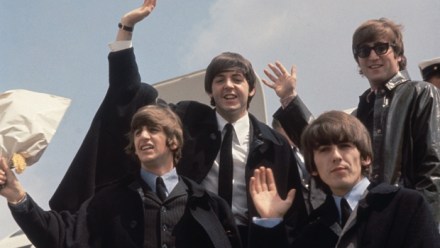
As pop music drifts away from many people’s lives, so its literature grows ever more serious and weighty, as though aware that this is an art form approaching the end of its time. Having had the pleasure of opening the first volume of Mark Lewisohn’s planned three-volume history of the Beatles and then fallen into a deep sleep attempting to read it, I feel only a sense of impending doom when presented with yet another vast tome of unimpeachable scholarship into the ephemeral. Peter Doggett, a long-serving toiler at the pop coalface, has produced a whopper here, a near-700-page history of pop’s 125 years, with the accent on the popular. What music did people like? Why did they like it? What did it bring to their lives?

The writing on the wall | 20 August 2015

More from Books

‘Every day’, writes the foreign correspondent Wendell Steavenson in this account of the 2011 Egyptian revolution, ‘see-sawed between joy and death.’ She covered the 18-day cataclysm and stayed on in Cairo for another 18 months to report its aftermath, filing for the New Yorker among other outlets. The title refers of course to Tahrir Square, the heart of the conflict, a place ‘shaped like a giant teardrop with a traffic circle in the centre’. Steavenson’s previous books include The Weight of a Mustard Seed, a portrait of a Ba’athist general in Saddam’s Iraq; she also reported on the fall of the Soviet Union.

Hurricane Lolita

More from Books

Speak, Memory, Vladimir Nabokov’s nostalgic memoir, reflects on his life from the age of three to 41, taking us from early-20th-century Russia, soon to be engulfed by revolution, to Europe at the start of the second world war. He planned a sequel to it, based on his American years, but Speak On, Memory was never written, partly because much of that experience had found an outlet in his novels. As Robert Roper argues in his literary biography, it was America that made Nabokov the master we now admire. Nabokov in America, a detailed account of the 20 years the writer spent there, revisits some of the less widely known facts and draws a number of fresh analogies.

Common sense, moral vision — and the magic touch

More from Books

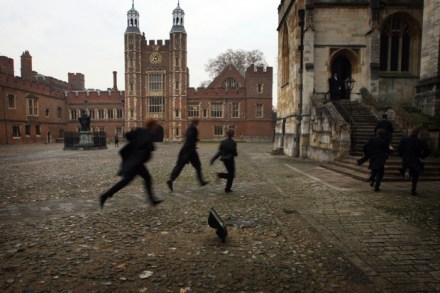
An Intelligent Person’s Guide to Education is Tony Little’s valedictory meditation on his profession, published on his retirement as headmaster of Eton. In a series of loosely connected essays, erudite and eccentric, he contemplates issues of fundamental concern to us all. What are schools for? How should teachers be educated? How do good schools work? The book is rather oddly larded with insights from The Schoolmaster (1902) by A.C. Benson (brother of E.F. and Robert Hugh) who was, like Little, an Old Etonian who went back to teach at the school. Benson’s commentary on his own teaching experience is used as a touchstone, generally reinforcing Little’s civilising, rational approach to education. These essays reveal Little’s vigorous moral vision.

Monster of misrule

More from Books

Mao Zedong, once the Helmsman, Great Teacher and Red Red Sun in Our Hearts, and still the Chairman, died in 1976. Even today his giant portrait gazes down over Tiananmen Square, where in 1989 his successors massacred hundreds of students and workers. After so many years and books and articles, can anything new be said about him? Although Andrew Walder, a Stanford sociologist and leading China scholar, writes that his comprehensive and deadly analysis is primarily for non-specialists, he has made me think. President Xi Jinping, who will make a state visit to London in October, speaks highly of Mao. Such praise, concludes Walder, requires ‘highly selective historical memory and a great deal of forgetting’.

Lust for life | 20 August 2015

More from Books

We all know about Samuel Pepys witnessing the Great Fire in his Diaries, but how many have read the definitive Latham and Matthews nine-volume edition, published between 1970 and 1983, complete with Pepys’s coded sections and his inconsistent and archaic spellings? Certainly the only person in the world to have read it aloud in its unexpurgated entirety is Leighton Pugh, on this three-volume 116-hour Naxos recording released between January and May this year. Produced by Nicolas Soames and with prefaces to each volume written and read by David Timson, it is a superb feat. Pugh had recorded 30 full-length audiobooks in the two years before this gargantuan challenge, an experience which helped him cope with the 40 gruelling recording days with their 10 a.m. – 5 p.m. routine.

In the sky with diamonds

Lead book review

Physicists have a nerve. I know one (I’ll call him Mark) who berates every religious person he meets, yet honestly thinks there exist parallel universes, exactly like our own, in which we all have two noses. He refuses to give any credit to Old Testament creation myths and of course sneers at the idea of transubstantiation. But, without any sense of shame, he insists in the same breath that humans are made from the fallout of exploded stars; that it is theoretically possible for a person to decompose on one side of a black hole and recompose on the other, and that there are diamonds in the sky the size of the moon.

Ballet critics are not writing for dancers

Some fans of Jonathan Ollivier, the fine dancer who was killed on his motorbike recently on the day he was to perform one of his best roles, the brooding sexpot in Matthew Bourne’s The Car Man, have been mourning that he wasn’t alive to see his glowing obituaries. Separately, I see that last week Rupert Pennefather of the Royal Ballet suddenly decided to leave ballet, aged 34. Next month he was due to open the new Covent Garden season in Romeo and Juliet. Again, fans have been commenting, this time noting that he never got a particularly enthusiastic press from the critics, and querying whether it might have been a factor in his quitting this young.

The poetic thoughts your pet is having

My request for poems by a pet who is cheesed off with its owner generated an entertaining parade of bullied, misunderstood and condescended-to creatures. The contempt in Basil Ransome-Davies’s closing couplet, written from the perspective of a bolshie moggy, speaks for the majority: He wants affection, he can kiss a duck. It’s what my mother told me: bipeds suck. I especially liked Sylvia Fairley’s homicidal preying mantis and Bill Greenwell’s scheming goldfish. Equally impressive, and unlucky to be just out of the frame, were Hugh King, John Priestland, George Tetley, John-Paul Marney and Dave East. Those entries printed below earn their authors £25 apiece. This week’s top dog is Martin Parker. He gets £30.

Rio’s rococo genius

More from Books

The surname is pronounced ‘M’shahdo j’Asseece’. There are also two Christian names — Joaquim Maria — which are usually dispensed with. K. David Jackson, professor of Portuguese at Yale, confines himself to ‘Machado’ and has invented an adjective ‘Machadean’. Stefan Zweig, who committed suicide in the very Machadean town of Petropolis, called him ‘the Dickens of Brazil’ which is not true — he has not Dickens’s range or sustained ebullience.

Venerable father of English history

More from Books

It might seem to some a bold move to base a book on any kind of journey at all when its hero entered the monastery at Wearmouth, Northumbria at the age of seven and, as far as we know, never left. Not that Bede was entirely parochial, distributing what was then an exotic luxury, pepper, amongst his peers on his deathbed. But his was essentially a virtual and vicarious world, reliant on a network of informants and an unrivalled library largely collected by its founder, Benedict Biscop, here memorably described as ‘the “millionaire” monk’, even if the more than 200 books we know Bede knew will seem small beer to most of us with bigger bookshelves.

Idolising Ida

More from Books

Jonathan Galassi is an American publisher, poet and translator. In his debut novel Muse, his passion for the ‘good old days’ of the publishing industry is palpable: a time when books were books, with glued or even sewn bindings, cloth or paper covers, with beautiful or not-so-beautiful jackets and a musty, dusty, wonderful smell … their contents, the magic words, their poetry and prose, were liquor, perfume, sex, and glory to their devotees. The halcyon days of print publishing were not, in fact, so very long ago, with the first e-reader going on sale only in 2004 and Amazon’s Kindle in 2007; it is astonishing that the digital revolution has taken only a decade to change the publishing landscape dramatically enough to inspire a novel so thick with nostalgia.

Polymath or psychopath?

More from Books

They don’t make Englishmen like the aptly named John Freeman any more. When he died last Christmas just shy of his centenary, the obituaries — once they had expressed astonishment that this titan from the age of Attlee and empire had still been around —paid tribute to a polymath whose achievements could fill nine more ordinary lives. Freeman was a pioneer of television, virtually inventing the TV celebrity interview. He was a leading politician — the last surviving member of the 1945 Labour government; a diplomat — at one time our man in Washington and High Commissioner in India; a much decorated war hero; and — not least — a renowned swordsman between the sheets, boasting four wives and innumerable girlfriends.

The lonely struggle of Jude the obscure

More from Books

Just over a century after Virginia Woolf declared that ‘on or about December 1910 human character changed’, the American novelist Hanya Yanagihara has announced a new shift in consciousness. Jude, the lead character in A Little Life, is known to his friends as the Postman, ‘post-sexual, post-racial, post-identity, post-past’. The obscurity of his origins (left at birth in a rubbish bin) and a childhood of horrific abuse mean he is determined to draw a veil over his past, making him the most mysterious of the four male New York friends at the heart of Yanagihara’s story. However, his condition is only an extreme — and negative — version of the ambiguity that characterises all the people around him, among whom identity is continually in flux.

A Broken Appointment

More from Books

I opened the envelope: it contained a ticket in my name from London St Pancras to Paris Nord, departing at 9.17 on the 12th of the 12th, a Friday; coach 3 seat 27, non-smoking; and another for returning the following day, at 13 minutes past two, in the afternoon – dans l’après- midi; and a postcard of Pierre Bonnard’s Le bol de lait, and there was just one word on the back — ‘Come’, followed by an ‘x’. Whenever I pour a dish of milk, or dwell on the loop in the ‘C’ of her flowing unfamiliar hand, I can’t help thinking — ‘Oh what a poem — what a poem Thomas Hardy might have written about this!

Wholly German art

Lead book review

Christian Thielemann (born in 1959) is a self-consciously old-fashioned figure who makes rather a virtue out of his limitations. As a conductor, he stands out in a profession increasingly given to the eclectic, and to performances of music outside the western canon. The practitioners of art music have almost all surrendered to the requirement to reach out, to experiment with the new and the non-European, and to mesh their endeavours with conscious gestures of social improvement. Thielemann could hardly be more out of sympathy with the prevailing mood. He is noisily devoted to musical excellence at all costs, and to long apprenticeships rather than flashes of stardom.