Jane Kelly

Meat-free moggies

From our UK edition

As I write, my cats and a visitor from the next street are hammering into their food, at nearly £5 a box. Once they only ate greens to make themselves vomit, but now they relish food labelled, ‘garden fresh’, containing carrots, pumpkin and pulses, plus ‘prebiotics to aid digestion’. I watch them eat and wonder how cats have evolved so quickly from savage carnivores into something more like middle-class ladies getting their five a day. Not that long ago, pets were fed scraps or, if they were lucky, Spratt’s Patent Food, which provided Puss and Fido with boiled horse flesh and beef blood, sold from barrows by street urchins. Tinned food arrived from the US in 1922. It made dog poop white, something that doesn’t seem to grace our pavements now.

Feeling lonely at Christmas? Me too

From our UK edition

In Dumas’ great novel, The Count of Monte Cristo, Edmond Dantès was condemned to life imprisonment in the notorious Chateau d’If, a lonely tower off the French coast, plus an annual flogging. The human mind being what it is he couldn’t sit peacefully enjoying his sea view. Instead his anxious thoughts continually anticipated the pain to come. It isn't clear in which month he was whipped but it seems likely that he was probably worrying about it for at least three months in advance. I know how he feels: in much the same way, I am among those who start losing sleep about Christmas Day in mid-October. No one could have loved Christmas more than I once did.

Storm Doris is here. It’s time to panic

From our UK edition

Today is Storm Doris's day.  A woman called Helen Chivers, not Shivers as she should be, from the Met Office was on Radio 4 this morning telling us that giving human names to gusts of wind is a really good thing because it makes everyone aware of the dangers of bad weather. We must keep our ears glued to the radio, the way you see in old war films and remain very alert because Storm Doris is going to be windy and there will also be snow in Scotland. I’m not taking any chances and will retire to the cellar under my house. Yesterday I was alerted to other new dangers in my once humdrum life. I thought my new cooker had broken because I was unable to light it. But when an engineer came to take a look, he explained that there was nothing wrong with it.

Rules for loneliness

From our UK edition

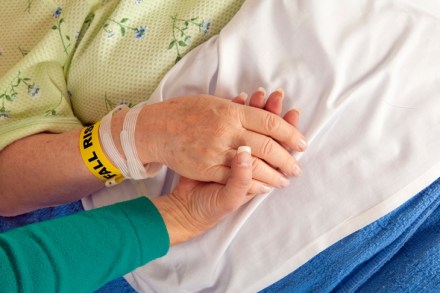
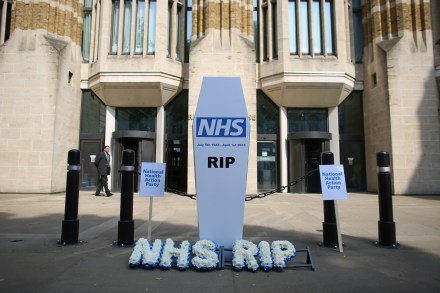
An old acquaintance died recently. A friend of mine, who was closer to him than I was, rang to tell me. She’d known him for 40 years and looked after him at various times when he fell ill. He was diagnosed with cancer three weeks ago and died suddenly in hospital last week. She tried to find out what happened, but as she is not next of kin (he had no relations) she will probably never know. Within the monolith of the NHS, patients, particularly the elderly, are able to disappear from view as effectively as prisoners in the Soviet gulag. If they don’t re-emerge alive, no except a close relation can discover why. I first realised this two years ago when I moved from London to Oxford, and tried to carry on volunteering as a hospital visitor. A neighbour broke her leg.

Teenage terrors

From our UK edition

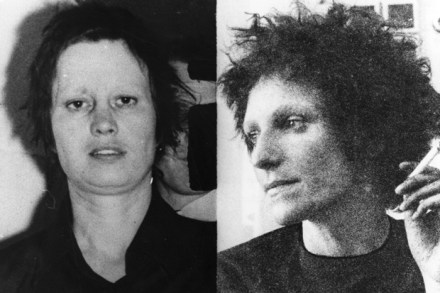
One of the great moments of my student life was opening the door and seeing visitors step back, shocked. I’d shaved my hair off to an eighth of an inch. It felt like velvet but looked spiky and hard. It was all down to Ulrike Meinhof, co-founder with Andreas Baader of the Red Army Faction, who’d just hanged herself in Stammheim prison, in Germany. My friends liked my haircut as we conflated Ulrike the martyr with images of a mullet-haired Jane Fonda raising her fist against the US army on behalf of the tortured Viet Cong.

Victim status

From our UK edition

I was riveted to read about Ione Wells, an Oxford student, aged 20, who was savagely attacked on a London street. She then wrote about the experience for her university paper and has now hit the national news, prompting other students to write about their experiences too. Ione has kick-started her career as a journalist, and discovered that a woman reporter can often do well by cannibalising her own life, as long as she is a good writer, which Ione seems to be. Her story was interesting to me because in 1982, just after I came to London, I was attacked while walking home in south London. It was a violent assault; the perpetrator tried to strangle me before attempting rape. Like Ione, I was rescued by a local person.

My wood-burning stove is expensive, trendy – and miserable

From our UK edition

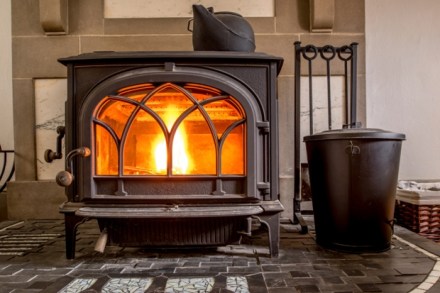
One of my earliest memories is seeing my father in the early morning raking out the ashes of our coal fire. I was interested in the blue veins around his ankles and bare white heels as he strained forwards with his short shovel. After the ashes he carefully placed balls of newspaper, which he called ‘spills’, and built a tent of small kindling logs over them. I was careful not to speak as he was always in a furious temper while he was doing it. Fifty years on, I have discovered why. I recently moved house and inherited from the previous owner a wood-burning stove, which takes up a large amount of space in my small living room, and a lot of time and energy from me.

Under this government, our prison system is falling apart

From our UK edition

It used to be sewing mail bags, picking oakum and working the treadmill, now the government has come up with a wheeze to get convicts busy with sandbags, fence posts and kit for the armed forces. The Justice Secretary, Chris Grayling, says the ten-year deal will teach convicts ‘the value of a hard day’s work’. This has been tried for six months with Coldingley prison in Surrey and Grayling reports savings of nearly £500,000. Although that figure must be offset by the £72,000 of taxpayers’ money he has just spent trying to overturn a court ruling against his ban on inmates receiving books from visitors. He is also planning major reforms on rehabilitation of offenders.

Old, vulnerable and hungry – the shocking view from inside the NHS

From our UK edition

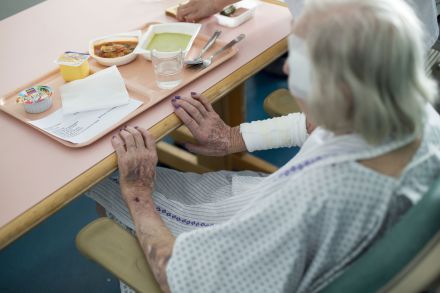
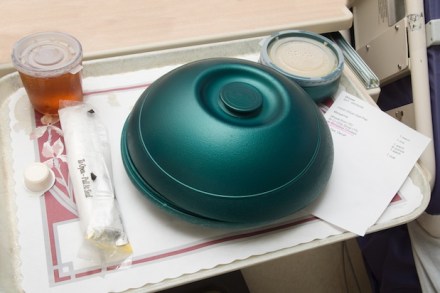
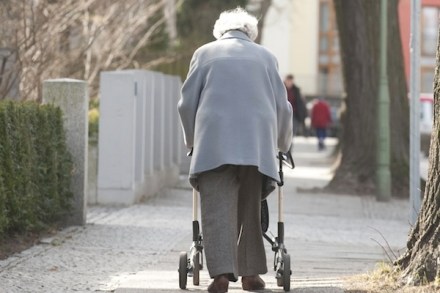
I am leaving London soon, coming to the end of my time as a voluntary hospital visitor working from a chaplaincy in a London teaching hospital. I have been roaming around a variety of wards for the last three years, only one day a week, but in those few hours I have seen quite a lot. The most disturbing things have been the poor quality food, which cannot aid anyone’s recovery, and the neglect of the very old and vulnerable, the patients rather ominously labelled ‘bed blockers’. On my last visit, the Anglican chaplain was not in the hospital, so instead of attending a morning service with him in the hospital chapel, I went up onto the wards early, at breakfast time. In one ward there is a neighbour of mine, an old man I’ve known for years.

Is the way our hospitals treat old people down to underfunding – or organised neglect?

From our UK edition

I am leaving London soon, coming to the end of my time as a voluntary hospital visitor working from a chaplaincy in a London teaching hospital. I have been roaming around a variety of wards for the last three years, only one day a week, but in those few hours I have seen quite a lot. The most disturbing things have been the poor quality food, which cannot aid anyone’s recovery, and the neglect of the very old and vulnerable, the patients rather ominously labelled ‘bed blockers’. On my last visit, the Anglican chaplain was not in the hospital, so instead of attending a morning service with him in the hospital chapel, I went up onto the wards early, at breakfast time. In one ward there is a neighbour of mine, an old man I’ve known for years.

Searching for Stan

From our UK edition

I feel like Job. Everything of significance is being stripped from me. In August my flat in west London was badly flooded; on 25 September I lost my job; on Monday lunch-time, 25 October, my beloved cat Stan, apparently terrified at the sight and sound of me knocking in a fence post, took off and hasn’t been seen since. In the six years since he came in as a stray, Stan has never spent a whole night out of my bed. He is rather cowardly and weighs a stone and a half, so he is not given to gadding about. On the morning after Stan took off I looked out of the kitchen window to see a massive magpie in the tree outside, sounding off with a voice like a cheap child’s rattle. An emblem of utter doom.

The nun who took down an Isis flag – and stands up for east London’s Muslims

From our UK edition

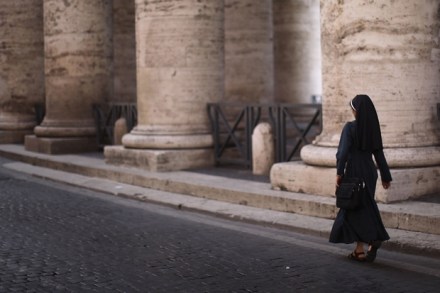
Not so long ago disaffected youngsters would take to a life of crime and hard drugs, a trajectory which would often kill them. These days, some young men from our Muslim community sign up instead to the so-called Islamic State, and the dream of a distant Caliphate. Why? Well, forget theology or even the prestige which comes from being a warrior — if Sister Christine Frost is right, it all comes down to housing. Sister Christine has worked on the Will Crooks Estate in Poplar, east London, for over 40 years. She accidentally got into the news in early August when she removed the black flag of radical Islam which was flying over the entry to the estate, and the press were fascinated that a small, lone woman aged 77, would take such a risk.

The NHS’s sympathy deficit

From our UK edition

Sometimes I have a quiet time as a voluntary hospital visitor. But recently I’ve witnessed a lot of distress from people of all ages and types. The other week I saw an elderly Middle Eastern man bent over a bin in a ward corridor, crying almost uncontrollably. I asked him the problem and he stuttered out that he had been watching his daughter sleeping, and he believed she was going to die. I went off to find a nurse as I felt I didn’t know enough about his situation or hers to help. The nurse wouldn’t tell me anything due to patient confidentiality. I returned alone to the man and tried to sympathise. He managed to say that his daughter had food poisoning. I didn’t think that sounded too bad, but he added that his wife had died of it.

In our hard-pressed NHS, must sympathy be rationed too?

From our UK edition

Sometimes I have a quiet time as a voluntary hospital visitor. But recently I’ve witnessed a lot of distress from people of all ages and types. The other week I saw an elderly Middle Eastern man bent over a bin in a ward corridor, crying almost uncontrollably. I asked him the problem and he stuttered out that he had been watching his daughter sleeping, and he believed she was going to die. I went off to find a nurse as I felt I didn’t know enough about his situation or hers to help. The nurse wouldn’t tell me anything due to patient confidentiality. I returned alone to the man and tried to sympathise. He managed to say that his daughter had food poisoning. I didn’t think that sounded too bad, but he added that his wife had died of it.

When a survivor of Auschwitz asks for your story, what do you say?

From our UK edition

My aim as a hospital visitor is to cheer, befriend, have a chat, do something to disrupt the bleak monotony of the modern hospital day. Some patients talk amiably while others are grumpy, demented patients kept on wards for months and who won’t shut up. Many conversations lead nowhere. Some days the pillow talk is dull, so I paid attention when someone in the chaplaincy mentioned a lady who’d been in Auschwitz and still had the camp tattoo. I’d heard of Polish girls working in London cafés after the war showing numbers etched on their arms, but I’d never met anyone who had one. I taught English in Poland for a year and made friends with a student who came from the village of Oswiecim, which the Germans renamed Auschwitz.

A dying estate agent helped me see the light

From our UK edition

I recently decided to move house. It started with a resentful yearning to own two bedrooms, but I quickly discovered that to afford a spare room, I must leave my seedy area of west London for a worse one, or leave London altogether. Not easy after 30 years. Since I made up my mind to move, my normal life has disappeared. In the ceaseless hunt for houses I have no time for blogging, writing, painting, exhibitions or sociable lunches: the things that used to give life its shape. As there are not enough affordable houses, there is intense competition involved, which has changed me into something like the unpleasant yuppie I was 30 years ago: anxious, resentful, greedy and tense. I put in offers while looking elsewhere, bidding against others when I know I’m not really interested.

Hospital food isn’t a joke. It’s a scandal

From our UK edition

One of the patients I see regularly as a voluntary hospital visitor, who has been in hospital for weeks, seems to be getting better. Still skeletally thin, he is now sitting up and complaining. His problem is that he longs for a jacket potato with just butter. He hates beans. But he might as well ask for gravadlax and dill. On the hospital menu, baked potatoes only come with baked beans. I asked one of the Thai ladies who deliver the food if he could possibly have a plain spud. ‘Not possible,’ she said, ‘all with beans.’ She said she would go and ask someone, but who that might be I don’t know: I have never seen anyone in charge of food. ‘It’s hopeless,’ he told me. ‘I’ve asked them before, they won’t do it.

These days, even a good NHS hospital can be a frightening place

From our UK edition

Let’s not pretend that it’s just those hospital trusts investigated, or put on ‘special measures’ by Jeremy Hunt that are the problem. On my weekly trot around the wards of a big London teaching hospital, everything seems fine, the patients reasonably clean and well cared for. But over the months I’ve noticed that, even here, the NHS service is just not what it was — so many bits are being pared away. First I met one of the hospital’s ‘Friends’, almost all of whom are now doughty ladies in their eighties. She mentioned that they are using some of their hard-won charity money to fund an art therapist who has been having a very good effect on stroke patients. The NHS no longer pays for them.

It’s time to admit it: the NHS is unable to look after our elderly

From our UK edition

I decided to become a hospital visitor last year, after being a patient and finding myself in something more like a factory than an old-fashioned ward. A terror of infection in 2011 (there were 2,053 deaths involving Clostridium difficile) has ended the cosy world of side tables covered in flowers and cards. Concerns about data protection have put paid to WRVS ladies pushing trolleys, and vicars walking around offering solace. There aren’t even many nurses about, and even if there were, you wouldn’t want to bother them for tea and a chat. It’s OK if you have family or friends nearby, but if you don’t, being a patient in today’s NHS is a bleak experience.