Culture

Culture

The good, the bad and the ugly in books, exhibitions, cinema, TV, dance, music, podcasts and theatre.

Sport’s first celebrity: W.G. Grace

More from Books

Should you wish to have a good copy of the 1916 edition of Wisden, cricket’s annual bible, you should be prepared to part with at least £5,000 and, quite possibly, much more than that. This reflects its rarity — the Great War ensured that the almanac had a limited print run — but also the significance of its contents. For the 1916 edition carries the obituaries of Victor Trumper, the wondrous Australian nonpareil and of course, the greatest Champion of them all: W.G. Grace. The summer game had never seen anything like Grace before and never will again. Other cricketers have scored more runs and taken more wickets than Grace but none did so in more pressing circumstances.

Proof that the British hardly ever had a stiff upper lip

More from Books

The last time I cried was September 1989. That was my first week at public school. The reason I cried was that my allocated room-mate, a malevolent pixie named Toby Cox who later became one of my closest friends, had informed me that he ‘knew a lot of people’ at Harrow and he was going to tell them all that I was ‘a total dick’. I bawled. I blubbered, and a cord of saliva swung from my lower lip, as I begged for mercy. He refused. And I haven’t cried since. Not at the deaths of pets or relatives. Not at the break-ups of relationships. There’s something satisfying, I suppose, in fulfilling so completely a national stereotype.

Hermitage director Mikhail Piotrovsky knows all the secrets of his museum, and he’s keeping them

More from Books

The front cover of this book describes the Hermitage as ‘the Greatest Museum in the World’. That sobriquet must go to the Louvre. The Hermitage is perhaps the second greatest, one which its current director Mikhail Piotrovsky calls an ‘encyclopaedic’ museum, housing ‘the culture of humanity, which is represented in all its variety...’ Not quite. Like the Louvre or the other encyclopaedic museums, the Met in New York say, or the Kunsthistorisches in Vienna, it does not incorporate primitive or folk art. London doesn’t have anything directly comparable: it would be as though the British Museum, the National Gallery, the Victoria and Albert, the Royal Collections and a bit of Tate Modern were all rolled into one.

The many lives of John Buchan

More from Books

Up the stairs with flying feet, You would burst upon us, cheering Wellington’s funereal street. Fresh as paint, though you’d been ’railing Up from Scotland all the night, Or had just returned from scaling Some appalling Dolomite… Pundit, publicist and jurist: Statistician and divine; Mystic, mountaineer and purist In the high financial line; Prince of journalistic sprinters — Swiftest that I ever knew — Never did you keep the printers Longer than an hour or two… Still I hope with kindly feeling You recall the days of yore, When I watched you gaily reeling Off your folios by the score; Self-effacing, self-suppressing When your elder took the reins, Though at half his age possessing Twice and more than twice his brains.

Big is beautiful: A crushing case for brutalism — with the people left out

Lead book review

First things first: this is one of the heaviest books I have ever read. Eventually I finished with it resting uncomfortably on my knees, as I perched on the edge of my bed. It reminded me of when I met Jennifer Worth (of Call the Midwife fame) and she showed me her hardback copy of my own substantial tome Austerity Britain — neatly spliced in half to make two separate manageable entities. Reluctantly I can now see her point; but in the case of Elain Harwood’s Space, Hope and Brutalism, the doorstopper’s doorstopper, I doubt if I would have the strength to do the same.

Lover and fighter

More from Books

I don’t like boxing. If I ever get into a boxing ring, I’ll be in the corner with the governor of California, Edmund ‘Pat’ Brown, who in 1963 called for ‘the abolition of this barbaric spectacle’ because another man had just been beaten to death in the ring. That man was Davey Moore, who had defended boxing before it killed him on the grounds that no one stopped the Indianapolis 500 when racing drivers get killed. But another dead man is the focus of this book: our hero is the captivating, frustrating, brutal Emile Griffith, who we meet at the age of 22, ‘happy and beautiful’, and who one year later battered to death the Cuban fighter Benny Paret, the first man whose death was shown live on television (the second was Lee Harvey Oswald).

To wit, deWitt

More from Books

Patrick deWitt is a Canadian writer whose second novel, a picaresque and darkly comic western called The Sisters Brothers, was much praised and shortlisted for the Man Booker prize in 2011. For the follow-up, deWitt has produced a picaresque and darkly comic middle-European fairy tale called Undermajordomo Minor. Instead of brothers named Sisters, it features a lone anti-hero with a girl’s name: Lucy (Lucien) Minor. As is traditional in storybook narratives, Lucy leaves his village of birth to seek his fortune — well, not to seek his fortune so much as just because he hates his village and everyone in it. He accepts a position assisting the caretaker (i.e. majordomo) of the castle of the Baron von Aux.

The politics of prediction

More from Books

Forecasts have been fundamental to mankind’s journey from a small tribe on the African savannah to a species that can sling objects across the solar system with extreme precision. In physics we have developed models that are extremely accurate across vastly different scales from the sub-atomic to the visible universe. In politics we have bumbled along making the same sort of errors repeatedly. Until the 20th century, medicine was more like politics than physics. Its forecasts were often bogus and its record grim. In the 1920s, statisticians invaded medicine and devised randomised controlled trials. Doctors, hating the challenge to their prestige, resisted but lost. Evidence-based medicine became routine and saved millions of lives. A similar battle has begun in politics.

Sodom in Potsdam

More from Books

Reacquaintance with Germany is long overdue for most English people. Before 1914 it was at least as familiar as France and Italy. Tim Blanning, former professor of Modern European History at Cambridge, has already written brilliantly about Germany in books such as The Culture of Power and The Triumph of Music. His latest is a 625-page biography of Frederick II (a hero in his lifetime to many Englishmen), which also illuminates Berlin, Potsdam and Prussia in the 18th century. It is sure to be the standard English-language account for many years. It instructs; it entertains; and it surprises. Blanning shows that this hereditary monarch, born in Berlin in 1712, could be more radical than most leaders today.

Two serious ladies

More from Books

‘You understand, Lenú, what happens to people: we have too much stuff inside and it swells us, breaks us.’ The line comes from the third of Elena Ferrante’s Neapolitan novels, but it offers a fair summary of a sequence that concludes in this fourth volume. Set in Italy between the 1950s and the present, and documenting the turbulent friendship between two women from the same working-class quarter of Naples, these books by a still-unidentified pseudonymous writer rattle like pressure-cookers with anger, outrage, frustration, jealousy and spleen.

Poet as predator

Lead book review

In Testaments Betrayed, Milan Kundera says: ‘Biographers know nothing about the intimate sex lives of their own wives, but they think they know all about Stendhal’s or Faulkner’s.’ In The Silent Woman: Sylvia Plath and Ted Hughes, Janet Malcolm says: ‘The transgressive nature of biography is rarely acknowledged, but it is the only explanation for biography’s status as a popular genre.’ She also shrewdly remarks on the ‘mantle of judiciousness’ that biographers are forced to deploy. Jonathan Bate informs us that over a period of five years he has read and taken notes on nearly 100,000 pages of Ted Hughes manuscripts.

Spectator competition: the Lion, the Witch and the Ikea Wardrobe (plus: take a poem in a new direction)

The latest challenge was all about writers selling their souls to the corporate giants. Competitors were asked to recast a well-known scene from literature to reflect the fact that its author has signed a sponsorship deal with a well-known brand. Frank McDonald fancied that Coleridge had taken Highland Spring’s shilling: Water, water everywhere And still our throats did sting. Water, water everywhere But none was Highland Spring. Elsewhere in the entry the Mad Hatter’s Tea Party provided the perfect platform for Mr Kipling; Sydney Carton’s execution was the ideal shop window for both Sabatier and Brooks of Sheffield; and Lady Macbeth cracked open the Wet-Ones with gusto.

Jonathan Meades on god, football and brutophilia – and why his memoir was 17 years late

This is a transcript of a talk, 'Composing the Past', given by Jonathan Meades at the Assembly Rooms in Edinburgh on 26 August 2015, about writing An Encyclopaedia of Myself, which won the Spears Memoir Prize and was shortlisted for the PEN Ackerley award The most recent film I made was on the sculptural neo-expressionistic architecture of the late 50s, 60s and early 70s - known as brutalism after the French for raw concrete, beton brut or bru, depending on how costive with consonants the speaker is. This film has had bizarre and unintended consequences. Forty years ago two fine comic actors, both now dead, John Fortune and John Wells, collaborated on a novel called A Melon For Ecstasy. The title comes from a Turkish proverb: 'A woman for duty, a boy for pleasure, a melon for ecstasy'.

Tree devotion

More from Books

I have never written much about the one-acre shaw of native trees I planted in 1994, even though it is the delight of my heart, especially when the wild cherries flame in autumn. That’s because I am well aware that en masse tree-planting is a niche activity, open only to the fortunate few. But no one can have envied Thomas Pakenham when, in 1961, he unexpectedly inherited Tullynally Castle in County Westmeath in central Ireland, with its 1,500-acre ‘demesne’ — a third of it park and garden — since he was heavily burdened with death duties. It took nearly 30 years to pay off the debts, before he could begin to concentrate on the delight of his heart, which is planting, caring for and observing the ways of trees as well as travelling the world to look at them.

How cool is Britannia?

More from Books

Is it true that, having lost an empire, we reinvented ourselves as an island of entertainers? Do we channel the same rigour and vigour into film and music and literature as once went into conquering continents? Is there a residual colonialist bias in our arts, seen, for instance, in our cinematic penchant for creating patriotic period dramas such as Henry V or The King’s Speech? How much of our cultural success depends on the US market and the accident of a shared language? To what extent does our cultural expression reflect not our idea of ourselves but an American distortion?

The voice of Crow

More from Books

A dead parent, the interrogation of a literary inheritance, and over everything, a bird: Max Porter is apparently unafraid to step into massive shoes. Not just the colossal ones belonging to Ted Hughes, whose ‘Crow’ poems are the jumping-off point for this free-verse novella about a bereaved Hughes scholar visited by Hughes’s corvine manifestation, but also those of Helen Macdonald. H is for Hawk, her memoir of loss, writing, recovery and nature, drawing ingeniously on the life and work of T.H. White, covered this territory with ferocious honesty and eloquence. The comparison is impossible to avoid, and not kind to Porter. That’s somewhat unfair, since Grief is the Thing with Feathers is fiction, and cannot compete with the rawness of real grief written down.

Love, loneliness and all that jazz

More from Books

Woody Allen (born Allan Stewart Konigsberg), the prolific, Oscar-winning auteur, New Orleans-style jazz clarinettist, doyen of New York delicatessen society, moralistic nihilist and icon of nebbishes everywhere, will be 80 on 1 December. He says he hopes to sleep through the occasion, but he is already completing next year’s film, his 47th, and preparing a series of programmes for television. In the meantime, here, in homage, are two magnificently illustrated catalogues raisonnés. Both books incidentally tell the story of his life, including the time when he courted his former partner Mia Farrow’s adopted daughter, Soon-Yi Previn, and caused all media hell to break loose. He survived disapproval by working, married the girl in 1997, and they still live happily together.

Cry havoc

More from Books

If you love dogs and or live with one — I declare an interest on both counts — there is enough here about what the authors too often call ‘doggies’ to keep you interested. But what I liked about this book, despite its trickle of cute language, is that the title exactly tells the story. The dogs indeed went to war, and they were trained to do unpleasant things, including committing suicide by charging into German strongholds carrying bombs, seeking out and identifying landmines, finding bodies under rubble, and guarding bases. But according to Clare and Christy Campbell, war dogs’ effectiveness, despite much heroic, sometimes false, publicity, is doubtful.

Sibling rivalries

More from Books

In The Past (set chiefly in the present) four middle-aged siblings spend an eventful summer holiday in the Devon country house vacated by their dead grandparents. When Alice, a failed actress, turns up with an unannounced male guest who’s still at university, her footloose ways vex the others — particularly the youngest, Fran, a harassed teacher with two small children, Ivy and Arthur. Then there’s demure Harriet, the eldest sibling, who needed to grow up fast when their mother Jill died young. Her secret diary shows how far her selflessness edges into repression, not least after she accidentally spies on her brother Roland in bed with his latest wife, a taut Argentinian named Pilar.

Pillar of the Victorian age

More from Books

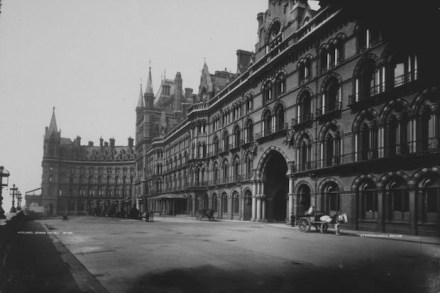
Briefing his illustrator for the jacket of A Handful of Dust (1934), Evelyn Waugh asked for a country house in ‘the worst possible 1860’. The result was a neoGothic extravaganza with a pinnacled entrance tower and spiky dormer windows — just the sort of thing that might have come from the drawing board of George Gilbert Scott, the most eminent architect of that time. Scott’s Kelham Hall in Nottinghamshire, its bright red brick distantly visible from the western side of the carriage as the train heads north from Newark, gives the picture perfectly. And if you strain to spot Kelham amidst its trees, no one could miss Scott’s Midland Hotel at St Pancras —same style, but twice as big — or that staggering object, the Albert Memorial.

Dick at his trickiest

More from Books

In the more than 40 years since Richard Nixon resigned as president — disgraced as much by his inveterate lying as by his actual crimes related to Watergate — history has been relatively kind to him. Compared with Ronald Reagan, Bill Clinton and George W. Bush, Nixon in retrospect can seem statesmanlike, thoughtful and liberal-minded. He established diplomatic relations with communist China, took the US off the gold standard, negotiated the wind-down of the Vietnam war, and created the Environmental Protection Agency — accomplishments that generally prompt even Nixon-haters to pause before they condemn Tricky Dick to perdition. But now comes Joan Brady with a bracing reminder of what indeed was so hateful, so villainous about Nixon and his political ascent.

Theatre of politics

Lead book review

We don’t usually pay all that much attention, as James Shapiro points out, to the Jacobean Shakespeare. We’re in the habit of thinking of him as an Elizabethan playwright: look in most cradle-to-grave biographies for ‘what Shakespeare was doing after James came to the throne in 1603 and there usually aren’t many pages left to read’. That’s to scant his decade-long engagement with the dawning of the Stuart era. Also to ignore that, as Shapiro argues, only three cultural artefacts created during the first decade of King James’s reign still matter 400 years later: the King James Bible, the mythology of the Gunpowder Plot, and Shakespeare’s late plays. Shakespeare, as 1606 began, was 41.

A new track record

More from Books

Simon Bradley dates the demise of the on-board meal service to 1962, when Pullman services no longer offered croutons with the soup course. That may be a touch fanciful— there were other reasons for the decline, such as faster trains, cost cutting and the growth of fast food. Nevertheless, it is the type of anecdote that illustrates the thoroughness and depth of Bradley’s research. It is indisputable that the railways were the most important invention of the early 19th century. Before their creation, travel between towns and cities was a desperately slow and difficult enterprise and moving goods around was even harder, given the terrible state of the roads.

Ticks and crosses

More from Books

Houses, as any plumber will testify, do sometimes blow up in gas explosions, destroying their contents and inhabitants, but would that really happen on the night before a wedding in a swanky house in Connecticut, killing daughter, daughter’s fiancé and owner’s lover? It seems too good to be true —the perfect big bang to set a novel in motion — and it made me distrustful from the start. It’s bad enough for a fictional weirdo to engineer such a disaster, but it’s worse for a novelist to engineer one, just so he can crack open a cast of characters’ sorrowful interior monologues and keep them going for a novel’s length. Did You Ever Have a Family is a strange book: a psychological thriller that intrigues rather than thrills.

A captivating prospect

More from Books

What could happen in literature to a young couple — or a pair of young couples — who fall off the beaten track and enter a magical place not quite of this world? They might end up, like Adam and Eve, in paradise. Or, like The Tempest’s Miranda and Ferdinand, under the control of powers greater than they can hope to understand. Or, like the lovers in A Midsummer Night’s Dream, they could find themselves unsure who they love, or whether they can ever trust what they see, or feel. Or, like Charmaine and Stan, the star-crossed heroes of Margaret Atwood’s dazzling and hilarious new novel The Heart Goes Last, which plays effortlessly with tropes from Shakespeare and Milton, they could take shelter from a world ravaged by economic crises in a prison.

Following the fickle fish

More from Books

Fish stories come in two varieties: the micro-version of a hundred riverside bars, blokeish boastings of rod-and-line tussles with individual fish in which man and beast are fairly evenly matched. Then there is the macro-version, the one that tells of the fate of entire stocks — the cod of the Grand Banks, the European hake, the bluefin tuna of the Mediterranean, the haddock of the Atlantic, the whale everywhere. In this version, technology and greed have the upper hand and the narrative invariably moves from scenes of boundless plenty to ones of catastrophic scarcity. Donald S. Murray’s Herring Tales is one of these. As a native of Lewis, a Gaelic speaker, he recalls Stornaway crammed with herring boats; you could cross the harbour on their decks.