Conrad Black

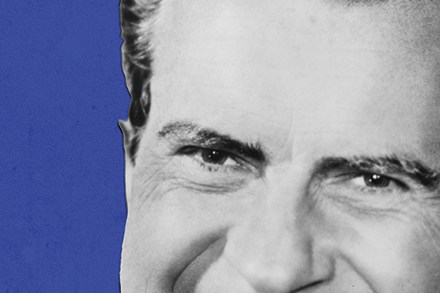
The redemption of Richard Nixon

In the last five years of his life, when I knew Richard Nixon, nothing described him better than Milton’s “calm of mind, all passion spent.” During the most tumultuous political career in American history he had come back many times, but the greatest comeback of all was in full swing. His enemies had seized control of the puritanical conscience of America to slay him, unjustly, and he was manipulating the same national conscience, which was founded on Plymouth Rock and has survived all the corruption and hypocrisy and violence of American public life, and when aroused, is insuperable. Since his political fall, and later his death, polls increasingly indicate public unease about the treatment of Richard Nixon.

Another stupid, redundant, dismal Canadian election

From our UK edition

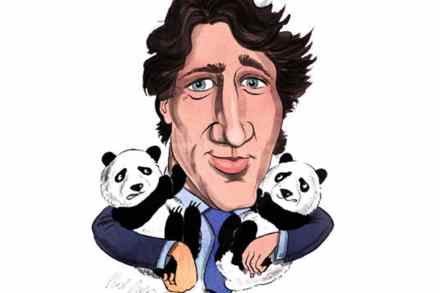
Canada has just surpassed even its own previous records for absurd and boring elections yielding predictable and dreary results. Almost inexplicably, Trudeau called this election with the shortest possible campaign. He believed he could regain his majority as a recognition of what he imagined to be his distinguished leadership of the country through the coronavirus pandemic. Like Theresa May seeking a strong mandate to leave Europe and remain within it, Trudeau wanted a strong mandate to take the country on a drastic turn to the left which most people did not wish and Trudeau never seriously outlined. In fact, Trudeau's imposition of the Covid shutdown was far too severe and prolonged. He started negotiating with the Chinese for a vaccine which was soon shown to be ineffective.

Trump’s story is still not over

The triumphant ululations of the almost unanimous Trump-hating media of America and much of the world did not clarify the late election. An unknowable quantity of harvested ballots came from the mass unsolicited mailing to the wildly inaccurate voters’ listings in Democratic-governed swing states, following a plan the Democrats implemented in hundreds of state lawsuits over three years and then hid under the pandemic terror that their allies in the media propagated. This produced miraculous Democratic comebacks from ‘ballot drops’ in the middle of the night after counting had been paused in several selected states, and it quickly became almost impossible to verify these ballots, mixed in with many millions of others.

trump

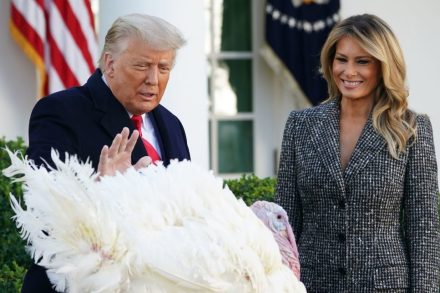
Donald Trump’s remarkable victory

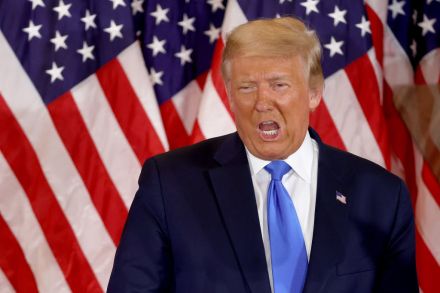
Despite the suspension of vote-counting in Pennsylvania, Georgia, North Carolina, Michigan and Wisconsin, President Trump leads in all of those states by substantial margins compared to the number of ballots to be counted and has almost certainly been reelected, bringing the Senate and some House gains behind him. That he has done this in the teeth of the pathological hatred of 95 percent of the American national political media and Hollywood, Silicon Valley and most of Wall Street is an astonishing achievement. One would ransack the British media unsuccessfully trying to find a trace of the fact that he has had the most successful first term of any American president except Lincoln, Franklin D. Roosevelt and Nixon.

remarkable

Their rantings betray them

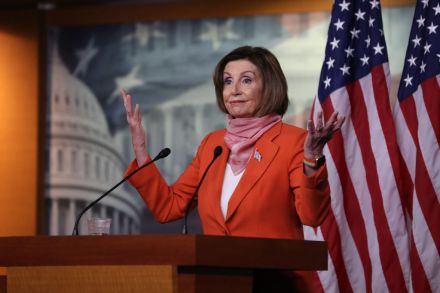
The compulsive and self-righteous bellicosity of the Democratic leaders in Congress over the Supreme Court vacancy has opened an opportunity for President Trump to strike decisively. It is admittedly controversial for a president to fill a high court vacancy starting six weeks before a presidential election, but it is entirely constitutional. What’s more, it has applicable precedents, including most conspicuously the elevation of Chief Justice John Marshall by President John Adams after he had been defeated in the 1800 election. This is not a provocation to justify the extreme belligerency of Senate Minority Leader Chuck Schumer and House Speaker Nancy Pelosi.

democrats

The fatuousness of the Harper’s letter

The recent letter ‘on justice and open debate,’ published in Harper’s magazine on July 7 and signed by some 150 self-nominated intellectuals, will stand as one of the conspicuous fatuities of this intense American election year. The intellectuals begin with the portentous assertion that ‘our cultural institutions are facing a moment of trial.’ It is then explained that forces that have all long demanded ‘police reform and greater equality and inclusion across our society,’ goals whose championship these signatories claim throughout for themselves, are now being threatened.

letter

If Boris wants a New Deal he needs to end the lockdown

From our UK edition

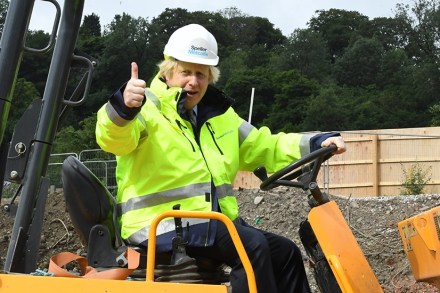
The invocation of Franklin D. Roosevelt by Boris Johnson is welcome, but the conditions that greeted Roosevelt when he was inaugurated US president in 1933 and those in the UK today are very distinguishable. Roosevelt inherited a collapsed financial system; the stock and commodity exchanges and almost all of the banks in the country had been closed for up to two weeks. Almost a third of the country was unemployed (the states compiled the figures and they were not entirely reliable), and there was no direct relief for the jobless. For the first time since the Civil War there were machine-guns at the corners of the great federal buildings in Washington on Inauguration Day. The incoming president had a practically unlimited mandate to take drastic measures to deal with the crisis.

The Biden factor is difficult to calculate

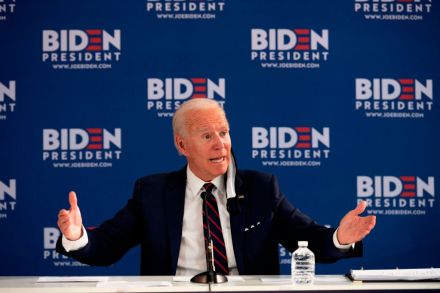
The final stage of the election campaign and its result will depend on four factors: management of the balance between demand for police reform and concern for the maintenance of public order; whether there is a significant revival of COVID-19; the swiftness of the economic recovery; and the resolution of questions about Joe Biden’s apparent capacity to serve as president. Hovering above the campaign will be the question of indictments from US Attorney John Durham’s special counsel investigation. On all that has been revealed, crimes will be charged, and Attorney General William Barr confirmed last week that those whose conduct is likely to be judged controversial will be 'familiar' names. But they may not include elected officials and apparently not Biden himself.

joe biden

The changes to come in the post-COVID world order

The Democrats are taking their stand on the coronavirus crisis in an untenable position. It is like building a defensive redoubt in a valley surrounded by hills in the hands of the enemy (like the French at Dien Bien Phu in 1955, as President Eisenhower warned them). Whether this is tactical stupidity by the president’s enemies or strategic genius by the president or — more likely — a bit of both, is not clear except to insiders. Readers will recall that the Democrats charged out of the gate on the issue of taking science seriously and reacting comprehensively; the president picked up the gauntlet, brought prominent scientists forward, and 'flattened the curve'.

changes come covid pakistan

Prince of Europe’s long peace

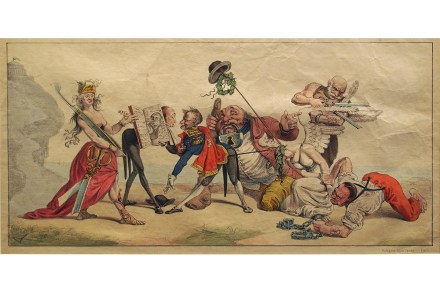
This is a giant Teutonic forest of a book, to be progressed through with determination as if by seasoned infantry; it is as far as biography can get from a Viennese waltz. But it has its rewards. It is an extensive and wellresearched chronicle of Klemens von Metternich’s monumental career — 39 years as foreign minister of the Austrian Empire, the last 27 of them also as state chancellor, and an extensive diplomatic career prior to all that. Wolfram Siemann presents and argues for a new and rather liberal interpretation of ‘the Metternich system’ instead of the normal view of Metternich’s influence as rigid and reactionary.

metternich

A bare knuckles fight between Bernie, Bloomberg and Trump

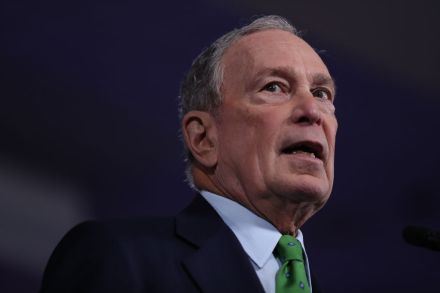
The Nevada caucuses confirm that Sen. Amy Klobuchar has clung to the ledge by her fingernails as long as she could and will almost certainly fall off on Super Tuesday. It also confirms that the end is nigh for the Pete Buttigieg phenomenon, the typecasters’ candidate, a prefabricated person with all the outer ingredients but no relevant governmental or equivalent experience, no fixed beliefs, and nothing but flippant and fluently well-rehearsed answers to all subjects; an articulate facade with nothing tangible behind it. Klobuchar and Buttigieg both have made a valued contribution and if Klobuchar had had more panache, she might have made a strong run for the nomination.

bloomberg

Metternich gets a makeover

From our UK edition

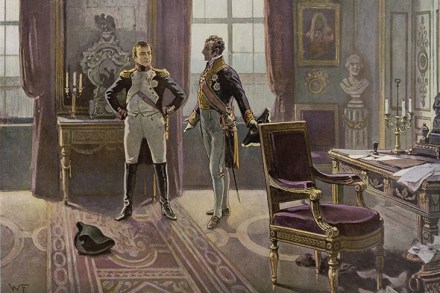
This is a giant Teutonic forest of a book, to be progressed through with determination as if by seasoned infantry; it is as far as biography can get from a Viennese waltz. But it has its rewards. It is a very extensive and well-researched chronicle of the subject’s monumental career — 39 years as foreign minister of the Austrian Empire, the last 27 of them also as the state chancellor, and an extensive diplomatic career prior to all that. Wolfram Siemann presents and argues for a new and rather liberal interpretation of ‘the Metternich system’ in place of the normal view of Metternich’s influence as rigid and reactionary.

Of course president Trump was acquitted

From our UK edition

The impeachment of President Trump was unfounded in law and in fact and was never anything but a smear-job organised by the Democratic House intelligence chairman (Adam Schiff) with a pretend whistleblower. Trump asked the president of Ukraine for the facts about the association of former vice president Biden and his son’s activities in Ukraine, not a condemnation; that was not inappropriate. president Zelensky has said there was no pressure, the investigation seems not to have occurred, and the assistance to Ukraine was sent within legislated deadlines.

Kingdoms of the wicked

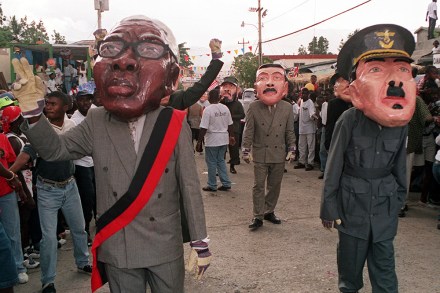
This article is in The Spectator’s January 2020 US edition. Subscribe here. Frank Dikötter has written a lively and concise analysis of the techniques and personalities of eight 20th-century dictators: Mussolini, Hitler, Stalin, Mao Zedong, Kim Il-sung (North Korea), François ‘Papa Doc’ Duvalier (Haiti), Nicolae Ceausescu (Romania) and Mengistu Haile Mariam (Ethiopia). As a comparative study of those individuals, it is enlightening and a good read. The title and parts of the foreword indicate that it aspires also to be a guidebook of dictator tactics. There are some weaknesses in this broader ambition. These eight men were not altogether uniform in their methods of obtaining, retaining or losing power, and certainly not in their abilities.

dictator

Justin Trudeau is not a racist – but he is a fool

From our UK edition

The election campaign was off to an unexciting start even by Canada’s standards. A well-known but fluffy incumbent, Liberal Justin Trudeau, faced a Conservative leader, Andrew Scheer, whose strategy had been to lay low. The Trudeau message these past four years has been total  political correctness: equal numbers of male and female cabinet members, ‘peoplekind’ instead of ‘mankind’ and requiring summer employment project hirees to sign a pledge to uphold abortion rights. Probably as many Canadians groaned at these fatuities as were impressed by them, but it assisted the Liberals in taking votes from the left, as the Conservatives unhistrionically asked for common sense.

20th-century assassins – How to be a Dictator reviewed

From our UK edition

Frank Dikötter has written a very lively and concise analysis of the techniques and personalities of eight 20th-century dictators: Mussolini, Hitler, Stalin, Mao Zedong, Kim Il-sung, Duvalier (Haiti), Ceausescu (Romania) and Mengistu (Ethiopia). As a comparative study of those individuals, it is enlightening and a good read. The title and parts of the foreword indicate that it aspires to be a guidebook of tactics for those aspiring to be dictators and to retain their status as such. There are some weaknesses in this broader ambition. These eight men were not altogether uniform in their methods of obtaining power, retaining it, or losing it, and certainly not in their abilities. Stalin, Mao, Kim Il-sung and Duvalier died in office to great public lamentations.

Battle of Hastings

From our UK edition

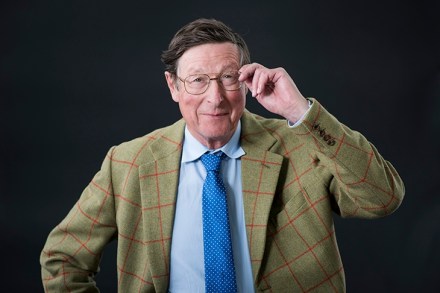
Sir Max Hastings, whom I engaged as editor of the Daily Telegraph in 1986 and who stayed in that role for about nine years, seems to have installed himself at the head of the rabid mob of journalistic haters of Boris Johnson. In recent pieces in The Spectator and the Guardian he has described Boris as ‘a tasteless joke’ interested only in ‘fame and gratification… a scoundrel or a mere rogue’ (a subtle distinction), and in any case a man afflicted by ‘moral bankruptcy’. Max concedes that Boris is likely to be the next prime minister and preemptively accuses him of conducting a ‘celebrity government as in Ukraine and the US’.

Diary – 23 May 2019

From our UK edition

I owe my return to these pages to the pardon I have received from the President of the United States. When he called me, he referred to my ‘miraculously shrinking crime’ of 17 counts, to 13 (including racketeering), to four, to two; and to the quantum of my alleged transgressions from $400 million to $60 million, to $6 million, to $285,000 (which was approved by independent directors and published in the company’s filings). The President stressed that the White House counsel and his legal staff had analysed the legal material and concurred that I received ‘a bad rap (and) an unjust verdict’.

What Trump is getting right

From our UK edition

Freddy Gray and Scott McConnell discuss the American tragedy with Isabel Hardman: Almost anyone who has followed the US presidential selection process closely could realise what a brilliant campaign Donald Trump has conducted. He saw that in its self-absorption, the US political class had completely failed to grasp the extent of public anger at the deterioration of almost everything. American public policy has brought about the greatest sequence of disasters since the 1920s, when the liquor business was given to gangsters by Prohibition, followed by the equities debt bubble and the Great Depression.

Not-so-evil genius

From our UK edition

It is almost inconceivable that there could be a more densely detailed book about Napoleon than this — 800 crowded pages to get him from his birth in 1769 to his acclamation as First Consul for life in 1802. When completed in three or more further volumes, this will be an extremely comprehensive study. As only French biographers can do, every conceivable motive and alternative scenario is presented at every stage in the astonishing rise of the subject from the petty and parvenu and rather impecunious nobility of Corsica to a greater position of power than anyone had exercised in Europe since Charlemagne, if not the greater Roman emperors.