Henry Hitchings

What not to say when visiting Santa’s grotto, and other tips from Ben Schott

From our UK edition

Where might you observe both form policing and labour pains? What’s the difference at a casino between a flea, a vulture and a fish? Who talks about plate spinning, monkey branching and hard nexting? Why would a devotee of competitive eating (otherwise known as a gurgitator) exploit a manual typewriter yet shun the Roman method? Should you worry if a sommelier tells a colleague you are a whale and ready to drop the hammer? If a doctor identifies you as a Honda, is that praise or disapproval; and how should you feel when prescribed a therapeutic wait? This handsomely produced volume, a field guide to the esoteric languages of different professions and tribes, provides answers to all these questions and many more.

Masa Son: the world’s most reckless investor

For a few days in February 2000, Masayoshi Son was the richest person in the world. A risk-taker and showman, universally known as Masa, he had long been disdainful of Japan’s staid "salaryman" business culture and was riding the wave of dot-com mania. His company SoftBank, founded in 1981, had bet big on the growth of online shopping. The bullish mood didn’t last, and Masa slunk away from the limelight — but only for a while. A techno-optimist, the now sixty-seven-year-old has repeatedly reinvented himself, urging doubters to see beyond the immediate: "You’re limiting your field of vision to thirty years… Start bold and think 300 years ahead.

Masa

The rollercoaster ride of the world’s most reckless investor

From our UK edition

For a few days in February 2000, Masayoshi Son was the richest person in the world. A risk-taker and showman, universally known as Masa, he had long been disdainful of Japan’s staid ‘salaryman’ business culture and was riding the wave of dot-com mania. His company SoftBank, founded in 1981, had bet big on the growth of online shopping. The bullish mood didn’t last, and Masa slunk away from the limelight – but only for a while. A techno-optimist, the now 67-year-old has repeatedly reinvented himself, urging doubters to see beyond the immediate: ‘You’re limiting your field of vision to 30 years... Start bold and think 300 years ahead.

Spelling it out: the volunteers who made the dictionary

From our UK edition

‘Everything obscene comes from France,’ wrote James Dixon, an eye surgeon retired to Dorking, in 1888. He was provoked by learning of an item called a condom, and explained to his correspondent, James Murray, that this was ‘a contrivance used by fornicators, to save themselves from a well-deserved clap’. Surely the word had no place in the Oxford English Dictionary, of which Murray had for the previous nine years been editor? Murray was persuaded and left it out. Dixon was a useful source of information about words relating to medicine, and Oxford’s team of under-resourced lexicographers relied on the goodwill of such volunteers.

No chocolate-box portrait: Bournville, by Jonathan Coe, reviewed

From our UK edition

British novelists love to diagnose the state of the nation. Few do it better than Jonathan Coe, who writes with warmth and subversive glee about social change and the comforting mundanities it imperils. Bournville, his 14th novel, lacks the caustic verve of What a Carve Up! (1994) or the wistful charm of The Rotters’ Club (2001), but it’s an affectionate work of social history in fictional form, tracking four generations of a West Midlands family whose dreams, successes, misadventures and divisions reflect the shifting contours of postwar Britain.  British chocolate is deemed by French and German bureaucrats to be greasy and unsuitable for adult palates It’s largely set in a model village on the south-west side of Birmingham.

Robert Harris’s gripping Act of Oblivion is let down by anachronisms

From our UK edition

When Charles II became king of England in 1660, he pardoned most of those who’d committed crimes during the civil war and Commonwealth. The Act of Indemnity and Oblivion, from which Robert Harris’s propulsive new novel takes its title, promised to wipe the slate clean and ‘bury all seeds of future discords’. But the monarch, generally tolerant, made an exception of the 59 men who, 11 years earlier, had signed his father Charles I’s death warrant. Act of Oblivion opens on a drowsy midsummer day as two of those 59, having fled across the Atlantic, arrive in Boston. One is Oliver Cromwell’s cousin, Edward Whalley, and the other Whalley’s son-in-law, William Goffe.

What do Beethoven, D.H. Lawrence and George Best have in common?

From our UK edition

This is not a book about tennis. Roger Federer appears early on, trailed by the obligatory question ‘When will he retire?’ He figures more prominently in the final 80 pages – still looking, despite the imminence of hanging up his racquet, as if he moves ‘within a different, more accommodating dimension of time’. There are cameos from some of the game’s other stars at various points on the way to the exit: the young Bjorn Borg (‘heir to some non-specific Scandinavian malaise’), the often crocked Andy Murray (‘a mumble-core Hamlet’) and the middle-aged, disgraced Boris Becker (afflicted by a ‘hitherto unseen condition called testicular elbow’). But the title is a characteristic act of wrong-footing.

An inspirational teacher: Elizabeth Finch, by Julian Barnes, reviewed

From our UK edition

‘Whenever you see a character in a novel, let alone a biography or history book, reduced and neatened into three adjectives, always distrust that description.’ So says the protagonist of Julian Barnes’s latest novel, the poised, droll, epigrammatic Elizabeth Finch, who is loosely modelled on his late friend and fellow Booker Prize-winner Anita Brookner. A lecturer delivering an adult education course on Culture and Civilisation, an exercise she considers ‘rigorous fun’, she introduces her students to figures such as Goethe and Epictetus.

Are the English exceptionally gullible?

From our UK edition

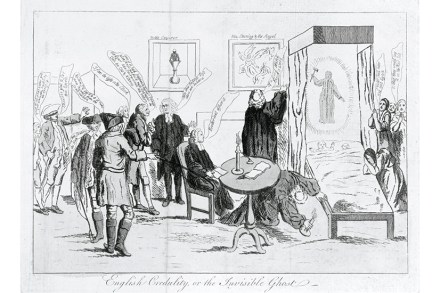
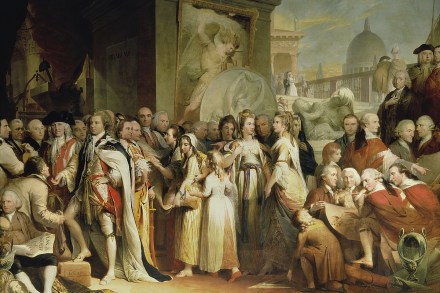
The word ‘hoax’ did not catch on till the early 19th century. Before that one spoke of a hum, a frump, a prat or a bilk. But 18th-century Britain, even if not rife with talk of ‘hoaxes’, was full of incautious souls at risk of being bilked. James Graham, a Scottish quack, was able to charge infertile couples £50 a night to lounge in his Celestial Bed, which had a mattress lined with hair from stallions’ tails. The artist Ann Jemima Provis and her father, Thomas, caused embarrassment to the Royal Academy by conning its president, Benjamin West, into thinking they had stumbled on a rare manuscript that would allow him to emulate the luminous style of the Venetian masters.

A tide of paranoid distrust: The Sunken Land Begins to Rise Again, by M. John Harrison, reviewed

From our UK edition

Over the past 50 years, M. John Harrison has produced a remarkably varied body of work: a dozen atmospheric novels and five volumes of finely controlled short stories that have ranged from austere realism to operatic fantasy. He is not easily pigeon-holed — an intentional state of affairs, but one that has denied him a large readership. The worlds of his science fiction are truly strange, yet he conjures them with piercing lucidity. For instance, Light (2002) is largely set 400 years in the future. The cosmos Harrison visualises is a place of splintery disruptions, but it is peopled with cruel and slovenly characters whose minds churn in entirely familiar ways.

Science and philanthropy meet in the Royal Society of Arts

From our UK edition

What does Jony Ive, the designer of Apple’s iPhone, have in common with Peter Perez Burdett, the first Englishman to produce aquatints, and Ann Williams, a postmistress who bred silkworms at her home in 18th-century Gravesend? The answer is that they all received awards from the institution known today as the Royal Society of Arts. Ive bagged a £500 travel bursary for creating a futuristic telephone nicknamed the Orator; Burdett earned £100 for a detailed map of Derbyshire; and Williams collected a 20-guinea prize for her observations about the lepidoptera she mistakenly called ‘dear little innocent reptiles’. As Anton Howes demonstrates in this lucid and scrupulously researched history, such bounty is the raison d’être of the RSA.

Can giving voice to the horrors of the past re-traumatise?

From our UK edition

It is 50 years since Ronald Blythe published Akenfield, his melancholy portrait of a Suffolk village on the cusp of dramatic change. Akenfield was actually a composite of two real villages, Charsfield and Debach, and Blythe’s oral history was a patchwork created from about 50 conversations — with figures including a pig-farming colonel, the over-stretched blacksmith and a rural dean who reported residents being ‘blunted and crushed by toil’. It was an unsparing vision of rural poverty, yet also a homage to disappearing ways of life and the virtues of small communities. Last Saturday’s Akenfield Now, on Radio 4, followed local sixth-former Anna Davies as she surveyed the landscape afresh.

London has a genius for self-renewal — but what do we miss as a result?

From our UK edition

In the autumn of 1987, after London had been hit by a fierce storm, Simon Jenkins wandered through Bloomsbury and noticed that workers clearing away the fallen plane trees were finding it hard to cut through the branches. When he looked closely, he saw this was because their chainsaws kept snapping against embedded fragments of wartime shrapnel. It’s a nice detail, and there are many in Jenkins’s new book, though he spoils this one by adding that ‘London never lets us forget its history’. On any other day, surely, this legacy of conflict would have eluded his attention rather than imposing itself upon it. One of London’s features is its genius for self-renewal — after the Great Fire, for instance, as well as after the Blitz.

Who’s who and what’s what

From our UK edition

Asked to name a reference book, you may well choose the Encyclopaedia Britannica or the 20-volume Oxford English Dictionary. But perhaps you’d pick something less elephantine — the Guinness Book of World Records, with its tributes to figures such as Smudge, holder of the record for most keys removed from a keyring by a parrot, or Brewer’s Dictionary of Phrase and Fable, which informs us that the Russian equivalent of ‘to carry coals to Newcastle’ is ‘to go to Tula with one’s own samovar’.

Down and out in Park Lane and Plaistow

From our UK edition

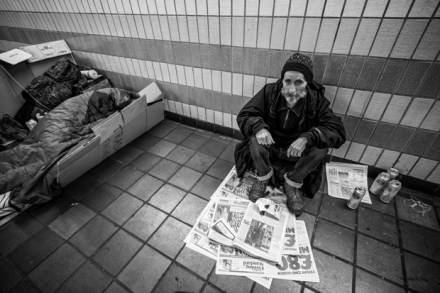
‘I was born in London,’ Ben Judah tells us early in this vivid portrait of Britain’s capital, ‘but I no longer recognise the city.’ London has become a building site where dirty money is converted into gleaming blocks of bullion. The smartest parts of town are lined with empty houses owned by foreign plutocrats, and London’s spirit is embodied not so much by the bearded hipster brewing your £3 cup of coffee as by the Shard, a soaring monument to wealth and inequality. Judah isn’t all that interested in the well-shod hirelings who lubricate this shiny capitalism. We’re halfway into the book before we encounter anyone who could be described as privileged (other than the widely-travelled, Oxford-educated Judah).

All the men and women merely players

From our UK edition

How many books are there about Shakespeare? A study published in the 1970s claimed a figure of 11,000, and today a search of the British Library catalogue yields 12,554 titles that contain the playwright’s name. But good short introductions to Shakespeare’s life and work are not exactly plentiful. Students and teachers are therefore likely to welcome this up-to-date overview from Paul Edmondson, a Church of England priest who works for the Shakespeare Birthplace Trust. Although Edmondson covers the biographical ground succinctly, as well as discussing the plays and poetry in a style that’s discreetly authoritative, his approach is unconventional.