Rose George

The tragedy of Sir Walter Ralegh’s impossible quest

From our UK edition

I remember little of my two years at boarding school, where I arrived aged eight, apart from the cloaks. Red, green, blue and yellow, for the houses of Ralegh, Nicholson, Gordon and Wellesley. They were called after generals, we were told, and of the four, Ralegh’s name is the best known. But why? I take a short survey of my colleagues. They all know the name but not why they know it. It is a curious fame to have, and perhaps David Gibbins’s book will do something to give it substance. Sir Walter Ralegh (Gibbins’s choice of spelling, as opposed to Raleigh, Rawleigh, Ralley and other versions in the elastic Elizabethan way with names) was more than a military commander.

Why are men in the gym so annoying?

From our UK edition

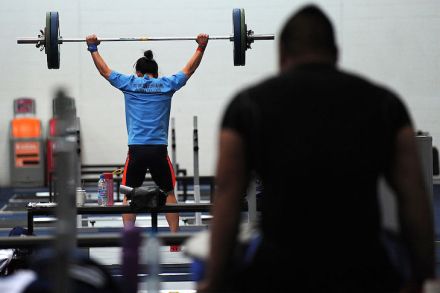
Being of menopausal age, I obey instructions and regularly lift weights (menopausal women are meant to lift heavy stuff and jump a lot to protect our bones, our sanity and revitalise our fast twitch fibres). I love it. Using the squat rack and watching men walk past thinking, “What’s this old bird doing there?” makes me feel powerful. My gym has a small sign asking people not to drop weights. I’ve never seen a woman do it: that sign is not for us My gym is not one of the posh ones; there are no free towels, no sauna. There is only what a gym needs: some studio spaces for classes, a swimming pool and sports hall, and two decently equipped gym areas; one with cardio machines, the other with with free weights and machines and a squat rack.

The truth about cold water swimming

From our UK edition

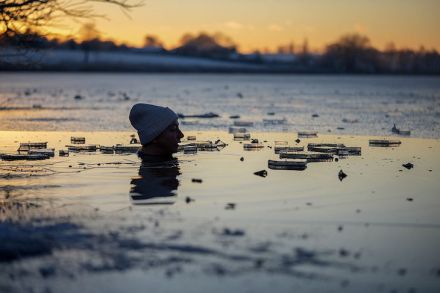
I fear the sea because I should. Not the depths or the blackness or its creatures or the cold but the currents and tides. So I was horrified at the recent tragic deaths in the sea off Budleigh Salterton, in Devon, and Withernsea, in Yorkshire, of people who were swept away by the force of the ocean, either by accident or because they were heroically attempting to save others. They get an eyeful and they are welcome to it. Nothing matters when you need to get warm After those tragic events, various experts were interviewed in broadcast media; they talked darkly of cold water shock and how risky cold swimming is. Cold water shock is simply named: when the body encounters cold water, it goes into shock. You may immediately breathe in water, and then your fate is probably set.

Women beware women: young feminists are betraying their older sisters

From our UK edition

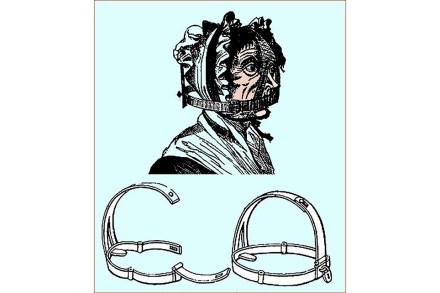
Where are all the father-in-law jokes? You won’t find them, because fathers-in-law are not fair game in the way middle-aged women are. There is no male ‘Karen’. Men are not mocked as wizards, but we are witches. Victoria Smith has subtitled her timely book ‘The Demonisation of Middle-aged Women’, and if you are one of them you will know that is no exaggeration. Witches, crones, hags, scolds, evil mothers-in-law – up here in middle age, we are used to male scorn. But Smith has a different target: ‘I do not wish merely to present the myriad ways in which older women are belittled, undermined or misrepresented.’ We know all that, it’s obvious: ‘Ageist misogyny has always existed.

Does running 42 Lakeland fells in less than 24 hours really bring ‘serenity’?

From our UK edition

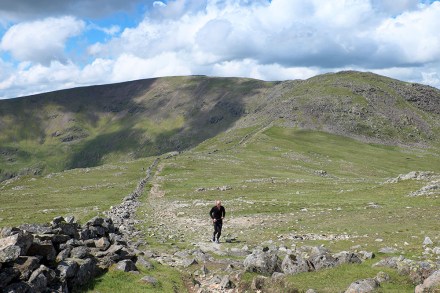
‘We continue to grapple as a species,’ writes Carl Morris, ‘with a knotty philosophical divide between anthropocentric and biocentric approaches to the natural world. Our bodies are both transcendent – seemingly beyond nature and capable of rationalised enhancement – but also immanent – that is within nature and therefore subject to the same frailties and limitations.’ What is he addressing? Space travel? Diving to the bottom of the Mariana Trench without oxygen? Not quite. He is talking about the process of human locomotion. He is talking about running. Stay with me. Books about running can be as dull as a ten-mile road race in the Illinois flatlands, and I say that as a keen fell runner. This book isn’t.

A death sentence for Afghanistan’s women judges

From our UK edition

Quiz. Which country had a successful court named the Court for the Elimination of Violence against Women, where women could seek redress for any perceived wrong? Was it the United Kingdom, this ancient democracy that operates according to the rule of law? Or Afghanistan, where we assume women have always had to wear hideous burqas, cannot work, go to school, play music or laugh out loud? It was Afghanistan between the two Taliban regimes (2001-21), when women could be employed and laugh and study, and when Afghanistan had a network of nearly 300 female judges, many of them sitting in that wonderfully named court and doing their best to make women’s lives a little better.

Freddy Gray, Tanya Gold, Rose George, Toby Young and Rory Sutherland

From our UK edition

28 min listen

On this week’s Spectator Out Loud: Freddy Gray reads his letter from Washington D.C., and reveals what Liz Truss, Eric Zemmour and Steve Bannon made of Trump’s inauguration (1:22); Tanya Gold writes about the sad truth behind the gypsies facing eviction in Cornwall (7:15); Rose George reviews The Forgotten Sense: The New Science of Smell, by Jonas Olofsson, and explains the surprising link between odour disgust and political attitudes (13:07); Toby Young provides his favourite anecdotes about President Trump, having crossed paths with him in New York City in the 1990s (18:39); and, Rory Sutherland proposes a unique way to solve Britain’s building crisis: ‘Areas of Outstanding Natural Ugliness’ (23:40).  Produced and presented by Patrick Gibbons.

Why do we assume smell is our weakest sense?

From our UK edition

My cat can smell depression. Another family cat could smell my stepfather’s dementia. They both became more affectionate and tactile: the dementia-smelling cat would gently paw my stepfather, when he hadn’t even liked her when he had been well. My cat comes in close when my mood is darker. Perhaps both cats were using other cues, but I’m convinced it was smell. Up until the 18th century, doctors relied for diagnoses on smell as much as anything else For something that Jonas Olofsson calls ‘the easiest and most natural thing in the world’, smell is satisfyingly complicated. When it comes to humans’ ability to smell, as Olofsson persuades us in this captivating book, it has also been profoundly neglected. This wasn’t always the case.

Why must we be in constant battle with the ocean?

From our UK edition

I recently learned to dive in the bay of Dakar. It was exciting. I’d started learning in a Leeds swimming pool and though I knew the ocean would feel different, I didn’t expect it to feel comfortable. It shouldn’t. It is not my element, and humans have long since left it to the rest of the ocean’s creatures. I also didn’t think the ocean would sound like my neck when I roll it during yoga: that same crackle. With their remarkable sonar, dolphins can even tell when a human is pregnant That the ocean is not quiet is one of the most pleasing revelations of the past century (I mean the ocean’s native noise, the fish songs and grunting and whistles – not ships’ propellers). But it is not the best revelation.

The rat as hero

From our UK edition

Behold rat. Behold the magnificent, clever creature as it runs from the bin you have just opened or disappears into the nearest bush. Behold rat as it is cut open or drugged or injected to improve your health in the name of science, as many millions of its peers have been. Behold rat – though you may find that tricky, because the old adage that you are never more than six feet away from a rat is comprehensively skewered in this wonderful, charming book. Wonderful? Charming? Rats? Yes. Even Joe Shute, a man scared of the creatures, bravely takes two four-inch baby rats into his house and slowly grows to love them. He acknowledges that his fear is no less powerful for it having been socially instilled in him by a society that, for ignorant reasons, demonises rats.

Violence overshadowed my Yorkshire childhood

From our UK edition

We might be twins, Catherine Taylor and I. We were both girls growing up in Yorkshire in the same decades – I in the West Riding (where an alley is a ‘ginnel’), her in the south (where it’s a ‘gennel’). We are children of the Yorkshire Ripper years, conditioned to be constantly scared of the murderer, the dark, and our independence. We were both fatherless too young – mine dead, hers departed to another household; and we both had strong mothers keeping the remaining family afloat and forced to take in lodgers – in our case, Polish, German and French, in hers, Japanese and Senegalese. Much of this bookis familiar – but not all of it. There is still room for surprise and stirring.

The scandal of rubbish disposal worldwide

From our UK edition

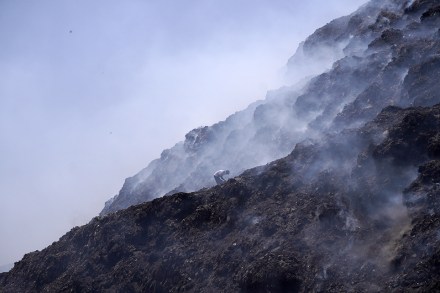
Above a foul towering dump in Delhi a cloud of vultures and Siberian black kites fly in hope, ‘careening over the mountainside like some dreadful murmuration’. Here some of the world’s million waste pickers stash water bottles along their route, ‘like climbers making camp’. Oliver Franklin-Wallis concedes that his subject – the dirty truth of what happens to our rubbish – is not appealing. Much of the unusable, stained tat charity shops receive is sent abroad, whether it’s wanted or not But he does his best to make that untrue with arresting analogies and metaphors that shine like metal in trash in his account of his extensive travels through what the world discards and disdains.

An old Encyclopaedia Britannica is a work to cherish

From our UK edition

Two thousand years ago, a young Cilician named Oppian, wanting to rehabilitate his disgraced father, decided to write Halieutica, an account of the world of fishes, as a gift for Marcus Aurelius. It was a mixture of possible fact and definite fiction – if only there were octopuses that climb trees and fishes that fancy goats – and it was a success. His father was forgiven, and the son’s written work accepted as authoritative knowledge.

The kiss of death

From our UK edition

I once threw Tony Parker’s Lighthouse across the fo’c’sle of a ship at sea when I read that his characters were composites. Oral history should be historical, or it goes into the ocean. So it is a shame that I sometimes question Xinran’s authenticity in this account of the loves and lives of four generations of Chinese women. I question conversations recalled verbatim when they clearly weren’t recorded; and perfectly rendered speech when only notes were taken. Is this too severe? Then it is appropriate, because severity is something you must get used to, though this is a book about the Chinese concept of ‘talk love’, defined as ‘the process of cultivating love or interacting on the basis of love’, possibly leading to marriage.

A different kettle of fish

From our UK edition

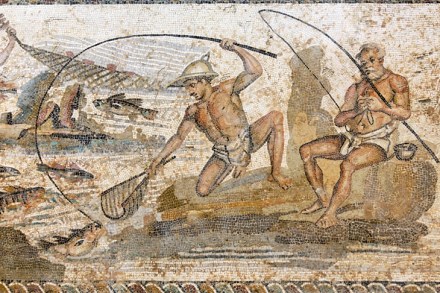
Fish. Slippery, mysterious creatures. They are mysterious because of where they live, in vast waters, and because they elude the historical record, too: fishing equipment is soft and decays (bamboo, hemp, lines made from kelp, cedar bark, women’s hair). Brian Fagan is an archaeologist, a profession that we associate with dust and soil and stone, but here he attempts to capture the history of fishing in ancient civilisation. It is not just fish that elude the historian: fisherfolk have always lived on the margins — of land and in recorded history (and still do). ‘To a scholar,’ writes Fagan, ‘the illiterate fishing people of the past are elusive, and their trade is a challenging puzzle of clues.

Cinderella in China

From our UK edition

She was a foundling in her own family, shunted to adoptive parents for two years, then to the edge of China, to a fishing village on the East China Sea, and to a furious, alcoholic grandfather and a grandmother sold at 12 into marriage for some pottage, and never given a name. Is that colourful enough for you? But there is more: the life story of the young Chinese filmmaker and novelist Xiaolu Guo makes Cinderella’s seem bland. The hovel she lived in until she was seven was on Anti-Pirates Passage. Her grand-father, a failed and bitter fisherman, lost his livelihood in the 1970s, when the Chinese state collectivised fishing and stole everyone’s boats.

Making waves | 14 July 2016

From our UK edition

The tour guides of Ephesus, in Turkey, have a nice party trick to wake up their dozing coach passengers. As the coach drives along, they say, ‘This is the ancient port of Ephesus’, and the passengers look, as I did, at fields and trees and nothing else. They peer for the sea and are told it is miles away. Ephesus was a major river port in antiquity but the river has long since silted up and left its port stranded. This fact isn’t in Aldersey-Williams’s book on tides but there are plenty more to be told of the curious, attritional relationship of humans and the tidal waters of the planet.

Very much like a whale

From our UK edition

In principle, freediving is simple and perilous: divers take one breath, then dive as deep as they can, with no tanks or air, and come back up again. Watch a video of this — or Luc Besson’s 1988 film The Big Blue — and you have to hold your own breath, because it is beautiful, streamlined, pitiless: a human in the most powerful and unnatural element for humans. The beauty of freediving is that it does not look unnatural, but pure. What Adam Skolnick conveys in One Breath is how deceptive that is, and what a dreadful toll diving takes on the human body. He does this by telling the tale of one death, but also of the small freediving community that travels the world from one deep ocean hole to another to go as deep as possible, on one breath.

Lover and fighter

From our UK edition

I don’t like boxing. If I ever get into a boxing ring, I’ll be in the corner with the governor of California, Edmund ‘Pat’ Brown, who in 1963 called for ‘the abolition of this barbaric spectacle’ because another man had just been beaten to death in the ring. That man was Davey Moore, who had defended boxing before it killed him on the grounds that no one stopped the Indianapolis 500 when racing drivers get killed. But another dead man is the focus of this book: our hero is the captivating, frustrating, brutal Emile Griffith, who we meet at the age of 22, ‘happy and beautiful’, and who one year later battered to death the Cuban fighter Benny Paret, the first man whose death was shown live on television (the second was Lee Harvey Oswald).

Suffering a sea change

From our UK edition

The oceans cover seven-tenths of our planet, and although it may not seem like it above the surface, they are very busy. Helen Scales and Christian Sardet are marine biologists: Sardet is apparently known as Uncle Plankton, and those multitudes of drifting organisms — ‘plankton’ comes from the Greek planktos, meaning to wander or drift — are his life’s work. Scales’s focus is the shell-making creatures that are molluscs, though focus seems an inappropriate word for such a vast body of life: a 1993 survey of just one island, New Caledonia, found 2,738 distinct species, and 80 per cent of them were new to science.