Clare Mulley

Derided as ‘feminists’: the unsung witnesses of the Nuremberg trials

From our UK edition

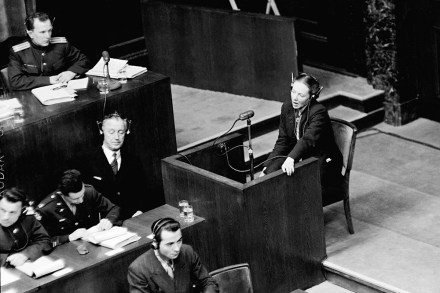
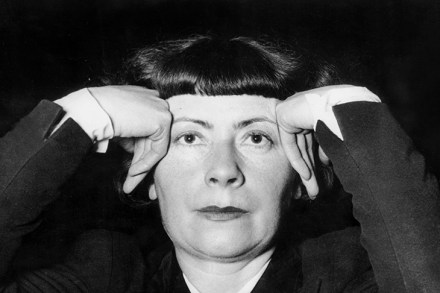
There are several things wrong with James Vanderbilt’s new film Nuremberg, least of all, some might say, the fact that it fails the Bechdel test. This 1985 metric assesses female representation in film by whether two named women have a conversation on screen about anything other than a man. If you are thinking, ‘So what? All the Nuremberg prosecutors were male, as was every defendant’, then you need to get hold of Natalie Livingstone’s revelatory book. While the public face of the trials was resolutely male, as were the indictments (there was no mention of rape, for instance, within the listed war crimes), the truth is that in the trials, as in the war, women played significant though often hidden roles.

Vindictive to the last: a Nazi atrocity in Tuscany

From our UK edition

Late one evening in 1994, an Italian magistrate walked into a storage room at the military prosecutor’s offices in Rome. There his eye was caught by a 6ft-high wooden cupboard, curiously positioned so that it faced the wall. His interest piqued, he pulled the cupboard around and opened its doors. Inside were stacks of documents dating from the mid-1940s. In all, there were 695 long-lost war crime investigation files, detailing more than 2,000 incidents that had taken place in Italy during the fascist period. Picking up the story, the Italian media dubbed the cupboard the ‘wardrobe of shame’ – which quickly became a metaphor for what Thomas Harding calls ‘Italy’s general amnesia about the fascist past’.

The agony of making music at Auschwitz

From our UK edition

Anita Lasker survived the Holocaust because, as a Berlin teenager, she had enjoyed her cello lessons. The Hungarian Lily Mathé’s violin performances had once impressed the man who became the Auschwitz concentration camp commandant. Alma Rosé, among Europe’s most talented musicians and the niece of Gustav Mahler, became the conductor who kept these young women and more than 40 others alive through ‘ferocious discipline’ and determination. In The Women’s Orchestra of Auschwitz, Anne Sebba recounts these intertwined stories with great sensitivity. She also explores the ethical questions that haunted the survivors who were once forced to play melodies in the darkest moments of the 20th century.

The circus provides perfect cover for espionage

From our UK edition

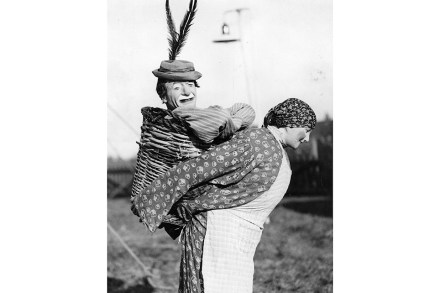
The hall was before me like a gigantic shell, packed with thousands and thousands of people. Even the arena was densely crowded. More than 5,600 tickets had been sold. Cyril Bertram Mills started his circus career accompanying his father to European horse fairs in the 1920s. The two of them were soon familiar faces on the German circus scene, travelling between shows to recruit acts for London. The Munich Circus was a particular draw; but sometimes they hired out their circular wooden building to other local acts. The opening quote of this review comes from Adolf Hitler. Mills was at first dismissive of the Munich Nazi party leader, pointing out that hippos, monkeys and pigs ‘also received enthusiastic receptions in the same circus arena’.

Sidney Reilly, Ace of Spies, remains an enigma

From our UK edition

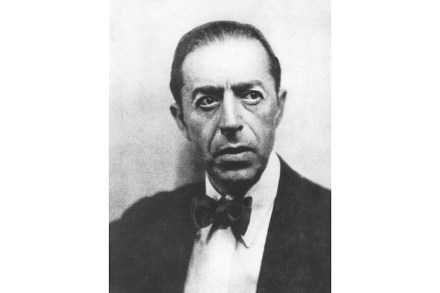
‘James Bond is just a piece of nonsense I dreamt up,’ the former naval intelligence officer Ian Fleming once said. ‘He’s nota Sidney Reilly you know.’ Sidney Reilly was not really Sidney Reilly either; but he was certainly a James Bond. Born Sigmund or Schlomo Rosenblum (this is a book full of caveats), he spoke possibly six languages and identified at different times as an Englishman, an Irishman, a Greek or Turkish merchant, a German machine-tool operator and a Tsarist officer. In fact he came from a Ukrainian Jewish family, but ignored his heritage as much as prevailing anti-Semitism would permit, and devoted his life to making love and money and, with only slightly greater dedication, fighting Bolshevism as an MI6 spy.

The sheer tedium of life at Colditz

From our UK edition

They say each generation needs its own biographies of Cleopatra, Joan of Arc and Napoleon, not just when more evidence is unearthed but because the lens through which we view character and motive changes. The same is true for the great set pieces of history. According to Ben Macintyre, the story of Colditz and its second world war POWs with their ‘moustaches firmly set on stiff upper lips, defying the Nazis by tunnelling out of a grim Gothic castle on a German hilltop’ has been unchanged and unchallenged for more than 70 years. In his latest page-turner, Macintyre includes the stories of those heroes who were not straight, white, moustachioed or even male, and others who were at once courageous, arrogant and bigoted.

The great betrayal of Ethel Rosenberg

From our UK edition

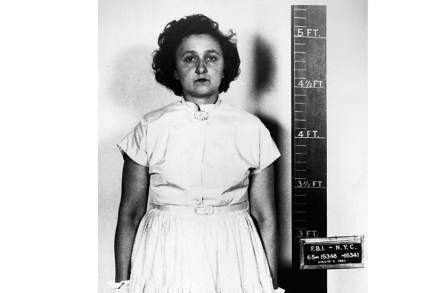
Ethel Rosenberg was an exceptional woman. Born with a painful curvature of the spine to a poor family of Jewish immigrants and a mother who never loved her, she was determined to make her life matter. A talented singer, she won a place at New York’s prestigious Schola Cantorum and performed at Carnegie Hall. Having found clerical work, she helped organise strike action and then won a court vindication. Seeing the rise of fascism, she came to embrace the concept of communism, and when war arrived she campaigned for America’s entry. Ethel’s exceptionalism did her no favours, however, in paranoid post-war America. Although she focused on her children, she was still far too close to her husband’s work.

The defiance of the ‘ghetto girls’ who resisted the Nazis

From our UK edition

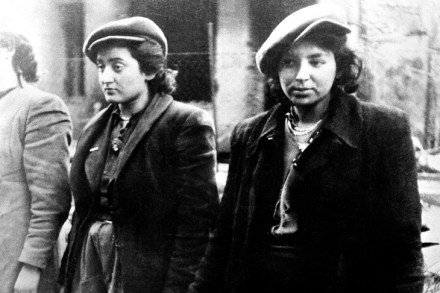
‘Jewish Resistance in Poland: Women Trample Nazi Soldiers,’ ran a New York headline in late 1942. That autumn, the Nazi occupying forces in the ancient town of Lubliniec, in southern Poland, had forced the Jewish community to assemble in the square. As men, women, the elderly and children were ordered to strip, a dozen women suddenly attacked their persecutors, scratching, biting and hurling stones. Stunned by this unexpected defiance, the Nazi soldiers fled. The influence of such courageous acts of resistance was tremendous. Galvanised by largely left-wing youth activists and connected by mainly female couriers, Jewish defence groups were soon staging armed attacks and operations across occupied Poland.

Out-scooping the men: six women reporters of the second world war

From our UK edition

Two war correspondents were hitching a lift towards Paris in August 1944 when a sudden wave of German bombers forced them to dive for cover. What the hell were they doing trying to cadge a ride when ‘war correspondents have their own jeeps and drivers?’ an American officer barked at them as his car screeched to a halt beside the shallow crater they had commandeered. ‘We happen to be women,’ Ruth Cowan replied steadily, as she straightened up and shook off the dust along with his words. Cowan was the first female journalist attached to the US army but, as a woman, she was denied the official facilities provided for the men of the press. At the outbreak of hostilities, British female correspondents were prohibited from combat zones.

Sleeping with the enemy: the wartime story of ‘La Chatte’

From our UK edition

The name ‘Carré’ immediately evokes the shadowy world of espionage. Ironically, however, few people today have heard of the real Carré, also known as ‘Victoire’ and ‘La Chatte’, a female intelligence agent inside Nazi-occupied France whose life had enough plot twists and moral ambiguity to satisfy any spy novelist. Mathilde Carré (1908-2007) had beena clever but rather neglected child. Desperate to give her life meaning, and inspired by the poems of a patriotic aunt, she had romantically decided ‘at all costs, to die as a martyr for France’. Thirty years later, after a number of false starts, the second world war finally presented her with the chance to live a life of real value.

The pram in the hall was one spy’s best friend

From our UK edition

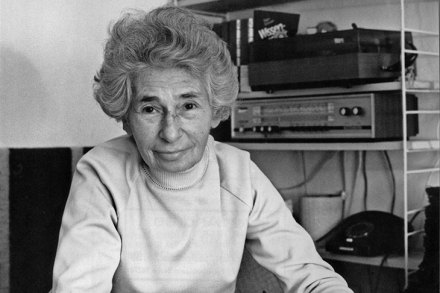
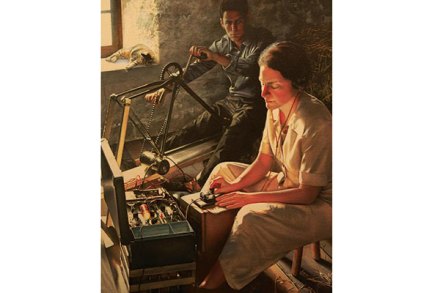
‘If you had visited the quaint English village of Great Rollright in 1945, you might have spotted a thin, dark-haired and unusually elegant woman... climbing on to her bicycle,’ Ben Macintyre opens his latest book, like the start of a gentle Ealing comedy. It will come as no surprise to his fans that the elegant Mrs Burton, Cotswolds housewife, baker of excellent cakes, mother of three and wife of a chap called Len who works in the local aluminium factory, is in fact Colonel Ursula Kuczynski of the Red Army, aka Agent Sonya, whose clandestine mission is to help the Soviets build the atomic bomb.

Monuments to the second world war are looking increasingly dodgy

From our UK edition

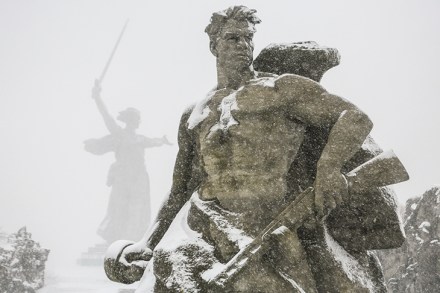
Most monuments are literally set in stone — or cast in bronze to better survive the weather. Being enduring, they arguably become ‘prisoners of history’, as this fascinating series of essays by Keith Lowe is titled. Conversely, perspectives are like the weather, constantly changing, as relationships between and within nations, and views on social and moral norms, shift over time, as we are seeing particularly at present. The inherent tension between the human desire for monumental permanence, especially after the upheaval of war, and the natural transience of social values, proves fertile ground for this examination of the lessons that can be drawn from second world war monuments around the world.

Female partisans played a vital role in fighting fascism in Italy — but it was a thankless task

From our UK edition

‘I am a woman,’ Ada Gobetti wrote in a clandestine Piedmont newsletter in 1943: An insignificant little woman, who has revolutionised her private life — a traditionally female one, with the needle and the broom as her emblems — to transform herself into a bandit… I am not alone. Ada, one of four female partisans whose interconnected stories weave through this history, knew what few Germans or Italian fascists yet suspected. All across Nazi- occupied northern and central Italy, thousands of women had started to resist. Factory workers subtly sabotaged the products of their enforced labour; village women spirited away men into the hills, often feeding and sheltering them as they organised into guerrilla units.

How Britain conned the US into entering the war

From our UK edition

In June 1940, MI6’s new man, Bill Stephenson, ‘a figure of restless energy… wedged into the shell of a more watchful man’, sailed from Liverpool to New York on the MV Britannic. Once separated from its protective convoy, ‘this elegant, ageing liner was on its own’, Henry Hemming writes, noting that the same was true of Britain and ‘salvation for both lay in the New World’. Shortly after America entered the second world war in December 1941, a plane left for Britain carrying just a handful of passengers. Stephenson was among them. Over the intervening 18 months he had become Britain’s extraordinarily effective ‘Man in New York’.

The lady with the limp

From our UK edition

‘This seems to be in your rough area. I mean, it contains wooden legs and everything…’ my commissioning editor at The Spectator emailed. He was requesting a review of Sonia Purnell’s excellent A Woman of No Importance, a biography of the remarkable Virginia Hall, the only second world war agent to serve not only with Britain’s Special Operations Executive (SOE) and its later American counterpart, the OSS, but eventually also with the CIA. It is perhaps unsurprising that war histories contain a high number of people with missing or prosthetic limbs.

The lure of a well-tailored uniform

From our UK edition

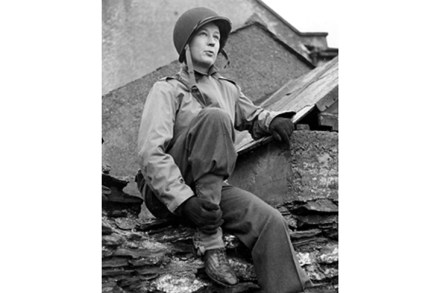
Anita Leslie knew how to tell a story. Arranging to sit for a portrait six months before she died, she planned to borrow a khaki shirt on which to pin her second world war decorations, the Africa Star and the Croix de Guerre. The portrait was never commissioned, but it is clear that Leslie — the only woman to have been awarded both these honours — wanted to be remembered as a war heroine, as well as a biographer, memoirist, witty and well-connected socialite, and cousin of Winston Churchill. Leslie’s war work certainly merits greater attention, so it is a shame that Penny Perrick’s Telling Tales: The Fabulous Lives of Anita Leslie focuses so much more on the ‘low-down on the high-ups’ than her subject’s actions on the front line.

Delusions of the deserters

From our UK edition

‘Keep my name out of it’, was the fairly standard reply when Matthew Sweet started researching the story of the GIs who deserted from Vietnam. People’s concern, it turned out, however, was not about being associated just with desertion, but with a more complex story of duplicity, abuse and insanity. Over time, the American Deserters Committee (ADC), the welfare group established to support the deserters in neutral Sweden, developed into a series of increasingly militant organisations. These were then infiltrated by the CIA. Sweet tracks the changing nature of desertion ‘from an individual act of conscience or cowardice to a political step that GIs could take together’.

Carve their names with pride

From our UK edition

‘Women,’ Captain Selwyn Jepson, SOE’s senior recruiting officer, once wrote, ‘have a far greater capacity for cool and lonely courage than men.’ This questionable assumption is not actually the reason why the women were recruited. That was down to their ability to move around enemy-occupied territory carrying messages, arms or heavy wireless sets without arousing as much suspicion as able-bodied men. But lonely courage was an essential virtue for the female agents, who had to face long weeks of keeping a low profile, with very little support, in between hours of terrifying activity. Most of them only met each other during training or, in several cases, in detention after capture.

Licence to kill | 12 January 2017

From our UK edition

As I read the last chapter of this book, news broke that the Russian ambassador to Ankara, Andrey Karlov, had been shot multiple times at close range by an off-duty Turkish police officer. Despite shocking live footage of the incident, it was unclear immediately whether this was political assassination or terrorist attack, or who was ultimately behind it. The assassin was quickly ‘neutralised’. Speaking from the Kremlin, Putin praised the slain ambassador, ordered security at Russian embassies to be stepped up, and said he wanted to know who had ‘directed’ the gunman’s hand. This is the crucial question. Not who the killer was, but for whom he was acting and with what intent.