Sofka Zinovieff

From teenage passion…

From our UK edition

The 16-year-old hero of David Nicholls’s fifth novel is ostensibly Everyboy. It is June 1997, the last day at dreary Merton Grange and, having flunked his exams, Charlie Lewis attends the leaving disco — all dry ice, vomit and snogging, laced with Cointreau and disinfectant. An infinity looms of bloated summer days, with only a part-time, underpaid garage job as distraction. Home is a small southern English Everytown, neither city, suburb nor rural village, with Dog Shit Park and Murder Wood ‘where porn yellowed beneath the brambles’. Worse, Charlie’s parents have separated, and he is stranded with his depressed, boozy, bankrupt father, eating cold curry from takeaway foil containers.
The ballad of John and Anton

From our UK edition

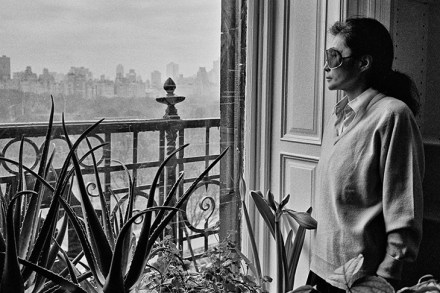
Tom Barbash’s dark and humorous second novel takes a risk by combining invented and real characters. I feared nagging doubts about what was ‘true’.  However, it absolutely succeeds. Set in 1979–80, the alluring (fictional) Winter family attend parties with neighbours like Betty Bacall or John and Yoko. They all live in the Dakota building — the Upper West Side landmark built to resemble ‘a Habsburg castle’ and populated by New York luminaries. ‘A malady shared by a lot of the building was that of being famous’ and Dakota etiquette demanded that even the legendary be treated as normal.

Sisters in scandal

From our UK edition

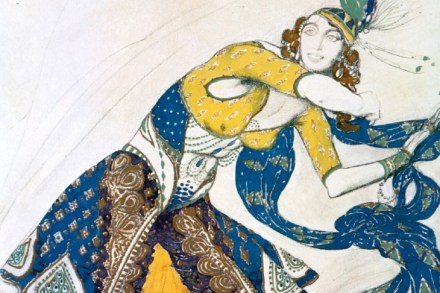
In our age of elasticated leisurewear, ready meals and box sets on telly, it is exhilarating to read about people who would come down to dinner in peacock-feather head-dresses, swathed in large snakes and dripping ornamental chicken blood. The Marchesa Casati has a loyal cult following and her bizarre style still influences fashion designers; but by placing her alongside two sisters in scandal in this triple biography, Judith Mackrell has done something very clever and entertaining. The author, the Guardian’s dance critic, has already championed controversial women in her multiple biography Flappers and in Bloomsbury Ballerina, about Lydia Lopokova. Now she recounts the lives of three wildly ambitious yet vulnerable women with page-turning pace and intelligence.

No happy endings

From our UK edition

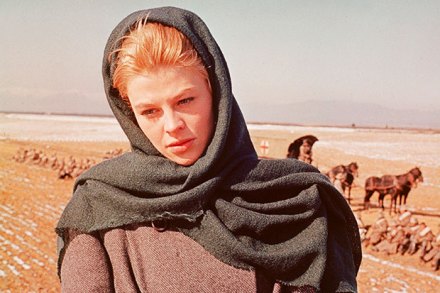
Between agreeing to review this book and receiving it, I got worried. Like many, I adore Doctor Zhivago with its tragic love story between the eponymous doctor-poet and the beautiful Lara, set in post-revolutionary Russia. When in Moscow, I followed the trail of literary pilgrims to Boris Pasternak’s dacha in the writers’ village of Peredelkino. I also had fond memories of Julie Christie and Omar Sharif in David Lean’s epic 1965 film; never underestimate the enhancing effect on romance of fur hats, sparkling snow and long-distance trains. Anna Pasternak, the writer’s great niece, is a journalist and Daily Mail columnist who made her name with Princess in Love.

The frog prince

From our UK edition

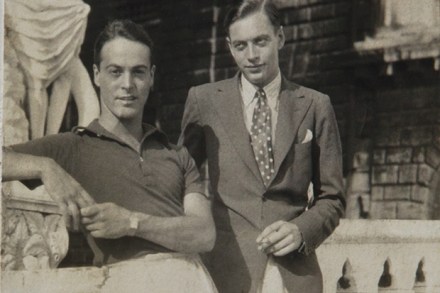
It would not have surprised their friends in the 1930s when Peter Watson had a fling with my grandfather, Robert ‘the Mad Boy’ Heber-Percy. Both gorgeous young men were known for their risky sexual escapades. What did ruffle feathers, however, was when Watson subsequently gave the Mad Boy a car. Cecil Beaton was so jealous that he demanded one too. And it was forthcoming: ‘Do please select any roadster which catches your fancy,’ replied the exceedingly wealthy Watson, who inspired lifelong unrequited love in poor Beaton. The Mad Boy’s long-term partner was Lord Berners, the famously eccentric composer, painter and writer, who retaliated by pinning Watson to the page of his wickedly satirical novel, The Girls of Radcliff Hall.

A woman who wears her homes like garments

From our UK edition

Depending on your approach, home is where your heart is, where you hang your hat, or possibly where you hang yourself. Our homes reflect our characters, social milieux and finances, but we also reflect them. Leonard Woolf wrote that a house ‘has an immense influence on its inhabitants’, and contended that Monk’s House (where he lived with Virginia Woolf from 1919–1941) was ‘the most powerful moulder’ of how they had lived their lives. Taking a lead from this notion, Margaret Forster has produced a memoir focussing on the homes she has lived in throughout her 76 years. This is no history of the buildings or who came before, like Julie Myerson’s Home.

When Rachel Cusk went to Greece: would she be nice or nasty?

From our UK edition

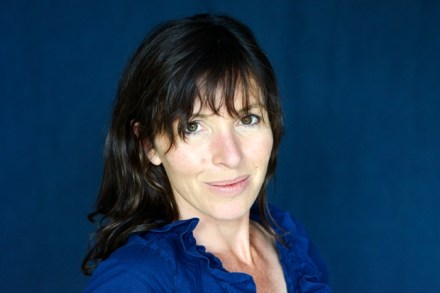
Last year in Athens, rumours raced about Rachel Cusk’s creative writing classes at the British Council. Some of the (mostly Athenian) pupils revered her for her intelligence and pitiless honesty, while others reviled her for her ‘colonial attitude’ and an apparent antipathy towards Greeks. One might suspect Greeks of tending towards intense emotional reactions, but the phlegmatic British have had no less divided opinions about Cusk’s books. The author of seven novels, she was amongst Granta’s best young writers in 2003, yet her memoirs about the horrors of having babies (A Life’s Work: On Becoming a Mother) and about the break-up of her ten-year marriage (Aftermath) provoked outrage as well as adulation.

‘Back to Delphi’, by Ioanna Karystiani

From our UK edition

If you mixed Lionel Shriver’s chilling We Need to Talk About Kevin with a Joycean stream of consciousness from a female Ulysses in contemporary Athens, you’d be approaching the spirit of Ioanna Karystiani’s Back to Delphi. Viv is the mother of a notorious rapist and murderer, now locked up in Korydallos prison. Granted five days to take him on leave of absence, she decides that a trip to Delphi might provide salvation for her damaged son and for a relationship based on silence and betrayal. Strange, disturbing and funny, the book reveals the seedy neighbourhoods and bedsits of 21st-century Athens, its hot, dirty parks and ‘the drone of Balkan, Asian and African languages rising shrill above every badly designed square’.