Andrew Petrie

Behind the beat

From our UK edition

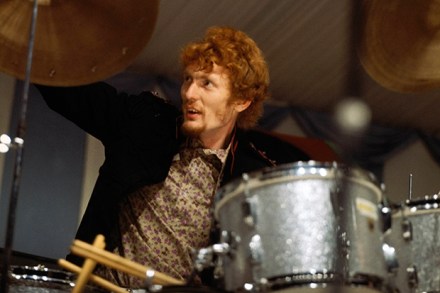
Tony Barrell can’t play the drums, but he’s in awe of those who can. ‘A band without a drummer is like a rocking chair that somebody has cruelly bolted to the floor,’ he writes in Born to Drum’s introduction. ‘While it may appear to rock, it actually doesn’t.’ Those who thrill to the sounds of anyone from Black Sabbath to the Buddy Rich Big Band would agree, but Barrell also aims to reach readers to whom names like these mean nothing with an inquiry more psychological than musical, namely: who would be a drummer?
The Northern Lights

From our UK edition

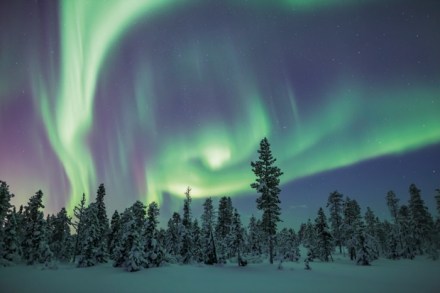
Getting here took a long time. First a flight to Seattle, then a connection to Fairbanks, followed by a coach to Coldfoot Camp and a final stage by minibus. It’s long after midnight and I’m shivering outside a snow-covered lodge in Wiseman, Alaska (population: 14), two hours north of the Arctic Circle, wrenching my tripod so the camera points straight upwards and trying like a fool to capture what essentially cannot be captured. I’m looking at the Northern Lights. The aurora borealis, the result of electrically charged particles causing havoc in the upper atmosphere, is the reason I’m here in America’s biggest state.

Rome, Open City still shocks

From our UK edition

Roberto Rossellini shot his neorealist landmark Rome, Open City while the war still raged and rubble littered the freshly liberated capital. Based on real experiences from the ten-month German occupation, the film follows ordinary Romans, some active dissenters, some just trying to get by, as the Nazis and the Italian fascist authorities mount a search for a Resistance fighter freshly arrived from outside the city. Actress Anna Magnani established her screen persona as the indomitable battler from the streets, and renowned stage comedian Aldo Fabrizi (above) turned in a performance as great as any in cinema as Don Pietro, the priest whose faith in God and his fellow man never wavers, even in the face of death.

Wild Tales: The book to make any Spectator reader weep

From our UK edition

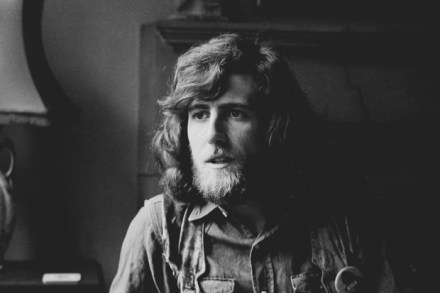
We all know that if you can remember the Sixties you weren’t really there. But Graham Nash, of the Hollies, and later of Crosby, Stills & Nash, was there, and has decided at the age of 71 to prove that he can well remember both them and subsequent decades by favouring us with his autobiography. Wild Tales begins in familiar territory: working-class lad discovers rock’n’roll in the late Fifties, forms a band with his schoolmates and discovers a gift for harmony vocals, along the way realising that he can make a better living from this showbiz lark than his poor father ever did at the ironworks.

At home with President Nixon

From our UK edition

The most paranoid of presidents, Richard Nixon must have been feeling unwell when he allowed three of his closest aides to shoot personal Super 8 footage of their time in the White House. Bob Haldeman, John Erlichman and Dwight Chapin — all of whom later went to prison for their involvement in the Watergate affair — together shot more than 200 rolls of film between 1969 and 1973, the highlights of which form the backbone of a new documentary Our Nixon, and show us a team of go-getting young Republicans you wouldn’t recognise from Oliver Stone’s murky biopic. As the director Penny Lane says: ‘There aren’t any bad guys in home movies.

Herzog at the BFI: Mad men in the rainforest

From our UK edition

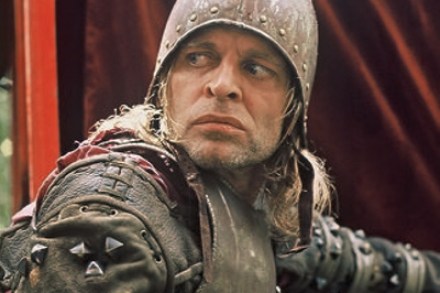
‘I am the wrath of God. The earth I pass will see me and tremble.’ Not my words, Mr Speaker, but those of demented conquistador Klaus Kinski in Werner Herzog’s electrifying Aguirre, der Zorn Gottes (1972). Now back in cinemas nationwide in a restored print that makes its rainforest setting a real feast for the eyes, Aguirre heralds a two-month Herzog season at the BFI Southbank. Five weeks of location shooting in Peru effectively meant the film crew endured the same hardships as the characters: heat, hunger and the unpredictable behaviour of Kinski, scarcely any less a madman than the treasure-seeking Aguirre. The director claims that Kinski only calmed down enough to finish the film after Herzog threatened to shoot the star and then himself.

The first Division – Peter Hook’s Unknown Pleasures

From our UK edition

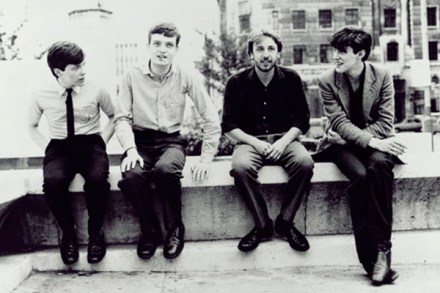
A good book about popular music will always give you a new appreciation of the records. Joy Division bassist Peter Hook’s Unknown Pleasures, just published in paperback by Simon & Schuster, might do just that, though perhaps not in the way the author intended: Joy Division’s music, never an easy listen, becomes almost unbearably intense once you fully understand the mental and physical suffering endured by vocalist Ian Curtis during its creation. By the last few months of the group’s career, in 1980, Curtis was balancing band life with the demands of a wife and baby daughter, conducting an unconsummated affair with a Belgian journalist and frequently having epileptic fits on stage.

The stamp of quality – Terence Stamp at the BFI

From our UK edition

If ever a director’s decision to cast an actor based solely on looks could be excused, it would be Pier Paolo Pasolini’s choice of Terence Stamp for the lead in 1968’s Theorem. As the mysterious, nameless, selfless houseguest of a well-off Milan family, Stamp (above) combines the insouciance of Malcolm McDowell in A Clockwork Orange with a passive saintliness appropriate to Pasolini’s satirical intent. Stamp didn’t even have to be able to speak Italian — his character barely talks, and everyone’s dubbed anyway. Somewhere between the profound and the Pythonesque, Theorem ticks all the boxes for a 1960s European art film: allegorical Christ figure exposes middle-class hypocrisy with his sexual magnetism and non-linear narrative.

Roy Lichtenstein: comic genius?

From our UK edition

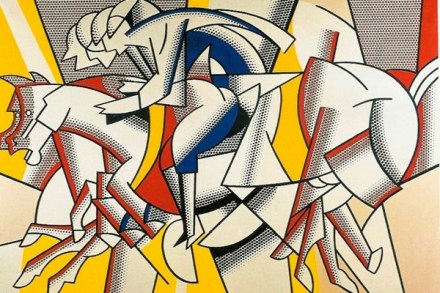
Tate Modern promises that its forthcoming retrospective will showcase ‘the full scope of Roy Lichtenstein’s artistic explorations’, to which Spectator art critic Andrew Lambirth responded acidly: ‘I look forward to being pleasantly surprised.’ And it’s true that once Lichtenstein perfected his dot patterning technique in the mid-Sixties, he stuck with it until his death more than 30 years later. Alastair Sooke’s How Modern Art Was Saved By Donald Duck is available as a Penguin Specials paperback from Tate Modern; elsewhere, it’s in eBook format only. It won’t convince any sceptics of Lichtenstein’s infinite versatility, but it does make a case for him as a supreme examiner of style.

Montgomery Clift and Elizabeth Taylor: beyond chemistry

From our UK edition

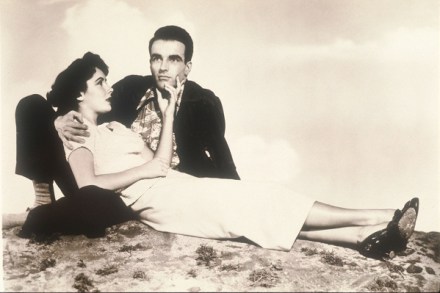
Regularly voted one of the greatest American novels of the last century, Theodore Dreiser’s moralising epic An American Tragedy (1925) hasn’t aged well. Adapted for the cinema as A Place in the Sun, however, it paired Montgomery Clift with the 17-year-old Elizabeth Taylor and gave us a film that still grips more than 60 years later. Director George Stevens disparaged what he called Technicolor’s ‘Oh, what a beautiful morning’ quality, and monochrome is indeed more suited to the ethical grey area explored by the film: whether a man who plans a murder but can’t go through with it is as guilty as a killer.

The shock of the old

From our UK edition

New Yorker music critic Alex Ross published The Rest Is Noise: Listening to the Twentieth Century five years ago, earning himself the Guardian First Book Award and a finalist citation for the Pulitzer Prize. Now London’s Southbank Centre is turning the book into a year of concerts, talks, film screenings, exhibitions and even a three-part BBC4 documentary series in celebration of 20th-century classical music. The festival marks the centenary of Stravinsky’s Rite of Spring, though Ross plays down the significance of the work’s riotous première in his book: it seems Paris audiences would faire la révolte for just about anything in those days.

London pride

From our UK edition

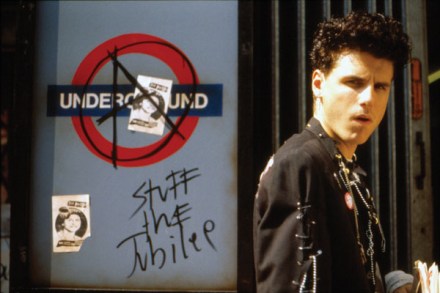
The trend for documentary portraits of individual cities assembled from archive footage continues with Julien Temple’s London: The Modern Babylon, out now on Bfi DVD. Temple was the obvious choice of director, as a native of the city and creator of London films Absolute Beginners and Oil City Confidential, not to mention 2010’s superb Requiem for Detroit? for the BBC. The film has been compared to Guy Maddin’s My Winnipeg and Terence Davies’s Of Time and the City (about Liverpool), though London lacks those works’ deeply personal perspective and strict avoidance of cliché: this is a film that opens to the sound of  ‘London Calling’ and closes with ‘Waterloo Sunset’.

24 hours in Tulsa

From our UK edition

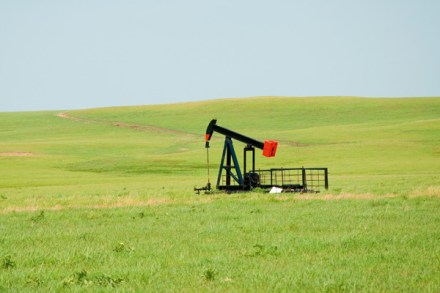
Oklahoma will always be a red state on the political map, but the colour goes deeper than that. Everything here was red: red earth, red brick, red dust, red rust. At Little Sahara State Park, 1,600 geologically anomalous acres of iron-rich sand dunes were pinky-orange, the colour of thousand-island dressing. The sitcom Friends had a storyline in which a character accidentally went to Oklahoma, the implication being that that’s the only reason anyone would go there. The state’s position as an unfashionable backwater became a running joke over eight episodes, after which the Friend headed back to civilisation. It was not always thus. So-called ‘wildcatters’ were poking around in the red dirt for black gold at the beginning of the last century.

Critical meltdown

From our UK edition

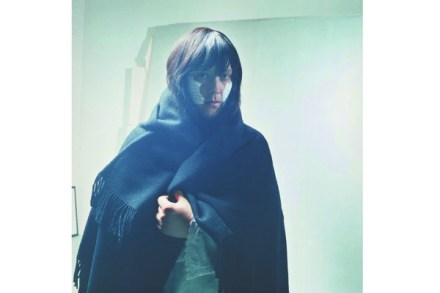
If the River of Music put you in the mood for stimulating sounds on the banks of the Thames, next week’s Meltdown at the Southbank Centre, also part of the London 2012 Festival, is well-timed. Meltdown’s later-than-usual slot should earn it a little reflected Olympic glory, though it’s hard to imagine anyone less suggestive of healthful outdoor pursuits than this year’s curator, surname-free singer and visual artist Antony (above), who looks as if he has spent his life shunning daylight in some windowless New York dive.

From our own correspondent

From our UK edition

‘Interviewing Afghan warlords is always something of a delicate dance,’ writes roving BBC reporter Nick Bryant in Confessions from Correspondentland (Oneworld, £10.99), and, given that he has also observed the methods of warlords from Nepal, Pakistan and Sri Lanka, his word counts for something. Though he acknowledges the journalistic allure of ‘shouting into microphones over the din of exploding ordnance’, Bryant’s memoir of his time as Auntie’s man in South Asia (and Washington, and Sydney) is refreshingly free of the macho stuff. Instead, he is concerned with analysing (not to say justifying) the changes in news presentation during his time on our screens, from the growth of post-Diana ‘how do you feel?

The first lady of song

From our UK edition

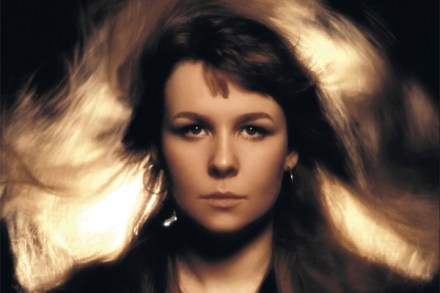
Folk legend Sandy Denny’s eminently coverable songs, direct of melody and opaque of lyric, have scarcely declined in popularity since the singer’s death in 1978 at the age of 31. A tribute concert at the Queen Elizabeth Hall in 2008 was such a hit that a similar event is being staged at the Barbican this month. Once again, a variety of vocalists will front a house band including members of contemporary folk stars Bellowhead and share the stage with Denny’s former Fairport Convention bandmates Jerry Donahue and Dave Swarbrick. Insecure but blessed with a versatile voice free of phony mid-Atlantic inflections, Denny’s infusion of traditional material transformed Fairport from blokey college circuit regulars into the definitive English folk-rock band.

Bad habits | 31 March 2012

From our UK edition

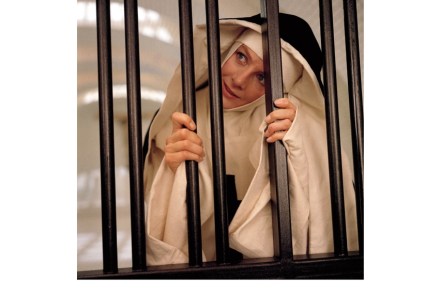
When the late Ken Russell published his autobiography in 1989, he called it A British Picture. That title could just as easily describe The Devils, his 1971 adaptation of Aldous Huxley’s The Devils of Loudun, relating the true story of supposed demonic possession among Ursuline nuns in north-west France in 1634. Here is a world-class film by a British director, with British stars and crew,  sets by Derek Jarman and a score by Peter Maxwell Davies. So why is it only now getting a DVD release? Combining sexual abandon, outright blasphemy and scenes of convent life unlikely to be mistaken for The Sound of Music, The Devils fought a notorious battle with the British Board of Film Censors that has been allowed to eclipse the quality of the film.

A bite of the Apple

From our UK edition

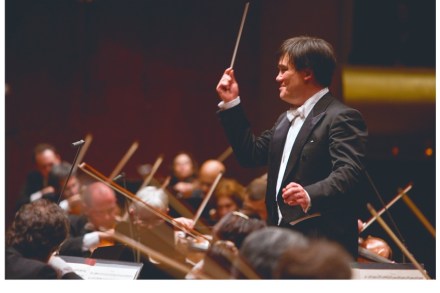
For the first time in its 170-year history, the New York Philharmonic Orchestra has a native New Yorker at the helm. Music director Alan Gilbert (above) brings the band to the Barbican this month for a brief residency that crams four concerts into a little over 48 hours, starting with a performance of Mahler’s Ninth on 16 February. Later concerts include the UK première of Polaris, a ‘Voyage for Orchestra’ by Thomas Adès, and Lang Lang tackling Bartók’s famously arduous Piano Concerto No. 2. The residency will also see small groups of musicians venturing beyond the concert hall to perform for residents of East London housing estates as part of the Barbican’s Front Room Concerts series.

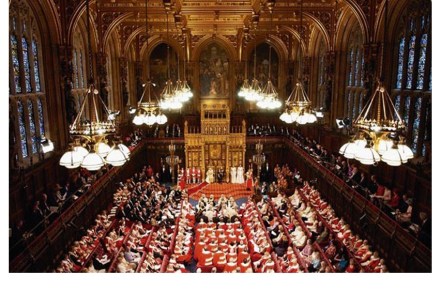
Disappearing lords

From our UK edition

‘I don’t like him looking daft,’ growls Alastair Campbell to the camera as Bafta-winning documentary film-maker Molly Dineen shadows Tony Blair for the 1997 party election broadcast. The warning is clear. Forty hours of footage became a mere ten minutes of spin, but it’s testament to Dineen’s rapport with the member for Sedgefield that despite its brevity the film was described by the late New Labour strategist Philip Gould as ‘probably our most effective broadcast’. Twenty-five years after her acclaimed debut Home from the Hill, Dineen’s collected works now fill three double DVDs.

Last night in Peckham

From our UK edition

This was what Peckham High Street looked like at about 6.45 last night. I had heard that a bus was petrol-bombed although I neither saw nor heard evidence of that. There was no confrontation between police and the public and I didn't see any arrests. Mostly it was just a case of people standing around wondering what, if anything, to do next.