Lewis Jones

The threat of the Black Shorts

From our UK edition

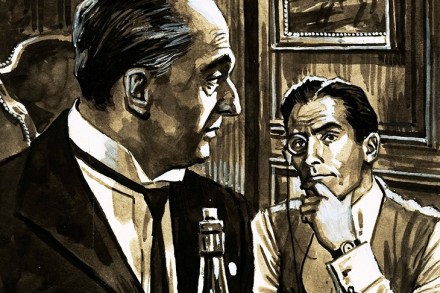
In 2016, inspired by reports that Donald Trump’s butler had recommended the assassination of Barack Obama, Ben Schott wrote a scintillating squib, published in these pages, about Trump meeting Bertie Wooster. As he later noted in a diary column, it gave him the idea of writing a new Jeeves and Wooster novel. Predictably, reassuringly, soothingly, Jeeves and the King of Clubs returns us to such idyllic haunts as Bertie’s flat in Berkeley Mansions, the Drones Club and Brinkley Court, Aunt Dahlia’s pile in Worcestershire, and to the company of the furious Sir Watkyn Bassett and his whimsical daughter Madeline, who is yet again engaged to Roderick Spode, 7th Earl of Sidcup. It would appear to be the summer of 1939.
Three for the road

From our UK edition

One of the great challenges in life, writes Richard Ford in Between Them, ‘is to know our parents fully — assuming they survive long enough, are worth knowing and it is physically possible’. Leaving aside the question of whether we can ever know anyone fully, Ford’s knowledge of his parents, Parker and Edna, was limited. They did not survive long enough, or at least his father didn’t. Soon after Ford’s 16th birthday, his father ‘came awake in his bed on a Saturday morning and died’, aged 55, of a heart attack, as Richard administered CPR. Nor were they particularly worth knowing, whatever that means; his description of them as ‘country people and insufficiently educated’ gives some idea.

Spectator Books of the Year: The biography of a man who prayed he’d never have one

From our UK edition

‘I pray I shall not find a biographer,’ said Steven Runciman, eminent historian of Byzantium and the Crusades, Grand Orator to the Patriarch of Constantinople, Astrologer Royal to King George II of the Hellenes, Laird of Eigg, screaming queen, howling snob and honorary whirling dervish. His prayer has been denied, but he could not have found a better biographer than Minoo Dinshaw, whose Outlandish Knight (Allen Lane, £30) is monumentally impressive: scholarly, witty and gorgeously written. When Runciman was in charge of the British Council in Athens after the war he dismissed Patrick Leigh Fermor from the only job he ever had, having tired of ‘Paddy’s little irregularities’, such as drinking too much and not paying his debts.

In the gutter, insulting the stars

From our UK edition

John McEntee — ‘the Chancer from Cavan’, as he bills himself — has enjoyed a long career as a gossip columnist on various national newspapers. Gossip is thirsty work, and in the anecdotes that comprise the bulk of his memoirs he is almost invariably ‘well-refreshed’. That can also be dangerous. He recalls, for example, attempting to introduce himself to Eve Pollard, who was then editor of the Sunday Mirror, in the bar of the Grand Hotel at the 1989 Labour party conference in Brighton. Pollard was talking at the time to Bruce Anderson, who told him, ‘Fuck off, potato head.’ McEntee responded by whipping off Anderson’s spectacles, and Anderson took a blind swing at him, which landed on Pollard’s bosom.

Bohemian life Down Under

From our UK edition

Here’s a pair of little books — one even littler than the other — by Robin Dalton (née Eakin), a celebrated Australian literary agent and film producer, now aged 92, who has lived in London for the past 70 years. As she explains in a prefatory note, Aunts Up the Cross was written as ‘a diary for my children should I, too, die young’, her husband having died at 33. Years later, when the publisher Anthony Blond complained that she never sent him anything, she reluctantly gave him the 22,000-word manuscript, telling him it was by a mad schoolfriend of hers.

Disgusted of X-ville

From our UK edition

Eileen is an accomplished, disturbing and creepily funny first novel by Ottessa Moshfegh, the latest darling of the Paris Review, which has published her stories and given her a prize. It recalls, half a century later, a week in the life of Eileen Dunlop, leading up to Christmas 1964. Her mother, whom she loathed, has died some years ago, and at the age of 24 Eileen is living in a dreary New England town she calls ‘X-ville’ with her father. He’s a demented, gin-sodden retired cop whom she also loathes, and whom she is supposedly looking after, though her care is limited to shouting at him, maintaining his gin supply and hiding his shoes to prevent him from terrorising X-ville in his pursuit of imaginary ‘hoodlums’.

A posh Del Boy

From our UK edition

The Art of Smuggling comes garlanded with fraternal encomia from Howard ‘Mr Nice’ Marks, Phil Sparrowhawk (author of Grass) and Maurice O’Connor (author of The Dealer), but it seems the author was hardly a master of his chosen art. As Eddie the Eagle was to skiing, so was Francis Morland to drug trafficking. Spectacularly unsuccessful but heroically persistent, he was busted six times and spent more than 15 years in jail. A better title might have been How Not to Smuggle. I was more than once reminded of an Only Fools and Horses Christmas special, featuring a tall Del Boy with a posh accent.

Jack the Ripper unmasked again

From our UK edition

The Whitechapel Fiend is a psychic conduit for the vilest aspects of Victorian sex and class, and a creature mainly of the imagination. In 1888, the year of the murders, John Francis Brewer published The Curse Upon Mitre Square, and novels have followed from such writers as Edgar Lustgarten, Colin Wilson and Iain Sinclair. Many are Ripper mash-ups in the style of Robert Louis Stevenson or Arthur Conan Doyle, as in the Holmes capers of Ellery Queen and Michael Dibdin. Marie Belloc Lowndes’s The Lodger was made into a film by Alfred Hitchcock, A Story of the London Fog (1927), starring Ivor Novello as a sympathetic Ripper; and he features in many other films — in This is Spinal Tap (1984), for example, as the subject of Saucy Jack, a projected rock opera.

The history man

From our UK edition

History for Gore Vidal was a vehicle to be ridden in triumph, perhaps as in an out-take from Ben-Hur, which he worked on during one of his stints as a Hollywood hack, camping up the script to annoy Charlton Heston. Not only did he ride the Vehicle of History, but as its amanuensis and avatar, born and raised to the purple, in his mind he somehow was History, and of his many achievements the greatest was to persuade others to share that belief. His career presents the realised fantasy of the charismatic narcissist, which is to be taken at one’s own estimation. The American writer and academic Jay Parini, who was a friend of his from the 1980s, remembers him saying, ‘I might have been president’, but the presidency would not have been enough.

The raffish toff with a winning Formula

From our UK edition

Max Mosley’s autobiography has been much anticipated: by the motor racing world, by the writers and readers of tabloid newspapers, by social historians, and by lawyers, whom one imagines perusing it with nods, frowns and the occasional wince. Mosley is a barrister of Gray’s Inn, and it was as a lawyer that, with his friend Bernie Ecclestone, he came to dominate motor racing. Their association began in 1964, when Mosley was a pupil in Lord Hailsham’s chambers and Ecclestone was the country’s top used-car dealer, said to be able to value an entire showroom at a glance.

Not a patch on our own Dear Mary

From our UK edition

As Dear Mary so wittily demonstrates, our need for advice is perennial. But fashions change. Mary would probably take issue with The Handbook of the Toilette (1839), which advises that one should take a weekly bath whether one needs to or not, and also with the recommendation of Cassell’s Home Encyclopedia (1934) that ‘bloater cream’ makes excellent cocktail canapés. She would surely concur, though, with an observation from All About Etiquette (1879) that ‘a social party is not intended as a school for reform, or a pulpit to denounce sin’. To compile How to Skin a Lion Claire Cock-Starkey has consulted the British Library. She promises ‘medieval manuscripts’, but her selection is mostly from Victorian sources.

Touring America in Steinbeck’s footsteps

From our UK edition

In 1960 John Steinbeck set off with his poodle Charley to drive around the United States in a truck equipped with a bed, a desk, a stove and a fridge. To renew his acquaintance with that ‘monster of a land’, he planned to cross the northern states from the east coast to the west, then drive down the Pacific and across the southern states. He was 58, and recovering from a mild stroke. Having recently abandoned his attempt to write an American Don Quixote, he called his project ‘Operation Windmills’, cast Charley as his Sancho Panza, and named his truck Rocinante. Travels with Charley was published in 1962. It was a great success, and his last major work. Four months later he won the Nobel Prize.

Spectator books of the year: Lewis Jones on Ian McEwan and narrow boats

From our UK edition

Music Night at the Apollo: A Memoir of Drifting (Bloomsbury, £14.99) describes the year Lilian Pizzichini spent with her cats on the Adam Bonny, a narrowboat moored on the Grand Union Canal amid the factories and sink estates of Southall. The boat stays moored but, on a tide of cider and cheap vodka, and fuelled by skunk, cocaine and heroin, Pizzichini takes a wild and perilous voyage, encountering not only the local Punjabi and Somalian lowlife but also her own ‘white underclass ancestors’. It sounds grim, but it’s actually rhapsodic, funny and weirdly hopeful. Ian McEwan is usually impressive, and The Children Act (Cape, £16.99) is especially so.

From head-shrinking to skull-seeking: a history of the severed head

From our UK edition

A severed head, argues Frances Larson in her sprightly new book, is ‘simultaneously a person and a thing… an apparently impossible duality… an intense incongruity’. History is ‘littered’ with such heads. Pilgrims visit them: the heads of St Peter and St Paul, for example, are thought to be in the high altar of the Basilica of St John Lateran. Artists are inspired by them, especially the erotically charged ones in the stories of Salome and Judith. Medical students dissect them, thereby acquiring the ‘necessary inhumanity’ of their profession. And Americans pay $50,000 to have their own heads cut off — cryonicists prefer the term ‘cephalic isolation’ — and preserved in thermos flasks of liquid nitrogen.

Was John Cleese ever funny?

From our UK edition

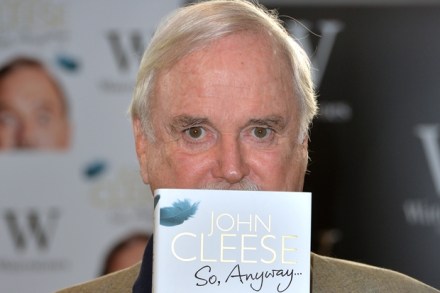
Like many of my generation I was enchanted by the surrealistic irreverence of Monty Python’s Flying Circus, until I overheard other boys — it was never girls — excitedly murdering the Parrot Sketch: ‘Ah yes, the Norwegian Blue — lovely plumage…’ This was not out of a snobbish disdain for popularity; I still loved the Beatles, after all. What made me wince was that the boys in question obviously lacked any sense of humour, and had adopted the show as a kind of prosthesis — which would explain its huge success in Germany.

Enjoy gin but don’t read books? Or read them only while drinking gin? This is the book for you

From our UK edition

Gin Glorious Gin: How Mother’s Ruin Became the Spirit of London is a jaunty and diverting history of ‘a wonderful drink that embodies the best of London’, which is a judgment that would raise eyebrows even at closing time in Soho. It is not a remotely scholarly book. There are no notes or index, and on the second page Olivia Williams informs us that the first citation for gin in the OED is from 1714, as ‘an infamous liquor’. It’s actually from 1723, as ‘the infamous liquor’ — mere details, but still. I stopped checking things after that.

James Bond’s secret: he’s Jamaican

From our UK edition

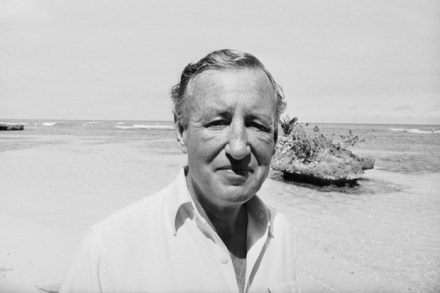
Ian Fleming’s first visit to Jamaica was pure James Bond. In 1943, as assistant to the Director of Naval Intelligence, he flew from Miami to Kingston to attend an Anglo-American naval conference and to investigate the rumour that Axel Wenner-Gren, a rich Swede and supposed Nazi, had built a secret submarine base at Hog Island, near Nassau. He was accompanied by his old friend Ivar Bryce, who was also in intelligence, and who put him up at a house his wife had recently bought. As they left the island, Fleming told Bryce, ‘When we have won this blasted war, I am going to live in Jamaica… swim in the sea and write books.

Wealth is no guarantee of happiness. Look at the Sackville-Wests

From our UK edition

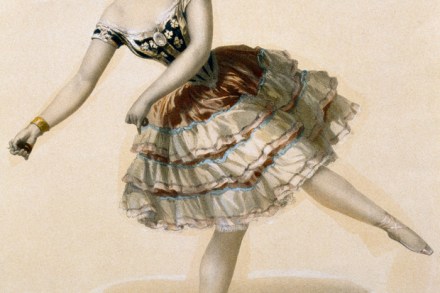
When Robert Sackville-West was writing Inheritance (2010), his history of Knole and the Sackvilles, he was ‘struck’, as he recalls in his new book, by the way that Sackvilles have ‘tended to take Italian or Spanish dancers as mistresses’. The most notable of these was Josefa Duran, the flamenco dancer known as ‘Pepita’. A barber’s daughter, she was born in 1830 in the backstreets of Málaga — ‘Oh such a slum it is!’ observed her grand-daughter Vita Sackville-West, who wrote a biography of her, Pepita (1937). By the 1850s she was the toast of Europe, and in 1852 she began a liaison with Lionel Sackville-West, later the 2nd Lord Sackville, which lasted until her death in 1871.

Lost Kerouac that should have stayed lost

From our UK edition

In 1944, when he was 22, Jack Kerouac lost a manuscript — in a taxi, as he thought, but probably in Allen Ginsberg’s room at Columbia University — and it stayed lost until 2002, when it was auctioned at Sotheby’s. Now it has been published, all 70 pages of it, together with some youthful sketches and some letters between Kerouac and his father, in an edition by a professor at Lowell, Massachusetts, Kerouac’s home town. The Haunted Life is billed as a novella, but turns out to be the first part — ‘Home’ — of a projected novel, to be completed by ‘War’ and ‘Change’. Set in 1941, it is a coming-of-age story.

Finally, a celebrity memoir worth reading

From our UK edition

Unlike many celebrity memoirs, Anjelica Huston’s is worth reading. In her Prologue she writes that as a child she modeled herself on Morticia Addams, and where a lesser celebrity memoirist would go on to say that she eventually played Morticia in a film of The Addams Family, Huston is generous enough not to labour the point. Instead of the usual ghosted drivel, she offers — as she does in her acting — a quirky charm and a reckless honesty. Her story is an interesting one, and is generally well written, sometimes even beautifully so. Her father was the great film director John Huston.