Patrick Flanery

Life in reverse

From our UK edition

The publication of César Aira’s The Lime Tree in Chris Andrews’s assured translation is a reminder that much of the Argentinian writer’s massive literary output — now more than 70 books — remains inaccessible in English. In this novella, which teases readers with suggestions of the autobiographical, Aira has one eye on his country’s past and the social effects of Juan Perón’s regime, and the other on the literary legacies of Proust. For Aira’s unnamed narrator, it is not the taste of lime blossom tea that spurs his fluid reminiscences, but a particular tree itself, ‘grown to an enormous size’ and central to the small-town landscape of his childhood in Coronel Pringles, where Aira himself was born.


A brutal race

From our UK edition

More than 25 years ago, Peter Carey co-wrote one of the most audacious road movies ever made, Wim Wenders’s Until the End of the World, which circles the globe before concluding with a long interlude in the Australian outback. While the film was in the mode of speculative science fiction and Carey’s captivating A Long Way from Home is a fiercely realist story set in the 1950s, this new book nonetheless shares both that earlier work’s fascination with outsiders whose lives spin off in unpredictable directions, and as a profound reverence for Australia’s interior and its people.

The great depression

From our UK edition

If it was not yet ‘The Age of Anxiety’ in 1947, when Auden published his long poem of the same name, now it most certainly is, given the manifold global uncertainties that keep any sane person awake with worry. Nearly 20 per cent of adult Americans have been diagnosed with a general anxiety disorder, while the pharmaceutical industry has produced a legion of drugs that promise to combat the effects of such conditions. In Adam Haslett’s beautiful new novel, Imagine Me Gone, mental illness rips through one New England family over the course of four decades. Told in alternating first-person chapters by the parents and their three children, it is a captivating portrait of the ways depression and anxiety mark both the afflicted and everyone who loves them.

David Mitchell is in a genre of his own

From our UK edition

David Mitchell’s new book, Slade House, is not quite a novel and not really a collection of short stories. It is, rather, a puzzle and an amusement. A member of the same family as last year’s The Bone Clocks, it also has a slight connection to his 2010 novel, The Thousand Autumns of Jacob de Zoet. Mitchell has said in interviews that he thinks of his books being volumes in one mega work, or ‘übernovel’, and like his earlier fictions, Slade House meditates on varieties of predation, a theme explored to most moving effect in Cloud Atlas and Ghostwritten. The territory here is more straightforwardly supernatural, although the otherworldly high jinks are balanced by Mitchell’s generous touch with characters from Britain’s economic and social margins.

Hope against hope

From our UK edition

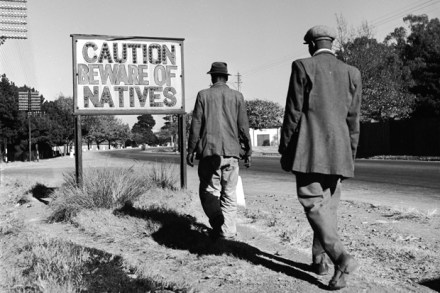
At the eye of apartheid South Africa’s storm of insanities was a mania for categorisation. Everything belonged in its place, among its own kind, as if compartments for scientific specimens had been laid out across the land. Or, as Christopher Hope puts it in his caustic new satire, people were ‘corralled in separate ethnic enclosures, colour-coded for ease of identification’. Reminding us that ‘Jim Fish’ was a derogatory term for a black man in South Africa, Hope thrusts his eponymous hero, who fits no racial category, into this mad system of classification. To some, Jimfish appears ‘as white as newly bleached canvas’, to others ‘faintly pink or tan or honey-coloured’. Nonetheless, racist whites treat him as ‘not the right sort of white’.