Michael Bywater

Where are the scents of yesterday? Entire countries have lost their distinctive smell

From our UK edition

Smell is the oldest sense. We owe our existence to it. The moment you start to talk about smell, things explode in a shimmering, chaotic starburst of epistemological and ontological complication. It is involuntary; we have no noselids. Smell stays switched on in our sleep: to inspire is to smell. It has a bigger ratio of genes than any system in any species. Yet it remains almost unspoken of. The existence of smell — either as verb or noun — seems a guilty secret. Mr Justice Caulfield, in Jeffrey Archer’s 1987 libel action against the Star, would have caused no comment had he suggested that Mary Archer had ‘elegance’. But his gallantry led him over the brink. ‘Has she fragrance?’, he asked. The rest of his words were unheeded.

The stuff of life

From our UK edition

‘I didn’t realise we were carbon,’ said a friend to whom I mentioned this book. She was the first of several. It’s odd to think of clever and educated people not knowing that we are made of such stuff. But The Many Lives of Carbon is an odd book to come to grips with. Its title promises plain speaking about carbon, which the book then delivers. Nothing to lose sleep over. Yet one does. This is partly because it mines a rich seam. I fell asleep thinking about the carboniferous period, and dreamt I was one of the seven dwarfs, trapped underground with a pickaxe and a vile hod, and woke myself up with a sepulchral groan of horror, which woke the dog, and there was nothing for it but to go downstairs and put the kettle on.

Deeply mysterious

From our UK edition

The human urge for personal hygiene has had many improbable side-effects, and I can confidently assert that through the ages, sponge-divers have punched consistently above their weight. Bronze-age tools, 10th-century Islamic glassware, a Byzantine ship whose plunge to the bottom was cushioned by the fourth-century Roman wreck it alighted upon, anchors, amphorae, sculpture: if it’s down there, they’ll bring it up. And so, around Easter 1900, there they were, waiting out the bad weather in the shelter of Potamós on Antikythera, a small island northwest of Crete.

Sic transit: the buildings we treasure most are often the ones we’ve never seen

From our UK edition

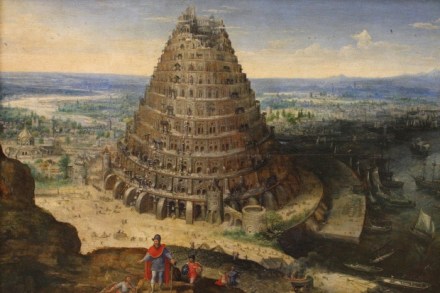
Here are two books which have almost nothing in common: form, function, source material, methodology, all utterly different. The surprise is that I should be surprised. Loss and rediscovery is at the core of what writers mostly deal with. We all experience loss (lovers, spectacles, innocence, our very existences) and that universality allows each of us to shape it as we will. James Crawford’s approach is structurally simple, but his narrative is beguiling. He considers the life-span of 20 buildings — including the Tower of Babel (5000 BC to 323 BC), the Library of Alexandria (300 BC to AD 650), the Berlin Wall (1961 to 1989) and, provocatively, the web ‘settlement’ of Geocities, born in 1994 and deliberately and utterly obliterated by its owners in 2009.

Caves of ice

From our UK edition

Summertime, and the living is... variable. Depends who you ask. People come to mind, of course: one in hospital, waiting for an MRI scan; another just come out of hospital having had two little frosted ova thawed out and implanted, so with a bit of luck she’ll have a baby at last. One old chap, 90-ish, with several basal cell carcinomas on his pate from his young days as an army officer in the Palestine sun, is going for a painless zap with a cryoprobe: lesions gone and a free pathology section into the bargain. And over at Cern the Large Hadron Collider has sent a new pentaquark lately to the firmament. The mind, generally, lags. It needs a book to provoke it into fresh life, into noticing old things anew.

The book that made me (almost) believe in bitcoin

From our UK edition

Bitcoins are digital money ‘mined’ from satanically difficult mathematical problems. Madness, obviously. But five years ago, while the rest of us were saying ‘Huh. Geeks. Money in cyberspace’, or ‘Y’what?’ a young doctor I know bought a few quids’ worth for fun. Sold it later for £800. Now she’s out on a hillside in the driving rain with her hawk. Bitcoin paid for the hawk. As for cyberspace, that’s where all money is anyway. Bitcoins simply take it a step further. It might be the first step on one of the most important journeys in economic history. It’s a strange, compelling tale, and three things lie at its heart.

A flashlight into the cellar of the lawless ‘dark net’

From our UK edition

This year marks the 25th anniversary of the world wide web, and I wonder whether its inventor, Tim Berners-Lee, would still have given it away had he known where it would be now. Had he foreseen Google and Facebook and Twitter, the conquest of web porn and the normalisation among teen-agers of misogyny and sodomy, the endless harvesting and mining of data, the surveillance, the cruelty and vulgarity and invasive crassness, the commercialisation of everything — would he still have said, ‘Have it for free, in the common good’? That’s a question that only he can answer. But the great fascination of the web lies in the near-asymptotic rate at which it has grown, not only in scope but in its domination of our lives.

Stephen King – return of the great storyteller

From our UK edition

Stephen King’s latest novel, Mr Mercedes, is dedicated to James M. Cain and described as ‘a riveting suspense thriller’ — a phrase so closely approaching 100 per cent semantic redundancy (a non-riveting thriller? A thriller entirely free of suspense?) that it tells us precisely nothing. All it does is declare that the reader will keep turning the pages. Which we will. That’s what King makes us do. Except Mr Mercedes isn’t, on the surface, a thriller; and you can bet that the consensus will be that King is writing what will be called ‘off-piste’. It’s a slender book, by his standards — only 400 pages — you can get it in your briefcase. There’s nothing particularly weird.