Patrick Skene-Catling

Stirling Moss’s charmed life in the fast lane

From our UK edition

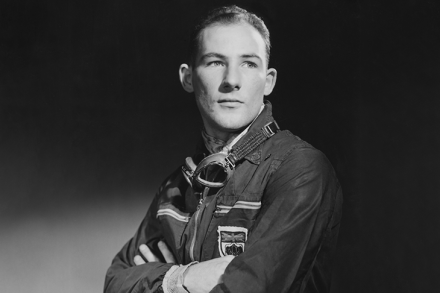
‘Who do you think you are — Stirling Moss?’ a genially menacing traffic cop would ask a hapless motorway transgressor. At the peak of his popularity as the most successful English motor-racing driver, Moss personified the glamorous daredevilry of racing at top speed. Richard Williams, the author of this sympathetic, exhaustive anatomy of an international sporting hero, part-time playboy (‘chasing crumpet’) and ultimate family man, is a veteran sportswriter for national broadsheets. He has also written critically acclaimed books, including one with the wonderfully comprehensive title A Race with Love and Death.
How St Ives became Barbara Hepworth’s spiritual home

From our UK edition

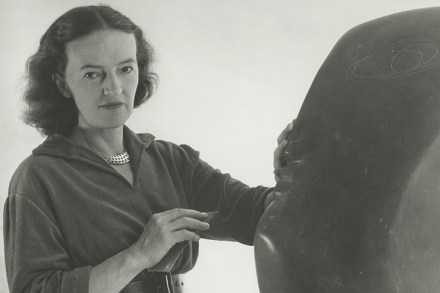
‘To see a world in a grain of sand’, to attain the mystical perception that Blake advocated, requires a concentrated, fertile imagination. Barbara Hepworth (1903-1975), one of the leading and most popular British sculptors of the 20th century, fervently imagined that her works expressed cosmic grandeur and her own spiritual aspirations. In the foreword to this thoughtful and enjoyable biography, Ali Smith testifies that Hepworth was ‘fiercely intelligent’, while its author, Eleanor Clayton, candidly declares: ‘I write as a curator who loves the artist she presents, a fan writing of her hero.’ Her research shows how frequently the sculptures convey ‘concepts [Hepworth] considered universal and eternal’.

Hitler’s devastating secret weapon: V2, by Robert Harris, reviewed

From our UK edition

After Stalingrad, Hitler desperately needed an encouraging novelty. Wernher von Braun, Germany’s leading rocketeer in the second world war, expertly and persuasively briefed him on the latest secret weapon, a powerful ballistic missile, with a film to demonstrate its capabilities. Hitler was enchanted. He said: ‘Gentlemen, I thank you. If we had had these rockets in 1939, we should never have had this war. No one would have dared oppose us.’ Hitler made the aristocratic von Braun an honorary professor — and ordered the manufacture of 10,000 of the new rockets.

Why Niki Lauda was considered the bravest man in sport

From our UK edition

Formula One motor racing is the perennial, worldwide contest that most reliably gratifies hero-worshipping, power-worshipping, money-worshipping, technology-worshipping ghouls, and some others. The ghoulishness may be subconscious but it certainly seems to excite many spectators at every Grand Prix track, especially in foul weather, as drivers approach sharp turns flat out. If you heard of a Charles Addams figure standing in the rain on a verge of the M25, thrilled by the possibility of witnessing a devastating crash, you might consider him (or her) to be quite weird; but anyway, Formula One is universally popular, extensively televised and reported on asa respectable sport. Maurice Hamilton is a veteran enthusiastic and loyal chronicler of Formula One — or F1 as it is called.

We were highly amused: the Queen — and Mrs Thatcher — thought Ken Dodd tattyfilarious

From our UK edition

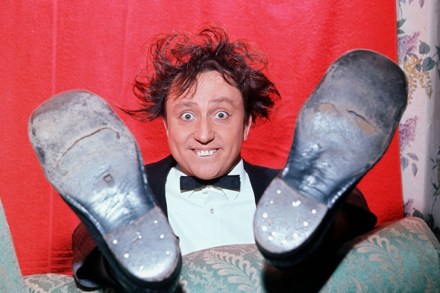
Doddy! Thou shouldst be living at this hour. England hath need of tickling sticks. So also hath the rest of the UK. At this time of political uncertainty, laughter is the one reliable panacea for all anxiety. Louis Barfe’s industriously thorough, entertaining biography of the late Sir Kenneth Arthur Dodd, written with admiration verging on hagiography, portrays the comic genius who was the last performer to uphold this country’s tradition of vaudeville in music hall, on radio and television. Dodd was born in 1927 in Knotty Ash, as the village was developing to become a suburb of Liverpool. He was brought up, with an older brother and a younger sister, by adored, adoring parents, and Ken said his father was the funniest man he ever met.

The Mutiny and the bounty

From our UK edition

Sullying the glorious sunshine, sand and sea, Miami in the 1940s, when I first ventured there, was already overcrowded, vulgar and exorbitant. It got a lot worse. By the early 1980s, the period to which this sensational criminal history is devoted, it had become the capital of Cubans in exile and America’s most prosperous cocaine entrepot, where the annual murder rate was more than 300. Attempts to impose law and order were handicapped by corrupt police, a corrupt judiciary and corrupt juries.

Visiting the world’s masterpieces is a quixotic undertaking

From our UK edition

From his base in London, Martin Gayford has spent much of his career as an art critic travelling. He has interviewed and sometimes befriended many leading artists and scrutinised their works close up in their own environment. He has found that artistically creative men and women are not really very different from normal people. The text of this informative and entertaining book is comprehensively balanced, fair, lucid and subtly witty, although some of the illustrations are handicapped by the smallness of the format. Art criticism itself can be an art. Gayford’s curiosity is wide and his judgments are tolerant, no matter how onerous the investigations can be. He explores remote, uncomfortable places, often accompanied by his wife Josephine, to whom the book is dedicated.

Mastering rocket science

From our UK edition

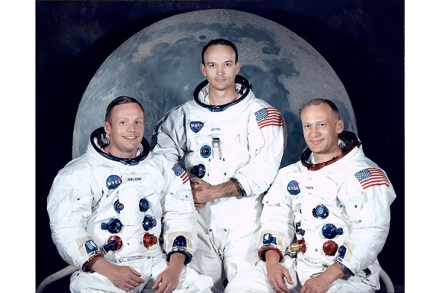
Now that we are stupidly rendering Earth almost entirely uninhabitable by many species including our own (through overcrowding, failing political systems, chemical pollution and climate disorder), a few humans of means are looking forward to migrating soon to other planets, even though, as yet, there are no good hotels and restaurants there. Scientists, stimulated by international rivalry and their own ambitions during the past century, have put together the machines and propellants for interplanetary travel. Here are two excellent, microscopically detailed books about the most important individuals and organisations that achieved personkind’s first progress into space.

Death at the top

From our UK edition

Agatha Christie’s spirit must be loving this poisonous new historical entertainment. Eleanor Herman has already enjoyed the success of Sex with Kings and Sex with the Queen, thoroughly researched, gossipy revelations of promiscuity among monarchs and their noble retainers during the Renaissance. She is an American author and broadcaster, born in Baltimore, now living in Virginia, but, at 58, she still concentrates her professional attention on the historic immorality and disastrous vulnerability of western European royalty. In the Middle Ages, when monarchs commanded virtually absolute power, rivalry for every top job was sufficiently intense to motivate assassination, and the least difficult way to commit it was with poison.

Homo Erect Us

From our UK edition

Ever since enlivenment of the primordial blob, before thoughts were first verbalised, all nature has always been motivated by a dynamic ambition to improve, to grow stronger, more agile, inventive and fertile. The successful continuously grow more successful; the failures disappear. This selective, upward process has been defined as evolution. Dr Adam Rutherford, a British geneticist, half Guyanese, a contributor to The Atheist’s Guide to Christmas and a former editor of Nature, is well able to explicate scientific complexities, including the origin and development of man. He writes with intellectual authority and also, as a popular lecturer and broadcaster, expresses himself in a clear and persuasive manner with natural charm.

Family fallout | 2 August 2018

From our UK edition

Savi Naipaul Akal’s publishing house is named after the peepal tree, in whose shade Buddha is said to have achieved enlightenment. The author’s industriously detailed memoir reveals nothing quite so brilliantly life-enhancing but presents persuasive statements in favour of family loyalty, domestic order and higher education, while allowing herself opportunities to express resentment of a disturbing sibling rival. She was proud when her brother Vidiadhar Surajprasad Naipaul was awarded the 2001 Nobel Prize in Literature, but dismayed when his acknowledgement of it failed to mention Trinidad, the land of his birth. He called his prize ‘a great tribute to both England, my home, and India, the home of my ancestors’.

From New York to the New Hebrides

From our UK edition

Publication of a debut novel is an experience comparable with the birth of a first child. Literary gestation is normally a longer process, and delivery of a book is more deeply fraught. Here is some evidence that the labour can be worthwhile. Asymmetry (Granta, £14.99) by Lisa Halliday, a young American now living in Milan, is a lopsided triptych of admirable erudition and stylishness — in effect, two novellas and a short story: a Manhattan romance, an Iraqi reminiscence of the devastation of Baghdad, and a BBC interview on Desert Island Discs. In the initial, most enjoyable episode, Alice, an assistant editor of a New York publishing house, would like to move to Europe to write.

School of Soho

From our UK edition

This is an important, authoritative work of art criticism that recognises schools of painters, yet displays the superior distinctions of individual geniuses. Martin Gayford, The Spectator’s art critic, concedes that the identification by R.B. Kitaj, an American painter, of a ‘substational School of London’ was ‘essentially correct’, though in London there was no ‘coherent movement or stylistic group’.The only characteristic shared by London painters has always been merely that they live in London. There have been some influential personal relationships, even cases of a sort of cosiness, especially in the French Pub, the Colony Room and other drinking venues in Soho and Fitzrovia.

An unprincipled Principal

From our UK edition

‘Dreaming spires’? Yes, but sometimes there are nightmares. Brian Martin, awarded the MBE for services to English literature, is at home in Oxford, where he spent most of his career teaching, and seems to know all about the professional and psychological complexities of the university. Holt College, his fourth novel, written with dedicated probity and Baedeker thoroughness, is a suspenseful tragedy without a hero — just a few men and women who mean well. Concerned with the administrative deliberations and manoeuvrings of the fellows of a respected, ancient college, the story serves analogically to show how an unscrupulous individual of obsessive ambition and manipulative cunning can turn even the most idealistically conceived democracy into a dictatorial hierarchy.

Harsh, but entertaining

From our UK edition

When millionaires become billionaires they become even greedier and more ruthless. At the highest level, Trumpian economics can be lethal. Edward St Aubyn, in his powerful new novel Dunbar, applies the oxyacetylene brilliance and cauterisation of his prose to bear on the tragic endgame of a family’s internecine struggle for control of a global fortune. St Aubyn is a connoisseur of depravity, yet also shows he cherishes the possibility of redemption. Henry Dunbar is an 80-year-old Canadian mogul who founded and developed the world’s second-most influential media conglomerate. His older daughters, Abigail and Megan, want the wealth and power; his youngest daughter, Florence, wants only his love.

Verse and worse

From our UK edition

Molly Brodak, a fair, young Polish-American born in Michigan, is a winner of the Iowa Poetry Prize. Iowa: that hotbed of academic creative writing! Her poems, published in A Little Middle of the Night, are intensely private, pointillist compositions of unconnected images. Now, teaching at Emory University in Atlanta, she has written her first book of prose, which is entirely different, an intimate communication in clear language of shocking candour. Without any evident self-pity, it is as frankly accusative and confessional as an ideal patient’s revelations on a psychiatric couch. Molly analyses her family and herself, evidently achieving understanding, perhaps even forgiveness, of some excruciating emotional entanglements.

Lessons in sex

From our UK edition

Helen Gurley Brown’s internationally influential career, as the author of Sex and the Single Girl and editor of Cosmopolitan, is revealed in this intimate biography in 50 shades of pink. ‘Let it be understood at the outset,’ writes Gerri Hirshey, an American freelance journalist for many upmarket periodicals: Sex has imbued the soft core, hard times and glory days of this story — sex surrendered, sex wielded, lavished and revelled in, sex merely endured and sometimes coolly transactional, sex reimagined, promised and packaged on glossy magazine covers for global dissemination... Hirshey tells all about Helen’s life, every nook and cranny, from her childhood poverty in hillbilly Arkansas, steeply ascendant to the pizzazz of A-list Manhattan.

The axeman cometh | 11 August 2016

From our UK edition

All organic beings descended from a single primordial blob, according to Darwin. Some of them developed sufficiently to leave the commodious depths and widths of the sea to scramble ashore. Was that wise? In this intricately detailed history, David Miles, a distinguished Oxford archaeologist, takes up the story of human evolution since our species and chimpanzees diverged from a common ancestor about seven million years ago. Between the origin of our life on Earth and the exponential population growth that causes long queues and traffic jams and threatens imminent apocalypse, there was a period when change amounted to beneficial progress.

The wicked old Paris of the Orient

From our UK edition

Here’s the Mandarin for ooh-la-la! As Taras Grescoe, a respected Canadian writer of nonfiction, shows in this marvellous, microscopically descriptive history of what is now one of the most populous and smoggiest megalopolises on earth, Shanghai in the 1930s was internationally notorious as ‘the wicked old Paris of the Orient’, with ‘as vivid a cast of chancers, schemers, exhibitionists, double-dealers and self-made villains as had ever been assembled in one place’. Grescoe lavishly keeps the promise of his book’s subtitle. In its heyday, the city was both glamorous and squalid, extremely rich and poor, unscrupulous and tough: to shanghai in the lower case means to force people to do what they don’t want to do.

The great monkey puzzle

From our UK edition

King Kong, the story of a violently amorous gorilla, Me Cheeta, the autobiography of a slanderous Hollywood chimpanzee, and now this, a benign biological, psychological and cultural survey, comes in further recognition of the versatility of our primate cousins. Both collateral branches of our family seem doomed (too many humans, too few apes), unless. . . Chris Herzfeld, a philosopher of science, an artist and a founder of the Great Apes Enrichment Project, has written a movingly tragic study in praise of Wattana, a Bornean orangutan. Even the restrained academic publisher calls it ‘poignant’. Commercial depredations are spoiling Wattana’s ancestral forest habitat at such a rate that the orangutans of Borneo will probably be extinct by 2030.