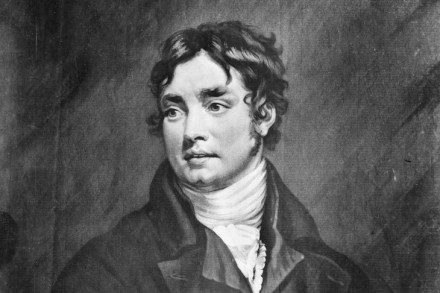
Ruth Scurr

Exploring the enchanted gardens of literature

From our UK edition

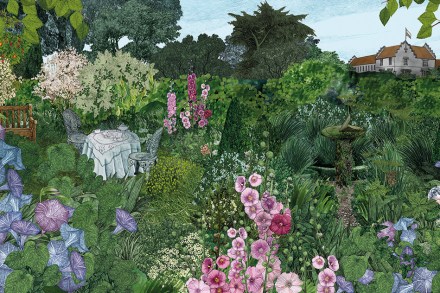
‘If Eve had had a spade in paradise, we should not have had all that sad business with the apple,’ claims the narrator of the novel Elizabeth and her German Garden (1898). The author, Mary Annette Beauchamp, eventually adopted the pen name Elizabeth von Arnim, merging her identity with the fictional character she had created. Both Elizabeths lived in Nassenheide in Pomerania (now Rzedziny, Poland), but whereas the fictional one had a spectacular garden, with a majestic clematis ‘Jackmanii’, giant poppies and delphiniums, the real Elizabeth, according to E.M. Forster (who was briefly employed as a tutor to the von Arnim children), did not have much of a garden at all.
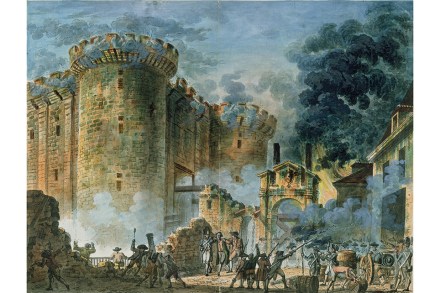
Could the French Revolution have been avoided?

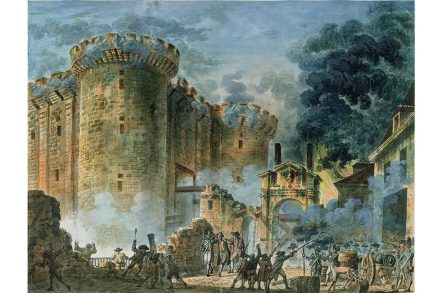
In the middle of the 18th century, on the north side of the Palais Royal gardens in Paris, there stood a magnificent chestnut tree called the Tree of Cracow. In his presidential address to the American Historical Association in 2000, Robert Darnton explained that the name Cracow probably derived from the heated debates that took place in Paris during the War of the Polish Succession, but also from the French verb craquer: to tell dubious stories. News-mongers or nouvellistes de bouche, agents for foreign diplomats and curious members of the public gathered round the tree, which was at the heart of Paris’s news network, a nerve center for transmitting information, gossip and rumors.

Darnton

‘Poor devils’: the hopeful scribblers of the French Revolution

From our UK edition

In 1778, Louis-Sébastien Mercier, dramatist and author of the early science fiction novel L’an 2440, claimed that only a small minority of writers in ancien régime France lived by their pens: ‘One exclaims everywhere that the number of authors is enormous… But in fact, there are not more than 30 writers in France who make writing a career.’ The rest needed patrons, protectors, pensions, privileges and sinecures to scrape a subsistence, or else were reduced to peddling libels and pornography, or spying for the police.

Snobbery in the garden: U and non-U borders

From our UK edition

Richard Sudell is the forgotten hero of the gardening revolution in Britain between the first and second world wars. A Quaker, born in Lancashire in 1892, the son of a straw and hay dealer, he left school at 14 and became a gardener, worked at Kew, then went to prison as a conscientious objector in 1916. On furlough from his first prison sentence, he worked with the Vacant Land Cultivation Society to help create allotments for London’s poor. When the first world war ended, he moved to Roehampton with his first wife. There he began writing a monthly gardening column in the Roehampton Estate Gazette advising his neighbours, most of whom had never had a garden before, on how to ‘beautify’ the debris-strewn patches of mud outside their new front and back doors.

Was the French Revolution inevitable?

From our UK edition

In the middle of the 18th century, on the north side of the Palais Royal gardens in Paris, there stood a magnificent chestnut tree called the Tree of Cracow. In his presidential address to the American Historical Association in 2000, Robert Darnton explained that the name Cracow probably derived from the heated debates that took place in Paris during the War of the Polish Succession, but also from the French verb craquer: to tell dubious stories. News-mongers or nouvellistes de bouche, agents for foreign diplomats and curious members of the public gathered round the tree, which was at the heart of Paris’s news network, a nerve centre for transmitting information, gossip and rumours.

How do authors’ gardens inspire them?

From our UK edition

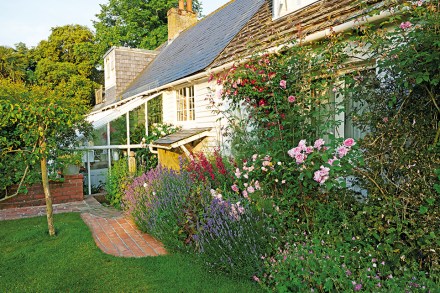
When Henry James moved to Lamb House in the Sussex coastal town of Rye, he admitted that he could hardly tell a dahlia from a mignonette: ‘I am hopeless about the garden, which I don’t know what to do with and shall never, never know – I am densely ignorant.’ He sought advice from the artist and designer Alfred Parsons and fortunately Lamb House already had a gardener, George Gammon, to do all the work. When Gammon won prizes at local horticultural shows, James was delighted: he was a vicarious gardener, more comfortable at his desk in the Garden Room than with his hands in the soil. Thomas Hardy was at the other end of the gardening spectrum.

Welcome back to Gilead: Margaret Atwood’s triumphant reclaiming of her work

From our UK edition

‘Penises,’ Aunt Lydia muses, ‘them again.’ Penises are always causing trouble, even in the God-fearing dystopian state of Gilead. The Testaments is set 15 years after the end of The Handmaid’s Tale, at a time when young girls, carefully and modestly brought up to become wives to the regime’s male elite, are beginning to rebel; some would rather die than get married and there has been an attempted suicide via secateurs in the flower-arranging class. ‘Perhaps we need to change our educational curriculum,’ Aunt Lydia thinks, ‘less fear-mongering, fewer centaur-like ravishers and male genitalia bursting into flame.

The imaginative energy of Katherine Mansfield

From our UK edition

A hundred years ago, in a former Carmelite monastery 60 kilometres south of Paris, Katherine Mansfield ran up a flight of stairs to her bedroom and died of a haemorrhage.  She was 34 years old. She had known for five years that she had tuberculosis. After joining the spiritualist therapeutic community at Fontainebleau-Avon in October 1922, under the guidance of the Russian guru George Gurdjieff, she had been careful to avoid stairs, or only to take them very slowly. But on the 9 January 1923, her husband, the writer and editor John Middleton Murry, came to visit and they enjoyed an evening watching other members of the commune dancing.

Empress Eugénie’s shrine to the Bonapartes

From our UK edition

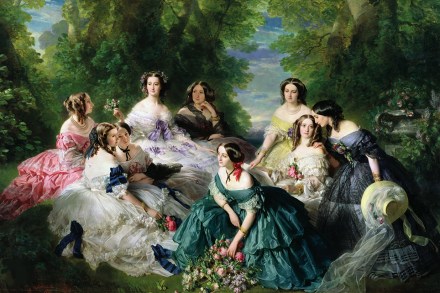
The empress Eugénie – the Spanish-born last empress-consort of France, wife of Napoleon III, mother of the prince imperial – lived for the last 40 years of her life in Farnborough, between the military towns of Aldershot and Sandhurst. There she created a home, museum, mausoleum and chantry in commemoration of the first and second French empires.  Farnborough Hill was the place she chose ‘après que tout fut fini’ (after it was all over).  In 1870, Eugénie had accompanied her husband into exile in England, following the defeat of France in the Franco-Prussian War.  Together with their teenage son, they lived in Camden Place, a large country house in Chislehurst.

The men of blood get their comeuppance in Revolutionary France

From our UK edition

Colin Jones’s hour-by-hour reconstruction of the fall of Maximilien Robespierre, the French revolutionary most associated with the Terror, is inspired by Louis-Sébastien Mercier, who believed that only by getting ‘up close’ to the ‘infinitely small’ details would it be possible to understand the truth about a Revolution that was stranger than fiction. Mercier (1740-1815) was an early science fiction novelist, a journalist, politician and Parisian. He was not an eyewitness to the fall of Robespierre because he was in prison in 1794, one of 73 moderate members of the governing Convention who had been arrested and held as ‘Robespierre’s hostages’.

The life and loves of Mary Wollstonecraft

From our UK edition

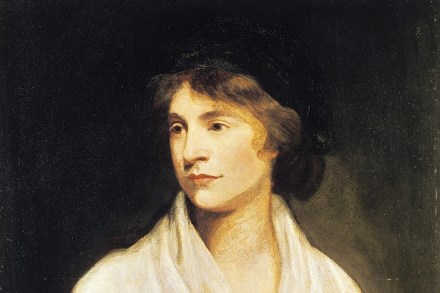
What did Mary Wollstonecraft like and love? This is the question Sylvana Tomaselli, a lecturer at Cambridge University, asks herself at the start of her new book about the writer and philosopher who is often described as ‘the mother of feminism’. After the unveiling of Maggi Hambling’s controversial statue in honour of Wollstonecraft on Newington Green last November, and the vitriolic spats between its detractors and supporters that ensued, a book that refocuses attention on the person at the centre of the storm is a welcome relief. Wollstonecraft, born in 1759, was determined to live independently by her pen.

Too many of our children are battling severe depression

From our UK edition

Christopher Hitchens once said that women just aren’t as funny as men and Caitlin Moran believed him. But that was many years ago — the great male essayist and orator has been dead for a decade — and Moran has matured into a bold, wise, middle-aged comedienne. When she was growing up in the 1980s, funny women such as Joan Rivers, Roseanne Barr and Victoria Wood ‘were rare and regarded as a freak of nature’. With retrospect, Moran realises that ‘Hitchens and I were, respectively, too male, or too young to have ever been invited into a coven — of which there are millions across the world’. Moran’s new book is dedicated to her coven, also known as Team Tits.

The grisly art of Revolutionary France

From our UK edition

There was a basket of thick red wool and two pairs of large knitting needles at the start of University College London’s cleverly curated exhibition, Witnessing Terror: French Revolutionary Prints 1792–94. Visitors were invited to contribute their own lines of stitches before picking up a copy of A Tale of Two Cities, in which Dickens fictionalised the tricoteuses, the women who gathered around the guillotine knitting and waiting for heads to roll. The first six prints are French portraits of ‘revolutionary martyrs’ ranging from Louis XVI, wearing the bonnet rouge, or red cap of liberty, that was placed on his head when the crowd broke into the Tuileries Palace in 1792, to Robespierre, whose death in 1794 marks the formal, if not actual, end of the Terror.

A dark emerald set in the Irish laureate’s fictional tiara: Actress, by Anne Enright, reviewed

From our UK edition

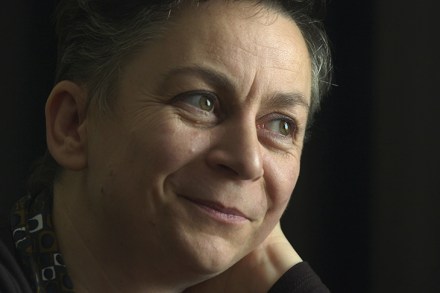
Actress is the novel Anne Enright has been rehearsing since her first collection of stories, The Portable Virgin (1991). It is a perfect jewel of a book, a dark emerald set in the Irish laureate’s fictional tiara, alongside her Man Booker Prize winner The Gathering (2007) and The Green Road (2015). Its brilliance is complex and multifaceted, but completely lucid. Like its predecessors, it is a portrait of a matriarch. Norah, the novelist daughter of an invented Irish theatre legend, Katherine O’Dell, sets out to tell the story of her mother’s life as she approaches her own 59th birthday. She is acutely aware that she is about to have one birthday more than the actress managed: ‘I would spin beyond her, out into unchartered space.

Conversations between truth and power

From our UK edition

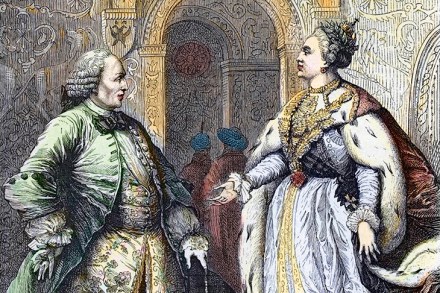
Denis Diderot (1713–84) is the least commemorated of the philosophes. Calls for his remains to be moved to the Panthéon on the tricentenary of his birth in 2013 were ignored. He has not taken his place alongside Rousseau and Voltaire in the Parisian vaults of fame, even though he was no less radical or progressive. Instead, his name has been given to a metro stop in the 12th arrondissement: Reuilly-Diderot. Even here, he comes second, tacked on by a hyphen, one of history’s and philosophy’s also-rans. The injustice done to Diderot can partly be explained by the fact that he was a collaborative writer and thinker.

Character actors

From our UK edition

Willa Drake’s second husband calls her ‘little one’, even though she is over 60 and the mother of two grown boys. After a troubled childhood in Lark City, Pennsylvania, she married at 21, stopped studying after her first pregnancy and was widowed with teenage children when her first husband was killed in a road-rage incident of his own making. Willa walked away from the crash physically unscathed: ‘She seemed to be in a kind of bubble, sealed away on her own.’ Late in life she suddenly decides the time has come to stop drifting, or going ‘at things so slantwise’. To her new husband’s bafflement, she responds to a random call for help after one of her son’s ex-girlfriends is shot in the leg in Baltimore.

A year full of birds

From our UK edition

Deborah Levy draws her epigraph for The Cost of Living from Marguerite Duras’s Practicalities: ‘You’re always more unreal to yourself than other people are.’ Practicalities (1987) is a series of interviews Duras gave to a young friend with all the questions left out and the interview format effaced. Levy’s book is, similarly, one side of an intense conversation about life, love, power, home-making and writing. Her interlocutors, many of them dead but still living through their words and work, include Simone de Beauvoir, Louise Bourgeois, Emily Dickinson, Barbara Hepworth and Elena Ferrante. Levy is a playwright and novelist whose Swimming Home (2012) and Hot Milk (2016) were shortlisted for the Man Booker Prize.

The only word that hurts

From our UK edition

It is hard to be honest about anorexia. The illness breeds deceit and distortion: ‘It thrives on looking-glass logic. It up-ends your thoughts, turns bone into flesh, makes life unlivable, death seem glorious.’ In her first book, the literary critic and art historian Laura Freeman is determined to tell the truth about her recovery from the illness that ravaged her adolescence and early adult life. The result is the reverse of a misery memoir. Freeman’s celebratory book is about getting better and learning to savour life again by doing what she most loves: reading. Freeman was diagnosed with anorexia when she was 15 and had already been ill for two years.

A vanishing vision

From our UK edition

Samuel Taylor Coleridge and Robert Southey were undergraduates when they met in June 1794, Coleridge at Cambridge university and Southey at Oxford. One of their earliest conversations concerned the political implications of the passions. A month later, on 28 July, the French Revolutionary Terror climaxed in the guillotining of the Incorruptible, Maximilien Robespierre. Evidence from across the Channel notwithstanding, Coleridge and Southey were certain that the passions are not vicious — ’tis society makes the indulgence of them so. They resemble an assemblage of waters, destructive if they run wildly over the country, but the source of abundance if properly guided.

Dark night of the soul

From our UK edition

As bombs fall everywhere in Syria and IS fighters destroy Palmyra, a musicologist in Vienna lies awake all night thinking of the Baron Hotel in Aleppo, where he stayed in 1996, following in the footsteps of Lawrence of Arabia, Agatha Christie and King Faisal. He remembers the hotel’s Ottoman ogival windows and its monumental staircase, with its old, worn-out rugs and shabby rooms where there were still useless bakelite telephones and metal clawfoot bathtubs whose pipes sounded like a heavy machine gun whenever you turned on the tap, in the midst of faded wallpaper and rust-stained bedspreads. In 1996 Franz Ritter was travelling with a fellow student, Sarah, a beautiful French woman, studying for her PhD in Orientalism.