Douglas Murray

Douglas Murray

Douglas Murray is associate editor of The Spectator and author of The War on the West: How to Prevail in the Age of Unreason, among other books.

Would Sadiq Khan back a rave in a mosque?

I must return, regrettably, to the subject of the Church of England. Readers with long memories may recall the year of our Lord 2024. In February of that year, the people who are meant to care for Canterbury Cathedral allowed a ‘silent disco’ to take place over two nights in the place where St Thomas à Becket was martyred. Two thousand revellers turned up to take part in what became known as ‘a rave in the nave’. Naturally the Church of England authorities denied that this constituted any sort of defilement of one of England’s holiest places. Fast forward to September of that same year and it was Peterborough Cathedral’s turn. That was when it announced an Ibiza-themed nightclub evening with DJs spinning an ‘epic’ set of ‘soul, funk and contemporary hits’.

Who will remember Keir Starmer?

From our UK edition

I am starting to think that Keir Starmer might have been in it for himself. In saying that, I am not trying to echo that laziest of all critiques of politicians that ‘they’re only in it for the money’. Good luck to anyone trying to make money from politics in Britain these days. Rather, I mean that the former prime minister’s decision to leave the House of Commons and trigger a by-election is not the behaviour of a patriot. There were many people in the legal world who were nervous when the former director of public prosecutions decided to put his name forward as a Labour candidate for parliament. DPPs are meant to be politically impartial, like BBC presenters.

Harry and Meghan deserve a second chance

A little while back I came across a copy of Ted Hughes’s Laureate poems which had an inscription to some friends. Inside was an unpublished squib by the late poet laureate which read: ‘The Royalist/ Is afraid/ The Queen’s a pin/ In a hand-grenade.’ If I understand the poet’s meaning correctly then I count myself such a royalist. I dislike criticism of the royal family, especially of the monarch. When it happens it feels too much like people hammering at something fundamental – far more fundamental than the critic appreciates. If criticism is to be made it seems to me that it should be done privately, so as not to disturb the fragile equilibrium of the rather magical arrangement we have on these islands.

Middle England is finally waking up to the migrant crisis

I don’t know how familiar readers are with the term ‘accelerationism’. It is generally used to describe a tendency on the left, though is increasingly heard on the right too. The basic idea of accelerationism is that there are certain flaws in the societal structure which if pushed could bring things to their inevitable conclusion more quickly. It is why there are so many people on the left of politics who say that sustainable government spending should be discouraged. It is not just because they are economically illiterate. What they really hope is that a speeded-up financial disaster will expose the ‘underlying contradictions of capitalism’, and we’ll all realise that Karl Marx was right and promptly vote for Zack Polanski or similar at the next election.

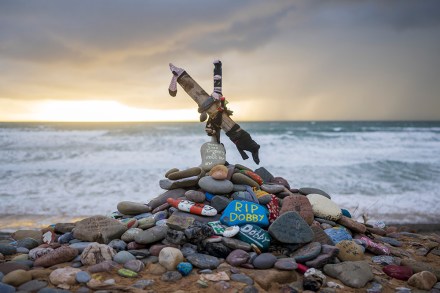
The mawkish madness of Dobby’s ‘grave’

I don’t know how many readers have visited the grave of Dobby the house-elf, but any who have should immediately be sectioned and have their subscriptions to The Spectator cancelled. This strong course of action occurs to me after reading one of those stories that can make you laugh, cry and smack your head into your hands all at once. It relates to a ‘memorial’ which apparently sits on Freshwater West beach in Pembrokeshire, Wales. The area is run by the National Trust – a charity which used to look after our nation’s heritage sites. The beach in question was where filming took place for Harry Potter and the Deathly Hallows.

Rod’s bravery made others brave too

How do you produce the type of person who cares deeply while seemingly not giving a damn? With great difficulty, it turns out. Plenty of people imagine that they can say what they think, but very few do. For most people, some real or imaginary social punishment lies on the horizon: a dinner they won’t be invited to; a club of which they fear they will never become a member. Rod Liddle was one of the happy few who was free. He was free to say what he thought. He was free to voice unpopular opinions and – often harder – he was free to voice popular opinions. When the whole world seemed to be falling on his head he had a perfectly contented attitude towards it.

I wish more people had imposter syndrome

From our UK edition

I have spent part of the past week thinking about imposter syndrome, and how we might be able to give it to more people. In an interview this week, Andy Burnham’s best friend Steve Rotheram, who happens to be the Mayor of Liverpool, said that our latest Prime Minister had struggled with imposter syndrome ‘for many years, like most people from working-class backgrounds’. All of which leaves me slightly baffled. Surely, whatever your origins, if you have made it to Cambridge University in your late teens, got a job in Westminster in your early twenties, become a Member of Parliament in your thirties, have become a mayor, are best friends with a mayor and are now Prime Minister, it might be time to stop with the feeling of ‘imposter syndrome’?

The problem with the Widdecombe suspect’s ‘fair trial’

It’s hard to hold anyone responsible for anything today in British politics. That’s because no sooner have the facts emerged than everybody in Westminster has played another game of musical chairs. If the word ‘amusing’ can be used in the same paragraph as ‘attempted beheading’ allow me one amusing example. Last month, a 30-year-old asylum seeker from Sudan allegedly attempted to behead a local man on the streets of Belfast. The attack was apparently caught on video. Everyone was geared up to make their points. The left was preparing to argue ‘So you’re saying all asylum seekers are beheaders, are you?’, while the right was gearing up to say: ‘We must hold people accountable.

The hijacking of Ann Widdecombe’s death

I don’t know if you remember that old saw: ‘Always speak ill of the dead.’ I don’t recall being brought up with it myself, but a number of our fellow countrymen apparently were. After the brutal killing of Ann Widdecombe last week we saw some fine examples of people following this rule. Peter Tatchell – a prominent member of the ‘be kind’ brigade – took to social media to describe the death of Widdecombe in celebratory tones. He listed her crimes, such as her belief that marriage is a union between a man and a woman, and then ended his tweet by saying: ‘BIGOT!’ As though final judgment had been passed down from on high.

What Farage can learn from the anti-Trump playbook

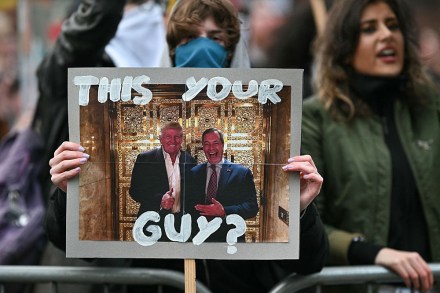
In January this year Dominic Cummings – once of this parish – warned The Spectator’s editor and assistant editor that Whitehall and the establishment parties would ‘stop at nothing’ to prevent Nigel Farage from becoming prime minister. As Cummings told the Quite right! podcast: ‘The people around [Keir] Starmer and all through the upper echelons of the Whitehall system are looking at Donald Trump. They’re looking across Europe, and they’re saying to themselves: “The lesson is to strike early and strike hard and not let these people in… Let’s smash the absolute living shit out of Farage, and make sure that he doesn’t win, by fair means or foul.

The confessions of J.D. Vance

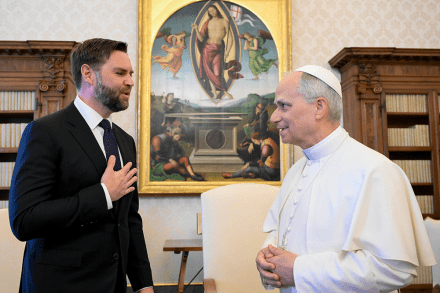
There were many reasons why 2016 was a strange year. One of them was the halfhearted effort by people on both sides of the Atlantic to try to understand why voters had voted the ‘wrong’ way in the Brexit referendum and the US presidential election. The book that was touted as an explainer for all of this was Hillbilly Elegy, a memoir by someone called J.D. Vance about his upbringing in rural Ohio. After the election of Donald Trump, Vance’s description of family breakdown, de-industrialisation, poverty and drug abuse was said to explain why so many Americans had voted for Trump. There was much that was patronising about all this – mirrored in France by the attention paid to Didier Eribon’s Returning to Reims.

Burnham’s worryingly vague vision for Britain

Once again the question occurs: ‘Why do they want it?’ Keir Starmer held a very important role in the legal profession before entering parliament, but for some reason he desperately wanted to be even more political. As soon as he became an MP it was plain that he was so keen to get the top job that he was even willing to go through the Jeremy Corbyn period – immiserating his reputation and presumably himself by spending years having to pretend that Corbyn was a suitable candidate for prime minister. Serving in Corbyn’s shadow cabinet was not something that any decent person would do – leading some of us to conclude either that Starmer was not a decent person or that he had such a surfeit of ambition it didn’t matter because it was a means to an end.

The radical left will regret embracing political violence

From our UK edition

What are the circumstances in which it is right to smash up a building? When might one justifiably destroy an artwork? And what are the conditions under which one might splinter someone’s spine with a sledgehammer? Many on the left seem to have satisfied themselves on all these questions. But I wonder if they have even begun to reckon with the consequences. One can only hope that those who urge on ‘direct action’ have no idea how slippery a slope they are on Back in 2019 a group of activists from Extinction Rebellion took their views on fossil fuels to Belvedere Road in central London. There, at the site of the Shell building, they smashed windows, spray-painted walls and caused other criminal damage.

Are we allowed to feel angry yet?

I get the sense that the political and media class badly miss Katie Hopkins. Back when the reality TV star was still a regular on our screens and in our newspapers, she could be relied upon to be the focus of attention whenever the people in charge didn’t want the public’s attention to be focused where it ought to be. So when a British soldier was decapitated on the streets of London, or a suicide bomber went off at a pop concert packed with teenage girls, Ms Hopkins could be found saying something that a lot of people were thinking – only in a more colourful or unwise way.

The lessons from Henry Nowak’s murder

From our UK edition

I wonder how many readers have ever heard of the name Kriss Donald? The young Glaswegian was just 15 years old in 2004 when he was kidnapped by a local gang of Pakistani men. The group selected him because he was white and they had some beef with a group of white men with whom Donald had no connection at all. After driving around for hours, the gang – led by one Imran Shahid – stabbed Donald repeatedly before dousing his body in petrol and setting him alight. I also wonder how many readers have heard of the name Tony Timpa? The white, unarmed Texan was 32 in 2016 when he suffered some sort of mental breakdown in public. Instead of assisting him, police arrived at the scene and restrained him in such a way that he died.

When did Sturgeon first notice her husband’s kleptomania?

From our UK edition

What would you say if your spouse bought a luxury campervan? I know what I would say – something along the lines of: ‘Get that thing away from me. I refuse to spend wet weekends campervanning around the Highlands, and I don’t care whether the bathroom facilities are “luxury” or not.’ In other words, any spouse of mine would get a tongue-lashing. But then I have a spiritual aversion to campervans, having spent many a childhood summer stuck behind them on single-track roads in the Highlands, watching their foul residents bespoil many of Scotland’s best beaches. We cannot know what Nicola Sturgeon’s reaction was to this luxury monstrosity. She would have us believe that when Peter Murrell took receipt of his top-of-the-range campervan she had nothing to say.

Douglas Murray, Flora Watkins & Nicholas Farrell

From our UK edition

22 min listen

On this week’s Spectator Out Loud: Douglas Murray details his encounter with Labour leadership hopeful Wes Streeting; Flora Watkins explains why the Open Garden scheme is the antidote to the Chelsea Flower Show; and Nicholas Farrell says local nudists are running wild in Ravenna. Produced and presented by Patrick Gibbons.

My encounters with Wes Streeting

From our UK edition

The Labour party seems to have ignored the advice I gave it in last week’s column, and so we are going to be treated to one of those down-market beauty pageants where candidates for the Labour leadership spend weeks talking competitively about the evils of Thatcherism, the nobility of miners and the perpetual threat of NHS privatisation. We might also look forward to watching the leadership candidates go for a jog, play football in an amusing manner and eat this country’s most disgusting foodstuffs as evidence of their authenticity. One of the candidates for this pie-eating competition is the now-resigned health secretary Wes Streeting. And on this particular candidate I have some history to narrate.

Things can always get worse

I have spent the past week marvelling at the behaviour of our commentating class. They seem to have whipped themselves back into that familiar frenzy which must lead, inexorably, to the Prime Minister stepping down. ‘He has to go’; ‘The most incompetent prime minister of my lifetime’; ‘Things can’t go on like this’ – these were the general sentiments revolving around Keir Starmer even before his party’s thumping in last week’s local elections. The problem is that some of us have a long-ish memory. So when people say the Starmer government is uniquely incompetent or ineffectual, a tiny flare goes off in my mind. Have these people forgotten Theresa May?

The obvious truth about anti-Semitism

From our UK edition

There are many ways to do nothing. One is to sit on your hands; another is to call for ‘a conversation’. I have noticed quite a lot of calls for ‘a conversation’ since the stabbing of two Jewish men in Golders Green last week. Some politicians and pundits have even been bold enough to call for a ‘national conversation’. This is when you can tell people are pulling out the big guns. One reason I say it is also a variant on doing nothing is because this has happened so many times before. I remember Theresa May standing near the site of the London Bridge attacks in 2017, surrounded by various leaders, insisting that we need to tackle ‘extremism’. The results were a real stunner – even for connoisseurs of inertia.