Jan Morris

Spectator Books of the Year: An almost perfect book to read in the bath

From our UK edition

Two of my most memorable books of the year were by two of the most brilliant writers of our day, and were both, to my simple mind, of opaque allure. Colin Thubron’s novel Night of Fire (Faber, £16.99) evokes the emotions of seven tenants, plus their landlord, when their apartment house is burnt down, and fascinatingly jumbles them all into a mystique contemplation of something or other. Geoff Dyer’s White Sands (Canongate, £16.99) is subtitled ‘Experiences from the Outside World’ and is a virtuoso display of his particular kind of travel writing, sometimes fact, sometimes fiction. I was only half convinced by it all, but quite bowled over by the title story of the collection, which seems to me a little masterpiece.
Exquisite mementoes

From our UK edition

All alone on page 313 of this spectacular book, a tattered but heroic flag flies in a painting of an icy wasteland. It is a remarkable picture for two reasons: first, because it was done by the Arctic explorer Edmund Wilson in 1912, when he and Captain Scott learnt from that very flag that the Norwegian Amundsen had reached the South Pole before them; and second, because it is a hauntingly beautiful work of art.

The blank on the map

From our UK edition

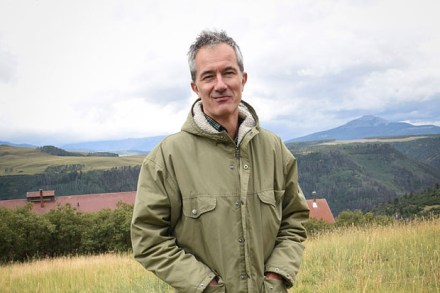
‘Is Geoff Dyer someone on your radar?’ inquired the courtly literary editor, inviting me to review this book. What a question! Envy is the writer’s sin, as everyone knows, and to a nonagenarian writer of my kind the very conception of Geoff Dyer, aged 57 and perhaps the most brilliantly original practitioner of his generation, figures green and large on any screen. Has he not won countless awards around the world? Has his work not been published, his publicists say, in more than 20 languages? More than 20? More than 20! And White Sands, an elegant parade of his talents, tells me why. It is not quite like any other book, and frankly says so.

From Celtic tiger to pussycat

From our UK edition

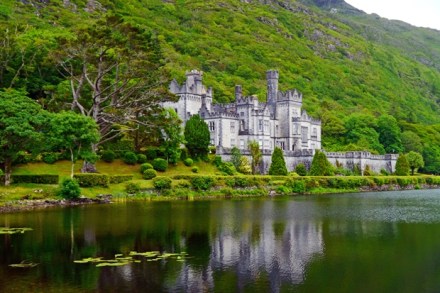
After a healthy Irish lunch I drove blithely off through the streets of Roscrea, I think it was, to find that everywhere I went the populace was cheerfully waving at me, smiling, gesticulating or blowing horns. When I stopped to ask them why, I found that I had left on the roof of my car a wallet containing my entire worldly wealth, cash, credit cards and all. So paradoxically enjoyable was all this, so irresistibly amused and sympathetic were the bystanders, that I came to think of the event as a sort of leitmotif of my visit to Ireland. For whatever else has happened to the Republic, through it all the populace has remained fun, quick, laughing and kind to foolish visitors.

Pastoral scene of the gallant South

From our UK edition

During the first ten pages of this long work Paul Theroux, on a journey through the American South, meets two citizens of Alabama. The first, encountered in Tuscaloosa when he asked the way to the Cornerstone Full Gospel Baptist Church, was named Lucille, called him ‘Mr Paul’, said ‘Ain’t no strangers here, Baby’, took him to the church and said ‘Be Blessed’ when they parted. The second, a citizen of Gadsden, was named Wendell, called him ‘Sir’, clamped him on the shoulder, said ‘Kin Ah he’p you in inny way?’ and before they parted suggested they meet again for ‘a sandwich, peanuts or anything’.

Spectator books of the year: Jan Morris was touched by Michael Jacobs’ swan-song

From our UK edition

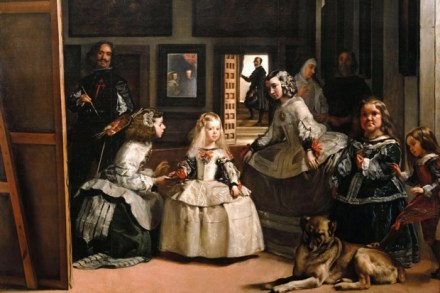
My favourite book of the year was The Hotel Years, a collection of wanderings by the incomparable Joseph Roth (Granta, £16.99). I was oddly touched by Everything is Happening: Journey into a Painting, the swan-song of Michael Jacobs concerning the Velazquez masterpiece ‘Las Meninas’. And the grand and peculiar Landmarks seemed to me a welcome change of direction by the uniquely gifted Robert Macfarlane (Hamish Hamilton, £20).

Double thinking, double lives

From our UK edition

This hefty volume is misleadingly titled. It is not an escapist sort of travel book, ushering the visitor around the homelands and houses of the Italian literati. It is a selection of the author’s previous literary articles, mostly book reviews for the New York Review of Books and the London Review of Books, and believe me it is hardly a sunshine ramble or a splash in the pool. On the contrary, it is an immensely learned, elegantly written rehearsal of the significance of 23 Italian writers, from Dante in the 13th century to Antonio Tabucchi in our own, and as such it amounts I think to an assessment of the Italian sensibility as a whole. Nobody is better qualified than Tim Parks to guide us through such an experience.

Mocking the Welsh is the last permitted bigotry

From our UK edition

‘Don’t let’s be beastly to the Germans’ went a sarcastic lyric of Nöel Coward’s at the end of the second world war, and nowadays nobody of civilised instinct is beastly to them. Quite right too. Political correctness, so often stultifying to free expression, has at least ensured that racial bigotry is recognised as the cruellest kind of yobbery, distantly but recognisably related to genocide. Few of us now blame ‘the Germans’ for the evils of the war, and generalised mockery of Jews, blacks, wogs, frogs, Micks, Poles or Eyeties, let alone Muslims, has to be witty indeed to raise even a guilty laugh. One class of person, though, one race, one nationality, is evidently exempt from this taboo.

A prickly but noble nation

From our UK edition

To my mind one of the relatively few happy circumstances of our time, as we grope into the 21st century, is the condition of Wales. By no means all Welsh people would agree with me. Those who love the Welsh language above all else must still fight their heroic battle in its defence. Those who think politically are dissatisfied with devolution and the febrile dullness of the National Assembly. The flood of English incomers is a curse on several levels. Many of my countrymen are in sackcloth and ashes over the state of Welsh rugby, and rather fewer, perhaps, are mourning the virtual dissolution of the chapels. But I prefer to take the big view, the long view, and all in all it seems to me the condition of Wales is on the mend.